Editor’s Note: This article was first published in EIR, Vol. 24, No. 18, April 25, 1997.
The following is an edited transcript of an interview with Lyndon LaRouche conducted in December 1996 in Germany, by reporters from the Islamic Republic of Iran Broadcasting. Portions were aired on Iranian national television Channel 1, beginning in January 1997. It was reprinted with permission of the Islamic Republic of Iran Broadcasting.
Q: How do you evaluate peace in the Middle East negotiations?
LaRouche: Well, first of all, I’ve been working for this, since my 1975 trip to Baghdad, and met many people from the Middle East at that time. For it to work, there must be economic cooperation. You cannot have a settlement, a Middle East settlement, without a Palestinian settlement. You cannot have a Palestinian settlement, without justice for the Palestinians, which means giving them a state. Without a state—without economy, they don’t have a state.
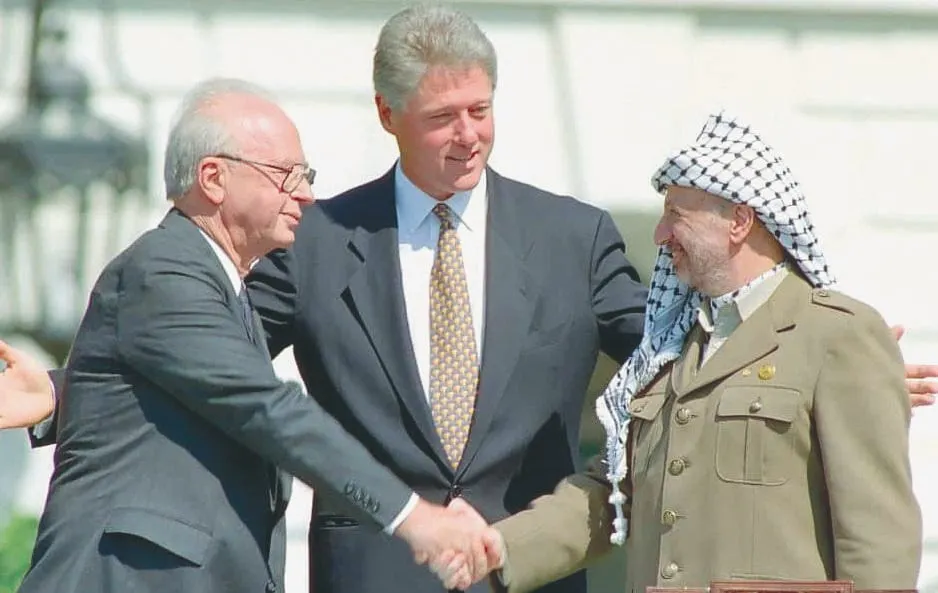
Now, the Oslo Agreements were good, as far as they went. [Israeli Foreign Minister Shimon] Peres and his prime minister at the time, [Yitzhak] Rabin, were sincere. If that had been the matter between Peres and Yasser Arafat, it would have worked. The problem was, too many countries conceded to the British in giving control of donors’ funds to the World Bank. The World Bank would not allow any of the necessary development programs. It wouldn’t even allow enough money for the Palestinian state to function. The prolonged failure to implement the economic intent of the agreement meant that people in Britain and people whom they control in the United States, in the extreme right wing of the Zionists, were able to be manipulated back into power, and we now have a very dangerous situation on our hands.
Q: There are some other problems which are not economic; you see, there are many Palestinian people who cannot accept Israel as a country in this region. What’s your view of this, how we can solve this problem?
Lyndon LaRouche: Well, we’re dealing with many years of injustice, and it’s very difficult to get the emotions of many years of injustice out of the system. My approach to this is to say, if the performance is good, then people will change their opinion—if justice is there. But, the essential thing is that with those involved, we must fight for justice, a just solution; and, hope that others will be brought around to confidence in a just solution. So, you have to be flexible. You have to be sensitive to the feelings of the Palestinians, in particular, who have suffered great injustice. For them, it’s like a Nazi injustice…. I know that there are some in Israel who are for justice. One would hope that the agreement would bring about between the Palestinians and those Israelis, a commitment to common justice, and that other Palestinians would come around to support the idea of justice once they saw that it was true.
I think that the Palestinians’ problem is not so much their hatred against their experience; the problem is they have no confidence that the future will be any better with Israel.
Q: Actually, these negotiations up till now have been simply negotiations between the governments: Yasser Arafat and the others; people coming from the government, from the top of their country. But actually, nobody has asked the people of these two regions. And, so, the problem is that on the one side, the Israelis, most of them, don’t accept, and otherwise, for instance, Hamas, doesn’t accept these negotiations, because they say, nobody has asked us about this problem. How can we argue this problem with the Palestinian people?
LaRouche: The problem is this: that the Hamas is a very complex phenomenon. It was based on an appeal to certain emotions among the Palestinians, but it was orchestrated by British intelligence and also the right-wing Israelis, the right-wing Zionists who control Hamas. And that’s the way it worked. Actually, there are several Hamases: There’s the Hamas which is in Palestine. There’s a real Hamas, which has a popular base, who are typical Palestinians, who are very frustrated and believe that only stronger action will bring about justice. Then, there’s a group in London, which are not necessarily even Palestinians, who play the role of Hamas terror. This group in London, like the right-wing Israelis, are controlled by certain forces in London and by the so-called right-wing Zionists—so, they’re the troublemakers. My belief is, you cannot—you will either have perpetual war, or you will have peace. People like Peres in Israel understand that. People behind [Israeli Prime Minister Benjamin] Netanyahu, do not understand that. And so, therefore, we have to have peace, but the problem has been, as I watched this negotiation from the time of the Oslo Agreements, and as I’ve dealt with it over many years, the problem has been that there has been no performance which would bring Palestinians around—ordinary Palestinians—around to confidence with the process reported. I think it would change, if there had been that process.
Q: What’s your personal view about the negotiations? Do you think that this process can bring peace in the region?
LaRouche: Well, without it there can be no peace in the region, it’s impossible. First of all, in order to have relations between Israelis and Arabs, stable ones, you cannot do it unless there’s peace with the Palestinians. It won’t work. For peace to be achieved, you must have justice for the Palestinians. They must have the right to economic development.
For example, the Palestinian Arab is typically among the best-educated populations in the region. They were used in exile by Kuwait, by other people, to do administrative functions that others could not do. They are, in a sense, an intellectual leadership in part of the region. If they’re given employment in their own country, given development, given the opportunities, and given the dignity of national status, then, I think, if there’s good faith on both sides, if there’s good faith on the Israeli side, which, I think, from someone like Peres, you have good faith. If there’s good faith on the Palestinian side—and I know that Arafat, who has walked a very difficult road for many decades, is proceeding in good faith. He was moving in absolute good faith. There’s no criticism of him that is legitimate from the standpoint of the Israelis. All right, if there’s good faith, I believe it can work, but, also other powers have to agree to make it work, there have to be guarantees.
Q: There are many American politicians who talk about Israel as if it were actually one of the states of America. What do you think about this problem? Do you think that in this case, they can get peace in the region, peace in the Middle East, to be on one side, while the other side feels itself taken out of this problem?
LaRouche: We have this problem in the United States. I think it’s not as bad as you say; but, it’s bad. That is, there is not a really very powerful, independent Zionist lobby in the United States as such—in the way that people talk about it. You have corrupt politicians, is what you have, who are bought, in one way or the other; or, who play games for various reasons, who are not sincere. You have an international cabal, which is the Anglo-American cabal, which uses the Zionist question for geopolitical reasons.
Take the comparable case of Iran in recent years. Now, all of the attacks on Iran from the Anglo-Americans are dishonest, that is, the public form of the attacks. They have nothing to do with the present regime, they have nothing to do with what happened in the 1980s, they have nothing to do with what happened earlier—because the attack on Iran came in the beginning of the 1970s from London and from Henry Kissinger, against the Shah.
Q: Against the Shah?
LaRouche: Yes. The issue they raised, which was a geopolitical issue, you look, and it’s the same issue you face today: Iran is in a geographic position, a crucial one, in Asia, Eurasia. If you wish to bring together China, Pakistan, India, and other countries, and link them to Europe, it has to be done involving Iran. Therefore, if you wish to prevent cooperation among India, China, Europe, and the Middle East, you have to destabilize Iran. What they (the British) objected to, and Kissinger objected to, against the Shah, was the Shah’s agreement to trade petroleum for technology with Japan and the developing countries—and Germany. The British wanted that stopped. They said, “We will not tolerate a new Japan in the Middle East,” that is, Iran, becoming a new industrial, technological power.
The Middle East is crucial. Go, then, to the area of the Middle East as such: This is the crossroads of humanity. Ocean ships bring cargoes to the area of the Suez and the Sinai Peninsula and the Gulf of Aqaba. The Mediterranean is the center of European civilization. So, therefore, whoever controls that area, or any development in that area, [controls] the link between the Indian Ocean, and the Pacific Ocean, and Europe. If you don’t want that link to occur, you destabilize the Middle East.
Now, you look at the history of the Israeli business in the Middle East: First of all, for a long period of time, there were settlements. The settlements began, essentially—though, of course, there were traditionally always some Jews in the area—the Jewish immigration into the area began from London during the early 19th Century. The development was relatively peaceful into the beginning of this century. Then the British decided to play a game, about the time—before, but during the period of the First World War. They decided to make an Israeli religious state in the area—and the Russians, too.
Now, thus, you have Palestinians living there, who were probably originally Israeli, many of them. They’re the same population from before, except that they happen to be Islamic, or Christian, or Orthodox, now. So, the idea of making a religious division between the states, which was a British idea, was the essential game. But, the purpose of the game was not Arab or Israeli politics; the purpose of the game was grand strategic politics, just like the attacks on Iran today, which have nothing to do with the reality of Iran, they have to do with the geopolitical position, as the British put it, of Iran. And so, there are certain forces in the United States, who are close to the British, who like to play this Zionist game, because they get money for doing it, and because they are for a policy which means destabilizing the Middle East. It’s not that they destabilized the Middle East because they are formally Zionists, they’ll need the state; they formed the Zionists, because they want to destabilize the Middle East.
Q: There is another thing in this: to bring arms into the southern part of the Persian Gulf area. All these countries, Arab countries, with their arms, they are not for peace in the region, and they are all against Iran. What do you think? Is it another way to destabilize Iran?
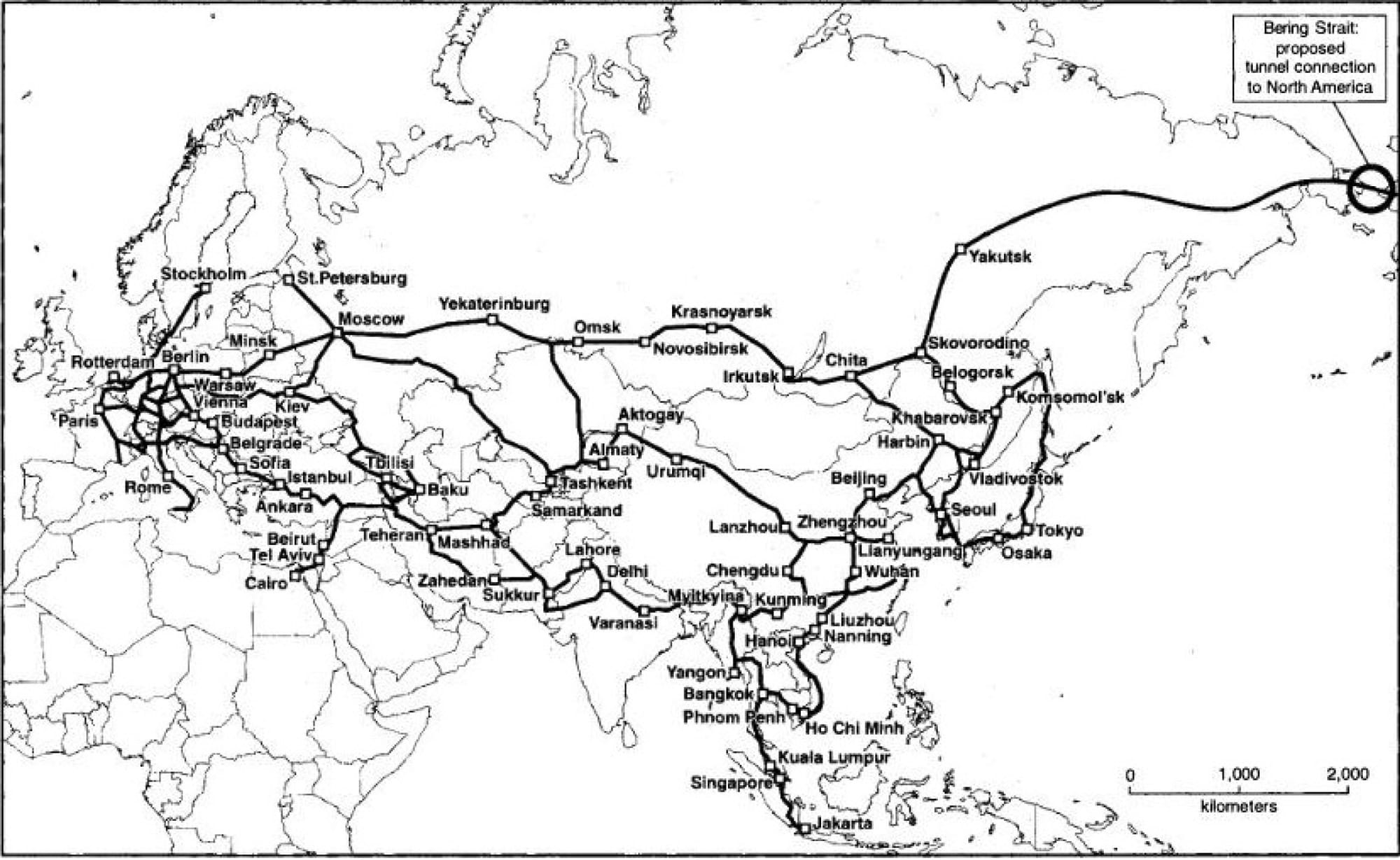
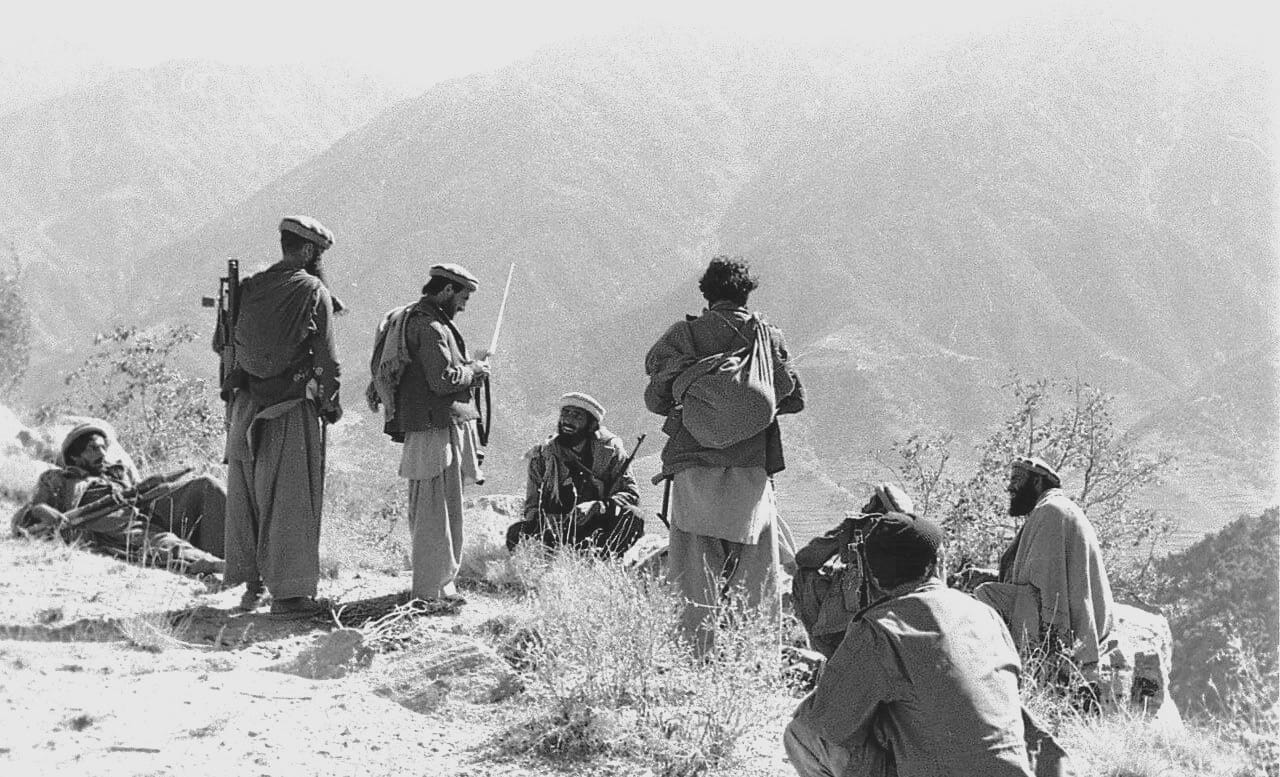
LaRouche: You probably have seen the report I did on the subject of China, which was published in the Executive Intelligence Review recently [Nov. 22, 1996]. And you may have seen the report I did on Russia, later, which is that same issue [Nov. 29, 1996]. Look at the map. In 1979, the same time things were happening in Iran, something was happening in Afghanistan, [which] is that the British, together at that time with Zbigniew Brzezinski as national security advisor for the United States, set up a trap for the Soviet Union in Afghanistan. I wrote about this at the beginning of 1979…. The purpose was, to set up a war in which they would trap the Soviet forces. This is an old idea. It comes from the 19th Century, when the British were playing, in Iran, a game against tsarist Russia, and Britain, the British Empire, was being played in Central Asia then. So, that’s the purpose.
Now, what they did, is they ran a secret war, at the same time that the British and George Bush were funding arms to Iran and arms to Iraq to keep the war going for a long period of time, they were running a secret war through northern Pakistan into Afghanistan, using drugs to fund the war. This operation was run by the Thatcher government and by George Bush, the Vice President of the United States….
So, what happens is, war is being used, weapons are being used, for secret wars, that is, under-the-table wars; trillions of dollars of weapons, hundreds of billions of dollars of illegal drugs, all being used to create destabilization. This is a strategic threat to Iran. It’s a strategic threat to India, a strategic threat to Pakistan, a strategic [threat] to China, and a strategic threat to Central Asia in the north: to Kazakhstan, Uzbekistan, and so forth. So, that’s the way we must look at it; what we’re dealing with here is, someone is deliberately, from outside the region, is deliberately orchestrating strategic operations by using covert methods of this type we’ve seen before, as in the Afghanistan wars of the 1980s.
Q: What would you decide if you were the President of the United States, for instance, in the case of Iran?
LaRouche: Well, very simply, that Iran is a nation-state; it has its own internal problems, it has its own interests. That the United States must, particularly because of its power, must look to the long-term interests of each of the states with which it deals, and must try to slide over short-term difficulties in terms of long-term interests, for the sake of long-term interests. The long-term interest of Iran is obvious: that it is the link from Central Asia and China to the ocean, and to the Caspian Sea. It is the link, through the Caspian Sea, to Teheran. It is the link into Turkey, provided they don’t have a Kurdistan destabilization of the Transcaucasus going on to stop that. It is the link into the Middle East. It is the link into Europe. So, therefore, Iran plays a vital strategic role in creating peace—and that’s the interest of Iran. Because if Iran wishes to exist, it must have some important function in respect to each of its neighbors, which is China, South Asia, the Middle East, Europe, and Turkey.
I’ve seen very good signs, I must say, the attempt of Prime Minister [Necmettin] Erbakan in Turkey to open up discussions with Teheran on a new level, to try to bring about stabilization in the Transcaucasia area; these are all very good things. And therefore, we must—we should, in my view (and of course this is my known policy), take what we proposed as the “Productive Triangle,” and what in China, is called the “Silk Road,” in which Iran is already cooperating, and say: The basis of our policy toward this region must be to bring together South Asia, Southeast Asia, China, the Middle East, together with Europe, and with outside U.S. support for the whole operation, into large-scale railway-centered development projects for economic cooperation, and thus, to permit the nations of the region to cooperate, not only for the benefits, but to create a second benefit: stability.
So, our object should be long-term, stable relations among states in the region, and that economic projects, which are in the interests, and security interests of these states, should be the basis of the United States’ policy. Our interest in this area is to have global peace. And, we have to build it.
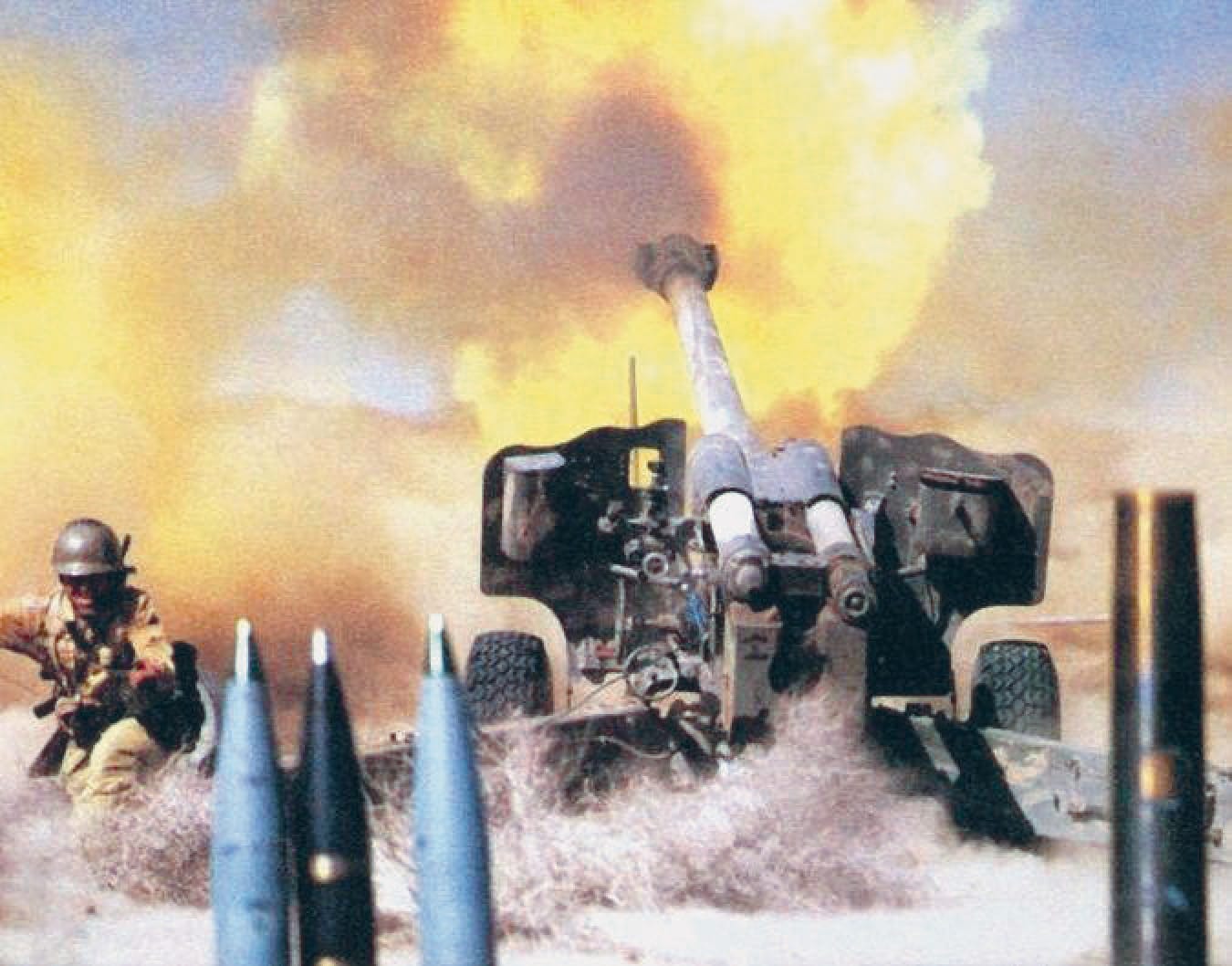
Q: The fact is that the United States has wanted to isolate Iran, in many ways, during the last years. But, as you see, it cannot succeed in this matter. Many of the politicians, for instance, in Europe, say that it is not a successful policy of America to isolate Iran.
LaRouche: But, the problem is, very simply, the United States is not a homogeneous entity. We have some very bitter fights. Let me just give you a map of the United States to give you some—a political map—to understand what this is: There are two major parties in the United States. Each party is divided, functionally, into two parties. We have the Republican Party, the old Republicans are almost—they’re vanishing. They’re still there, but they’re limited in number. The Republican Party has been taken over by a very savage, very dangerous force. In the Democratic Party we have a similar phenomenon: We have the traditional Democratic Party, which is one thing; but, there’s another side of the Democratic Party which is very much like this Republican Gingrich-bloc type. U.S. politics has always been, as it is today, a division between London and U.S. interests. There’s a faction in the United States, and these two, the Gingrich party and the second thing in the Democratic Party, are very much tied to the British.
If you look at the policy of the United States in the UN and elsewhere, you say, don’t look just at Iran, look at Sudan, look at Nigeria. You would have to say that the policy, foreign policy of the United States, in some sense, makes no sense, it’s insane. But yet, they continue to say, “This is our policy,” officially, even though many people in the government don’t agree with it. We have no issue with Sudan. We have no issue with Nigeria. There are people, states of Africa which are horrible, which are committing genocide on a vast scale, which are being used by London to cause genocide right now in Zaire, Rwanda, Burundi, and elsewhere. Yet, we [the U.S. government] have no objection to them.
So, the moral objections raised, or so-called moral, human-rights objections, which are raised in the case of Iran, in the case of Sudan, in the case of Nigeria, are totally fraudulent. Yes, every state has its own internal problems, but it isn’t—the character of the state is not these problems. Human rights are not what they should be, in any part of world, but one should not destroy nations on this issue. But, we do have nations, which are, in fact, morally outlaw nations. We don’t attack them. Why not? We support them.
And, that’s a fight we have inside the United States. It’s a fight which I’m engaged in, that issue. This is not a policy of the United States which is set, it’s a policy over which we in the United States have to fight. We have many features of our policies which, from the standpoint of vital U.S. interests, are insane, and I’m trying to change that.
Q: Let me just discuss this matter of America’s policies. They say they want to bring democracy to some countries, but at the same time, they are engaged in some other countries which don’t know anything about democracy. It’s a double standard, hypocritical; it applies two different measures.
LaRouche: The policy here is very simple. You have a faction which is centered on London which has its allies in many nations, including in the United States. George Bush, for example, is virtually a British agent—he’s not a British agent, but he’s virtually a British agent. Because—the way Margaret Thatcher talked about him, he was a little dog she led upon a string. He still is. As you know with the Enron operations in Iran, George Bush and his family are running all over the world, trying to steal every petroleum asset, every gold asset, every gold mine, every other kind of raw-materials asset they can. And, together with people like Mrs. Thatcher’s crowd—the same people with which you had experience before. So, you have this kind of policy.
But, the issue here is not what most people say, what newspapers say. The issue is, in London, with support of certain people in the United States and other countries, there is a grand strategic conception of how to organize the world. This includes destroying every existing nation-state in Eurasia, Africa, and the Americas. And, they say so, openly. The plan is, to find ethnic divisions within every nation-state…. In Africa, they plan to split Nigeria into several microstates. They plan to carve Sudan into several states, the largest territorial area in Africa. They plan to destroy southern Africa. I deal with these problems every day.
The issues are not these state issues; the issues are—what they say about states, is only a matter of convenience, in terms of their overall strategic policy, which has nothing to do with states as such.
Q: You see, there is always tension between Iran and America. What do you think, in the long term, will happen? Can Iran have more negative repercussions from this situation, or America, in the long term?
LaRouche: Don’t look at it from the standpoint of the United States, because the United States is involved in this from the standpoint of London. You have to go back to the 19th Century and look at British imperialism to understand the problem, which is that Iran is the largest nation, and the most potent and key nation in Central Asia. Therefore, if Iran is stable—as Iran demonstrates constantly—its natural interest is to reach out among its neighbors and find arrangements, cooperation, which is to Iran’s natural interest. It is this they’re opposed to.
They wish to see Iran destroyed. It’s that simple—for geographic, political-geographic reasons. It doesn’t matter who is there, what government is there, it’s the same thing. The problem here is, as I have to deal with this problem, I have to deal with a global strategic policy, not just an Iran policy, and the Iran policy is a product of that global strategic outlook. It is that global strategic outlook we have to defeat.
These people don’t really believe any of the things they say about Iran, they know better. They don’t believe what they say about Sudan and Nigeria, they know better; but, they say it because it suits their purpose, their strategic purpose, to do so. And, when Iran goes in and says, “Why do you abuse us like this?” “Why are you doing this to us?” “Why do you do this?” they laugh.
“Don’t you know what the game is about? It’s not about what you’re doing. It’s, we want to destroy you. We don’t care what you do.”
And therefore, we have to look at the strategic problem, the strategic policy which causes them to keep coming back to say, “Iran must be destroyed,” “Iran must be destroyed.”
First it was the Shah. Then it was Ayatollah Khomeini. Now it’s the present government. Whatever the government is in Iran, they are out to destabilize, not because they have something against that government as such, but because they want to destroy Iran; and, the reason they wish to do so has nothing to do with Iran as such, as its people; it has to do with the geographic position of Iran.
Q: Do you think they can succeed in this policy of destroying Iran?
LaRouche: Well, I don’t look at it that way. I look at it, again, on the strategic level. As you saw, we had recently a small disturbance in the financial markets. You’ve seen in the past year other disturbances in the financial markets. We’ve now come into a period of time, in which you must expect disturbances as great as that of this past week, or greater, as a regular event in various parts of the world. If you think—I’ve characterized these as like earthquakes, and you must expect many earthquakes: Some like 3 on the Richter scale, some like 5, some like 7, and a big one like 10, in which the whole system blows up. We are at the end of the existence of a certain kind of political system on this planet. Nothing can continue much beyond the weeks ahead.
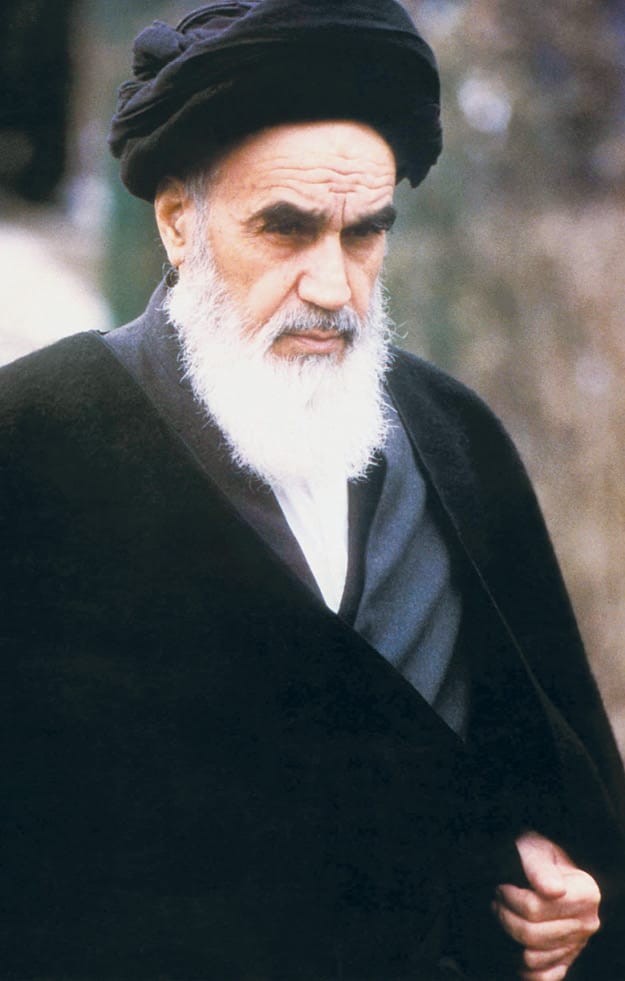
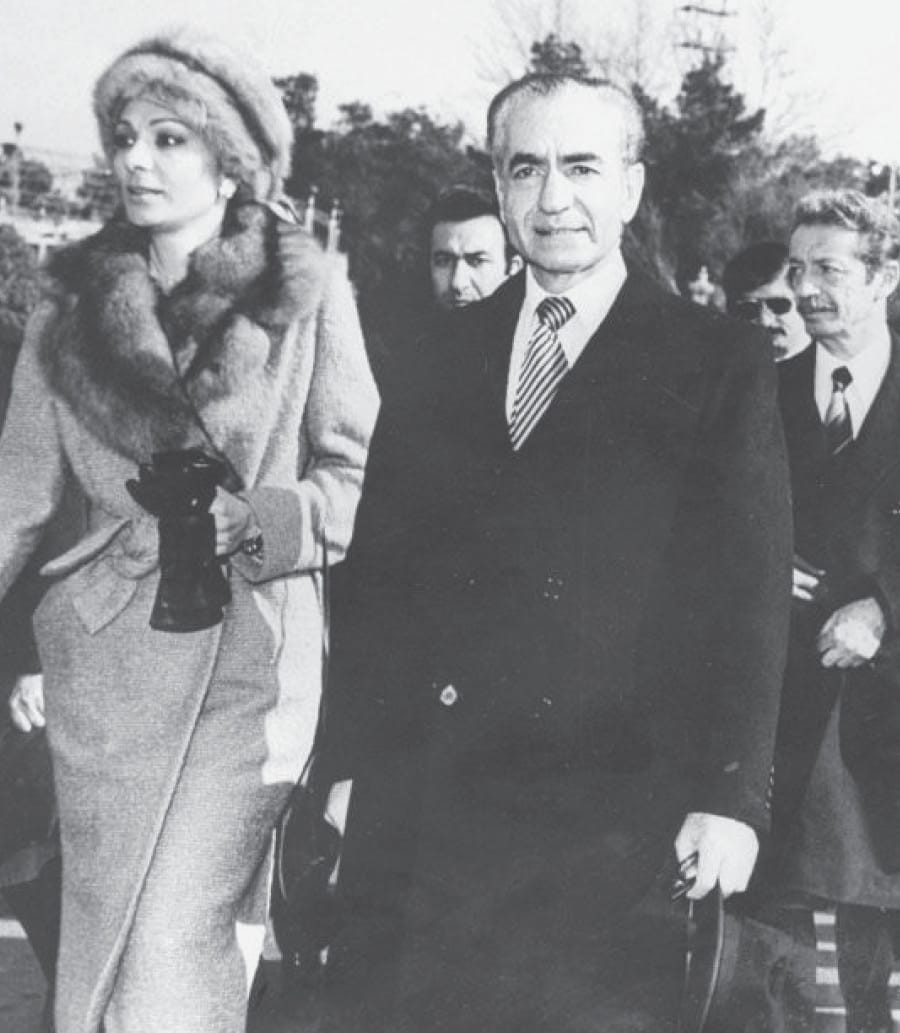
LaRouche: “First it was the Shah. Then it was Ayatollah Khomeini. Now it’s the present government. Whatever the government is in Iran, they are out to destabilize, not because they have something against that government as such, but because they want to destroy Iran.”
So therefore, what I’m concerned about, is a policy for survival of civilization on the planet, and my policy is based on confidence that, if I can get the United States to enter into agreement with China (which I hope I’m on the way to doing) on the Silk Road and related policies; if what [India’s President Shankar Dayal] Sharma and [China’s President] Jiang Zemin discussed in Delhi, two weeks ago, if that can also be in concord; if the oil pipeline agreement involving Pakistan and Iran is put through; and, if policies like that can be accepted as the alternative to a general world depression, then obviously the problem can be solved. If we do not solve the problem, then this whole planet would go into a new Dark Age for an extended period of time.
We’re not talking about something 20 years from now, five years from now—I talked about this many years ago and it was 20 years away. It’s now happening. What you see in Russia—Russia is going to explode. What you see in China. China’s going in a certain direction it cannot change without. The Middle East is on the edge of exploding, again, because of this business. Africa is on the edge of exploding. You have, you look through Europe: In every country in Europe you have political mass strikes—obviously, in Belgium; in France; you have something like that in Germany; you have a mass strike in Serbia against the Milosevic regime—even though this is partly run by NATO and related people, it’s real. You have a mass strike movement in Italy. So, if you look all over the map of Europe, and other parts of the world, you’ll see that there’s a popular eruption which nobody can suppress, which is political in character. It’s not on any one issue. It’s a general discontent with governments and parties, a complete lack of confidence, which erupts in the people in a kind of spontaneous way.
So, we’ve come to the end of a whole period of politics, and those people who are talking about December 1996 politics continuing through 1997, into 1998, they’re living in a fantasy land. This order of things is not going to continue. The world is going to blow up, and the question is: Do enough of us have the influence and the policies necessary, to rebuild the world without going into a Dark Age?
So that, one should not say, “Is Iran going to be subjected to this over ten years or so or more?” No. It won’t happen that way. Because we’ve come to the end of a whole period of history. In my terms: 400 years of history in European civilization have now come to an end. It’s merely a matter of weeks, or, maybe, a few months, before the decisive crisis will erupt.
And so, all policies are going to have to change. For example, you will see a pattern—immediately in progress now of breakup of the present governments of Europe and the United States. What is in progress in Germany, in Britain, in France, in the Netherlands, in Italy, and other countries, and in the United States, is a process of breakup of the existing political parties in their present form. This will occur very rapidly….
So, in any case, I just don’t think we should worry too much about the exact details of present policy. We should analyze the policy, understand what’s behind it, but, it’s not going to continue. One way or the other, there will be radical changes in policy very soon. And, our job is—among various nations, people who are concerned among various nations—is to discuss what is the alternative policy to the present policy. We must create an international constituency by a dialogue among various nations, to create a new policy. Let’s not fix up the old policy—create a new one, a new era.
Q: In this case, do you see a controversial or conflictual political situation between America—the United States—and the European countries? Most of the European countries do not want to accept the political isolation of Iran, and they are against this policy. Do you think that they can reach an agreement in this case of Iran?
LaRouche: Oh, yes. Don’t mistake what’s going on, nor is it so simple. For example, Germany is the one country in Europe, whose vital interest compels it to attempt to defend good relations with Iran and China. Germany is the one country in Europe—despite Germany’s other policies—which will defend the cooperation of China and Iran and other countries, which will be favorable to the involvement of India in new cooperation with Pakistan and Iran—as the pipeline agreement here reflects. In Italy—if Italy had a government which could express its natural interests, you would find sympathy for a similar view. In Eastern Europe, I think you have, but with countries which are almost destroyed, you will find a similar attitude. However, in France—oh, probably in Spain, too—but in France, or in Britain, no. Presently, in the British and French ruling establishments, there are no friends of Iran or China.
The United States is different. What’s in process is not an actual conflict between the United States and Europe. There’s a conflict between the United States and Britain. The conflict is this: Every leading banker and financial center in the world knows that the present international monetary system is doomed to early disruption, complete breakdown. They are aware that nothing can be done to save the present IMF [International Monetary Fund] system. It cannot be done. By the end of next year, it’ll be gone. The question is, when the crash comes—the big crash, which dissolves the system—what will happen? There’s only one nation-state on the planet which could lead a group of nations in creating a new monetary system: That is the United States. Forces in Britain do not wish the United States to do that; because they want a different world. Therefore, what the British have done is, they have done two things: Using, originally, [the late French President François] Mitterrand, then Chirac—and he knows every time they don’t like Chirac’s politics, they send him a message by the French subway system; a bombing of the French subway system occurs every time the British don’t like Chirac’s politics. This time it was Africa.
So, you have an Entente Cordiale which was established between the [UK Prime Minister Margaret] Thatcher government and Mitterrand, which has been revived with the aid of subway messages with Chirac—who is a bit of a coward, who is a military veteran, therefore, a professional coward. So, what’s happened is that the British have moved to create, since 1989, a super-regional government in Europe, through the Maastricht agreement, which the British themselves have not decided to enter, which would become a regional government, which will try to use Europe against the United States.
But, that’s not a real conflict between the European continent and the United States—there is no real conflict. There’s a commonality of interest, actually, objective interest, between the states of Europe, continental Europe, and the United States. So, no, the problem is of that nature, that it is, the whole system is collapsing, the Silk Road and related development is the only possibility of economic recovery of the world; and, therefore, what China represents, and China’s cooperation with Iran represents, and possible cooperation with India and Pakistan represents, is the only hope of general revival of the world economy. So, the vital interest of the United States, and the vital interest, objective interest, of Europe, is to use the tool-making capacity of the United States and Europe to assist China, Iran, and other countries in this development process. And therefore, what the present policy is, is contrary to the vital interests of the United States, as well as Europe.
Q: It seems that some European countries are interested in being more involved in the Middle East countries, and they have taken some initiatives recently which show that they want to be more active in the region. For instance, releasing of prisoners between the Palestinians, the Palestinian nation, and Israeli soldiers, and with the Turks, and so on; it shows that, for instance, Germany wants to be there in the region more. Do you think they can succeed or will they have a conflict with the United States in this situation?
LaRouche: It’s [in] the organic interests of Germany—exactly that kind of policy. Germany is a tool-making nation. It relies on earning its imports, by exports, from its tool-making capacities. The Middle East and Iran are part of an area of development, of people who are at very high levels of skill, like the Palestinians, or in the Iranian population, there are people at a high level of skills; which are connected with India, which will cooperate in technology, which has a tool-making capacity of its own. China has limited tool-making capacity, but some.
So therefore, there’s a natural interest of Europe, in its tool-making industry, to establish relations with developing countries of these kinds of projects and also lots of small development. It’s in their natural interests. For example: In terms of energy projects—all kinds of projects which Germany has shown interest in, for example with Iraq, traditionally. This is natural. This is also the natural interest of the United States. The problem is, if you have a faction in the United States, as typified by Bush, or certain people in the Republican Party (Democratic Party, too) who say, “We must go with our British ally,” then, as long as the United States is saying, “We must work with our British ally”—which is why I’m upset about the Madeleine Albright appointment, nomination, because she is typical of this pro-British attitude. And, she’s often been at odds with the President on policy. The President’s policy on the Middle East and on Middle East peace, on Sudan, on Nigeria, and so forth, is far different than Madeleine Albright’s policy.
But, this is the division between the patriotic section in the United States, the nationalist section, and this pro-British section. As long as the United States has a President, or has a government or a majority of the Congress (which the Republicans are) which is pro-British, then the United States’ policy tends to follow British policy, as it did in the Thatcher-Bush case; or, as in the—even to a large degree—in the Reagan faction’s relationship. If Clinton were free from the pressure he’s under—Clinton is essentially a patriotic President, a nationalist; he’s not pro-British. Even though the Vice President is very pro-British, Gore. So, Gore is no friend of Iran—so, that’s a problem. The President is more flexible.
But, if the national interest of the United States is asserted, we don’t have this problem with the United States. The question is: Who comes to power in the United States?
Q: Do you think there could in the future be a conflict again between Europe and the United States? Do you see that, any serious conflict?
LaRouche: No, there’s not really a conflict. The idea that there’s an objective interest that causes a conflict between Europe and the United States? No. It doesn’t exist. That is manufactured. That’s out of the truth. There are some political forces on both sides who will say that. For example: Jacques Chirac, whenever he gets a message by way of the Paris subway from London, will always be anti-American….
So, certain British forces will attack the United States, and they have their dogs on the ground in Europe, but there is no objective conflict between the United States and Europe on these questions. It’s purely a superficial political business, which comes and goes, which has a reason for it, but, I know, there are many people who say that Europe has an objective interest which is contrary to the interest of the United States—and it’s not true. That is a mythology, but it’s a very popularized one.
Q: Mr. LaRouche, how do you evaluate relations between Iran and the U.S.A. in the future?
LaRouche: Well, I think that we’re doing something about that right now, right here, in this discussion.
Q: Do you think that there will be real diplomatic relations between Iran and the United States after the recent elections in the United States?
LaRouche: No. I think we have to go through another process, which we’re doing right now, with this discussion; and, my putting myself in this position with Iran TV, will open certain eyes and so forth inside the United States, which I think will contribute to that end, for some people.