The following is an edited transcript of the keynote by Helga Zepp-LaRouche to Panel One of the May 30-31 Schiller Institute Berlin conference, “The End of 500 Years of Colonialism: For a Dialogue of Civilizations—The Urgency of a New Global Security and Development Architecture.” Mrs. Zepp-LaRouche is the founder of the Schiller Institute and initiator of the International Peace Coalition. Subheads have been added.

Your Excellencies, ladies and gentlemen, dear friends of the Schiller Institute! It is a great pleasure for me to welcome guests from so many countries, but also from Germany—and thus, I am sorry to have to add a significant fly in the ointment to this joy—a country that could very soon, 81 years after the end of World War II, find itself at war again; for the policies of the leading institutions in Germany, as well as those of the EU and the states of the so-called “Coalition of the Willing,” do not seek peace, they do not seek dialogue or diplomacy, but simply assert: The coming war with Russia is inevitable. That is why we must initiate a massive rearmament; the German army must become the strongest in Europe. This war will break out by 2029 at the latest, but it could happen even sooner; military historian Sönke Neitzel even claims that the Summer of 2026 will be the last Summer of peace. Given how the situation is currently escalating, we must first get through the Spring.
“A global war may have already begun,” said Sergei Naryshkin, director of the Russian Foreign Intelligence Service (SVR), describing the international situation the day before yesterday at the Moscow Security Forum. “Expert circles are seriously discussing at what exact point a global war will begin—or has already begun—and whether humanity has a chance of surviving it.”
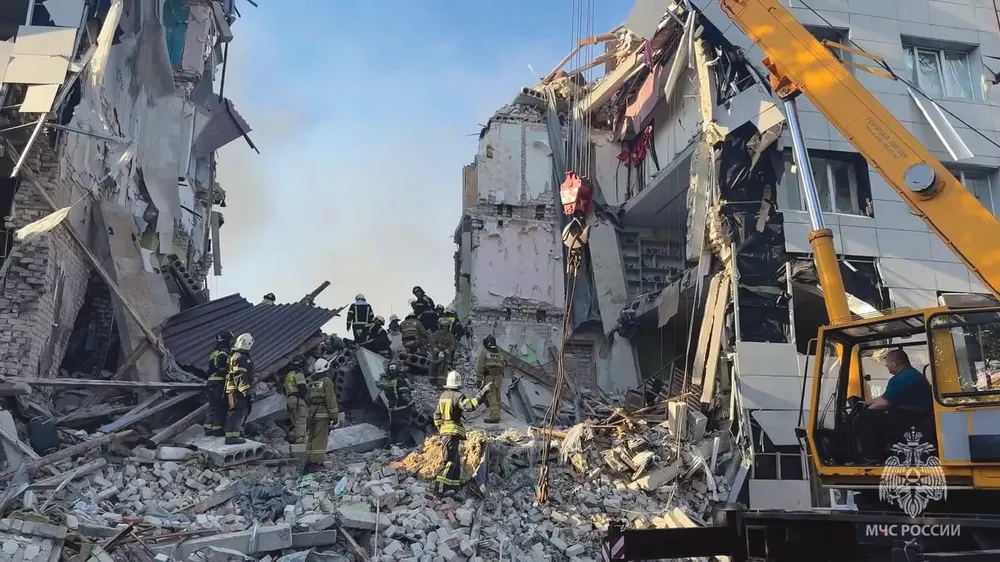
Events are unfolding rapidly: On May 22, a total of four salvos of Ukrainian drones struck a dormitory at a vocational school in Starobelsk in the Lugansk region; the attack killed 21 students aged between 14 and 19 and injured another 63, including many who were training to become elementary school teachers. Kiev claimed that the building was a training center for Russian drone pilots, prompting Russian authorities to invite a total of 50 journalists from over 20 countries to visit the site and verify that there were no military facilities anywhere within miles of the area. This [attack] clearly constitutes a violation of the 1949 Geneva Convention. On the night of Saturday, May 23, into Sunday, May 24, Russia subsequently carried out a fierce missile attack on military and industrial targets in Kiev and the city of Belaya Tserkov, in which, among other things, the hypersonic and nuclear-capable Oreshnik, the hypersonic cruise missile Zircon, as well as several dozen Iskander ballistic missiles, and around 700 drones, were fired.
European leaders from EU foreign policy chief Kaja Kallas, from European Commission President Ursula von der Leyen and French President Emmanuel Macron to German Chancellor Friedrich Merz, unanimously condemned “the reckless escalation,” while the media quickly downplayed the situation, claiming the Oreshnik was not all that effective and served only to spread fear; yet neither they nor the German mainstream media even mentioned the attack on the vocational school as a trigger, [or did so] at best in a half-hearted aside.
‘The Last Straw’
On May 25, the Russian Foreign Ministry issued a statement declaring that this attack on the school was “the last straw,” that an unprecedented number of military strikes against decision-making centers in Kiev were imminent, and that diplomats should leave the city and Ukrainian citizens should stay away from these centers. In response, the Ukrainian Foreign Ministry informed foreign embassies that the threat level was no higher than in previous years and months, that these were Russian attempts at blackmail, and that diplomats should remain. The EU Ambassador to Ukraine, Katarina Mathernova, posted on Facebook that the diplomats were not going anywhere, and that the Russian Foreign Ministry’s statement was a masterpiece of hypocrisy.
Where will this end? With Western support, Ukraine is crossing one of Russia’s red lines after another; Russia warns of the consequences of these actions; the West downplays these warnings, claiming that Russia has no red lines, etc. Russia’s Deputy Foreign Minister, Sergey Ryabkov, stated on May 26 at the aforementioned International Security Forum in Moscow, ipso facto: “The chances that the nuclear powers will enter into an armed confrontation with potentially catastrophic consequences are greater.”
One must realize that we are talking here about the complete annihilation of the human race, for the attack on the school in Starobelsk is merely the latest escalation in a series of aggressions and crossings of red lines—which, during the Cold War, would have been regarded as NATO’s entry into the war, ultimately concerning the very existence of the Russian Federation. First, the Kursk offensive, during which Ukrainian troops advanced 35 km into Russian territory from August 2024 to March 2025. Then, on June 1, 2025, the so-called Operation Spider Web, in which Ukraine launched an attack from deep within [Russian] territory against four military airfields that are part of [Russia’s] nuclear triad.
Then, on the night of December 28-29, 2025, the attack with 91 long-range drones on President Putin’s residence in Valdai, which the West dismissed as a staged event, but for which Russia has presented video evidence. In particular, the last two of these three attacks could already have led Russia to use nuclear weapons, based on its nuclear doctrine updated in November 2024, as this has been a proxy war by NATO against Russia from the very beginning; none of the aforementioned Ukrainian operations could have taken place without technical assistance from the United States, the UK, and NATO.
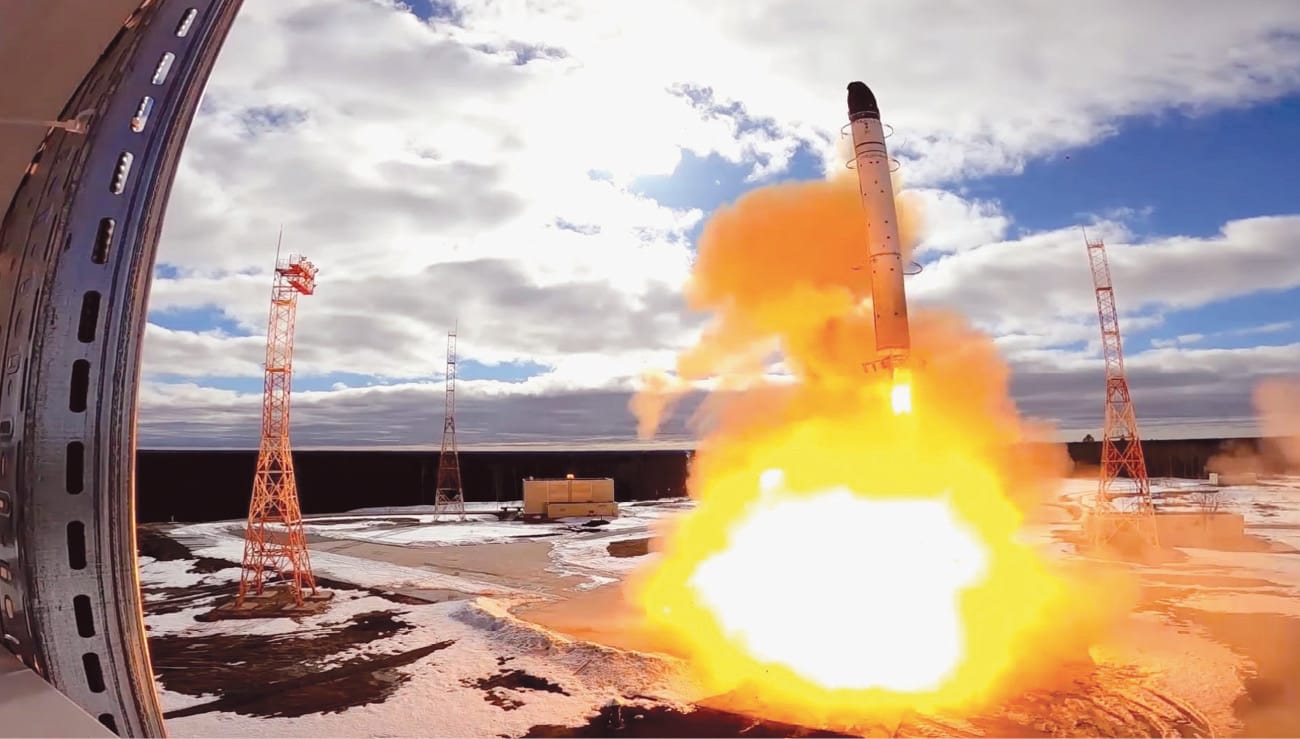
The possibility of using nuclear weapons has long been on the table, not least due to the joint exercise of the nuclear forces of Russia and Belarus from May 19 to 21, which, according to the Russian Ministry of Defense, involved the “highest state of readiness” for nuclear weapons. Likewise, the deployment of the most powerful combat missile ever developed, the Sarmat—a maneuverable hypersonic glider capable of flying 35,000 km with a variable trajectory and which cannot be intercepted by modern missile defense systems, is imminent.
Until recently, one could have dismissed Sergey Karaganov’s threats—that only the use of tactical nuclear weapons could bring Europe to its senses and prevent a global nuclear war, and that by continuing their aggression, they risk the complete destruction of Europe—as an extreme position. But there is now a broad discussion across the entire spectrum of the “expert community” and among politicians, about how to stop the forces behind the pro-Ukrainian war effort, namely, the EU and NATO, and, ultimately, the U.S. as well. We should be absolutely thrilled that the Russian President’s name is Putin.
It should be clear to any first-grader that Europe cannot win a war against the world’s strongest nuclear power. What in heaven’s name, then, motivates the forces driving the current massive rearmament?
German industry is in free fall, and traditional companies are trying en masse to avoid insolvency by switching to defense production, in a kind of collective psychosis fueled by the still-secret Operation Plan for Germany and the almost daily propaganda of German Defense Minister Boris Pistorius, who, to be honest, should call himself “Minister of War” just like his colleague U.S. Defense Secretary Pete Hegseth! The alleged saving of jobs through this arms buildup threatens to become a self-fulfilling prophecy of the coming war. A study by the University of Mannheim led by Prof. Tom Krebs, concludes that investments in arms represent “a risky bet with a low macroeconomic return.” In fact, financing through ominous “special funds” with no upper limit is a rehash of Hitler’s Economics Minister Hjalmar Schacht’s rearmament via Mefo bills, which were actually intended to have a term of only three to six months but were repeatedly extended by government decree, because the regime relied on concealment and subsequent war financing. Has the entire German establishment forgotten German history so thoroughly that no one notices this parallel?
I fear the reason for this flight into a renewed arms-race frenzy is obvious. The whole world is openly discussing how the West, in its attempt to impose a unipolar world order under its dominance after the end of the Cold War, has failed spectacularly.
The Lost Opportunity of 1989
The political elites of the West bear the heavy blame for having missed the unique historical opportunity of 1989—the fall of the Berlin Wall and the end of the Cold War—to establish a peace order for the 21st Century. The Russian leadership acted with extraordinary generosity in agreeing to German reunification and even to a reunified Germany’s membership in NATO—albeit with the stipulation that no foreign troops be stationed on the territory of the former GDR.
Today’s warmongers are counting on us all suffering from political amnesia, but we must not allow the attempt to rewrite history to succeed. Hundreds of documents, now available for review at the U.S. National Archives, the U.S. State Department, the Pentagon, presidential libraries, and various national archives and university libraries in several countries, prove a veritable flood of security assurances against NATO’s eastward expansion—“not an inch”—which were given to Soviet President Mikhail Gorbachev and Foreign Minister Eduard Shevardnadze by U.S. Secretary of State James Baker and President George H.W. Bush, by CIA Director Robert Gates, by German Foreign Minister Hans-Dietrich Genscher and Chancellor Helmut Kohl, French President François Mitterrand, UK Prime Ministers Margaret Thatcher, John Major and Foreign Secretary Douglas Hurd, and NATO Secretary General Manfred Wörner.
These documents clearly show that the Russian complaints of having been deceived are entirely justified. Former CIA Director Robert Gates has publicly admitted that Gorbachev and others were deliberately led to believe that NATO would not expand eastward.
Is NATO’s sixfold eastward expansion and the deployment of offensive weapons systems on Russia’s border—which amount to a de facto reverse Cuban Missile Crisis for Russia—supposed to have been no provocation? The Helsinki Final Act explicitly established the principle of indivisible security, but all of Russia’s repeated warnings regarding the deployment of so-called defensive missile systems in Poland and Romania—which can be converted into offensive systems within hours—were ignored.
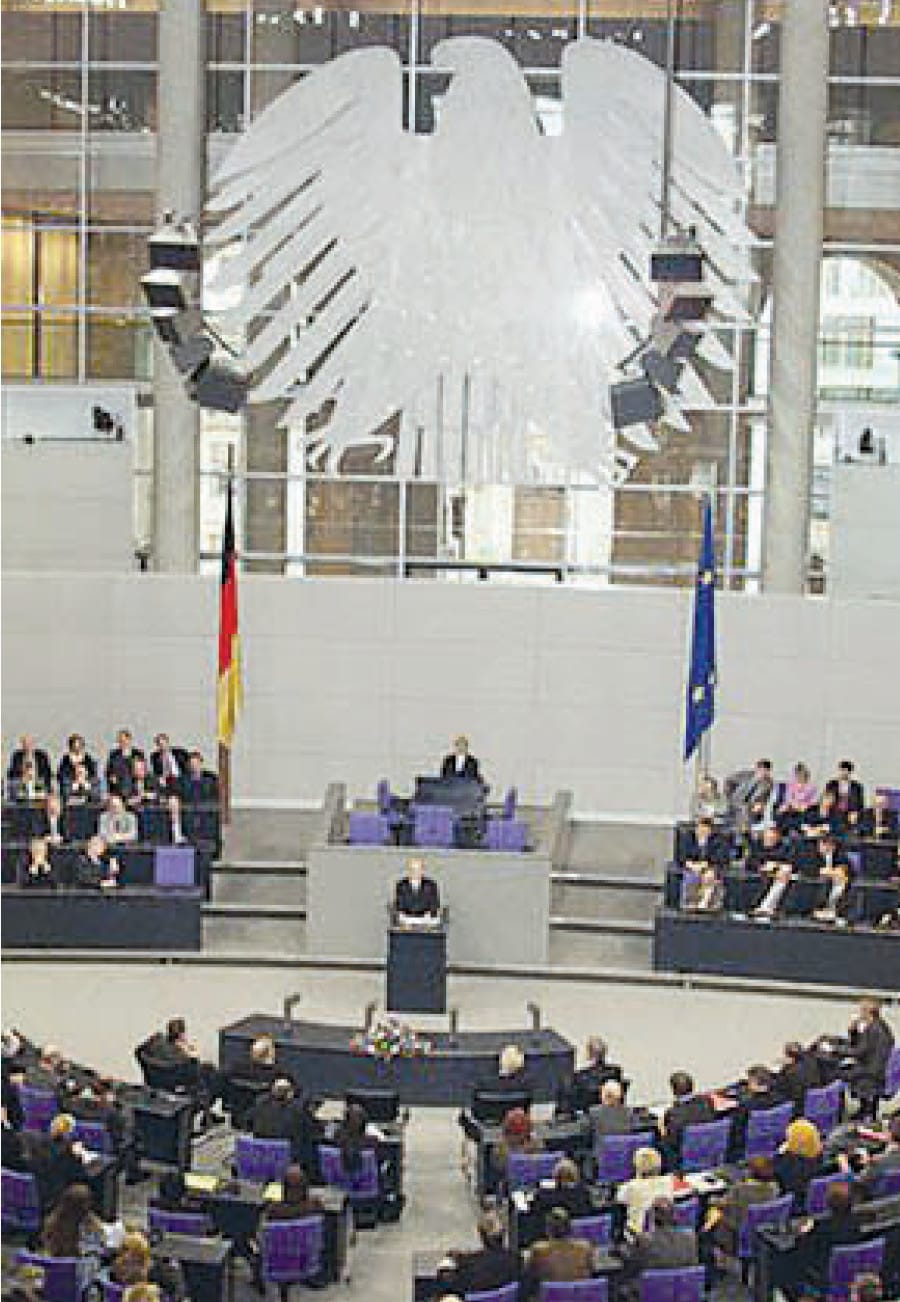
In his 2001 speech to the German Bundestag, which Putin delivered partly in German, he was still optimistic about future cooperation in Europe. By the time of the attempted Orange Revolution in Ukraine in 2004, at the latest, Russia had become aware of NATO’s geopolitical objectives. At the 2008 NATO summit in Bucharest, German Chancellor Angela Merkel and French President François Hollande opposed President George W. Bush’s demand for Ukraine and Georgia to join NATO, because they knew that this would mean war between NATO and Russia. Professor John Mearsheimer wrote that “the Russian invasion of Georgia in August 2008 should have dispelled any doubts about Putin’s determination to prevent the accession of Georgia and Ukraine.”
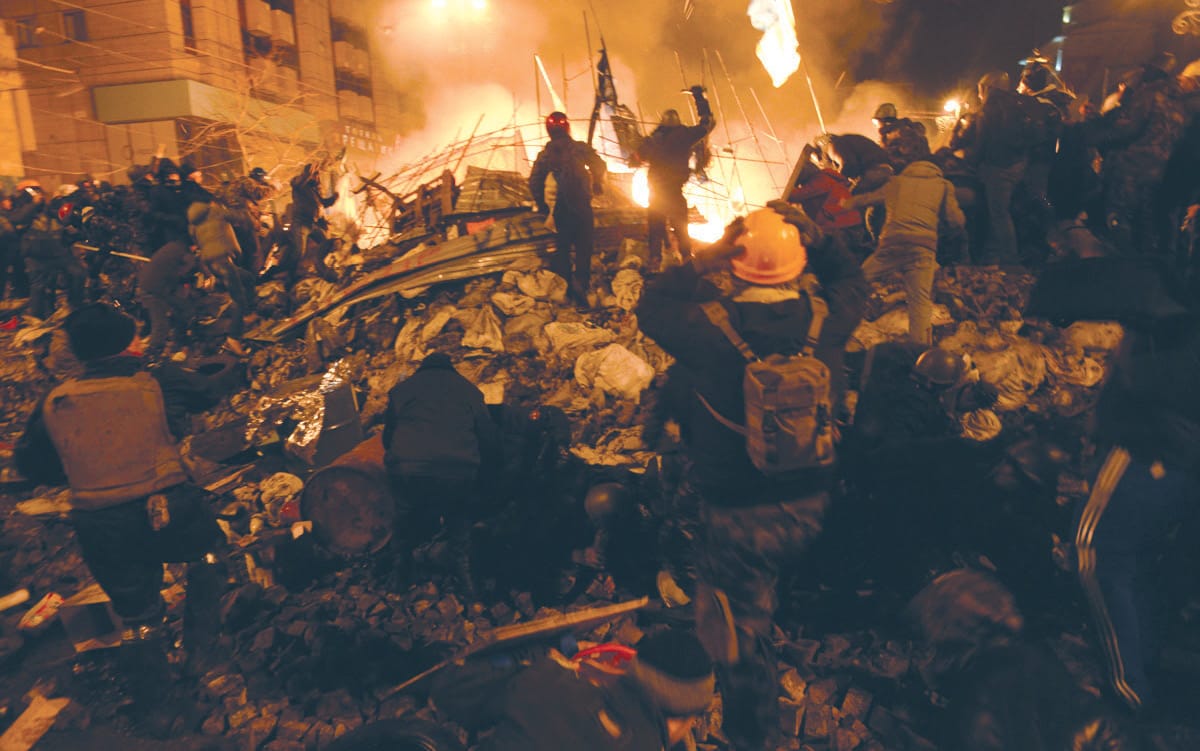
The 2014 Maidan coup was a Western-backed coup—Victoria Nuland boasted that the State Department had spent $5 billion on NGOs—whose primary task was to prepare the ground for further color revolutions. Nuland’s infamous “F__ the EU” phone call with U.S. Ambassador to Ukraine Geoffrey Pyatt also remains unforgettable. On February 21, 2014, then Foreign Ministers of Germany, Frank Walter Steinmeier; Poland, Radosław Sikorski; and France, Laurent Fabius guaranteed an agreement with Ukrainian President Viktor Yanukovych that was supposed to enable a peaceful resolution of the conflicts with the opposition; exactly one day later, the coup took place with the involvement of various intelligence agencies, all of which, Steinmeier at the very least, must have been aware of. There was no longer any mention of the so-called guarantee. A year later, Merkel took the lead in negotiating the Minsk II agreement, which concerned the autonomy of the Donbass; both Merkel and Hollande later admitted that they had done so only to give Ukraine time to carry out a comprehensive rearmament.
In a 13,000-word article published on March 31, 2025, The New York Times released the findings of a year-long investigation based on 300 interviews, documenting that the U.S. had been directing the war in Ukraine from the Clay Barracks in Wiesbaden since at least mid-April 2022. This fully confirmed that the war in Ukraine is a classic proxy war between NATO and Russia. And now, as a consequence, Germany is on the brink of war with the world’s most powerful nuclear power.
One could argue that Germany’s lack of sovereignty ultimately made it a victim of Anglo-American policy; but, at the very least, [because it joined] the so-called “Coalition of the Willing,” and has sought to undermine Presidents Putin and Trump’s attempts to bring the war in Ukraine to an end and normalize relations between the two strongest nuclear powers, this sounds like the defense of a teenage parricide who asks the judges for mitigating circumstances, pointing out that he is, after all, a minor.
The immediate threat of war in Germany and throughout Europe, however, is merely a consequence of the elites’ hubris in seeking to establish a unipolar world order based on the Anglo-American special relationship after the end of the Cold War.
Overcoming 500 Years of Colonialism
The policy of regime change, color revolutions, unilateral sanctions, and wars of intervention has led to a massive boomerang effect, as a result of which the nations of the Global South are now determined to finally overcome the 500-year period of colonialism and realize their inalienable right to develop into fully developed modern industrial nations.
Even if the West’s official narrative will indignantly reject this, it is ultimately the determination of the Global Majority to establish a new, just world economic order that is driving the geopolitical wars against Russia and Iran—wars that are ultimately aimed at destroying Russia and China, the two pillars of the new world order currently in the process of development.
But now President Donald Trump, who actually began his second term with the promise of being a President of peace, has been waging—together with Israel—the second unprovoked war of aggression against Iran for the past three months. Neoconservative Robert Kagan characterized the outcome weeks ago as a far more far-reaching defeat for the U.S. than those in Vietnam, Iraq, or Afghanistan. Indeed, we are witnessing the world order—as it was established after World War II and then again after the end of the Cold War—in the process of disintegration.
Trump has officially declared international law invalid; the security architecture based on the presence of U.S. military bases in Southwest Asia lies in ruins; NATO and the EU are crumbling; and in trans-Atlantic relations, the elites—whom the otherwise culturally uneducated Samuel Huntington once aptly described as “dead souls” and “Davos men”—and who have since become notorious as the “Epstein Class”—are trapped in their “socio-cultural bubble,” as Huntington also termed it, in which they have completely lost touch with the interests of the majority of the population, a fact reflected in their poll numbers.
Instead of reacting to the failure of the liberal economic model with a desperate attempt to cling to power through rearmament and war preparations, we in the West must instead correct the inherent systemic flaws in our current economic and financial model. When President Nixon replaced fixed exchange rates with flexible exchange rates on August 15, 1971, Lyndon LaRouche, an American statesman and economist, and my late husband, made the prophetic prediction that a continuation of the now-adopted liberal course would necessarily lead to a new systemic crisis, a depression, and a new threat of war, unless a completely different economic system were implemented. LaRouche updated this forecast in the following decades, each time a further step in liberalization and deregulation was taken; the precision of his analyses can be verified in hundreds of articles and videos. But he did not stop at analysis; each time he also presented concrete programs, not least his Four Laws for overcoming the global economic and financial crisis, which are contained in my Ten Principles: A global Glass-Steagall Act, the creation of national banks in every country, the establishment of a new international credit system designed primarily to ensure the development of the Global South, and a massive increase in the productivity of the global economy through targeted investments in nuclear fusion and other future technologies, as well as space exploration.
There is actually a simple way out of this existential crisis: Starting with sovereignty in our own minds, we in the Western nations must reach out to the nations of the Global South and signal that we support their attempt to establish a new, just world economic order and thus wish to cooperate as partners on an equal footing.
China has just emphasized, in a special session of the UN Security Council, the necessity of strengthening the UN system and fostering a sense of community for an undivided future. President Xi Jinping’s four global initiatives, particularly the Global Governance Initiative, are in essence very much in line with what the Schiller Institute has been advocating for many years through the idea of a new security and development architecture that represents the interests of every state on this planet and the Ten Principles. Key components of this include the Expanded Oasis Plan for Southwest Asia and joint cooperation in implementing the Africa 2063 Plan.
But the most important thing is that we in Europe and America rediscover our soul—America, as it was founded 250 years ago as an anti-colonial and anti-imperialist bastion of freedom. And we in Europe must rekindle in our hearts and minds the love of humanity that was self-evident to Dante Alighieri, Joan of Arc, Leibniz, Schiller, and Beethoven. We must send a clear message to Russia, to China, to Africa, indeed to the whole world, that we neither intend to perish in a Third World War nor allow our magnificent cultural tradition—the School of Chartres in France, the Andalusian Renaissance in Spain, the Italian Golden Renaissance, or the Classical period in Germany, to name but a few, to continue to fade into oblivion; rather, we make a sacred commitment to let these pearls of human culture, through a dialogue of cultures and civilizations, together blossom into a new renaissance of humanity.