July 26—The strategic situation threatens to spiral completely out of control in the short term due to two escalating regional wars—in Ukraine and the Middle East—potentially resulting in a global economic depression within weeks or, at most, months, or perhaps even leading in the short term to a nuclear Third World War. This existential concern is shared by a large portion of the population in the so-called “collective West,” yet the political establishment of the West—with few exceptions—makes not the slightest attempt to bring the war in Ukraine to an end through diplomacy and negotiation. While such efforts do exist regarding the war against Iran, they currently lack the necessary programmatic approach and, consequently, the requisite impact.
In the so-called Middle East—or more accurately, Southwest Asia—the United States is sinking into a strategic quagmire through its repeated bombing campaigns. These campaigns offer no prospect of a winner but will bring unspeakable suffering to millions of civilians across many countries, further impoverish the world’s poorest, trigger new refugee crises, and—in the worst-case scenario—escalate into a global war. This two-times unprovoked war of aggression against Iran has already fundamentally altered the balance of power in the region: the world’s strongest military power—the United States—and Israel, also an extremely powerful military force, have failed to defeat Iran, a nation of medium strength whose resilience was clearly vastly underestimated. The U.S.’s unilateral withdrawal from the Memorandum of Understanding signed on June 17 was likewise unprovoked, given that Article 5 of the MoU had officially granted Iran control over the Strait of Hormuz. Thus, whether they admit it or not, the U.S. has now lost the war with Iran—adding it to the list that includes Vietnam, Afghanistan, Iraq, and Syria, alongside various other retreats.
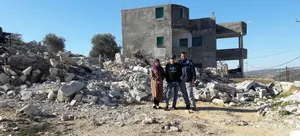
The Gulf Cooperation Council states will have to draw the inevitable conclusion that the presence of U.S. military bases on their soil did not guarantee the promised security, but instead turned them into targets for Iranian retaliatory strikes. Recent mutual attacks on civilian infrastructure—and desalination plants in particular—threaten to potentially depopulate these desert nations. Kuwait relies on desalinated water for approximately 42% of its needs, the UAE for 52%, Bahrain for 68%, and Qatar for 77%. Without these desalination plants, these states are essentially deserts where no one can live.

After 13 nights of merciless American attacks on military and civilian installations in Iran, there is now a pause, likely due less to the allegations of war crimes than to a shortage of the U.S.’s ammunition—something one cannot say without risking imprisonment, according to U.S. Ambassador to the United Nations Mike Waltz—and probably also protests from Gulf States fearing for their survival. Furthermore, the renewed fighting between Yemen and Saudi Arabia has demonstrated the consequences for the global economy should the Bab el-Mandeb Strait be blocked; such a scenario would force an additional 12-15% of global trade and roughly 30% of container shipping to take the significantly longer detour around Africa’s Cape of Good Hope.
The Sword of Damocles Looms
Despite the daily fluctuations by U.S. President Donald Trump, regarding the likelihood that this arbitrarily instigated war could still be ended by a “deal,” the Sword of Damocles continues to hang over everyone’s heads. Namely, the risk that the advice of certain warmongers to invade Iran with U.S. ground troops might be heeded—leading to massive shipments of “body bags” of dead soldiers back home, and, as a last resort, the use of tactical nuclear weapons to eliminate the Iranian nuclear facilities.
If this inhumane and desperate act of madness were to occur, it would immediately escalate beyond the region. Even though Iran has no formal military assistance pact with any other country, it is hardly conceivable that Russia and China would stand idly by while nuclear weapons are used against Iran. Annie Jacobsen, American author of the 2024 bestselling book Nuclear War: A Scenario, emphasized in an interview this week that anyone at the Pentagon who has considered this scenario knows that a nuclear war, however it begins, can only end in one way: with total, apocalyptic annihilation.
It is an almost macabre speculation about which war is more dangerous: the one against Iran or the one in Ukraine, which is in reality a complete proxy war by NATO against Russia.
General (ret.) Harald Kujat, former Inspector General of the German Armed Forces and Chairman of the NATO Military Committee, recently warned in the Swiss newspaper Zeitgeschehen im Fokus (Current Events in Focus), quoting the actuality of quotes of former Chancellor Helmut Schmidt, that the situation was worsening day by day, just as it had been in August 1914. He accused Western political leaders of never having attempted to prevent the war through diplomacy, but on the contrary, of having done everything in their power to prolong it and of providing financial, political, and material support.
Kujat ruthlessly criticizes the Western governments, and especially the German government: He criticizes the multiple transgressions of Russia’s absolute red lines, such as Ukraine’s attacks with NATO and/or U.S. support against strategic targets of Russia’s nuclear triad; the German government’s attempts to promote Ukraine’s NATO accession, another absolute red line for Russia; and, more generally, NATO’s de facto participation in Ukraine’s war against Russia, a war that would have ended long ago without massive arms deliveries, financial aid, training, satellite reconnaissance, and real-time target data, etc., and which Russia views as precisely that. Kujat rejects the claim that the coming war with Russia is inevitable, a claim the population is being prepared for daily through propaganda, as he does in many other articles, by pointing to the lack of cui bono and Russia’s insufficient capacity to invade a European country. Conversely, the conventional war for which Europe appears to be preparing, coupled with a delayed and questionable U.S. involvement, threatens to create a situation in which neither side can achieve a swift victory, thus creating the risk of the first use of nuclear weapons by one side or the other to force a resolution. According to Kujat, a nuclear winter would last approximately fifty years.

Even though both wars had ostensibly different triggers, the underlying dynamic in both stems from the same cause: the West as a whole could not resist the temptation, after the end of the Cold War, to succumb to an arrogant triumphalism. And while it was initially the Anglo-American neoconservatives who attempted to establish a unipolar world order, it was later the Europeans who adapted to this attempt, even sabotaging Trump’s initially perhaps earnest peace policy through a “coalition of the willing.” The unspeakable demonization of Russia only flared up again when Russian President Vladimir Putin set about asserting Russia’s role as a world power and sought to halt its containment. And China has done nothing wrong except violate the Wolfowitz Doctrine, which states that no nation or group of nations can ever be allowed to surpass the United States in political, economic, or military strength.
As a result of the boundless overconfidence of leading circles in the West, who accepted Western dominance in the world as their inherent birthright, and a long series of errors and mismanagement, as well as the complete lack of a positive vision for the future, which is now being replaced by aggressive militarism, the world order lies in ruins. We have—hopefully—only a very small window of opportunity left to end these wars through genuine diplomacy and to rebuild the shattered trust.
A New Framework for International Relations
There is only one promising way to save world peace: We must immediately place the establishment of a new global security and development architecture on the international agenda and seriously create a new framework for international relations. This must be based on the UN Charter, the Five Principles of Peaceful Coexistence, and the lessons of the Peace of Westphalia, which emphasize that a peaceful order can only succeed if it takes into account the interests of “the other.”
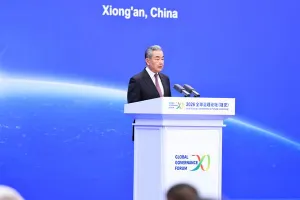
In other words, the principle of indivisible security must be reinstated. Besides the Schiller Institute’s proposal for such a new architecture, formulated in the Ten Principles, China, with its four global initiatives, and especially its Global Governance Initiative, has so far made the most comprehensive proposal in this regard.
The month of August must be used intensively to prepare the formalization of the discussion on a new architecture, to initiate initial diplomatic preparations, and to take corresponding steps in parliaments and other relevant institutions. This year’s UN General Assembly—if we make it to September—may be humanity’s last chance to escape annihilation.
Kujat writes in the cited article: “To prevent the worst from happening, Europeans are now more than ever required to correct miscalculations and to act with realism, a sense of responsibility, and reason. In the current situation, negotiations to end the war must be seen not only as preventing a major European war, but also as an opportunity to avert Ukraine’s military defeat and to secure its continued existence as a sovereign, independent, and viable state. Now, individuals with strategic judgment and security policy foresight are needed, individuals who are guided by German interests and the constitutional mandate for peace, in order to find ways out of the danger of a major European war.”
These individuals, who exist in every country, must now step forward and demonstrate their responsibility. At stake is the mandate for peace enshrined in the German Basic Law and the question of whether we, as a human species, are morally capable of survival.
Please contact: helga-zepp@proton.me