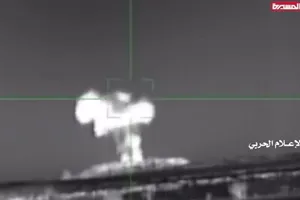

Like a drunken Pete Hegseth stumbling back from a post-football game frat party, the world lurched, almost uncontrollably, toward a new and dangerous phase this week. After Ukraine struck an Iranian cargo ship in the Caspian Sea on July 25, killing one sailor and injuring others, these two conflicts threatened to morph into something new and more terrifying. The Ukraine and Iran wars “have officially merged,” wrote one correspondent at the Wall Street Journal. A leading Financial Times writer noted that such an event should remind us that, despite the appearance of diplomatic relations between global powers, “it does not guarantee that another world war is impossible.” Iranian officials pledged a swift retaliation while many commentators were quick to identify Ukraine as a proxy of NATO, concluding that Western nations had given their implicit approval to such an escalatory move. And Ukraine’s ambassador to Israel told an Israeli audience that “We are fighting the same enemy, the other side of the same axis of evil.”
The late Pope Francis’s famous warning that World War III had already begun, but is being fought “in pieces,” is an apt way to describe today’s reality.
There was a slight walking back from the cusp of new escalations on July 28 when Iranian Foreign Minister Abbas Araghchi spoke with his Ukrainian counterpart Andrey Sybiha and Sybiha claimed that Ukraine wants to “avoid unnecessary escalation.” While the Ukrainian diplomat carefully avoided any apology or direct statement about the attack, Araghchi appears to have accepted it as an effort to de-escalate the situation, and reported that he had been assured during the call that the attack “was unintentional and Ukraine seeks no escalation.”
Despite this, the danger remains as intense as ever, and the underlying dynamic continues to expand. Saudi Arabia’s Abqaiq oil refinery was struck, threatening to expand its conflict with Yemen’s Houthis. Meanwhile, Ukrainian drone strikes continue to penetrate locations deep inside Russia, hitting a growing number of civilian targets. Over the recent 48 hours, Russian spokespeople Dmitry Peskov and Maria Zakharova denounced the strikes as part of Ukraine’s “bloody campaign of terror” and vowed to punish the perpetrators. U.S. President Trump, for his part, appears to still be locked into the false logic that negotiations and peace can be achieved through military force, making him at best an easy victim of control by those who actually understand the principles at play.
These principles were described by Helga Zepp-LaRouche in a newly published article, “On the Escalation Ladder to Nuclear War: Where Are the Responsible Figures?"—now published on EIR.news for broad circulation. Zepp-LaRouche identifies the inherent dangers in the wars in both Ukraine and Iran, where Western leaders have nowhere else to go than toward further escalation. She quotes General (ret.) Harald Kujat, former Inspector General of the German Armed Forces and Chairman of the NATO Military Committee, who recently compared today’s brain-dead Western leaders to those in August 1914 who sleepwalked into World War I. Instead of attempting real diplomacy to understand the actual interests of their adversary, they remained committed to the view that punishing the adversary would secure victory. This escalation ladder ultimately can end in only one way, Zepp-LaRouche argues: the use of a nuclear weapon.
Zepp-LaRouche then identifies the actual controlling dynamic behind both conflicts: “Even though both wars had ostensibly different triggers, the underlying dynamic in both stems from the same cause: the West as a whole could not resist the temptation, after the end of the Cold War, to succumb to an arrogant triumphalism. And while it was initially the Anglo-American neoconservatives who attempted to establish a unipolar world order, it was later the Europeans who adapted to this attempt, even sabotaging Trump’s initially perhaps earnest peace policy through a ‘coalition of the willing.’ The unspeakable demonization of Russia only flared up again when Russian President Vladimir Putin set about asserting Russia’s role as a world power and sought to halt its containment. And China has done nothing wrong except violate the Wolfowitz Doctrine, which states that no nation or group of nations can ever be allowed to surpass the United States in political, economic, or military strength.
“As a result of the boundless overconfidence of leading circles in the West, who accepted Western dominance in the world as their inherent birthright, and a long series of errors and mismanagement, as well as the complete lack of a positive vision for the future, which is now being replaced by aggressive militarism, the world order lies in ruins. We have—hopefully—only a very small window of opportunity left to end these wars through genuine diplomacy and to rebuild the shattered trust.”
History is not a string of events, but a knowable process that drags one along whether he or she knows it or not. It is this historical dynamic that must be addressed now if humanity is to avoid the fate warned about in the above article.
Toward that end, be sure to participate in this Friday’s EIR Roundtable, starting at 11am Eastern, where this topic will be taken up in full with two panels of leaders from around the world.