The transformation taking place in the world today is occurring at a rapid pace, creating conditions for changes that have been out of reach for decades or even centuries. Such a situation presents us with a mandate to consider the next ten days as a certain precious moment wherein substantial changes can be set into motion.
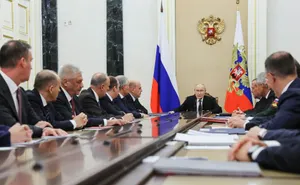
In ten days, the leaders of the United States, Russia, and China may sit down together for the first time since the end of World War II 81 years ago. On Nov. 4, Chinese Foreign Ministry spokeswoman Mao Ning confirmed that “China is maintaining communication with relevant parties” on a meeting of the three heads of state at the Nov. 18-19 APEC summit in Shenzhen, China. Russian strategist Dmitri Trenin cautioned that it “may not be the dawn of a new world order, but it could be a small step to balance wars with diplomacy.” Given the danger and the degree of flux in the world today, a small step may just be enough to pull mankind back from the brink.
Consider how much the ground has shifted in only the past two weeks. In Brazil, President Lula da Silva won the Oct. 25 runoff by a massive 4.4 million votes, defeating Trump darling Flávio Bolsonaro, who had promised to pull Brazil out of BRICS and into the “Shield of the Americas.” Combined with the recent jailing of former Paraguayan President Santiago Peña, an early recruit to that same Shield, this marks a major blow to the Trump administration’s attempt to recolonize the Western hemisphere. In Israel, this weekend President Herzog formally gave Gadi Eisenkot the mandate to form a government, likely bringing an end to Bibi Netanyahu’s mass-murderous reign. Then, in the Nov. 3 U.S. midterm elections, voters delivered a resounding defeat for an administration whose Iran war, high prices, and ICE brutality voters rejected. The revolt has also spread beyond partisanship as a groundswell of voters and elected officials alike also challenge the Democratic Party leadership.
These electoral changes are coinciding with major diplomatic initiatives, both in Southwest Asia and Ukraine. Aside from the reported diplomatic channels between Vice President Vance, Iran, and mediated by Qatar, Russia and China are increasingly in the center of the process. Russian President Putin met Iran’s Supreme National Security Council Secretary Mohsen Rezaei for three hours on Nov. 3, while Chinese Foreign Minister Wang Yi held same-day meetings with Saudi Arabia’s National Security Advisor Mohammad Al-Aiban and Iran’s deputy secretary of the Supreme National Security Council Ali Baqeri Kani. China, which presided over the 2023 “Beijing Agreement” between Iran and Saudi Arabia, is also sending its special envoy Zhai Jun to Iran, Oman, and Saudi Arabia later this month.
With Netanyahu on the way out and Trump’s war policy failing miserably, the moment is ripe for the LaRouche Oasis Plan, building peace through water, energy, and transport corridors across Southwest Asia. Russia, China, and the other BRICS countries are already pushing in this direction.
Ukraine offers a second window of opportunity, although one perhaps more distant. On Nov. 10, U.S.-mediated working-group talks between Ukraine and Russia will begin in Abu Dhabi. Russia has already upgraded its delegation to include Sergei Ryabkov, Russia’s Deputy Foreign Minister. Any path to peace must point toward a new security architecture for Eurasia as a whole, and a redefined relationship between the world’s nuclear superpowers.
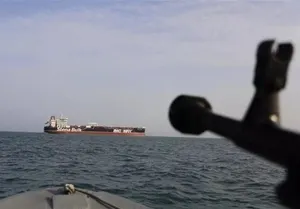
The question is whether President Trump hears the message. On Nov. 6, CENTCOM announced “Task Force Iron Gate” to seal Iran’s land borders on top of the naval blockade; Trump continues to hold out the option to resume military strikes on Iran at any time; and he has made horrible new choices for White House positions, such as Stephen Miller and potentially also UFC CEO Dana White. At the same time, European and NATO nations are accelerating their drive to prepare for war with Russia, eagerly hoping that the new Democratic majority in Congress will shift the tide toward Ukraine in the U.S.
These developments underscore the complete danger that grips the world on the one hand, as well as the complete opportunity for change on the other. The signs and symptoms of the collapsing “rules-based order” could not be more apparent, and viscerally felt by today’s ruling establishment.
Everything points to the next ten days as an extremely fertile, and extremely volatile, field for action. If war can be avoided and irrational moves held off, Shenzhen could deliver even a subtle shift in the strategic situation—and that may be enough to open the door to a new paradigm.