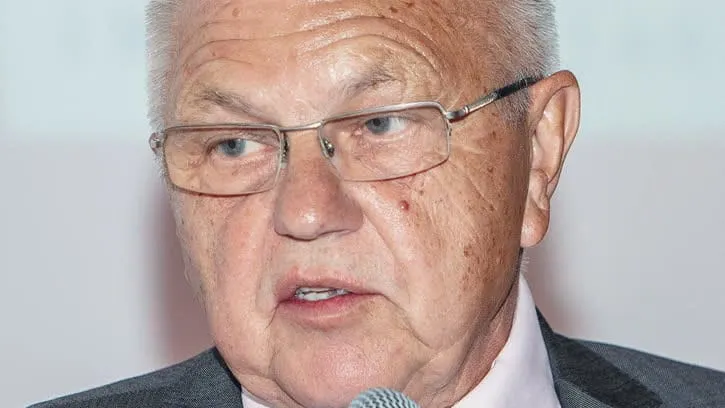
Retired General Harald Kujat, born on March 1, 1942, served, among other roles, as Inspector General of the Bundeswehr and, as Chairman of the NATO Military Committee, was NATO’s highest-ranking military officer. At the same time, he served as Chairman of the NATO-Russia Council and of the Euro-Atlantic Partnership Council of Chiefs of General Staff.
This article was translated from the original German after its first publication in the July 16, 2026 edition of Zeitgeschehen im Fokus. It is reprinted here with the generous permission of the author.
Former German Chancellor Helmut Schmidt stated in an interview in May 2014: “Unfortunately, there is currently no one putting forward constructive proposals for Ukraine’s future.” He continued: “I don’t believe in talking ourselves into a Third World War, and certainly not in calls for more money for NATO’s military buildup. But the danger that the situation will escalate, as it did in August 1914, is growing by the day.” Words of alarming relevance today.
The American economist and former economic advisor on the development of Eastern European market economies, Jeffrey Sachs, expressed the same concern in two open letters. Sachs urged the German Chancellor to “prevent open war with Russia,” because “if we want to move away from the brink of war, we must be honest.” In his letters, Sachs outlined specific failures of German foreign policy since reunification. This principle of deliberate blindness—of “not listening,” “not wanting to see,” and “not wanting to consider”—must be overcome.
Neither at the time of the Russian armed forces’ advance on Kiev in February 2022, nor afterward, was any serious attempt made by the United States—and certainly not by the EU member states or the United Kingdom—to prevent the war or to end it through a negotiated peace. On the contrary, the war has been supported politically, financially, and materially and has now been prolonged for more than four and a half years. The failures described by Jeffrey Sachs have an ongoing effect as misjudgments in foreign policy to this day.

