
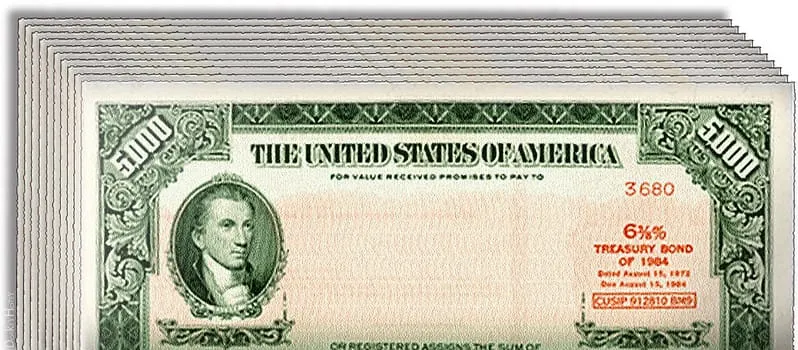
With yields on 30-year Treasury bonds soaring to 5.31% on Aug. 14—the highest rate since 2007—a desperate Treasury Secretary Scott Bessent announced on Aug. 19 that he would at least double the maximum size of the Treasury’s buyback operations, from $2 billion to $4 billion, to try to drive yields down. That is not a lot of money, but it was meant to signal that Treasury was prepared to bet against hedge funds and other speculators who have been fleeing Treasuries.
The speculators barely blinked, and continued to drive rates up – since what they have at stake is the existence of a global $2.4 quadrillion speculative bubble, which has bankrupted the entire system.
Five days later, on Aug. 24, “two senior Treasury officials” were deployed to inform CNBC that “Bessent could tap near $1 trillion Treasury General Account to fund bond buybacks.”
That’s a lot of money—but Bessent has been informed in no uncertain terms by Wall Street and his old hedge fund buddies that it will also not work. “Wall Street turns on Scott Bessent,” Politico wrote on Aug. 26, adding that “Wall Street has begun calling his bluff.”
For example, Bessent’s old mentor when both worked at the George Soros Fund in the 1990s, Stanely Druckenmiller, penned an op-ed in the Wall Street Journal telling Bessent he “will lose” if he goes up against the bond market—i.e., the speculators. Instead, he should “let the bond market speak…. Governments defending prices against fundamentals always lose. The only variable is how much they spend before conceding,” he wrote. “The long-term Treasury yield is the most important price in the world. It is also the only fiscal disciplinarian the US has left. Neither party will run on entitlement reform. Both have spent the past decade expanding commitments while ignoring arithmetic,” wrote Druckenmiller. In other words, the speculators are demanding draconian cuts in the Federal budget, and nothing less will satisfy them.
Bessent himself cut his teeth as an international-class speculator in the notorious operation to “break the Bank of England,” conducted by Soros, Druckenmiller, and himself, in 1992—reputedly making more than $1 billion in profits for the George Soros Fund.
“The irony of the guy working for Soros and Druckenmiller who broke the Bank of England back in 1992 pretending that you can do FX [foreign exchange] intervention alone, and lastingly defend a currency, is just amazing,” Adam Posen, the president of the Peterson Institute told the Financial Times earlier this month.