Maria Mitchell, the first professional woman astronomer in the U.S. (Aug. 1, 1818-June 28, 1889), was born in Nantucket, Massachusetts, into a large Quaker family. Quakers advocated equal education for women, and Maria was encouraged to explore the sciences by her father, William Mitchell (1791-1869).
William Mitchell was also a scientist, and some of his occupations included that of schoolteacher, cooper, farmer and surveyor. He was also an astronomical observer for the United States Coast Survey, and was a lifelong friend and professional associate of Alexander Dallas Bache. When Bache was mapping the U.S. coastline, he relied on an extensive 1838 map of Nantucket created by William Mitchell. This map became a foundational fixture for the U.S. Coast Survey’s regional charts for roughly a decade.
Through this connection, Maria was also hired by Bache as an astronomical observer.
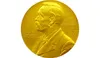
On the night of October 1, 1847, she discovered a comet (with a modern designation of C/1847 T1), using a Dollond refracting telescope with three inches of aperture and forty-six-inch focal length; the comet later became known as “Miss Mitchell’s Comet.” In October 1848, King Christian VIII of Denmark awarded a gold prize to her for the discovery, based on an initiative by King Frederick VI of Denmark to honor any first discoverer of a “telescopic comet”—one that is too faint to be seen with the naked eye.
• 1841—attended and supported the anti-slavery convention where Frederick Douglass made his first speech
• 1865—became professor of astronomy at Vassar College
• 1869—became one of the first women elected to the American Philosophical Society
She authored many articles, joined women’s scientific associations and was an advocate of the promotion of women in the sciences. The Maria Mitchell Observatory was named after her, and her own telescope is on display at the Smithsonian Institution.
She passed away on June 28, 1889, in Lynn, Massachusetts, and is buried in Nantucket.