After nearly five and a half months of illegal war against Iran, things are not going as Washington planned—and are actually becoming far worse than they were before it began. On Aug. 8, Iran’s then-head of its Supreme National Security Council, Mohammad Zolghadr, announced the conditions under which Iran would be willing to reopen the Strait of Hormuz, demands which included damage reparations from the U.S., unfreezing all of its frozen assets, and the permanent departure of U.S. forces from the region. In addition, Iran and Oman are on the verge of reaching an agreement over a new management framework for the strait, evidently without any approval or involvement by the U.S. Clearly, these are not the actions of a desperate or collapsing regime.
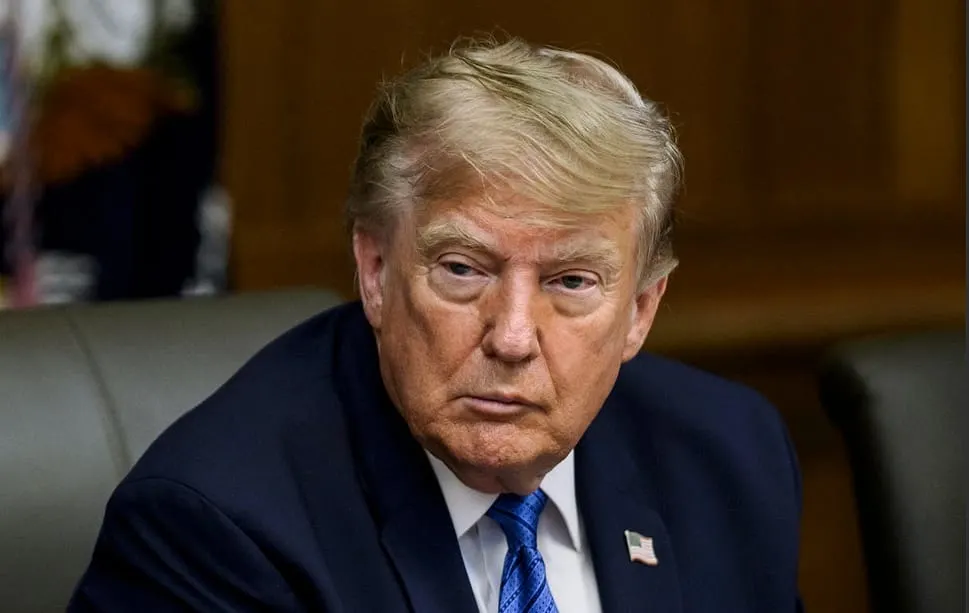
President Trump—feeling the heat from a choked global economy, a worsening ammunition shortage, and an increasingly upset domestic constituency—has allegedly even considered dropping his demand for an agreement on Iran’s nuclear capability as long as the Strait of Hormuz is again opened, according to the Wall Street Journal.
Further, the recently announced mutual defense pact between Saudi Arabia, Turkiye, and Pakistan indicates that far more significant tectonic changes are taking place in this region. While the true implications of this new defense pact remain to be seen, one expert interviewed by the Jerusalem Post highlights one viewpoint: “the Middle East is moving toward a more fragmented and multi-polar security architecture, in which states are hedging by developing several overlapping partnerships, rather than relying exclusively on one alliance or great power.”
In this regard, it’s useful to remember the words of former National Security Advisor Zbigniew Brzezinski, who wrote in his 1997 The Grand Chessboard: “In brief, for the United States, Eurasian geostrategy involves the purposeful management of geostrategically dynamic states and the careful handling of geopolitically catalytic states, in keeping with the twin interests of America in the short-term preservation of its unique global power and in the long-run transformation of it into increasingly institutionalized global cooperation. To put it in a terminology that hearkens back to the more brutal age of ancient empires, the three grand imperatives of imperial geostrategy are to prevent collusion and maintain security dependence among the vassals, to keep tributaries pliant and protected, and to keep the barbarians from coming together.” (emphasis added)
Whatever ultimately happens, there is no returning to the status quo of former decades; the growing revolt against the failed and discredited unipolar order designed by Brzezinski and other Anglo-American imperialists is advancing apace. And, as opposed to an already determined outcome, these events indicate a growing potential for something new.
Toward that end, former Italian Undersecretary of State at the Ministry of Economic Development Michele Geraci shone a light on such a new potential in an Aug. 8 dialogue on CGTN about the migrant crisis. While pointing out that protecting borders from illegal crossings is simply the law and should be upheld, Geraci then pointed to the real underlying issue: “[The] African population will double [in] the next decade, and what do we do with two billion people in Africa who of course look at Europe like a dreamland, where they get better jobs, better life? How do we solve this problem? One way to do it… is to offer development of society and the economy in Africa; not just to welcome them, we have to offer a development model in Africa that prevents young people in Africa from coming to Europe.”
In a similar fashion, China’s Global Times ridiculed the braindead thinking in a new report by the Foundation for Defense of Democracies, which argues that China’s growing presence in Africa means America’s economic relationship there is “at stake.” Africa is not “a stake to be defended” but rather “a partnership to be built,” the (Global Times} authors write, adding that the real issue is “help[ing] African nations chart their own development path—building the manufacturing base, the regional trade rules and the institutional capacity they need on their own terms.”
Despite today’s dying neocolonial system, we live in a world that is growing and in desperate need of policies for a population that will be much larger, more technologically advanced, and with a much higher standard of living in the coming decades. As the current order collapses, are we prepared to bring a world into existence that meets the future demands of humanity in 100 years? As Helga Zepp-LaRouche put it in her Ten Principles, “the economic, social and political order has to be brought into cohesion with the lawfulness of the physical universe,” and to abandon the arbitrary laws made up for the benefit of a morally depraved Epstein class. This is the importance of the LaRouche Oasis Plan for the development of Southwest Asia—the only basis to create a stable peace for this region over the long term.
This is the challenge now before the world, and should serve as a guiding star during the current period of turmoil.