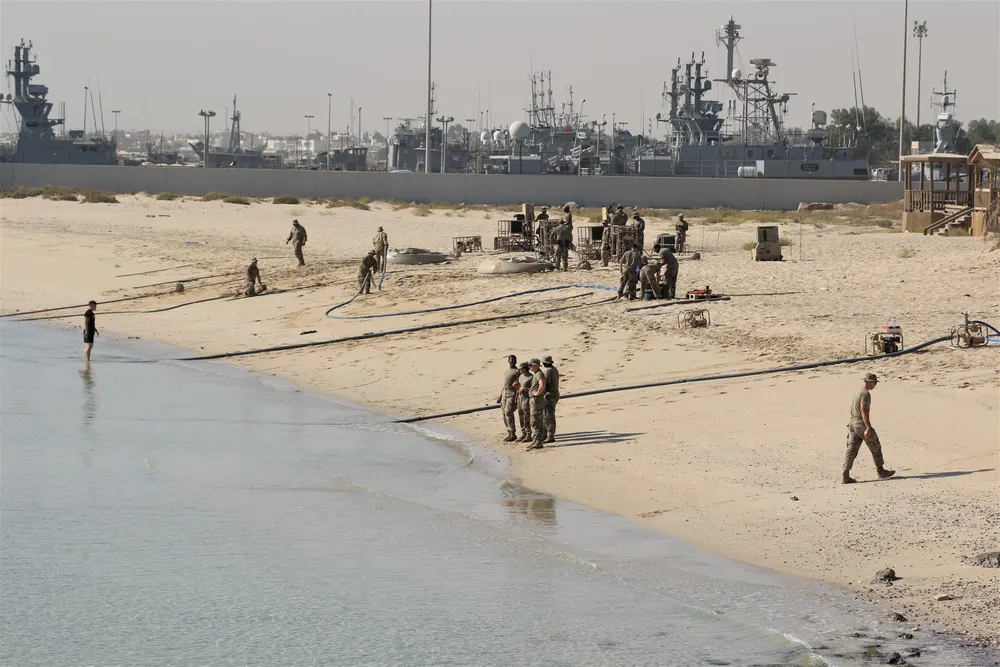
The Pentagon policy shop is evaluating the U.S. military footprint in Southwest Asia in the wake of the hot phases of the U.S. war on Iran, during which Iran inflicted serious damage on U.S. military bases in the region with drone and missile strikes. One of the key areas the Defense Department is assessing is whether to pull troops back from the Persian Gulf, where America’s large overseas military bases have been battered by months of Iranian strikes, two people familiar with the ongoing analysis told The Washington Post.
Besides the policy shop, the Joint Staff and U.S. Central Command are reported to be also studying the issue, but no formal review has been ordered. One official characterized the analysis as “prudent planning” that could eventually inform how the administration addresses whether to rebuild the bases damaged during the war. “Decisions are going to have to be made on some of this stuff,” the official said. The Post called the assessment a “once-in-a-generation” change in policy.
People familiar with the Pentagon’s analysis told the Post that the issue is likely to intensify a debate between camps within the administration that support military interventions and others that have argued that the Pentagon should curtail some of its security commitments to refocus on defending the U.S. homeland or deterring more powerful adversaries, like China. The other camp includes advocates for locating U.S. forces in Israel, although during the 40-day war that ended in April, Iran showed an ability to reach and destroy targets there.