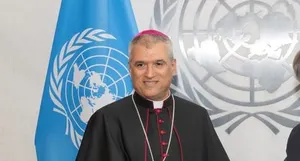
Speaker after speaker at the General Assembly’s high-level meeting on the total elimination of nuclear weapons on Sept. 29 warned against bringing artificial intelligence into nuclear weapons systems. Speaking for the Arab Group, Oman’s representative said, “We warn against the risks associated with integrating AI into nuclear weapons-related systems. We stress the need to maintain full human control over such weapons.” Mexico, speaking for OPANAL, the Latin American nuclear-weapon-free zone agency, raised “possible military uses of artificial intelligence through the life cycle of nuclear weapons, including in the nuclear command, control, and communication structure,” and said that “significant human control” must be maintained. Burkina Faso said, “No decision regarding the use of a nuclear weapon should be made without effective human control.” Costa Rica said AI “reduces decision making time and increases the risks of miscalculation and the loss of human control.” The Holy See warned that AI in nuclear systems adds risk “by compressing decision-making timelines and introducing new sources of error and opacity.” Opening the meeting, General Assembly President Khalilur Rahman said AI, cyber capabilities and advanced delivery systems “are introducing additional uncertainty into command, control and decision-making.”
China’s representative renewed Beijing’s call for the nuclear-weapon states to conclude “a treaty on mutual no first use of nuclear weapons,” or to make a political statement to that effect, while the countries with the largest arsenals make “drastic and substantive reductions.” Without naming the United States, he said, “A certain country keeps adjusting its nuclear policy, stubbornly maintains a massive nuclear arsenal, constantly enhances its nuclear deterrence and warfighting capabilities, [and] strengthens nuclear alliances.” The Arab Group also called for “adopting a policy of no first use.” The White House fact sheet on Xi Jinping’s visit, issued four days earlier, says President Trump “advocated for trilateral arms control negotiations between the United States, Russia, and China.” China’s answer continues to be that the U.S. and Russia should reduce their stockpiles, and that a no-first-use commitment is needed.