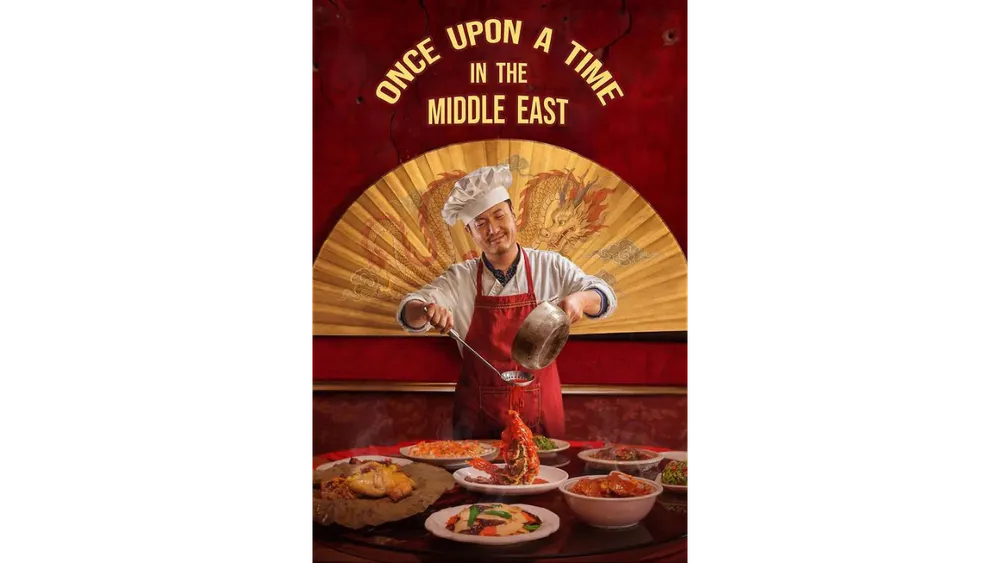
Once Upon a Time in the Middle East
Written, directed, and produced in Mandarin by multiple companies in China with English and Arabic subtitles available
Premiered August 11, 2026, in China; Oct. 9, 2026, United States, Canada
2 hours, 20 minutes
When publicly released in August in China, the film Once Upon a Time in the Middle East soared to the top of the charts, then met great acclaim and popularity in Asia, where it first started its international release in September. It is now in theaters across the United States and Canada, and is the Chinese entry for Best International Feature Film for the U.S. 99th Academy Awards (the Oscars), which will take place in March 2027. Our guest reviewer lives in her home country, China.
Oct. 14—In early September in China, the widely syndicated in-theater movie, Once Upon a Time in the Middle East, premiered. Films with such a subject are rare here. Most war movies shown in Chinese theaters focus on showcasing the strength of China’s military, its soldiers, its weaponry, seemingly highlighting China as a formidable power. The protagonists are usually soldiers or generals who win battles against brutal, powerful enemies. Personally, this reviewer has never been drawn to movies with these themes, although many people speak passionately about these heroes and express pride in China’s current strength. I often feel uneasy about such overt displays of national pride, because I struggle to tell if these movies reflect historical truth or are a form of partisan propaganda.
Once Upon a Time in the Middle East, however, is different. Although fictional, the movie is said to be inspired by the war on Iraq of almost 25 years ago. We see the protagonist, Xu Fu, who is a chef in China. He had once owned a small restaurant that failed. As the plot unfolds, he chooses to work abroad, as a chef in a restaurant in then-peaceful Iraq, to earn money to send home.
At first, Xu Fu plans to work overseas for just a year or two—only long enough to pay off his loans—and then return home. But, as the story unfolds, Xu gets tangled up in conflicts involving local authorities, war orphans, the U.S. military, and a terrorist headquarters.
A Story for Peace
Speaking as a Chinese citizen, we see many common Chinese—now living in peace for decades—who remain ignorant and even indifferent to what unfolds elsewhere in the world, especially in war zones. Perhaps this applies to many people privileged enough to live in peace: they grow desensitized to the suffering of strangers. A wise person once said that one can never truly feel another’s pain without enduring pain oneself. Xu Fu is such a person. He was accustomed to a peaceful life in China and believed that “foreign wars have nothing to do with us Chinese.” But, peace should never be taken for granted. As we see, only when Xu grows increasingly entangled in the lives and fates of these “foreigners”—his colleagues, war orphans, an “ABC” (American-born Chinese) U.S. combat soldier—does he realize that he, like every other person on this planet, is connected to all of humanity.
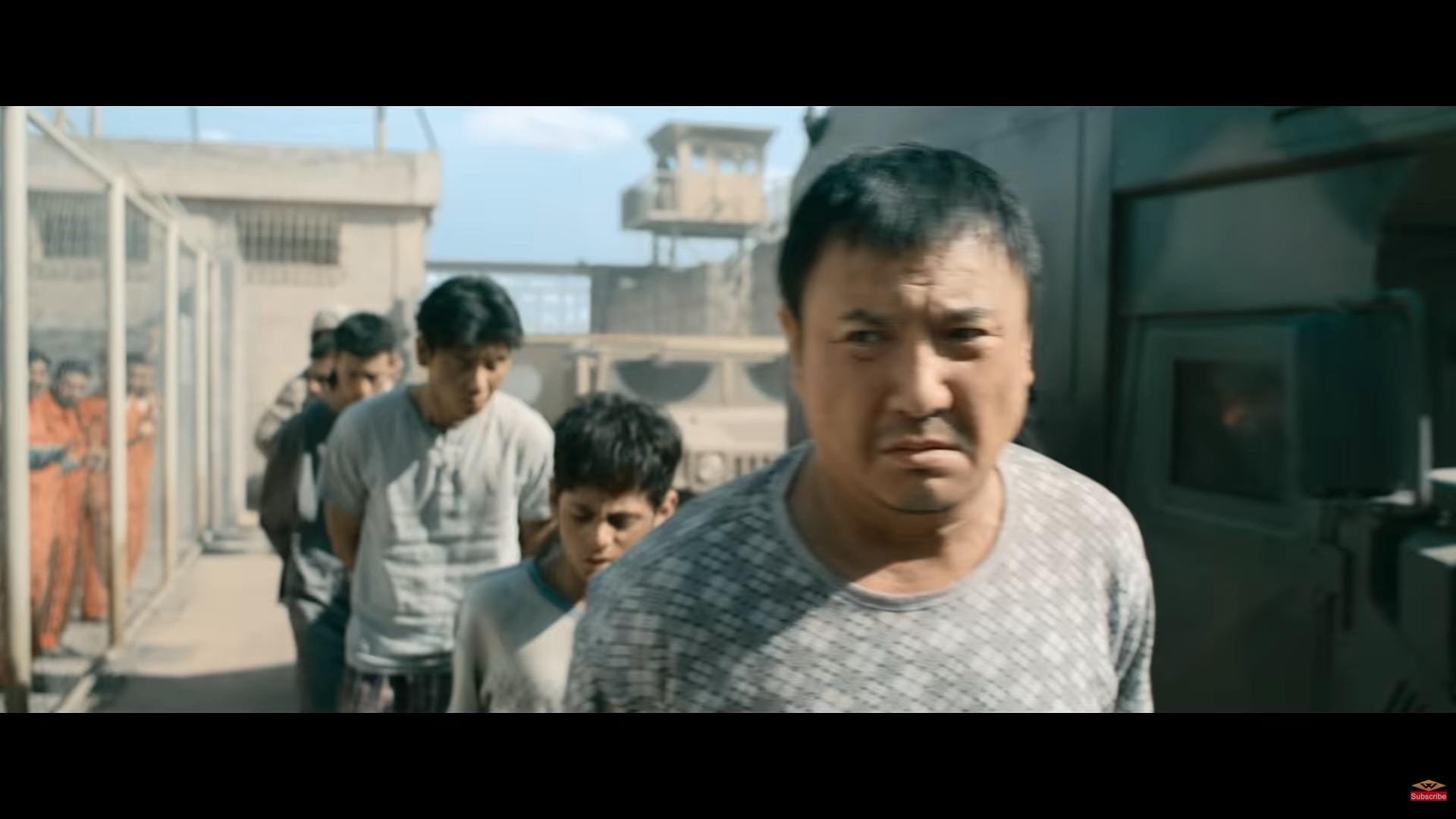
Xu is an unconventional hero: crude, initially apathetic, and harsh in the way he teaches war orphans. He is reluctant to get dragged into the conflict. He repeatedly tries to escape the chaos and reunite with his family in China. But then, something occurs: Inside an anti-U.S. terrorist camp, his colleague and closest friend—a young Chinese married to a local woman—sacrifices himself to save many war orphans. Many of these children, aged between five and fifteen, are manipulated by their headmaster and ultimately sacrificed in a doomed people’s war against the overwhelming invader. We see Xu Fu planning an escape with others from Iraq, but his colleague’s death while saving children shakes him to his core. Eventually, he spends all his earnings on the black market—to buy a chance to rescue twenty-five orphans.
This story strikes home today. In my travels to Palestine, while visiting a primary school, I spoke with a young boy who was playing with schoolmates in the school yard, just like any young boy around the world. When someone in our student group asked the boy what he wanted to be when he grew up, he answered in a calm, matter-of-fact tone that silenced everyone. He said he did not think he would live long enough to imagine a future.
A Beautiful, Humanist Movie
I went into this movie expecting a comedy, as its lead actor is a famous comedian in China. Yet, it turned out to be a moving surprise. In the movie theater where I viewed the film with my family, many viewers cried throughout the screening. This movie is valuable for pushing audiences out of their narrow focus on money, power, and personal relationships, prompting them to contemplate a larger global suffering. At the end of the film, a striking statistic appears on the screen: “430 million children live in war zones, accounting for roughly 18.7% of all children worldwide.” Every child deserves the right to live, to grow up, and to choose his or her own path in life. I would recommend this film as a powerful plea for peace, especially to anyone who still believes that war is personally irrelevant. It is a genuine work of humanist art.