NAZA
Directed by Yuval Abraham and Rachel Szor
Produced by Harry Davies, Lindsay Poulton, James Wilson for The Guardian and JW Films
Premiered Sept. 10, 2026; 1 hour, 20 minutes
Oct. 21—This documentary film consists primarily of interviews, conducted at night on a dark rooftop in Tel Aviv, with Israel Defense Forces (IDF) veterans who have participated in the Gaza operation. Their faces and voices have been digitally altered to safeguard their anonymity. As has been the case with every atrocity perpetrated by the Israeli regime, that regime is eager to prosecute not the criminals, but the whistleblowers who exposed them. On Oct. 11, Israeli Prime Minister Benjamin Netanyahu ordered Israeli security and judicial officials to identify and prosecute the anonymous soldiers and officers who testified in this documentary.
What makes this film so compelling is the understated and dispassionate way in which it tells its story. There is no preachiness; the filmmakers simply allow their sources to explain what they did, in their own words. The interviewees are primarily drawn from the elite Unit 8200 signals-intelligence outfit who worked remotely from computer consoles in Israel, but there are also veterans who were present on the ground in Gaza.
Although the practitioners of hasbara (the Hebrew word used to describe state-sponsored propaganda or narrative control) frequently claim that all Israeli forces and settlers withdrew from the Gaza Strip on Sept. 12, 2005, this is clearly misleading, because Israel surveils every inch of Gaza and monitors all activity there down to the smallest detail (which serves to corroborate the many recent reports that Netanyahu was completely informed about the impending attacks, well before Oct. 7, 2023).
Kill Ratio ‘Benchmark’
The intelligence officers who were interviewed in this film described how their computer programs included floor plans of every building in Gaza, and could provide them with a readout of the number of civilian casualties (collateral deaths, or “NAZA”) to be expected if that building were bombed. One of the interviewees states, “Twenty NAZA became a benchmark,” i.e., a ratio of twenty civilians per combatant killed was considered acceptable. However, another interviewee reports that there were NAZA ratios as high as 300 to 1. The intelligence officers used these floor plans to decide whether to order bomb strikes by the Israeli Air Force. One interviewee said that part of their training was to watch the 2015 movie Eye in the Sky, in which the protagonists are drone operators who must decide whether to kill dangerous terrorists when doing so will also risk the death of an innocent girl (they choose to do so, and the girl dies).
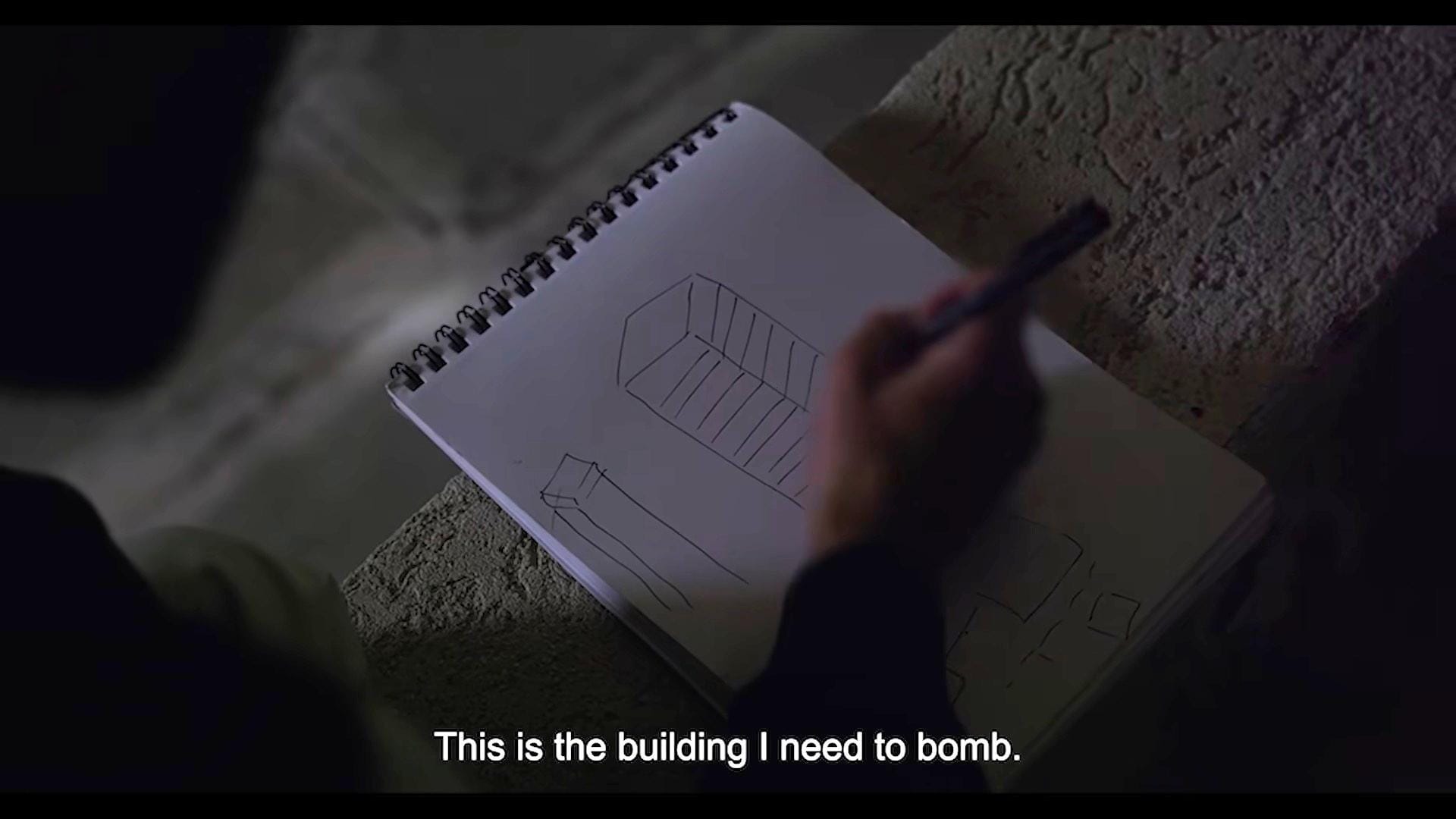
Beginning in the 1990s, Israel demanded complete control and supervision over the construction, deployment, and repair of telecommunications networks in Gaza. Under the Oslo Accords, Israel retained authority over the frequency spectrum and international gateways, requiring Palestinian operators to build infrastructure through Israeli firms and obtain permits for almost all development. The construction of critical infrastructure, such as high-speed fiber-optic cables along Gaza’s borders, was carried out under direct Israeli army supervision, with soldiers physically participating in the operations.
Consequently, the Unit 8200 operatives also had full access and control over every cell phone in Gaza, including the ability to view image files, use the cameras, activate the microphones, and of course, monitor all conversations. It is useful to remember that the Israelis have been leading innovators in the field of cell-phone surveillance, such as the Pegasus software, which they sold to numerous nations. This software could potentially give Israel “backdoor” access to information gathered by its clients, a suspicion long shared by current and former U.S. intelligence officials.
Phone data was fed to artificial intelligence (AI) programs that looked for patterns which could be correlated, in the loosest possible sense, with those of known Hamas operatives. The interviewees all freely admitted that the AI “correlations” often turned out to be wrong, but no one hesitated to order killings, including of NAZA persons, based on questionable output from AI. Let’s remember that so-called U.S. “Secretary of War” Pete Hegseth is currently champing at the bit to usher in the development and deployment of autonomous AI weapons, having announced the Autonomous Warfare Command (AUTOWARCOM) during his Sept. 30, 2026 State of the Force address.
Where’s Daddy?
One of the interviewees reported that there was a discussion among the leaders of the operation about whether to concentrate on killing their targets in the field, or at home with their families. He said that the consensus favored targeting the homes, considered to be the most reliable way to kill. They had a protocol that they called “Where’s Daddy?” under which they monitored conversations among family members to detect when the targeted father returned home, so that he and the rest of the family could be blown up. A typical hasbara justification for civilian deaths is that “Hamas uses civilians as human shields,” but one of the soldiers who was interviewed dismissed this claim as “absurd.”
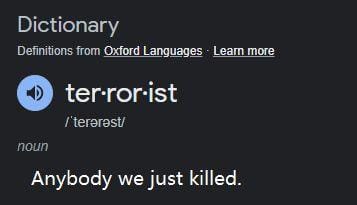
Asked about the moral implications of killing civilians, one interviewee dismissively states that “anyone you decided to kill was a terrorist.” The purpose of the wanton killing, and the widespread destruction of homes and property (described as the systematic destruction of houses, strip by strip, done in a hurry “before we lose international legitimacy”) was to “encourage migration … we called it ‘peace thwarting.’ ” In a rare moment of editorializing by the filmmakers, footage is inserted from an interview with a young Benjamin Netanyahu, during which he defines terrorism as “The systematic and deliberate attack, the murder, maiming, and menacing of innocents, of civilians, for political goals.” The viewer is left to draw his own conclusions.
The soldiers who were interviewed varied in their reactions to what they had experienced. The intelligence officers who experienced the war through a computer screen were more emotionally detached, reminiscent of the German soldiers on trial at Nuremberg who explained that “they were only following orders.” One defensively asserted that the elite Unit 8200 officers tended to be leftists, lived in Tel Aviv, and were not “Arab haters,” but they had to “complete the mission.” However, another intelligence officer, when asked why his colleagues willingly participated, described the facility where he worked as having an atmosphere of “hatred.”
Killing Children Is ‘Insanely Fun’
Those soldiers who had seen combat in Gaza were more emotional. One described his most vivid impression of Gaza as “bodies everywhere.” One of the most disturbing interviews is with a soldier who, without hesitation, describes the operation, in retrospect, as a genocide, adding, “We intended to kill those children.” But when asked why he willingly participated, he said that he felt differently at the time, recalling that “it’s so insanely fun.”
This film had its world premiere at the 83rd Venice International Film Festival on Sept. 10, 2026, where it received a 25-minute ovation, the longest in the history of the festival. This provoked an hysterical reaction from the Israeli regime, particularly because the filmmakers and interviewees are all Israeli. Netanyahu fulminated, “It’s shocking. We are fighting global antisemitic incitement and when it comes from within us it is intolerable.” He announced his intention to seek legislation that could strip the Israeli directors, Abraham and Szor, of their citizenship or impose massive fines. Haaretz reported that a mob of Zionists linked to Israeli Minister of National Security Itamar Ben-Gvir’s Otzma Yehudit party surrounded Rachel Szor’s parents’ house, making calls for violence and to “execute the traitors.”
This film adds to the already extensive body of evidence which must eventually be presented at a war crimes tribunal for the architects of this second Shoah. The Guardian, which co-produced the film, has announced its intention to make the film available for free on the internet, beginning in late November.