The following report was issued by Christoph Lavernhe, documenting the Schiller Institute’s activities at the Oct. 25-27 meeting convened by Pope Leo XIV in Assisi, Italy, titled “Unarmed and Disarming Peace.” A video of Mr. Lavernhe’s remarks to the International Peace Coalition on Oct. 30, 2026, concerning the trip is available here.
Our Schiller Institute delegation attended the interfaith gathering in the historic town of Assisi, Italy, from October 25 to 27, a meeting convened by Pope Leo XIV under the title “Unarmed and Disarming Peace.” Taking place every year, this was the 40th anniversary of the initial event on October 27, 1986. The first event in 1986 had been initiated by Pope John Paul II, who was very anxious at that time about the possible exchange of nuclear missiles between the Soviet Union (armed with Soviet SS20 missiles) and Europe (armed with American Pershing missiles). Many feared a repeat of the Cuban Missile Crisis in 1962, during which Pope John XXIII succeeded, at the last moment, to get an agreement between U.S. President John Kennedy and Soviet Premier Nikita Khrushchev, avoiding a real nuclear Armageddon. Today, the Soviet Union has disappeared, but the tensions are nonetheless higher than ever between Russia and NATO because of the Ukraine conflict, and in the Middle East because of the Iran conflict.
This situation justifies the very existence of the International Peace Coalition as well as of our presence in Assisi, where we disseminated an appeal to Pope Leo. We did so in public spaces in both Bastia Umbra and the historic center of Assisi, distributing a flyer titled: “Appeal to Pope Leo XIV To Organize a Global Leaders Summit To Address the Questions of Peace and Nuclear Disarmament.” During the four forums we attended (among the 24 scheduled in total), we were also able to hand-deliver the appeal both to leaders of Sant’Egidio Community—the organizer of the event—and to several high-ranking religious leaders.
Contrary to what one might think, the primary goal of the Assisi meetings is not to organize interfaith dialogue as such. These meetings are, above all, a means of achieving peace—but not a peace defined as the absence of war, or an “armed peace,” as Hobbes put it. Rather, they aim for a “disarmed and disarming peace,” to borrow the expression of Pope Leo XIV. According to the Pontiff, who is quoted in the appeal, “it is not atomic bombs that bring about peace, but disarmament. This truth, which seemed obvious in recent decades when nuclear de-escalation was evident, has been obscured by a frightening and terrifying arms race.”
In these particularly difficult circumstances, given current events, we noticed a high level of commitment and a friendliness on the part of the members of Sant’Egidio and the participants overall. (The Community of Sant’Egidio is an international lay movement of the Catholic Church founded in 1968 by historian Andrea Riccardi. It is present in 70 countries with approximately 60,000 active members.)
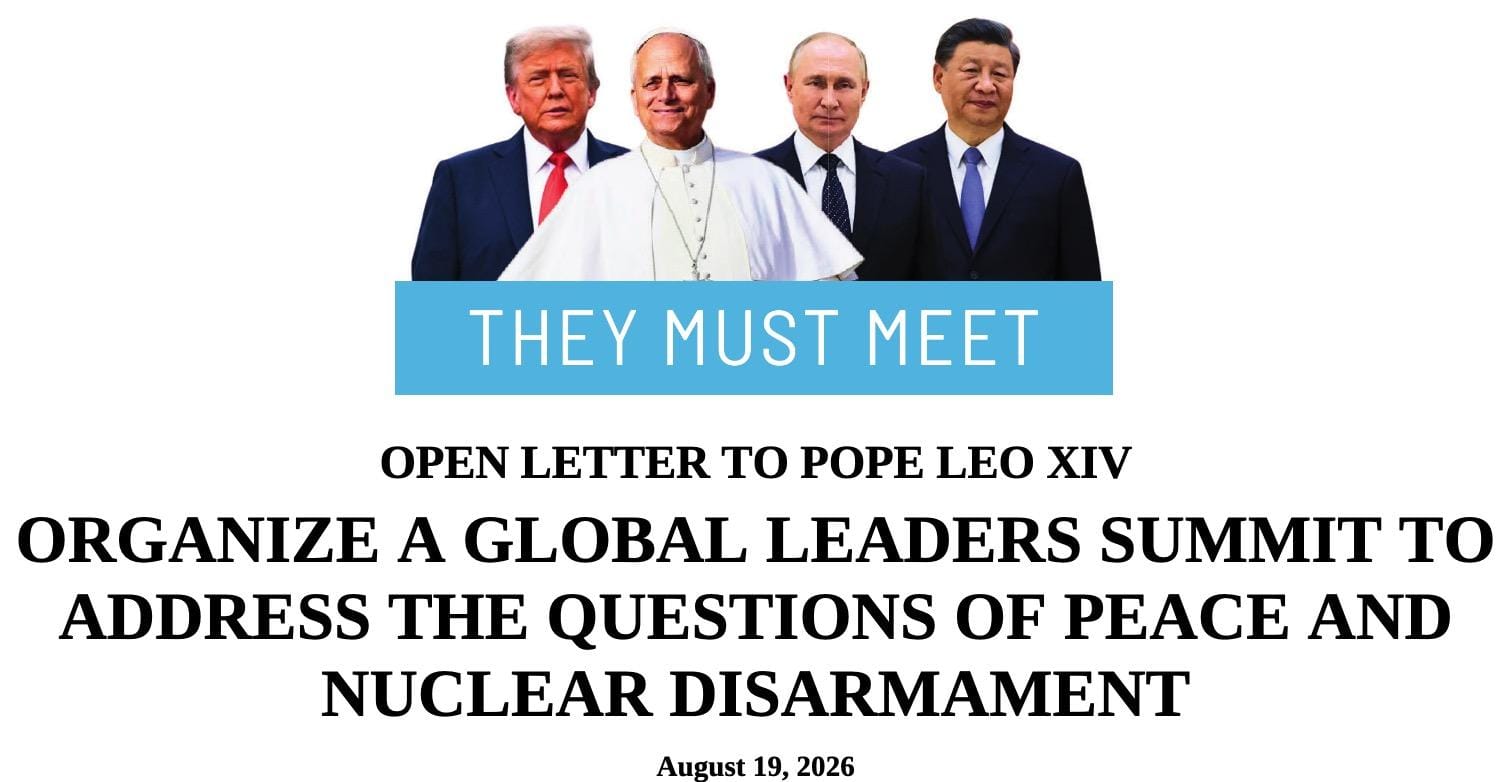
We also noticed—perhaps what is called “the Spirit of Assisi”—a kind of excitement that reminded me of Schiller Institute conferences. Between sessions, we were able to talk with participants scattered throughout the city. They were often in groups. A few reactions: Upon seeing the photo montage of Pope Leo XIV alongside Presidents Trump, Putin, and Xi, with the caption, “They must meet,” a passerby remarked, “That’s exactly what I think, but no one around me understands—I feel isolated.” A young German entrepreneur who works with African countries was deeply shocked by the attitude of many Westerners who do business at the expense of African producers. So much so that he feels the Chinese approach to business is far more Christian than Europe’s! A woman passing by made a point of scanning the flyer and sharing the digital version with her network. A group of Ivorian members of Sant’Egidio want to collaborate, etc.
Peace Must Be Built
For the late Pope John Paul II, peace is not something to be merely dreamed of—it must be built. And first and foremost, among religious movements, how can we claim to promote peace in the world if we are not capable of establishing it with other believers? To this end, Pope John Paul II charted a path in Assisi that begins with prayer and coming together, learning to know one another better, and engaging in dialogue. Everyone comes with their own convictions, and the point is not to give up those convictions in order to blend into a larger whole that loses all meaning. The prayer at the Assisi gatherings is not about “praying together”—each religious group prays differently—but about “being together to pray.” This balance between prayer and dialogue was the focus of the forum titled “Prayer and Dialogue: The Legacy of Assisi.” Prayer, in the face of brute force, is a weak yet powerful force; it unites our inner peace to the peace of the world, explained Valérie Régnier, who leads the French branch of Sant’Egidio.
On a more secular level, if there is one instance of peace in European history where religious reflection led to a new order of peaceful coexistence among nations, it is the one established between Protestants and Catholics at Westphalia in 1648. There, exterminatory violence gave way to prayer for a cause that had become desperate, followed by an ongoing dialogue—not always easy—but one that continues to this day.
Whether one is a believer who prays, or a non-believer who takes into account the needs of others, the approach remains fundamentally spiritual and human.
Religious Leaders in Assisi Denounce the Culture of War and Rearmament
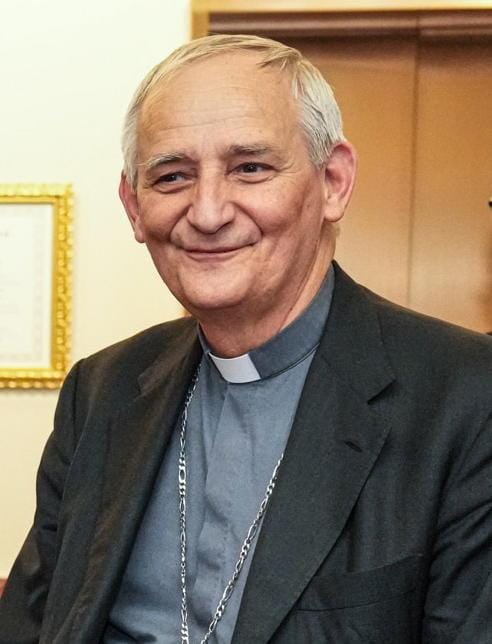
The Community of Sant’Egidio opened its international meeting “Unarmed and Disarming Peace” in Assisi on Oct. 25, where prominent religious leaders made a strong moral and epistemological attack on the culture of war currently gripping the Western world. Cardinal Matteo Zuppi, Archbishop of Bologna and president of the Italian Bishops’ Conference, who served as Pope Francis’s peace envoy for Ukraine in 2023, said that prayer “is a rebellion against war, against its logic, against the many forms of complicity, against the subtle desensitization through which we grow accustomed to pain…. Never can the name of God bless war.” Over the past 40 years, he said, “we have seen many prophets of doom—those who … incite war that is always waged by others … sowing division, inciting hatred, and seeking enemies rather than brothers and sisters.” Today “the prevailing vortex leads us to believe that rearmament is indispensable, a vortex that invariably results in further rearmament,” and “a coarse and ignorant culture of power” has spread, discrediting international organizations and appearing “in the temptation to construct a collective identity in opposition to an enemy.” That, he said, is quite different from “organizing the necessary defense, which is always proportionate and always accompanied by dialogue and appropriate diplomatic means.” Zuppi also warned, according to ANSA, that “arsenals, joined with artificial intelligence, make war tragically more inhuman,” and concluded, “Only the unarmed can disarm.”
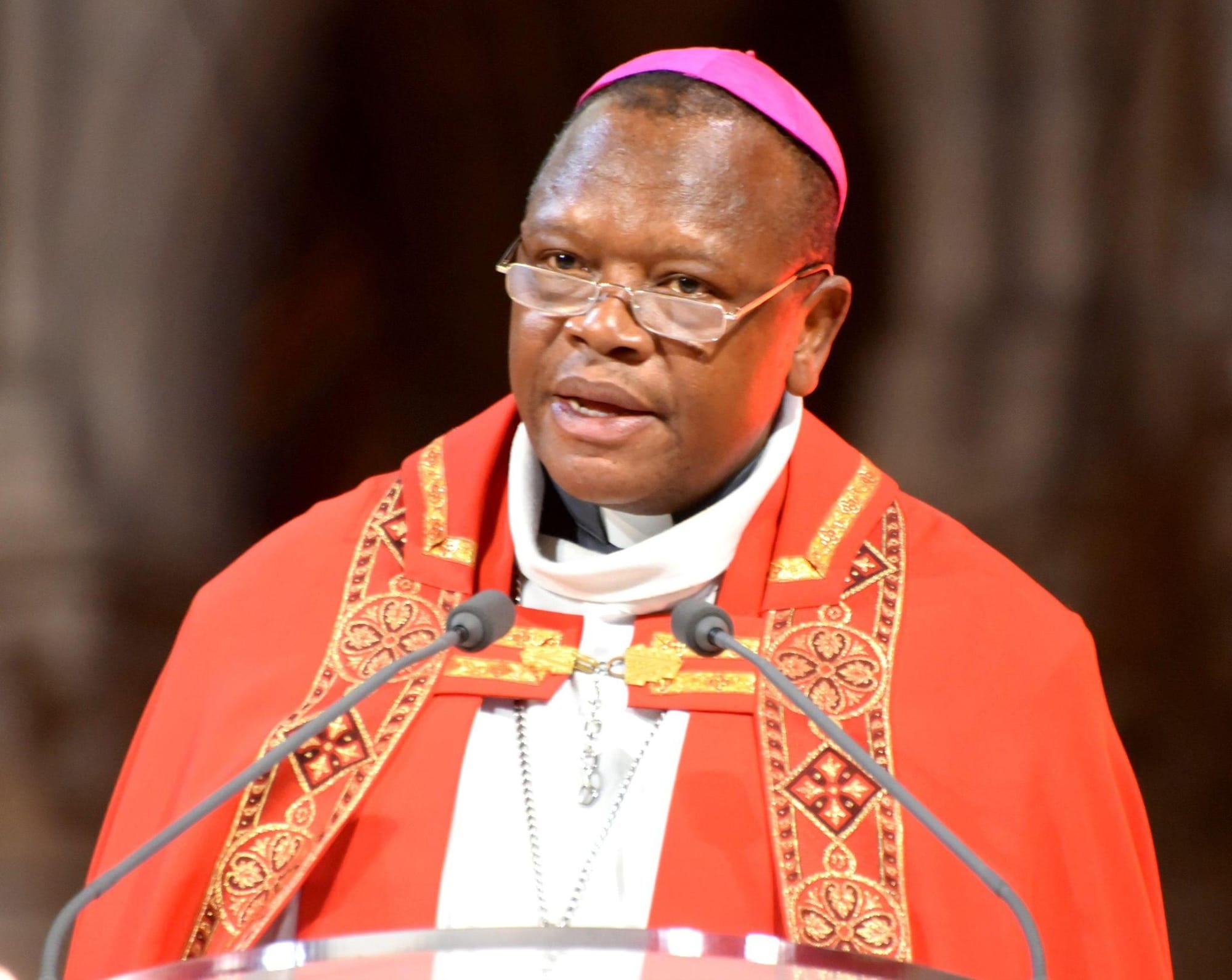
Zuppi quoted Pope Leo XIV’s warning that “the force of international law is thus replaced by the so-called ‘right of the strongest,’ ” and Pope John XXIII’s Pacem in Terris, which held that when one nation arms, “the others must keep pace,” and called for nuclear weapons to be banned.
Speaking on the second day of the event, Cardinal Fridolin Ambongo Besungu, Archbishop of Kinshasa, rejected the maxim that preparing for war secures peace. “Whoever prepares for war ends up waging it, and it is always the poor who pay,” he said. In the eastern part of the Democratic Republic of the Congo, he said, “the coltan, the cassiterite, the gold of our hills feed the war instead of feeding our children,” amid “an external injustice” of foreign interests competing for the country’s resources. He also warned: “A dialogue that excludes those with whom one is at war is not a dialogue: it is a monologue.”
The way Pope John XXIII urged Khrushchev to “back down wisely” during the Cuban Missile Crisis is another remarkable victory of “weak forces.” Here is an excerpt from the letter he sent to Khrushchev. This letter must have encouraged Khrushchev to resist the warmongers in his inner circles:
If you will be brave enough to stop the navies bringing missiles, you will prove your love for your neighbor, not only for your nation, but for all humankind. You will be described in history as one of the pioneers of a revolution based on love. You can say you are not religious, but religion is not a sum of precepts, but the commitment to actions made of love for mankind.
This sheds light on how we can and must avert the threat of nuclear war—the subject of the forum titled “Nuclear Weapons: Between Disarmament and Proliferation.”
When I Am Weak, I Am Strong
The third forum I attended, titled “The Ecumenical Patriarchate: From the East to the Global World,” gives full meaning to the motto: “It is when I am weak that I am strong.” This applies to the life of His Holiness Patriarch Bartholomew I of Constantinople, who has been active for 35 years and whose power of reconciliation shines brightly even though he has virtually no temporal power. A Turkish national, he belongs to the small Greek minority in that country, which is on the verge of disappearing. In Turkey itself, the number of local believers is very small, numbering no more than a few thousand.
Let me stress the importance of the initiative of Pope Leo when he invited all the religious leaders of France to make a common appeal, otherwise known as the Metz appeal (l’appel de Metz). This was a month before the Assisi meeting, where different religions united to be stronger in the quest of peace. In Assisi as in Metz, this common attitude makes it difficult for external politicians and whatever manipulators, who want to instrumentalize religion, to justify war. That is what Samuel Huntington tries to do through his theory on the “clash of civilizations.”
The response to Huntington’s clash of civilizations, and to Fukuyama’s theory on the “end of history”—both ideologies that sow division among religions—is the unity of religious leaders in the Spirit of Assisi.
In conclusion, “peace does not belong solely to religious leaders; it concerns every citizen, whether a believer or not.”
There Are No Holy Wars, Only Peace is Holy
The following remarks were delivered by Pope Leo XIV via video to the participants of the interfaith event in Assisi, Italy, “Unarmed And Disarming Peace,” on Oct. 27, 2026. Only his ongoing recuperation from lung surgery prevented his attendance in person.
Dear brothers and sisters,
You are gathered in Assisi forty years after the World Day of Prayer for Peace held on 27 October 1986. That event was initiated by Saint John Paul II, who on that occasion emphasized the intrinsic bond between a genuine religious attitude and a keen sense of peace.
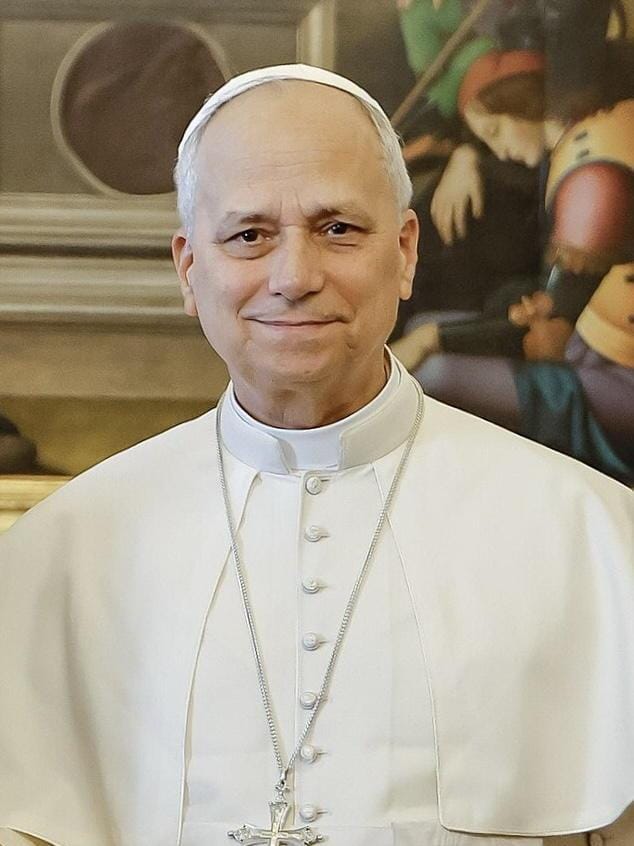
I extend my cordial greetings to the Patriarchs and religious leaders, many of whom have actively taken part in the various days of prayer and dialogue that have been held over the years. I also warmly greet His Excellency Felice Accrocca, Bishop of Assisi, the Franciscan Families and all those in attendance. I would very much like to have been with you at the tomb of Saint Francis on this important anniversary, to see your faces and bear witness together to the fact that living as brothers and sisters is already possible!
I thank the Dicastery for Interreligious Dialogue and the Community of Sant’Egidio for their commitment to continuing along the path laid out by my predecessors. I am heartened by the long and faithful journey made over these years, which has borne much fruit. Pope Francis said of that unforgettable day in October 1986: “It should not and could not have remained an isolated event. You have continued on this path and have increased its momentum.”
Indeed, following that first historic meeting, Saint John Paul II called for us to “continue to live the Spirit of Assisi.” That was at the time of the Cold War, a very different situation from the one we face today. After 1989, many believed that globalization would ensure lasting peace for the world. Unfortunately, as I wrote in Magnifica Humanitas, “an almost blind faith was placed in the ability of the markets to generate prosperity, democracy and stability. In reality, rather than automatically generating unity and peace, globalization has provoked fundamentalist, identity-based and nationalistic reactions.”
Against this backdrop, there has been “troubling revival of war as an instrument of international politics.” As the Catechism of the Catholic Church states, “the accumulation of arms strikes many as a paradoxically suitable way of deterring potential adversaries from war. They see it as the most effective means of ensuring peace among nations,” thus betraying the memory of the Twentieth Century and the senseless slaughter of millions of human lives. Precisely in these times marked by a “culture of power,” there is a need to cultivate the Spirit of Assisi, which entails a rejection of the religious justification of war, a spirit of mediation and dialogue, and contemplative reflection combined with creative action in the service of a future of peace. Yes, peace must once again become the common ideal of all peoples, the guiding star for all our choices, the standard that exposes injustice, and the shared horizon for all.
We must rebuild peace everywhere, not prepare for more wars. War can never be waged in the name of God. For us believers, to fight in the name of religion means attacking religion itself. There is no such thing as a holy war: only peace is holy.
That is why the journey begun in Assisi as a shared quest for peace is, first and foremost, the path of prayer. Prayer may seem weak in the face of the powers of the world, but it is the humble strength of believers. Let us turn to God, the giver of peace, that he may touch the hearts of those who seek war and terrorism. Let us not forget that prayer is never in vain.
Indeed, prayer is a school of dialogue with God, with people and with all creatures. Let us think of Saint Francis, whose death we have commemorated on his eight-hundredth anniversary. The world needs dialogue. The path of Assisi calls religious leaders to foster a climate of dialogue amongst the faithful and within society, so that the language of arrogance may give way to the language of peace, negotiation and understanding. This will help to “gradually [lead] humanity away from the cycle of violence.”
Brothers and sisters, may our prayers obtain from God that peace for the world’s nations for which we long. May he make us unarmed instruments of his peace. “Blessed are the peacemakers, for they shall be called children of God.”