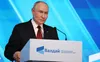
October 2nd marked the 174th consecutive weekly meeting of the International Peace Coalition (IPC). Helga Zepp-LaRouche, Schiller Institute founder and IPC initiator, opened the proceedings by warning of new developments, including the potential dangers of the military use of artificial intelligence (AI). U.S. Secretary of War Pete Hegseth is promoting the development of autonomous weapons systems, with no discussion of human control over these systems. She referenced the “absolute exploding situation in the Mideast,” where the blockage of both major maritime chokepoints threatens a global depression. On the other hand, a bright spot is the IRGC’s open letter to the American public, which gives Americans access to Iran’s side of the story for the first time. She also cited the remarks of Russian President Vladimir Putin at the 23rd annual forum of the Valdai International Discussion Club on Oct. 1, 2026, who described how Russia had sought to integrate itself with Europe and had been rebuffed. She recalled as well the case of Lieutenant Colonel Stanislav Petrov, who overruled the automatic retaliation mechanism in Soviet doctrine and prevented nuclear war on Sept. 26, 1983.
Agriculture in Crisis
Marcia Merry Baker, EIR Co-Editor for Economics, described today’s economic crisis situation as a “breakdown phase,” following economic shocks last Spring. She began with the projected collapse of total cereal grains production worldwide in the 2026-2027 crop year of 2.5%—which, she said, “might not sound like much, but it’s going to get bigger and faster as the planting and harvesting cycles go ahead, unless we intervene to stop it”—this in a world already facing hunger and shortages of food. She noted the trading of fertilizers globally has declined by 20 to 30 percent since the February start of the Iran War. The shutdown of shipping by the Persian Gulf oil states through the Strait of Hormuz has doubled the price of key industrial chemicals like sulfur. This is compounded by price rises in gasoline, jet fuel, heating oil and especially by shortages of diesel fuel. She described how Europe is moving to cut agricultural subsidies in order to re-direct the funds into rearmament. On the positive side, she cited agreements by Russia to supply India with fertilizer, and until recently, by China to export fuel to Southeast Asian nations. At Valdai, Putin spoke of resuming Russia’s global energy exports, provided that the economic sanctions are lifted.
Mike Callicrate is a cattle rancher, farm policy leader, and founder and owner of Ranch Foods Direct in Colorado. He catalogued the rapid decline of ranching due to bad policy, saying that “we are losing our ability to feed ourselves.”
Jesus Holguin Cazares, Kansas Cattlemenʼs Association President, reported on the sudden raids by ICE (U.S. Immigration and Customs Enforcement) last week in several communities with big meat-packing plants in southwestern Kansas. ICE gave no advance notice to anyone, including local law authorities. For several days, processing stopped, accounting for 20% of the U.S. beef supply. Ranchers had thousands of heads of cattle with nowhere to go. The ICE raids created a climate of fear where even well-documented U.S. citizens of Hispanic origin are reluctant to show up for work.
In response, Zepp-LaRouche referenced Pope Leo XIV’s remarks on the migrant controversy. “You do not solve the migrant question by expelling people,” she said; the answer is to stop wrecking the economies of other nations, which is what provokes waves of refugees. Mike Callicrate charged that meat packers “love disruption, they love chaos,” because it drives down the price that ranchers can ask for their cattle. Merry Baker agreed that ICE raids have disrupted the meat packing in southwest Kansas, contributing to a global crisis. Zepp-LaRouche urged everyone to step back from local controversies and view them from the perspective of a global shift away from the colonial system.
From Confrontation to Collaboration
Fr. John Heagle, Director, Priests Against Genocide (USA) and Member, Association of U.S. Catholic Priests, reminded the session that Pope Paul VI said, “If you want peace, work for justice.” He compared this to Helga Zepp-LaRouche’s call for a paradigm shift, and cited various Catholic Church leaders who called upon the church to engage with humanity as a whole. Paul VI called upon world leaders to recognize that “development is the new name for peace,” but he may have been naïve, because secular governments have disregarded his words, a situation which Fr. Heagle described as “the total failure of our democracy today.” Priests Against Genocide is working around the world where people are being slaughtered because of who they are. He described the role of the Church as a “field hospital” for the multitudes of victims. He ended with a powerful poem written by a child in Gaza describing the action of a parent writing their name on the child’s leg to identify them.