
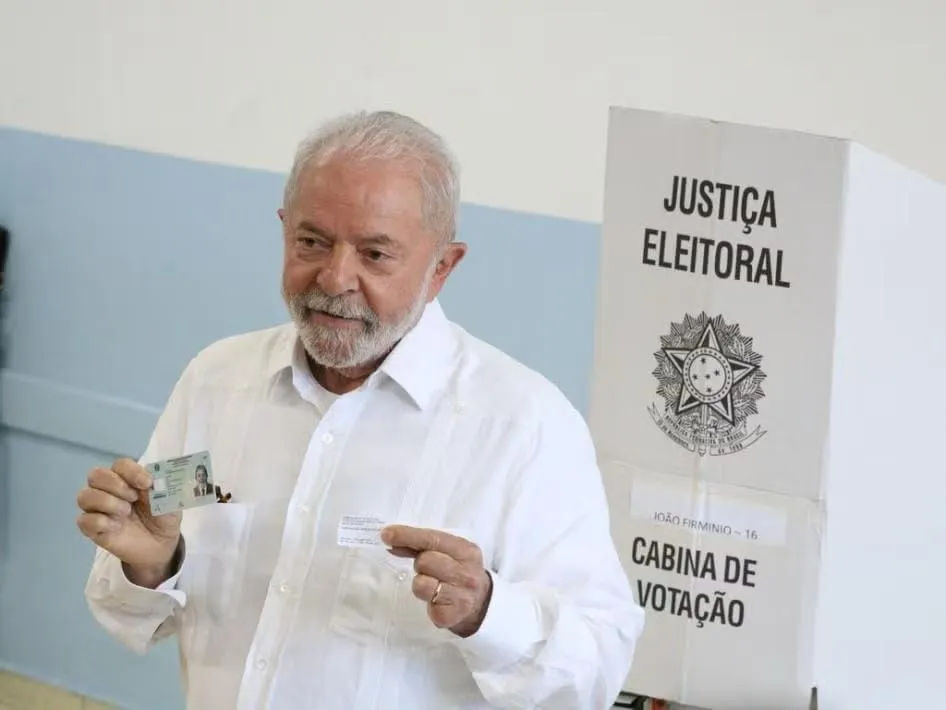
In the Oct. 25 second round of Brazil’s presidential election, President Luiz Inácio Lula da Silva was reelected with 51.8% of the votes cast, against 48.2% for Flávio Bolsonaro. This reflects a huge, unprecedented swing of over 5.5% in only three weeks since the first round of the elections: Lula was down by 2% then, and he emerged today with a margin of 3.5%. Never since direct elections resumed in Brazil in 1989 has the winner of the first round not gone on to win the second round—let alone to receive the drubbing which Washington-toady Flávio Bolsonaro got today.
The City of London, Wall Street, and the Trump administration had gone full tilt to oust Lula from power, as part of their strategic drive to destroy the BRICS (Flávio promised he would pull Brazil out of the BRICS) and silence the voice of the Global South demanding a new international economic system. That all backfired—and it will be a backfire heard around the world.
The voice of the Global South has just been strengthened.
What happened? A key factor was the dramatic youth mobilization across the country, organized by no political party, which started the day after the first round setback and which pulled in all age groups to the idea that Brazil had to fight for its sovereignty. This helped reduce voter abstention from 33 million in round 1 to about 30 million in round 2.
Another important point is that Lula, in the home stretch of the campaign, wisely moved away from the enemy’s political agenda of mutual mudslinging about “corruption” that had characterized much of the campaign and the mass media coverage. Lula instead shifted to emphasize policy basics such as sovereignty and development. In his comments to the media after casting his ballot, Lula first draped his speakers podium with the Brazilian flag and then pointed to it and stated: “We’re going to live in a country where the respected flag is this one, because on the other side they campaigned with this flag, but they want to govern with the American flag. We campaigned with this one, govern with this one, and win or lose with this one.”
As one senior statesman from the Global South commented simply to EIR after the Brazil results were in: “Yes, sovereignty matters.”