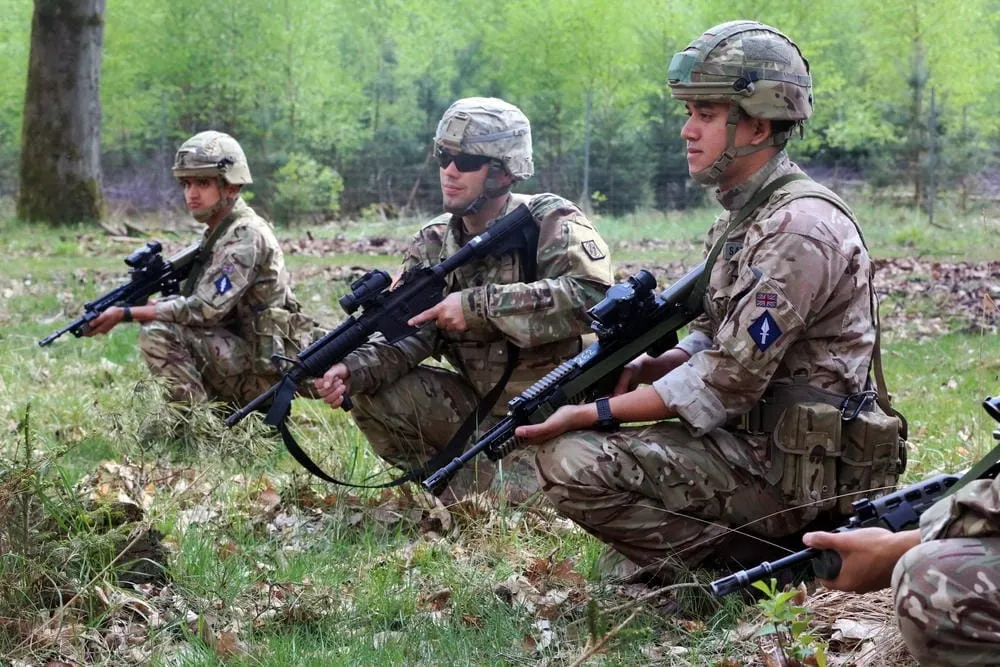
The Telegraph broke the news Nov. 26: “For the first time since the Cold War, letters have been sent to about 100,000 military reservists telling them to prepare to be called up for war. In the face of increasing threats from Russia, veterans of all three branches of the Armed Forces have been asked to update their contact details and provide information about their current jobs and skills.” Headlines in the rest of the British media quickly spread the message: “Britain Tells 100,000 to Get Ready for War,” the Daily Mail tabloid hyped.
On the same day, the Ministry of Defense announced a program to strengthen the UK’s ability to deploy its nuclear weapons. The £8 billion “Gateway Agreement” signed with Britain’s Babcock company aims to upgrade the UK’s “submarine availability and readiness,” as part of a larger “£26 billion investment program to turn naval bases into warfighting-ready facilities.” Currently, the UK can only launch its nuclear weapons by submarine. With this, we can “get our subs out of the docks and into the sea faster,” Defense Secretary Wes Streeting explained. “Even when we have to move funding from other departments, we will prioritize our nuclear deterrent and getting Britain warfighting ready.”
On Nov. 24, the monarchy’s foreign policy thinktank, Chatham House, posted an “expert comment” demanding that Europe “acknowledge that it is effectively under coordinated attack,” from Russia, Iran, etc., in order to make that clear to the public. “Securing public support for strengthened resilience measures” is urgent.
On Nov. 10, the UK leadership of RAND Europe published a 56-page paper, “[Ready for War by 2030: A Scenario. Bolstering NATO’s and UK Preparedness](https://www.rand.org/pubs/perspectives/PEA5505-1.html