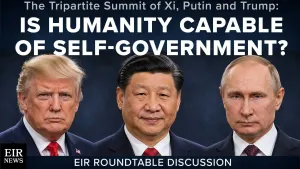
The trilateral meeting of the Presidents of the United States, Russia and China could establish channels for three-way crisis communication among the great powers, Qian Feng, director of the Research Department at Tsinghua University’s National Strategy Institute, told TASS.
“In my view, the main value of this meeting lies not in how many concrete agreements it produces, but in opening a new crisis communication channel among the great powers. That would preserve room for diplomacy to resolve specific differences gradually and prevent the system of global governance from sliding into division and confrontation,” Qian said.
“The results are likely to be seen from a broader perspective—in deeper mutual understanding, efforts to keep disagreements in check and a search for opportunities to cooperate,” Qian explained. “Reaching a comprehensive, legally binding agreement would be very difficult.”
Trump’s proposal to take up nuclear arms control issues “do not reflect the actual makeup of nuclear forces today,” he said, adding that China “made clear long ago that it would be unfair and unjustified to expect it to take part in such talks at this stage.” Nor would it be an appropriate venue to take up the issues of sanctions or Ukraine.
“The leaders of these three countries, which are among the most important players on the world stage and are permanent members of the UN Security Council, decided to use the multilateral setting of the APEC summit in Shenzhen to meet face to face, discuss their main concerns, engage in constructive dialogue on issues of common interest, reduce the risk of unintended conflicts arising from strategic miscalculations and curb tensions among the great powers. That in itself is an important diplomatic achievement,” he concluded.