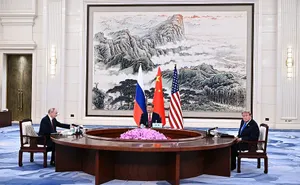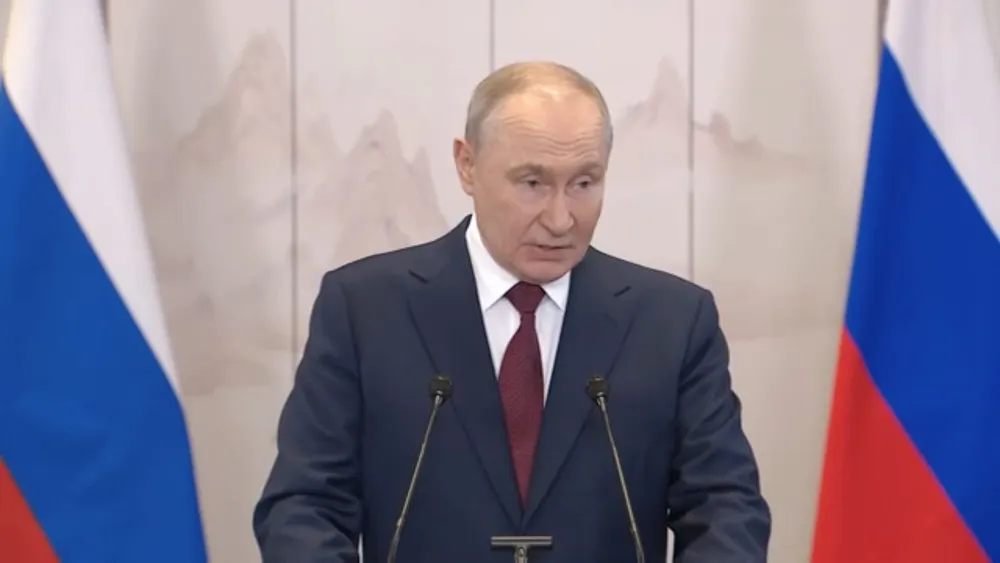
In a press conference after the meeting with Xi Jinping and Donald Trump, Vladimir Putin was asked what would follow: After responding that “nobody knows what will happen next. Only God knows that,” he added that he “would really want it to have a continuation, at least because in terms of comparing notes, in a number of key areas, we have reached, if not an agreement, then a mutual understanding. This primarily concerns its historical significance and the like. There have never been such meetings before. We have held the first meeting, which has opened a new page in the history of diplomacy.”
On the subjects discussed, he mentioned the reform of the UN, the role of nuclear weapons, and the agreement that the ICC “is clearly overstepping its mandate and making political rather than legal decisions.” But overall he said: “[W]hat I liked about that meeting, and what made an extremely positive impression on me, is that after we made our official statements, which we prepared in advance, in the presence of media representatives and your colleagues, we held an open discussion. I even think that none of us expected that. However, the President of China, who initiated this meeting, managed to create an atmosphere in which we freely exchanged views on several issues of mutual interest. It was probably the most interesting element of the meeting. Our discussion was held in a completely open and very candid atmosphere. It helped us understand each other better, and I think that this created conditions for future arrangements, no matter whether we do this in the same or in a different format. Overall, it was a very useful meeting.”
Pavel Zarubin of Rossiya TV pointed to the fact that earlier agreements were not followed up by the U.S., asking: “is the current United States even capable of reaching agreements, and would they actually honor such agreements if they were to be concluded?”
Putin replied that the U.S. “political system itself, is far from simple; one might even say it is rather complex. There are many checks and balances in place—various mechanisms designed to maintain a balance of political power. So, from the outside, things might appear inconsistent or not quite how we would like them to be. But the most important point is this—and I have no doubt about it—President Trump is genuinely committed to resolving conflicts, including the conflict in Ukraine, and he is sincerely interested in improving bilateral relations across a range of areas, including, of course, the U.S.-Russia relationship, which matters to us…. But we must deal with realities as they are, and we hope that this positive disposition will endure.” He added “we share certain commonalities in our approaches—specifically regarding what are termed ‘civilizational values.’ In that sense, there is something that, if not exactly uniting us, at least points to a certain alignment of views.”
Regarding the war in Ukraine, Putin reviewed the cause of the war, adding: “As for compromises, of course there are compromises. How could there not be? They were proposed by the American side, and we accepted them exactly as they were presented, including during the talks in Anchorage. So, these compromises do exist, and we have supported them. The question is whether the other parties to the conflict—Ukraine and, in this case, its European sponsors—are prepared to accept them. In other words, do they want to reach an agreement to end hostilities, to end the war, by peaceful means or not? Judging by what we see at the moment, they don’t. But we shall see. Everything flows, everything changes. Perhaps they, too, will eventually realize that it is better to accept these compromises now than to face the reality later that they will have to accept anyway.”