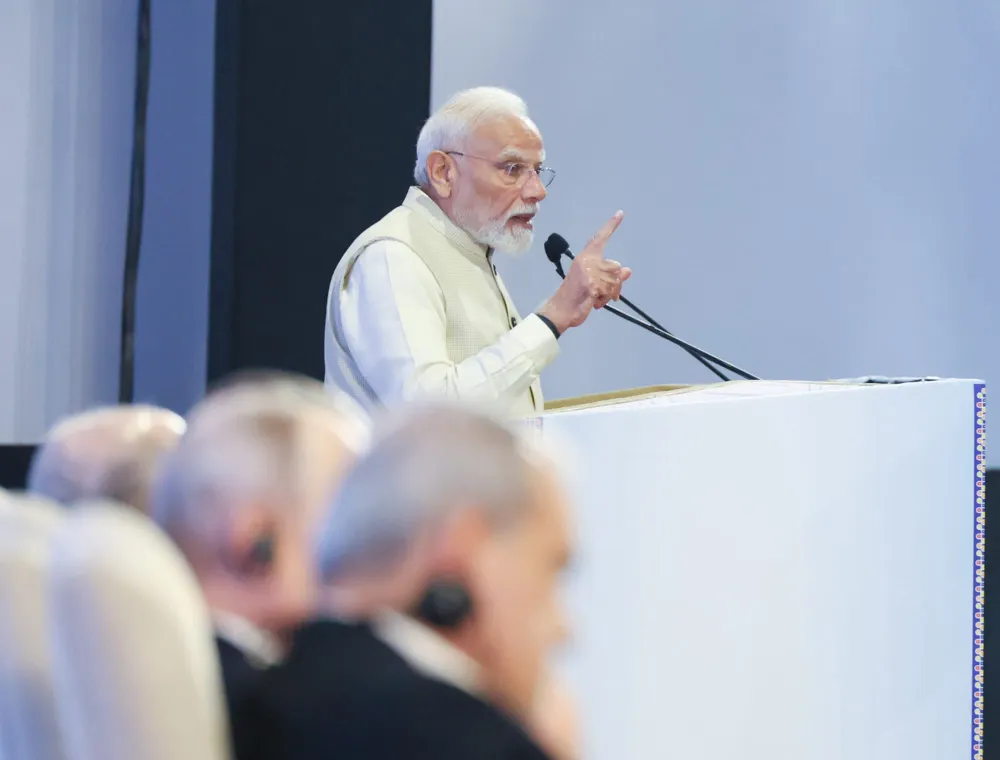
Indian Prime Minister Narendra Modi, as the host of the 18th BRICS Summit, delivered opening remarks on Sept. 12 which emphasized that the BRICS’s strength lies precisely in its diversity, and its ability to bring development to all parties.
Modi began by stating: “I am pleased that, with all your cooperation and support, we have been able to translate our shared vision into win-win cooperation.” It will not have gone unnoticed that he used the phrase “win-win,” which is widely associated with Chinese President Xi Jinping. Modi added that “From my personal experience, I can say that the Global South countries’ confidence in BRICS has grown, because within BRICS: Their voices are heard. Their experiences are respected. And solutions are developed not for them, but together with them.”
Modi’s conclusion was particularly eloquent: “The strength of BRICS lies in our diversity and cooperation. We may be rooted in different realities, but together, we rise through cooperation, and blossom for humanity. May our diversity remain our identity, our cooperation become our inspiration, and our progress serve the cause of all humanity.”
The meeting on the sidelines of the BRICS summit between Modi and Xi Jinping of China, who will assume the rotating presidency of the BRICS next year, also centered on the idea that the two leaders agreed that their countries “are partners rather than rivals.”
India’s Ministry of External Affairs issued a statement reporting on that historic conversation, which said: “They reaffirmed that both countries should take a strategic and long-term perspective of their ties. Differences should not become disputes. The Prime Minister [Modi) highlighted that both sides must be guided by three mutuals—mutual respect, mutual sensitivity and mutual interest.”
The statement continued: “He [Modi] underlined the need for both sides to observe existing agreements and understandings on border-related issues. The two leaders expressed commitment to a fair, reasonable, and mutually acceptable resolution of the boundary question proceeding from the political perspective of their overall bilateral relations and the long-term interests of the two peoples.”