
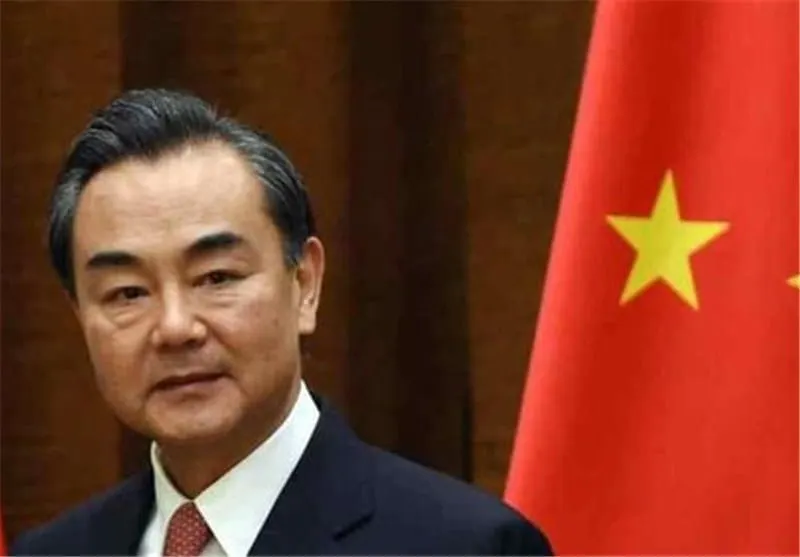
Saudi Arabia’s National Security Advisor Mosaad bin Mohammad Al-Aiban met in Beijing with Chinese Foreign Minister Wang Yi this on Nov. 2, the same day Wang also met, separately, with Iran’s Ali Baqeri Kani, Deputy for International Affairs at the Secretariat of Iran’s Supreme National Security Council. “In-depth exchanges of views on the situation in the Middle East and Gulf region” led the agenda of both meetings, as Chinese Foreign Ministry Spokeswoman Mao Ning reported today.
On the same day, the Sultan of Oman met with China’s President Xi Jinping.
Given “the pressing priority” of avoiding a new round of conflict in this region so important to world energy supplies and peace, China is stepping up its “communication and dialogue with Saudi Arabia, Iran, and other regional countries,” Mao explained in her briefing. It is China’s hope that these nations, adhering to the principles of mutual respect and good-neighborliness, will “jointly create a new regional architecture for common, comprehensive, cooperative and sustainable security,” in order to bring lasting peace to the region, she specified.
China is uniquely situated to aid Saudi-Iranian communication. In 2023, Chinese diplomacy successfully brought Iran and Saudi Arabia to the table together, leading to the signing of the “Beijing Agreement” by the three nations, in which Iran and Saudi Arabia agreed to restore relations with each other—a direct blow to the British Empire strategy of fomenting what they hoped would be perpetual religious war between Muslim countries by manipulating historic Sunni-Shi’a tensions. Now China is lending its good offices to ensure that “the spirit of the Beijing Agreement” continues. According to Mao, the security officials of both nations appreciated China’s “continued efforts to play a constructive role,” and are willing to maintain the spirit of that Beijing agreement.
Reporters at the press conference pressed Mao on whether China had brought the Iranian and Saudi officials into the same room for a trilateral meeting, or if it planned to do that. Mao left the direct question unanswered, referring reporters to the Chinese readouts on the meeting, and reiterating that China “stands ready” to continue its efforts “to promote dialogue and de-escalation.”
As for Chinese-Saudi relations in particular, Al-Aiban, who is a cabinet minister in the Saudi government, gave Wang a personal message for President Xi Jinping from Crown Prince and Prime Minister Mohammed bin Salman bin Abdulaziz Al Saud, concerning ways to develop bilateral relations and “other issues of common interest,” the Saudi Press Agency reported. Al-Aiban and Wang also discussed how to strengthen economic, trade, and investment cooperation between the two countries, through partnership in sectors such as energy, industry, and advanced technologies, “in line with Saudi Vision 2030’s goals.”