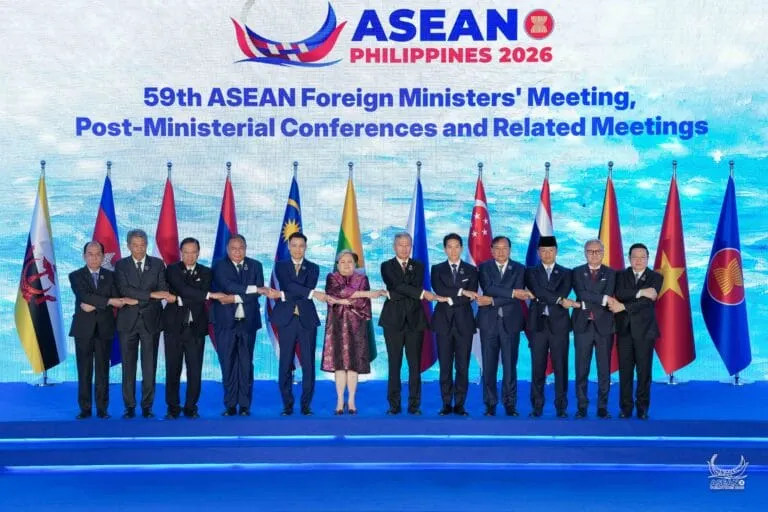
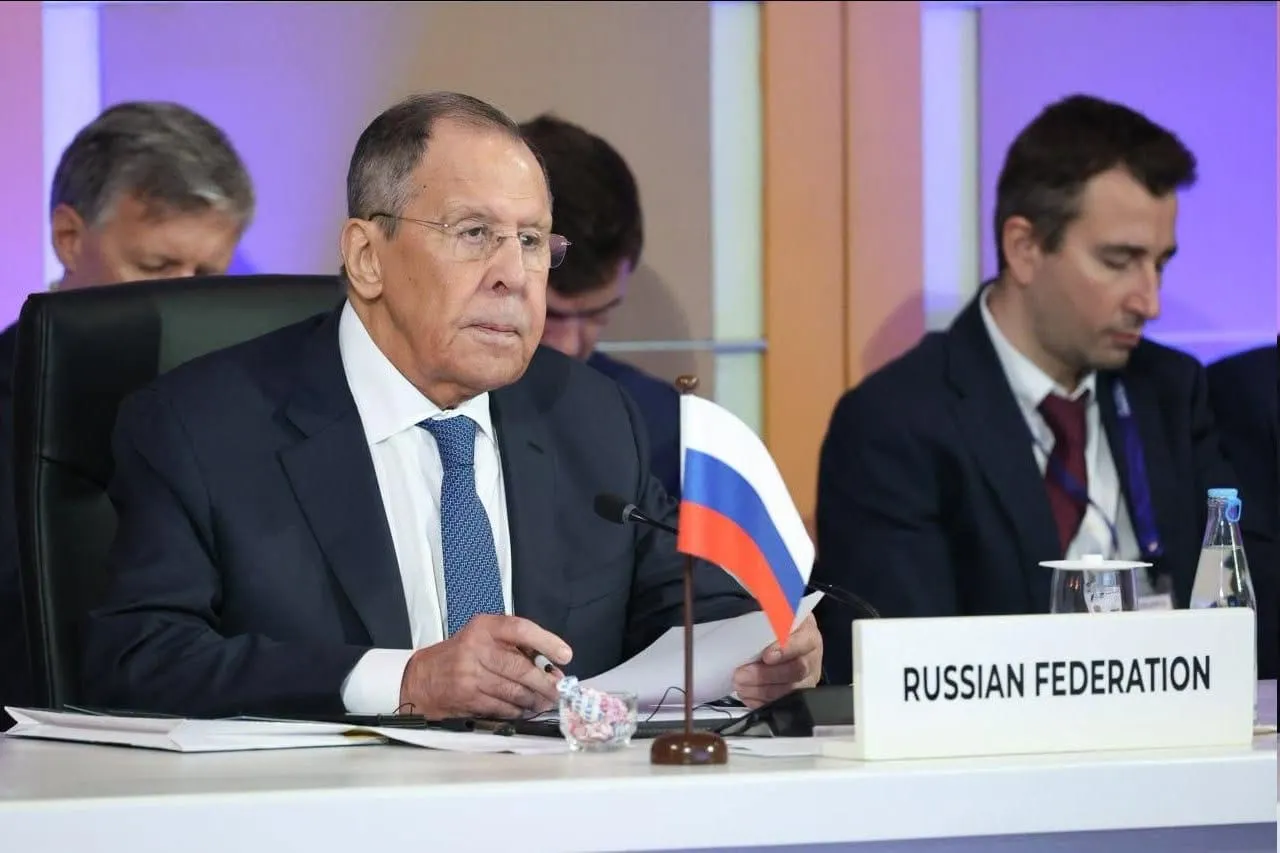
Speaking at a press conference at the ASEAN Foreign Ministers’ Meeting in Manila, Russian Foreign Minister Sergei Lavrov announced that he would meet with Secretary of State Marco Rubio on July 23. Lavrov also indicated some of the major issues that would be of concern for Russia in this discussion. He said that the United States is not simply assisting, but is directly participating in the targeting of Ukrainian weapons at targets, including civilian ones, on Russian territory. This is being done through the assistance of the Starlink system “and much more.”
While he said that he assumed that the U.S. has not abandoned the proposals put forward at Anchorage, he had a question about Marco Rubio’s “rather ambiguous” comments on Anchorage. (On June 25, less than a month ago, Rubio had stated to reporters, “There was a proposal in Alaska, but there was no agreement. If there had been an agreement, we would have had an end of the war.”)
Lavrov noted that President Trump has also recently talked about the possibility of a quick resolution to the conflict in Ukraine, and said that he would ask Rubio what Trump meant by this in their Thursday meeting.
Lavrov also reiterated that Russia is not interested in attacking any European nation, but that if a European country attacked Russia, he emphasized Putin’s statement that “It will not be a conventional one.” He said he found it strange that the U.S. was publicly “granting permission” to Saudi Arabia to enrich uranium, since Saudi Arabia, as a signatory of the Nuclear Non-Proliferation Treaty, already has the right to enrich uranium for the peaceful use of nuclear energy. In response to a question on the finance discussion in the BRICS, Lavrov indicated that the discussion on international financial reform was moving forward.
In reply to a question on the new US “Indo-Pacific strategy,” he said that in his private discussions, many of the ASEAN countries were also concerned about this dangerous development which went against the ASEAN notion of “consensus.” The matter of the quest for nuclear weapons on the part of both South Korea and Japan was particularly disturbing. On Japan, Tass reports that Lavrov said, “I have heard what Prime Minister Takaichi said when she stated that it was time to review the three principles enshrined in the Japanese constitution, under which the country neither produces, possesses nor hosts nuclear weapons. It is certainly a serious signal” and that this “echoes the processes underway in Japan’s neighboring countries, South Korea and the United States, who hold regular and increasingly intensive military drills, gradually incorporating a nuclear component. The Japanese are considering joining these exercises, so the situation is indeed grave.”
The Foreign Minister also expressed grave concern with regard to the number of non-nuclear countries, both in Europe and in Asia, now mooting the possibility of developing, or stationing on their soil, nuclear weapons.