

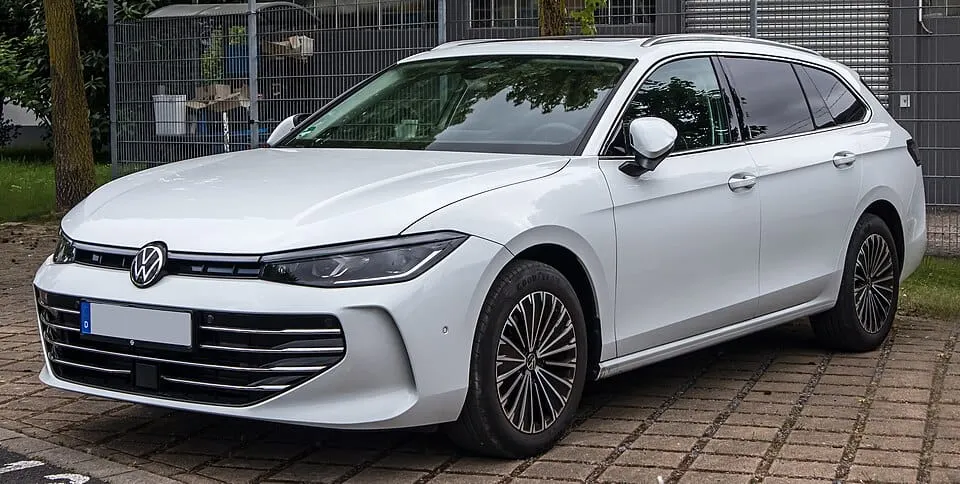
An ideological “fury” is demolishing the German auto sector, the liberal-conservative outlet Tichys Einblick wrote, exposing the idiocy of the political leadership which has banned internal combustion engines. Globally, only 5% of new car sales are EVs. The ideological fury has forced German carmakers to transfer production abroad, cutting 130,000 jobs directly and three times as many indirectly, last year.
“It is not the internal combustion engine that is disappearing—but rather the value it creates. The Volkswagen Passat is now manufactured in Slovakia instead of Emden. The new Volkswagen Transporter rolls off the assembly line at the Ford Otosan plant in Turkey, while Audi produces its Q3 in Hungary. Mercedes has relocated a large portion of its compact car production to Kecskemét [Hungary—ed.]. For years, large premium SUVs from German manufacturers have been produced primarily in the U.S. or Slovakia.
“The truth is this: Production takes place where the internal combustion engine yields the highest return—and Germany clearly isn’t one of those locations,” writes Tichys. ”Approximately 130,000 jobs have been cut in the automotive industry in recent years. When secondary effects are factored in, roughly half a million jobs are likely to have fallen victim to the automotive industry crisis. Typically, one job lost in the core sector—automotive production—leads to two, if not three, additional job losses along the value chain and as a result of the loss of purchasing power in the region.”
Not covered by Tichys, but relevant to the issue, is the much-propagandized success of EVs in China. The Green narrative is: The majority of car sales in China are EV. This is true—if hybrid cars are included. But hybrid cars run with a conventional engine; thus, conventional engines still represent over 50% of new cars in China. This is still a remarkable success, but it is due, among other things, to the fact that China first built the infrastructure, and then gradually sold the cars. On average, in China there is one recharging station for two cars, compared with Germany, where the rate is 1:10+. Germany cannot catch up on that, even if it wanted to: it simply has no energy capacity.
Had Germany and the EU allowed carmakers to keep producing diesel or gasoline-driven cars, the sector could have kept earnings high enough to afford investing in parallel into EV. With collapsing sales and investment losses, however, that margin is no longer there to face competition from Chinese carmakers, either in the EV or in conventional engines.
The German car industry already faced strong competition decades ago, when Japanese cars entered the European market. That competition was won through a combination of product improvements (the VW Golf replaced the old Käfer) and import tariffs. Adopting the same approach now will be difficult, if not impossible.