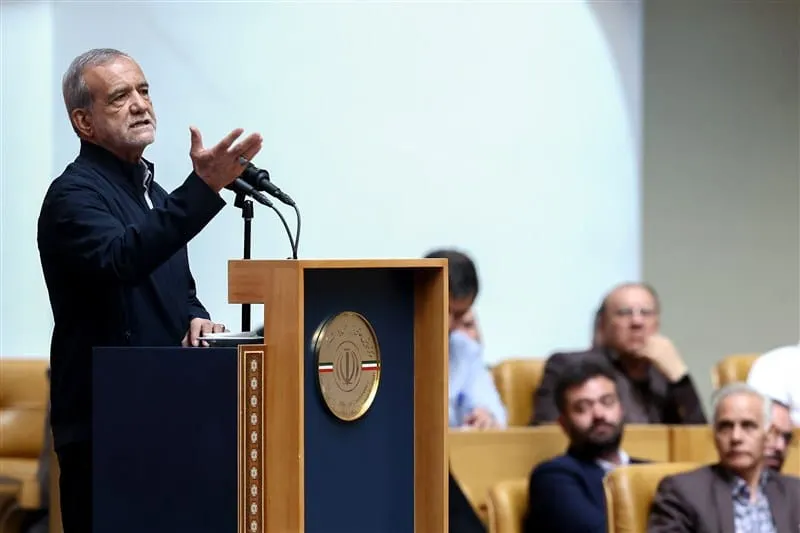
Aug. 28, 2026(EIRNS)—The 40th Islamic Unity Conference opened yesterday in Iran with the theme “Islamic Unity in the Thought of the Martyred Iman, Ayatollah Seyed Ali Hosseini Khamenei.” Sunni and Shia participants from around 40 countries, including, as reported by IRNA, Iraq, Pakistan, Turkey, Lebanon, Afghanistan and the Persian Gulf states came to the Tehran Summit Hall, joined by various foreign ambassadors posted to Iran, along with representatives of senior religious authorities.
The secretary-general of the World Forum for Proximity of Islamic Schools of Thought argued that the military attack on Iran actually represented a broader “civilizational confrontation” with Western hegemony and unilateralism. He contended that the U.S., as IRNA put it, “opposed the emergence of a strong Iran because Tehran’s growing scientific, military, economic and technological capabilities could provide a model for other Muslim and developing countries. But such outside impositions cannot bring security. Rather: “Security can only be ensured by the countries of the region themselves,” so promoting Islamic unity over sectarian divisions also has a key practical benefit.
Iran’s President Masoud Pezeshkian urged Muslim countries, as Tasnim News put it, “ to turn their shared resources and capabilities into collective strength and prevent their territories from being used against one another... Islamic unity does not mean that Muslims must become identical or abandon their religious, political and national differences. Rather, he said, unity means ensuring that differences do not turn Muslims into enemies...” The higher basis for unity is dependent upon “truth, justice and mutual responsibility.”