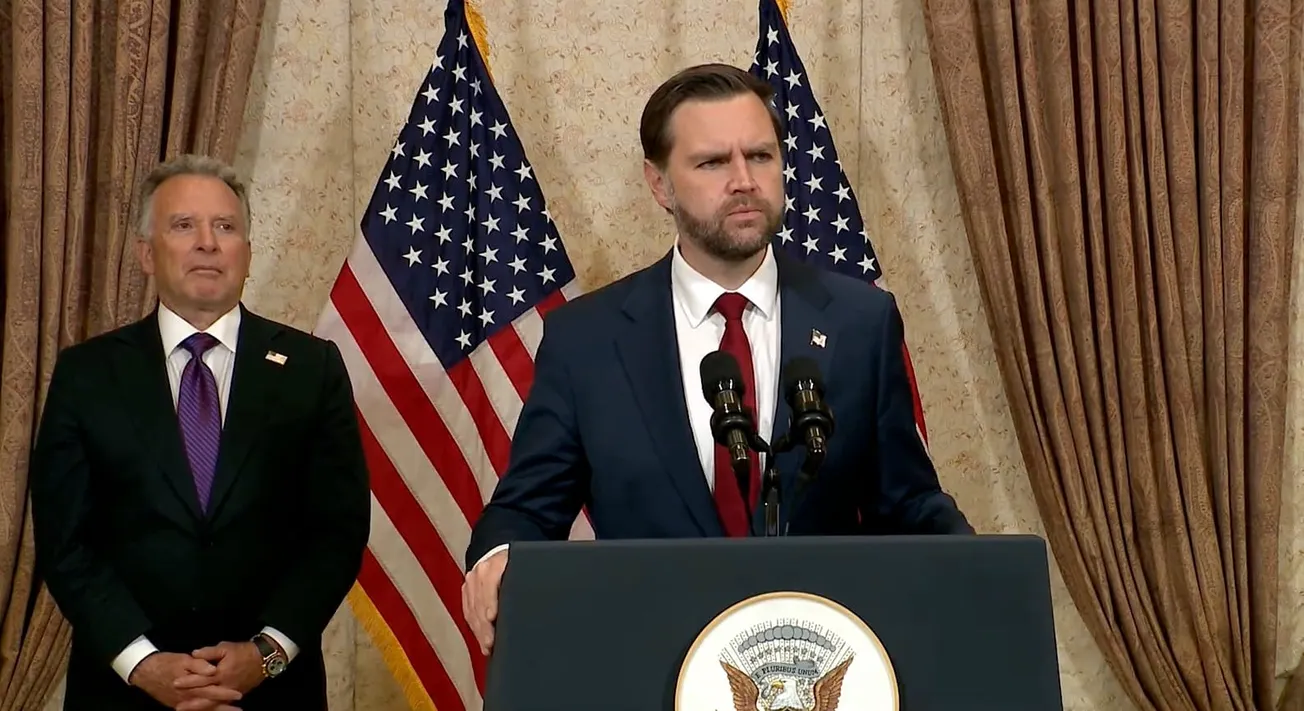
After marathon talks between the U.S. and Iran lasting 21 hours, U.S. Vice President JD Vance, early Sunday morning, April 12, local time, announced that the U.S. team is heading back to Washington. He said: “We have not reached an agreement…. We’ve had a number of substantive discussions with the Iranians. That’s the good news. The bad news is we have not reached an agreement.... We go back to the United States having not come to an agreement. We’ve made it very clear what our red lines are, what things we’re willing to accommodate them on, and what things we’re not willing to accommodate them on, and they have chosen not to accept our terms…. We just could not get to a situation where the Iranians were willing to accept our terms. I think that we were quite flexible. We were quite accommodating.
“The President told us, ‘You need to come here in good faith and make your best effort to get a deal.’ We did that and, unfortunately, we weren’t able to make headway.... We leave here with a very simple proposal, a method of understanding that is our final and best offer. We’ll see if the Iranians accept it.”
Asked what specific points of the negotiation the Iranians rejected, he said that the U.S. position was that Iran “not seek the tools that would enable them to quickly achieve a nuclear weapon.” While the administration continued to remain vague all day as to what this meant, it seems that once again Washington insists that Iran cannot even enrich uranium up to the 3-5% level to run their civilian nuclear energy facility, much less the 20% level for medical usages.
An Iranian official has clarified Washington’s vague description of the collapse of the peace talks. Responding to Trump’s description that Iran had refused to commit to not trying to acquire nuclear weapons, the official, as reported by AP and the Times of Israel, said: ″It is false. Iran’s position is clear. Iran is not seeking to acquire nuclear weapons, but it has the right to nuclear energy for peaceful purposes. This right is undeniable and must be recognized.″ Even so, the official added, Iran is ready to limit its nuclear activities as part of confidence-building measures, including limiting enrichment levels.
SInce reports, including from Vance and President Trump, indicate that much progress was made in the first two sessions on April 11, it appears that this canard—that Iran can only prove it has no interest in bomb-grade (above 90%) enriched uranium unless it gets rid of its 3-5% enriched uranium—that Vance was instructed by Washington to blow up the negotiations. Vance reported that he was hearing from Trump, Secretary of State Marco Rubio, Defense Secretary Pete Hegseth, Adm. Brad Cooper—commander of U.S. Central Command, which oversees U.S. military operations in the Middle East—and members of the White House national security team.