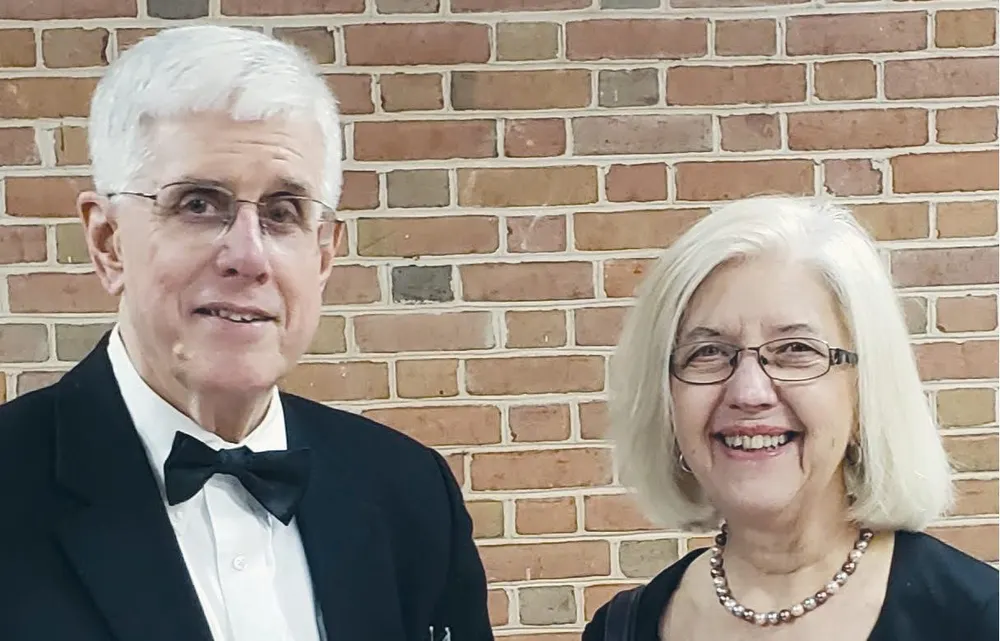
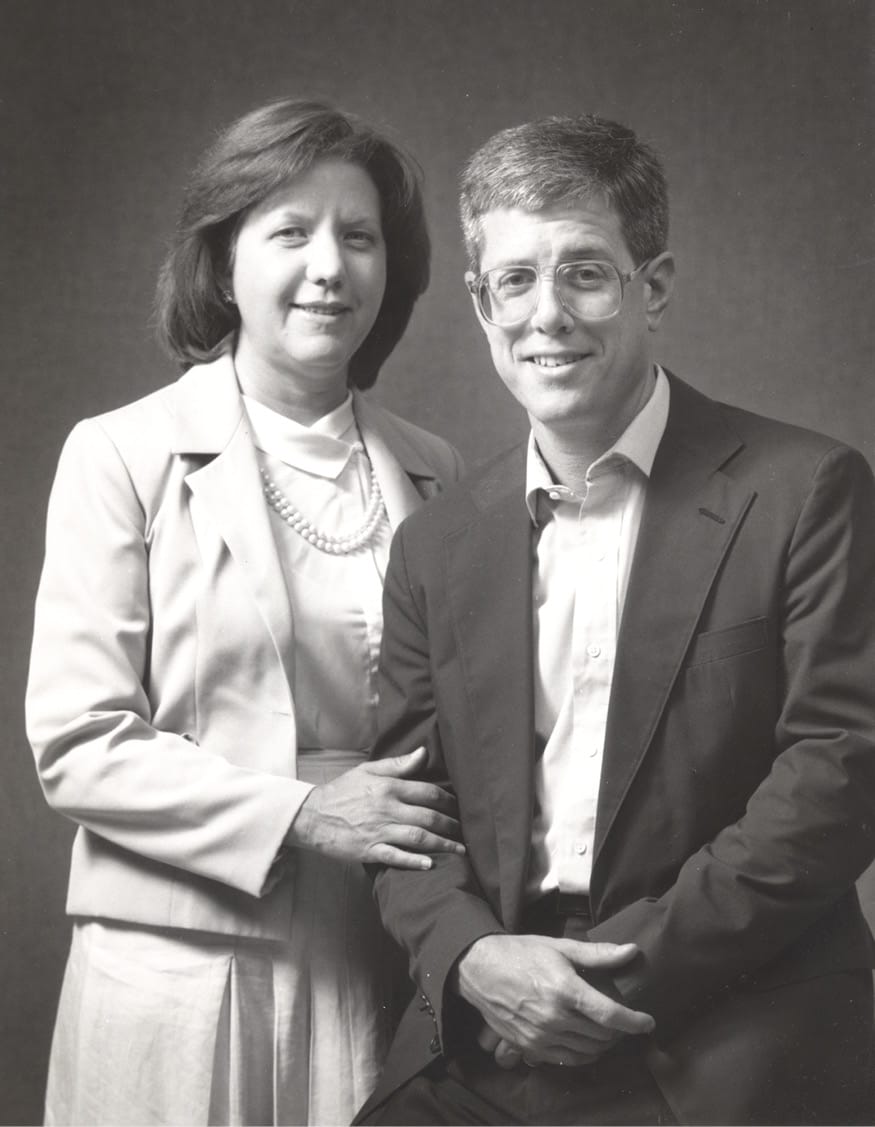
Jan. 8—Anita Gretz Gallagher, who was my much better half, died on Dec. 30 of last year at 78, after struggling with Alzheimer’s Disease for more than seven years. As Anita passed away, articles were appearing about researchers at Cleveland medical institutions having developed a compound which had actually reversed Alzheimer’s, although only in animal studies so far. She believed, for as long as she was still able to express thoughts about it, that developments like this had to happen soon. She was waiting.
In another time, in the later 1960s, Anita was among the very earliest of the young people who first took leadership roles in Lyndon LaRouche’s philosophical association—which, beginning with the Vietnam War, has always been focused on peace by economic development of underdeveloped nations. Pursuing that mission, Anita was, as Dennis Small said in his note on New Year’s Eve, “a gem—one in a million.”
Anita Gretz always wanted to be of service to people. As a teenager she had thought she would become a Catholic nun. As a cum laude student at Bryn Mawr College in Philadelphia, she had recognized a better way, in LaRouche’s economic philosophy, and become self-confident that she could bring people to support it. In a letter to a former high school friend, Anita described giving her first talk on the subject, and how all nervousness fell away as she threw her mind into convincing other students of it.
Anita moved to Boston in 1971, where I had begun organizing a “LaRouche local,” and immediately raised it to a higher level, as we pursued campus debate against the zero growth, “British conservationist” evil of the Club of Rome and its infamous book, The Limits to Growth. On the evening of the day we got married in 1972, we drew Club of Rome co-author Jay Forrester into a debate at Harvard, and filled the crowded room with our literature.
While working at Wellesley College, Anita debated “Soviet expert” Prof. Marshall Goldman there, who was spreading “limits to growth” poison in Russian academic circles.
Her file had been one of those notorious FBI secret surveillance files exposed in the well-known “Media, Pennsylvania” case. When Philadelphia police and the FBI attempted a frameup of her fellow LaRouche student activists back in Philadelphia, to punish them for their organizing of the 1969 University of Pennsylvania student strike, Anita organized Prof. Noam Chomsky to speak for their defense committee, and we overflowed a large lecture room at Boston University. The frame-up attempt was later dropped.
Anita’s work was bold and determined, and when she determined to do something, she was hard to restrain. Her own family had a colloquialism they applied to Anita’s girlhood, which got at it: “She was a pistol!” they’d say.
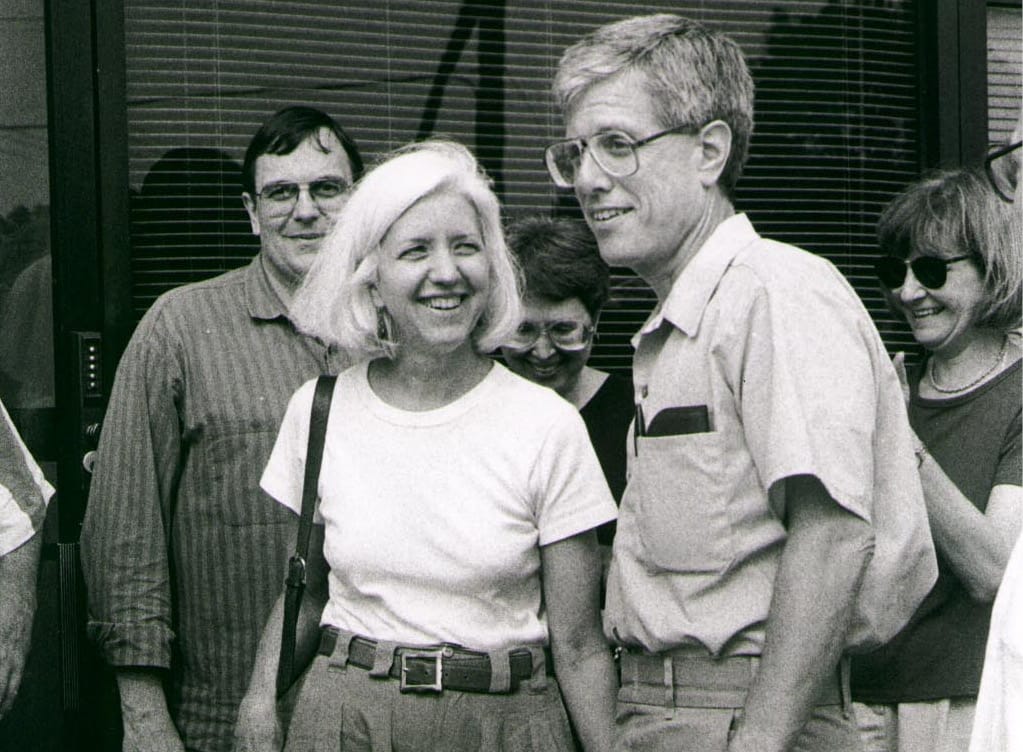
Her work branched in many directions. She managed electoral campaigns from Pennsylvania to California and made herself the LaRouche movement’s expert on FEC campaign law. We went to Germany to help organize conferences there. She organized lawyers to defend LaRouche and his movement against the much more serious persecution of the 1980s, which included prosecutions of both of us, and which she faced without blinking. When it was necessary in the mid-1980s that we stick to fundraising, Anita repeatedly raised $1 million in a year.
At the same time Anita reached out to draw public figures into collaboration with us, like Alaska Sen. Mike Gravel, U.S. Ambassador to Russia Jack Matlock, U.S. House Armed Services Committee Chair John Murtha and his Chief of Staff, head of Russia House Edward Lozansky, and so on.
It was not the case that Anita found any of these things easy to do, although she approached her work with either a jaunty smile or an edgy sort of humor. She was projecting her inner confidence, that if she concentrated hard and long on these missions, and elicited the same from friends and colleagues, they could make “the crooked straight and the rough places plain.”
As a phrase out of the Civil Rights Movement goes, “She made good trouble.”
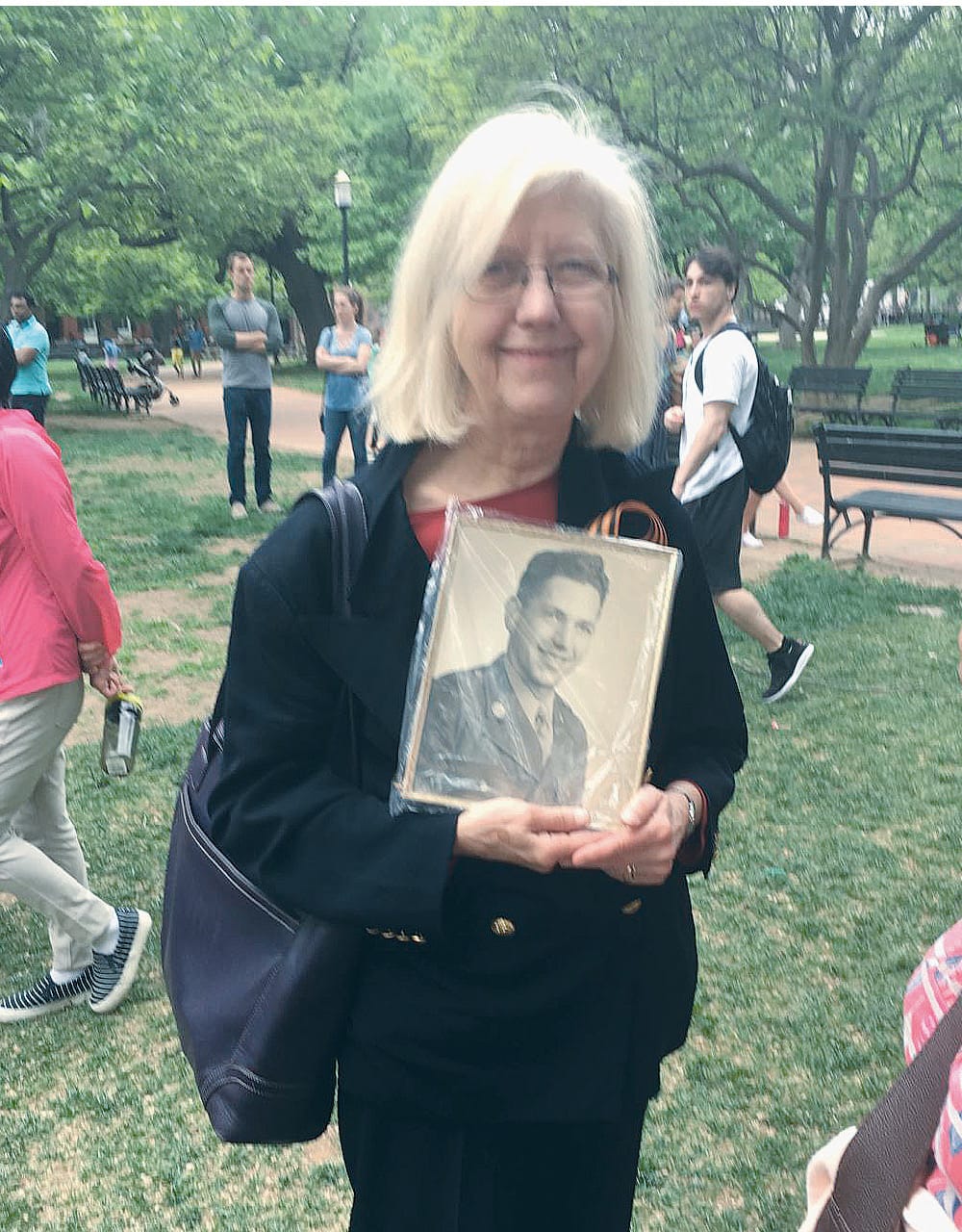
But still, Anita remained happy just to be of service to people, and never put any limit on how much time she would spend simply helping family members or colleagues take care of illnesses, find housing or work, drive to concerts…. Then for 18 months in 2004-05 she took over full-time care for her father, suffering from heart disease, at his home. Anita was proud of her father’s coming from poverty and limited education, learning to cook under the GI Bill at the end of World War II, and becoming one of the best-known, though very small, restaurateurs in Baltimore.
Anita and I were married 53 years. Decades ago, I made this poem to her, taking off from a famous Shakespeare sonnet as amateurs do, but meaning every word. For many years it looked out of a little frame on our bureau.
Sonnet for Anita
When, to the sessions of deep, silent thought,
I bring your eyes’ dear image to my mind,
I mourn the lack of many a joy you sought,
But hectic working, left to later time.
An hour’s sweet was more than you would take,
But still more hours would give, more being gone;
Into your evening’s quiet pause would break
The toiling wave by which your days go on.
But ever when our gazes meet,
I see such courage come and look out at your eyes,
Such fire, that our hopes must come to be,
That courage scorns at any other prize.
And when the while you think on me, dear friend,
The solace of your heart, my heart would lend.
Remembering Anita Gallagher, A Woman of Grace, Accomplishment, and Love
For EIR, by Marcia Merry Baker
Jan. 16—We who had the blessed good fortune to have known and worked with Anita personally, continue to marvel at how she combined so many virtues, skills, and charms into one being. We confess, here in Virginia, where she lived from 1985 to 2025, some of her close friends affectionately addressed her as “Miss Anita,” in awe of how she was, all at the same time, sharp-witted, lovable, and a force of intellect.
The list is long of the responsibilities she took on with great commitment and achievement, and the people she uplifted along the way. We here recount just a few of her accomplishments, as much a way to give comfort to us, her friends now in grief, as to pay tribute to a golden soul.
Political to the Core
Anita was “political” through and through, in the profound sense, as in Plato’s Republic, of the primacy of promoting policy to serve the public good. In 1980, she was in on the founding of the National Democratic Policy Committee, at the initiation of Lyndon LaRouche. She wrote the EIR in September that year, and went on from there, tirelessly working with networks of people from state to state across the country for policies to benefit Americans and the world. Over the decade, Anita never flagged, although truth be told, some of the “men of the NDPC” did, which was a fact of life Anita rightly had no time for.
She intervened in all kinds of ways, doing dozens of interviews, writing policy statements, participating in hearings, conventions, and street organizing. For example, she was in the forefront of mobilizing against Paul Volcker and the Federal Reserve. This 1981 EIR reflects her typical activities.
She knew everybody. She stayed in touch. She kept them briefed, and refused to take “No” for an answer, when it came to expecting them to act on the truth. As former U.S. Senator Mike Gravel (D-Alaska) once said about Anita, in praise: “She never gave up on me.”
Among Anita’s top concerns were stopping growing tendencies for so-called medical euthanasia, for the death penalty for criminals, and similar threats. She worked in every way she could for the sanctity of life. She publicized and amplified otherwise local battles around the country. For example, in a 1992 EIR interview she spoke with Leroy T. Matthiesen, Bishop of Amarillo, Texas, “Every Life Is Precious, Even That of Someone Who Has Committed a Crime.”
Before this 1980s NDPC period, in the mid-1970s, Anita was a key figure in the U.S. Labor Party, in its Operations Sector in Manhattan, when Lyndon LaRouche in 1976 was on the ballot in more than 20 states as an independent, third-party candidate for President.
Unflinching
When the political railroad charges came down on Lyndon LaRouche in 1988, both Anita and Paul were also politically targeted. Over the ensuing months, they were wrongfully charged, and tried in the Commonwealth of Virginia. Each was convicted, and in 1993 sentenced to jail time—39 years for Anita and 34 years for Paul. They were incarcerated for seven years, separately, of course, without visits, then released in 2000. They never flinched.
Anita, besides keeping up her relations with close political friends, put special effort into translations from German, of important philosophical and historical works. For example, she translated into English “On Wisdom” by Gottfried Wilhelm Leibniz, which was published in the Summer of 1994 (Fidelio, Vol. III, No. 2).
After their release in 2000, Anita and Paul resumed leadership activities. Anita’s abiding mission for justice and love of humanity remained evident in so many ways. This is reflected in what she praised about Dr. Martin Luther King, Jr., in an she wrote in January 2002, of a new book about King’s life (King Came Preaching: The Pulpit Power of Dr. Martin Luther King, Jr.). She wrote:
Dr. King swam against the social experience of his flock with a higher concept, agape: an understanding, redeeming goodwill for all humankind; an overflowing love that is altogether spontaneous, unmotivated, groundless, and creative, and is set in operation by no quality or function of its object (see his book Stride Toward Freedom). In his sermon “On Being A Good Neighbor,” Dr. King expounds on the parable of the Good Samaritan to say:
“The real tragedy ... is that we see people as entities or merely as things. Too seldom do we see people in their true humanness. We see men as Jews or Gentiles, Catholics or Protestants, Chinese or American, Negroes or whites. We fail to think of them as fellow human beings made from the same basic stuff as we, molded in the same divine image.”
With these best ideas of mankind—agape toward mankind, the dignity of every human person, the power of truth, the commitment to universal justice—Dr. King formed his movement and changed history.
Justice for All
Anita herself went on for more than the next two decades to contribute to “universal justice” with her dedication and talents, even into the time of onset of the disease that would eventually take away her life. Among her many activities, one that stands out is the work she did on a study of her hometown of Baltimore, and how its industrial decline—typical of the nation under years of Western casino economics—had resulted in actual “death zones.” EIR published the results of the study as a policy lesson for the LaRouche mobilization to end these destructive dynamics, and rebuild the nation for a future of prosperity here and worldwide.
The 14-page report, titled, “The Case of Baltimore: Deindustrialization Creates ‘Death Zones,’ ” is by-lined EIR Economics Staff, which was Anita Gallagher, Ned Rosinsky, M.D., and Marcia Merry Baker. The report’s illustrations include maps showing 58 sub-districts, with their rates of low income, decrepit housing, evictions, unemployment, and more. The once-powerhouse Bethlehem Steel center was shuttered. The decline was measurable in rising death rates.
These then, are descriptions of a few of the public efforts of Anita Gallagher to better the world. Another list could also be provided of the many ways Anita privately and personally gave joy and encouragement to each of us who knew and worked with her.
Leibniz wrote that we are called upon to do the good; but beyond that, he said, we cannot and should not expect “reward.” But, he wrote, if we are fortunate enough to enjoy doing the good in association with others, we are indeed blessed. Anita gave us that blessing.
—For EIR, by Marcia Merry Baker