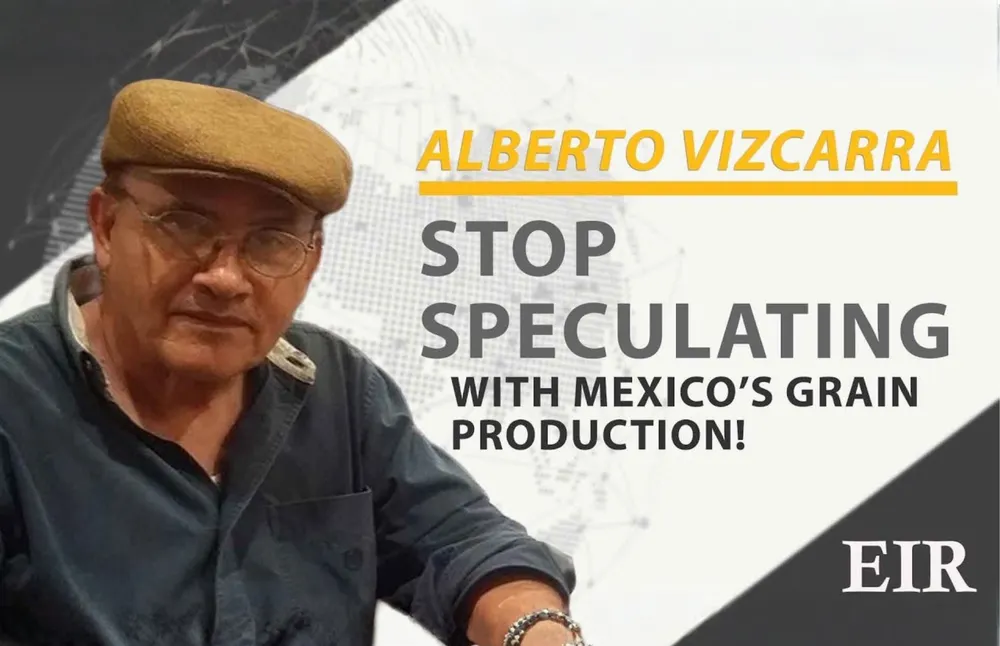
The following is an edited transcript of the Jan. 20, 2026 EIR interview with Alberto Vizcarra, a leader of the National Front To Save the Mexican Countryside. The interview was conducted by EIR’s Ibero-America Editor Dennis Small. Subheads have been added. The video is available here.
Dennis Small: Good evening. Today is January 20, 2026. My name is Dennis Small, and I would like to welcome you to EIR Interviews.
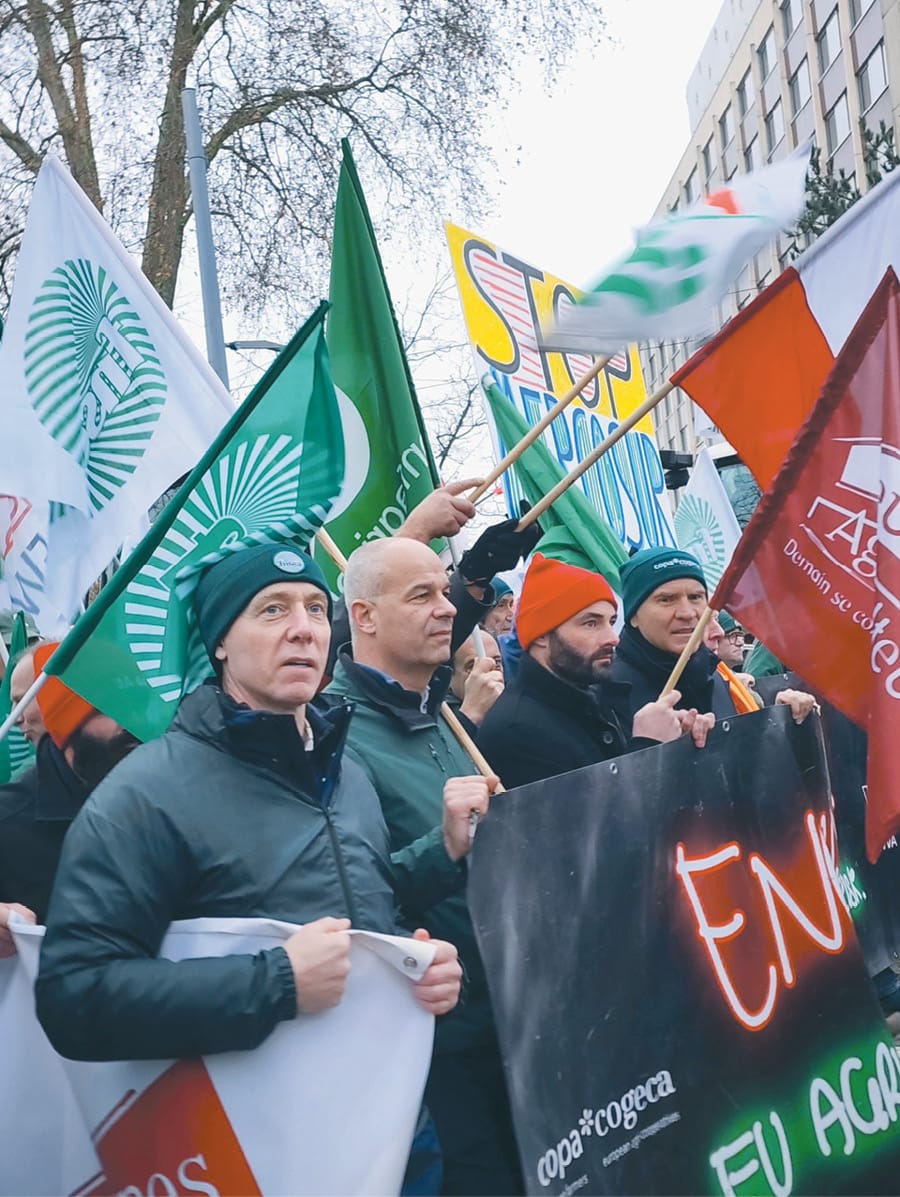
In the course of today, we received news that in Strasbourg, the European Parliament meeting was besieged by demonstrators from farm sectors from all across Europe. There were reportedly up to 6,000 farmers with 1,000 tractors, and they were demanding that the free trade agreement between the European Union and Mercosur—which had been agreed upon by the governments so far—not be approved. The farmers are opposed to this; they think that free trade agreements are destructive to their livelihood and to the world’s agricultural sector as a whole. Their view is that free trade agreements are not win-win but actually lose-lose: Europe loses; the Ibero-American population loses.
I should say there are some winners. Those are the large grain cartels and the big financial interests that back them.
Now, this is a battle which is underway not just in Europe, but is also occurring in Mexico, and in the United States as well. And in the situation in Mexico, we’ll be speaking today with a leader of the farm movement there, which has taken upon itself to not only organize protests and propose policies in Mexico, but also to enter into discussions and contact with fellow farm producers in the Americas, in Chile, in the United States, and elsewhere.
In fact, in an important meeting that they held in Mexico on October 10th, a message was read to the Mexican farmers group by 18 farm leaders in the United States. And we’ll be hearing a whole lot more about that today in our discussion with Alberto Vizcarra. He is a Mexican. He is a leader of the National Front To Save the Mexican Countryside, which is demanding that an entire sector of the Mexican economy, its production of basic grains, not be priced according to the Chicago Mercantile Exchange, because it’s speculative, but that it be priced instead according to the national needs of Mexico.
These are some of the things we will be talking about with Alberto today, including a very important meeting that he and colleagues recently had over a two-day period, for four hours, with none other than the Agriculture Minister of Mexico, Julio Berdegué.
So, let’s get right into it. Alberto Vizcarra is a long-time organizer and leader in the farm movement in Mexico, and also a long-time friend of the Schiller Institute and a collaborator with Lyndon LaRouche in much of his organizing activity between the United States and Mexico. With that introduction, let me ask you to please describe what the farm crisis is in Mexico today, and what is the series of demands that the Frente [Front] is making today.
Alberto Vizcarra: Well, thank you for the invitation to participate in this discussion. I believe that the context with which you opened this interview frames things very well: Just as with European producers or agricultural producers in the United States in a different way, Mexico is facing, perhaps with greater depth, the serious problem that basic [staple] grains, particularly wheat, corn, beans, sorghum, have been increasingly included in a trade scheme that, since the mid-1990s, has been designed, not to strengthen the national food market, but to implement mechanisms that would lead the country to a deeper food dependency.
Cartel ‘Dumping’ Has Been a Disaster
Mexico is now importing more than 50% of its basic grains and oilseeds, a food dependency that has been growing over the last 30 years. And, unfortunately, as you noted a moment ago, meetings with the government have not been as successful as they should be, because the Mexican government remains unconditionally committed to this trade scheme, the results of which have clearly been disastrous, in that they have allowed an invasion of basic grains at much lower prices. They [the cartels—ed.] are dumping on the domestic market, hurting national production capacities, and deepening food dependency. Above all, this weakens the national economy. This is exactly the situation we find ourselves in today. This is an extremely critical situation, because the government, starting in 2018, decided to even withdraw compensatory support for contract farming.
Now the National Front to Save the Mexican Countryside is calling for the restoration of the concept of national agriculture, for a return to the approach that gave the country self-sufficiency from 1934 to 1982, and which effectively demands, as you mentioned, that basic grains and oilseeds be removed from this free trade scheme; that Mexico establish a universal policy of parity prices, that sets tariffs to protect national production and establish an agricultural policy based on the principle, not of contract agriculture, but agriculture with national production goals to reduce food dependency.
Small: Parity prices, no free trade, having a national agricultural program—this is totally contrary to the free market model of today. These are very controversial issues. Now, you were talking about what has happened with the dumping on the Mexican market. I was looking at the statistics, and in the case of corn, Mexico imported 11 million tons of corn in 2014; today it imports 25 million tons. In other words, Mexico was previously self-sufficient; now it’s not—it’s importing. And those Mexican imports are not benefitting American farmers. They are benefitting the large grain cartels. So, what is this idea of combating the Chicago Mercantile Exchange? What should the system look like in Mexico? Have there been examples of this in the past?
Vizcarra: Yes, Mexico had, as I stated before, a policy which reached maturity at the end of the 1970s, which was known as the Mexican Food System, or SAM. It was a policy under which the government’s approach was to determine the per capita consumption requirements of the population, and then goals were established around that demand, for national production of basic grains. That approach to production was replaced at the time of NAFTA [North American Free Trade Agreement, 1994] and with the approval of the USMCA [United States–Mexico–Canada Agreement, 2020]. And what was imposed instead was an approach to agriculture which they called contract agriculture, where production is established based on the requirements of the large corporations, which already dominate in a large portion of the national market, and is not based on the production requirements of the nation.
Mexico Needs a Policy of National Production
In fact, as you noted, we’re talking about controversial proposals, and this was evident during the discussions with the Agriculture Secretary of Mexico, who at our mere mention of the idea that we need a policy with national production goals—this not only was controversial, but, I would say, scared him. It seemed like we were committing blasphemy against liberal or neoliberal policies, where he said, “You can’t do that.” Mexico’s Secretary of Agriculture said you can’t talk about a policy based on goals, because that would imply establishing production obligations on domestic producers, and the government is not going to do that. He was ratifying during all these discussions the policy that they have been implementing, including withdrawing compensatory supports—and that has created literally an existential crisis for national producers.
Small: What do you mean by an existential crisis for Mexican food producers? What has happened with Mexico’s food production capabilities, from your experience working with the farm sector?
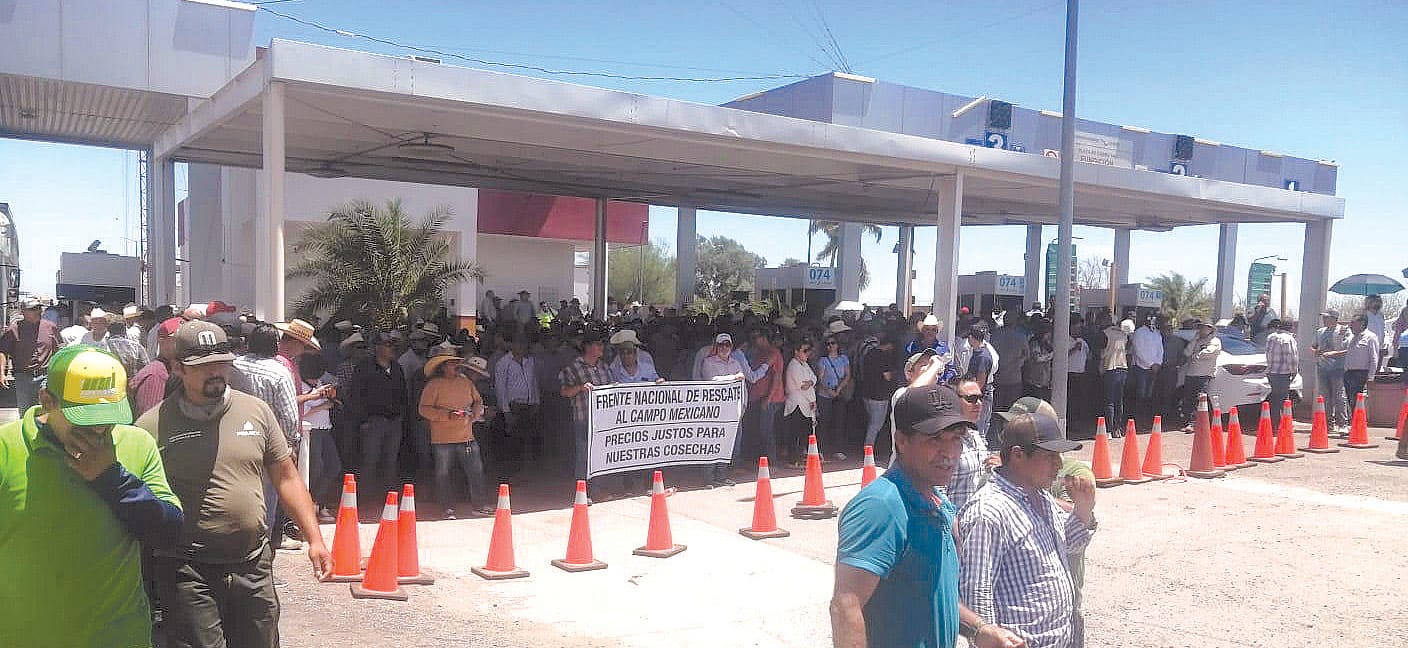
Vizcarra: What’s happening is that all of the instruments which existed and were put in place between 1934 and 1982—tariff policies that protected the national market, a national credit policy which was implemented through the Rural Bank, the policy of protecting the national market through a system of national warehouses which the government had established, the policy for the national production of fertilizers with the support of Pemex [the national oil company], the policy for the national production of seeds—all of these instruments and more were dismantled. And ever since the signing of the NAFTA [agreement] in the mid 1990s, the pernicious axiom of monetarist logic took hold: the idea that it is cheaper to import food than to produce it nationally.
This has led to a process of cumulative decapitalization. It is estimated that from 1994 to the present, nearly four million Mexicans have left agricultural production. There has been a physical displacement of producers. Many of them have emigrated to the United States, precisely as economic refugees, because there hasn’t been a policy to continue strengthening the Mexican countryside, as there was until 1982.
Today we are in an extremely critical phase. There is currently no market for over four million tons of corn. There is no market for 500,000 tons of beans. There is no market for thousands of tons of sorghum. There is no market for the fall-winter wheat cycle. Nor is there a market for the millions of tons that could be produced in the state of Sinaloa during the fall-winter cycle.
In other words, we are facing total, absolute uncertainty. And, unfortunately with a government that turns its back on national interests tied to the production of basic grains in order to, in my view, pay homage, tribute, and to appease the agro-financial structure which has been taking over the national food market.
Small: Well, you just answered one of the next questions I was going to ask, but I’m going to pose it anyway and connect it to your meeting and your discussion with the Agriculture Secretary. You spoke of emigration, that the collapse of Mexico’s farm sector and food-production sector is one of the important causes of the economics driving migration. That is to say, people are leaving Mexico, because they economically must leave to go to the United States in order to survive. This is of course a very sensitive political issue between our two countries, and you’ve addressed the causes of this crisis. At the same time, the Frente and its allies in Mexico, such as the truckers, have turned to form international alliances, such as with American farm producers and with Chileans and so on. I’d like you to explain a little bit why that’s important. And I understand that that particular issue caused a strong reaction from Secretary Berdegué.
Vizcarra: Well, it was really curious. The central proposal of the Frente is to remove Mexico’s grain production and trade from the free market scheme, and this has brought a reaction from producers from other regions of Latin America, especially Chile, who got in touch with the leaders of the Frente, specifically the Sinaloa farmers led by Baltazar Valdez, to establish communication. We set up a Zoom call with them, and we were able to see that the exact same process is affecting food policy in Chile, specifically with regard to basic grain and particularly wheat. They have been negatively impacted in exactly the same way by these agro-financial corporate entities, which essentially are based in the United States.
The Geopolitics of Food Import-Dependence
After that we held a Zoom meeting including producers from the United States, where we were able to chat among American, Chilean, and Mexican farmers. And we are seeing that the dominant characteristic of this problem is that there is a corporate structure which is operating deliberately and systematically to corporatize world food production, to use food import-dependence to convert nations into entities that are vassals of their policies, including their hemispheric geopolitical aims; where nations are left no option, given their vulnerability, other than to produce food completely at the whim of these economic policies and especially the geopolitical interests of the United States.
Small: By way of background for our viewers: When Alberto talks about the Chicago Mercantile Exchange being a speculative center which is where all Mexican, American, and international grains are traded, this is no joke. The Chicago Mercantile Exchange is actually the number one center internationally for all derivatives contracts trading. In other words, the global financial bubble of 2.4 quadrillion dollars is centered in the Chicago Mercantile Exchange, and that’s where Mexican producers of basic grains have to go to try to trade and sell their product. So, the connection between the global speculative bubble and what Alberto is talking about is quite clear.
Let me return to the question of your discussions with American and Chilean farmers. My understanding—because you told me—is that the American farmers had sent a message in October of last year to your group, which was a very important letter of support. My understanding is that you brought that up very specifically in your discussion with the Agriculture Secretary.
Vizcarra: Yes, sorry; I left that out in my answer. But it’s relevant, because in October of last year, when we held a forum at the UNAM [the National Autonomous University of Mexico], convened by the Economics Department and greatly promoted by our friend and colleague Dr. Arturo Huerta, who is now part of the national leadership of the National Front to Save the Mexican Countryside, at that meeting at the UNAM, farm producers from some 18 to 20 Mexican states gathered, especially from the grain-producing region of Mexico. And that is the meeting where we received the message of support from the American farmers, who emphasized that American farmers—family farmers and independent producers—are not the ones receiving subsidies for production. Rather, almost 80% of the U.S. government’s subsidies is being handed, through pass-throughs, to the agro-financial structures, especially Cargill, Monsanto, and others of that sort. They are the ones taking over the national market.
Speculating on the Destruction of Agriculture
That criticism by the U.S. producers at the UNAM forum had a huge impact, because it shined the light on the real profiteering structure that is speculating on the destruction of agriculture in both the United States and Mexico. It was exactly that part of the message that a member of the National Front read out loud to Secretary Berdegué at the meeting with him last week, to put him on notice that what we are facing is this apparatus, this agro-financial structure that is damaging both countries and the whole Western world. You can see this in what is happening now in Brussels and the European farmers’ protests. I think this was a very important observation to put the Agriculture Secretary on notice that we know, that, in the final analysis, his conduct was not defending the national interest nor the interests of the nation’s farmers, but that he was basically defending the interests of those corporate structures.
Some people here in Mexico say that Mr. Berdegué is not, properly speaking, a representative of the national interest in terms of production, but rather an imposition of those corporate interests within the government of President Claudia Sheinbaum.
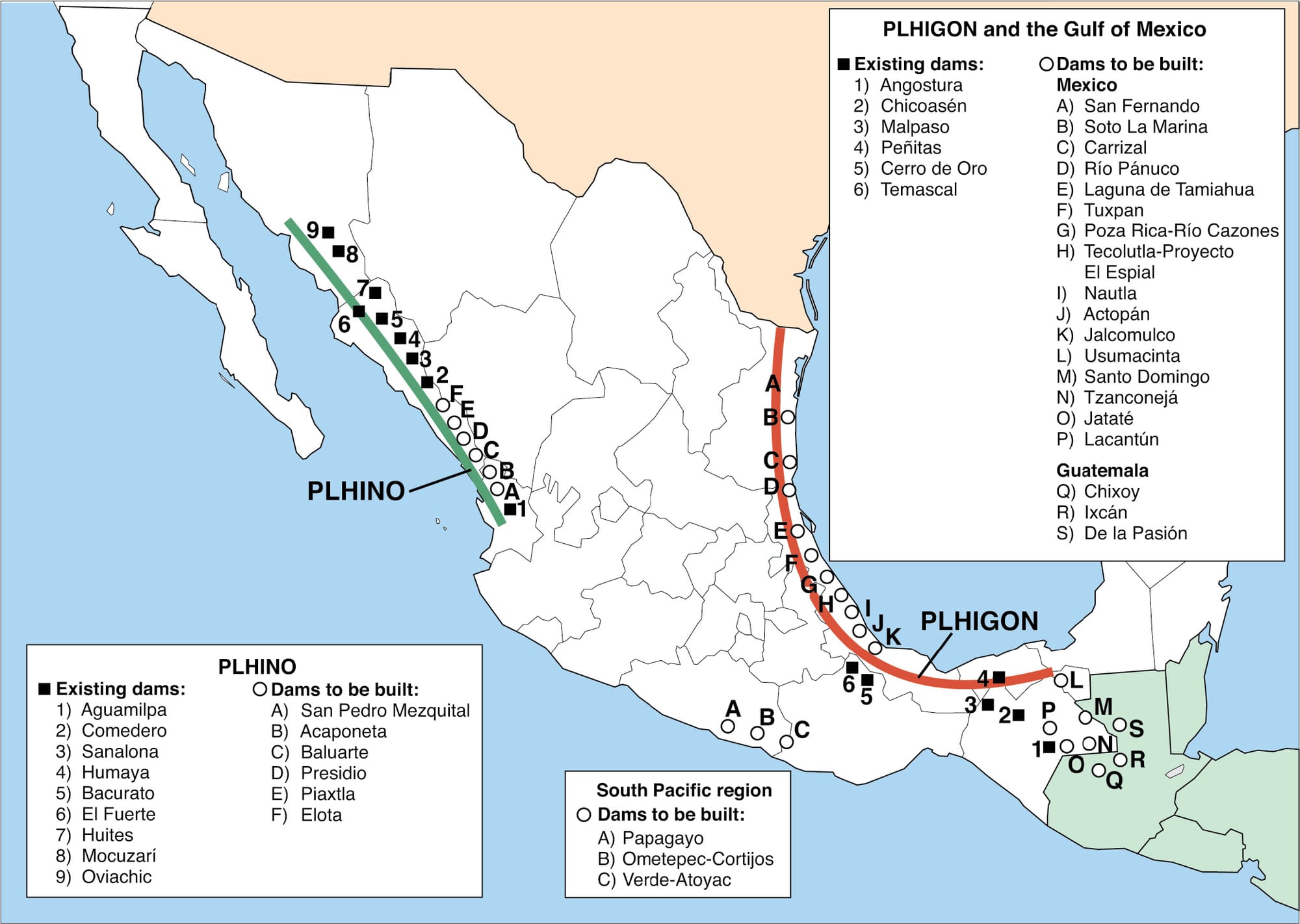
Small: Okay. So, now to some questions about what we do to solve these problems. The first of these questions has to do with the need for agricultural infrastructure, the need for great infrastructure projects, which I know is one of the programmatic points of the Frente. This includes the demand for building the PLHINO, the Northwest Hydraulic Plan of Mexico, and connecting that to the NAWAPA [North American Water and Power Alliance] proposal for the United States. Talk to us a bit more about the issue of infrastructure and what that means for an economy. And secondly, related to that, I’d like to ask you about your discussions with Lyndon LaRouche over the years during his travels to Mexico—because he took a great interest in exactly this fight.
Vizcarra: Members of ours in Sinaloa have sent and personally handed to President Claudia Sheinbaum documents where in fact we show that Mexico has the existing capacity and the potential to be able to significantly reduce our food dependency—not only because of existing potential capacity, where we have more than 5 million hectares of irrigated land. We also have almost 13 million hectares of rainfed land, which have significant potential, if they are supplied with the inputs needed to increase output per hectare.
But additionally, as you noted, we also have great potential to increase our cultivable land along the Pacific coast and in the central area of the country. If we build the two essential projects that were designed in Mexico in the 1960s, in order to expand the cultivable land by taking advantage of the sizeable runoff in the Southeast area of the country, and transferring some of it to the central part of Mexico; and in the case of the Pacific coast, to make use of the runoff of precipitation that now returns to the ocean in the middle-to-southern part of the Pacific coast, where we have a tropical zone that has a sizeable volume of water that runs off to the ocean. This could be transferred to the central part of Sinaloa, to the south of the state of Sonora, and in that way create, through these two projects, another 15 million hectares of irrigated land.
If we estimate that we will be able to achieve corn and wheat yields per hectare of 7-8 tons, in the case of wheat, and an average of 12-15 tons in the case of corn, this expansion of cultivated land, along with Mexico’s existing land under cultivation, in the medium term has the capacity to make the country a world food power—as was the intention ever since the Mexican Revolution [in the early part of the 20th Century].
LaRouche Was a True Friend of Mexico
It’s truly unfortunate that we have had governments in Mexico that don’t consider this potential. In fact, as you mentioned, our friend, the economist Lyndon LaRouche, always, always emphasized that he viewed these projects, such as the PLHINO, as exemplary of the projects that could be interconnected with the NAWAPA project. A connection could be made along the central border area, concretely the Agua Prieta River, that would enter the north of the state of Sonora and in that way contribute to this expansion of the cultivable land.
I recall that LaRouche always called for making the U.S.-Mexico relationship an example of what North-South relations should be, where the economies are measured in terms of mutual benefit, and not that someone has to lose so that the other can win.
I believe we have come to a time when those ideas, those policies can be realized. And I think that, along with a consistent mobilization of organized social resistance in the population and by farmers, we will make the Mexico and the United States we have jointly dreamed of, a reality.
Small: And that focus of the issue is needed, because in the United States people are not fully aware of these kinds of things. They tend to view this as a relationship of conflict, as opposed to one of potential mutual benefit.
My final question is related to this point. Current political leaders and current economic ideas, where they are in fact scientific and positive, always stand on the shoulders of earlier leaders who made advances in that kind of direction. So I would ask you to tell us a bit about the famous American agronomist and Nobel Peace prize winner, Dr. Norman Borlaug.
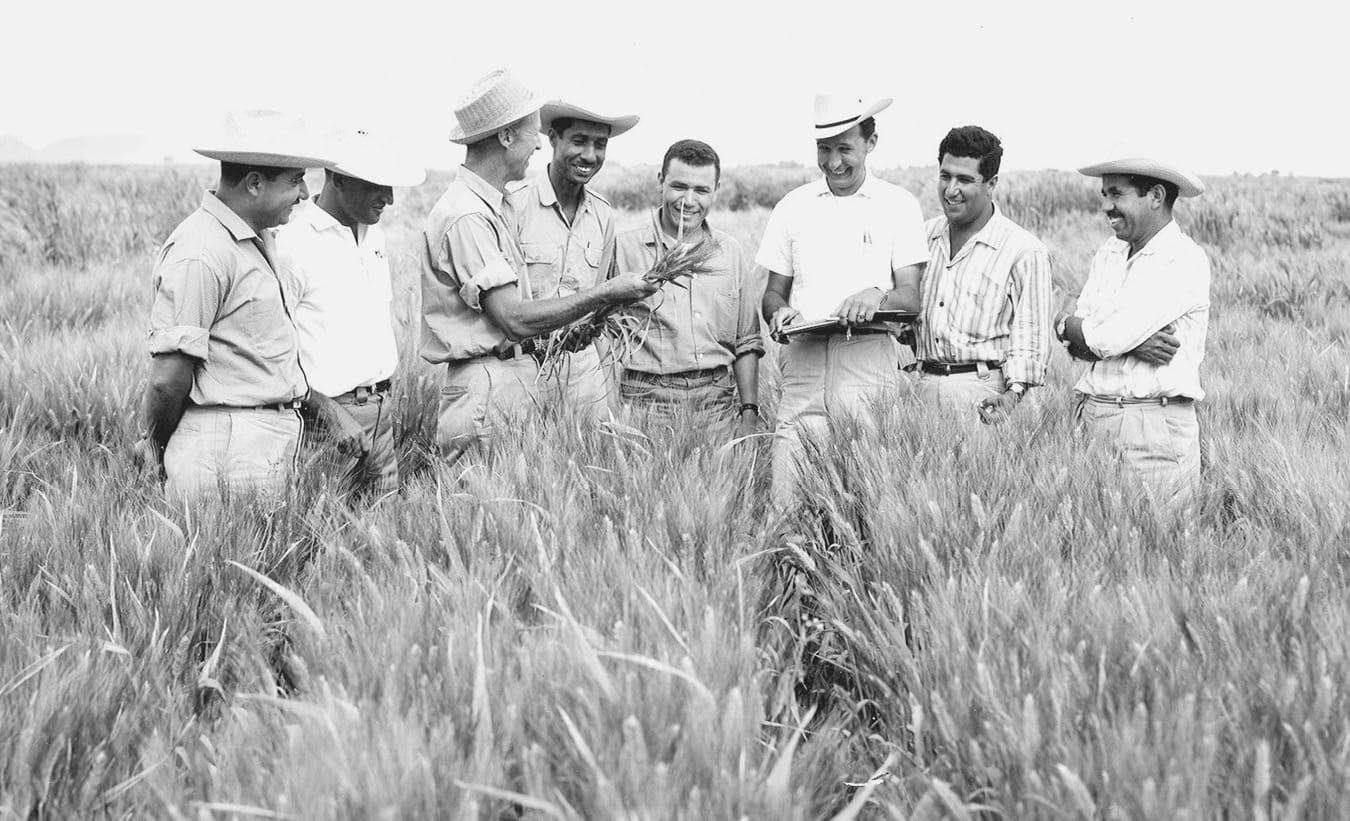
Vizcarra: Well, Borlaug is someone who is well known in this region. In addition to the research he carried out in Chapingo and in the Tlaxcala region [in central Mexico], similar research was conducted in this region, the northwest of Mexico, in particular in the southern part of Sonora. We here like to brag that this region became the birthplace of the Green Revolution, as a result of the great work done by Dr. Borlaug in the area of genetics, especially of wheat and corn, precisely to achieve substantial increases in the yield per hectare of these two crops, which are so essential to the region.
Those who knew Borlaug, such as our great friend, the late Jaime Miranda Peláez, always said that Borlaug had a great love for this region. He held the Yaqui Valley in high esteem, and gave it great strategic importance.
That is a spirit which remains in this region, and I think it is a spirit that encourages and provides enthusiasm, hope, and optimism to the National Front to Save the Mexican Countryside, to ensure that these dark times very, very quickly become bright—if we achieve what is indispensable: that we save our national production; that we re-establish the concept of national agriculture; and that through this alliance with farmers of the United States and South America, we make of Mexico an agricultural powerhouse for the good of Mexicans and of all humanity.
Small: Those are exactly the ideas that motivated Dr. Norman Borlaug, the famous Iowa agronomist and winner of the Nobel Peace Prize who always viewed his work as contributing to the good of humanity—not of any one country, not of any one group, but of the one humanity. And that is why he is both an American hero and a Mexican hero, and a hero of mankind. It’s that kind of thinking that will be able to lead us to solve problems, great problems like that of food production in Mexico and the United States, and the global problems of the need for a new security and development architecture, as we have been discussing at some length here at EIR.
Thank you very much for taking this time to talk to us.
Vizcarra: Thank you for the opportunity.
European Farmers’ Mass Mobilization Stalls EU-Mercosur Free Trade Mega-Pact
Jan. 23—In Strasbourg, France, on Jan. 20 and 21, farmers from many European nations were out in force with 1,000 tractors, and 8,000 demonstrators, insisting that the European Parliament vote down the newly signed EU-Mercosur (Southern Common Market of South America) free trade mega-pact. Under fierce pressure, the 720 Members of Parliament did vote to stall the pact, by passing a resolution on Jan. 21 referring the new deal to the EU Court of Justice, to determine whether it conforms to EU standards. Legal haggling could take two years. The vote was 334 to 324—a thin margin, with 11 abstaining.
After 25 years of talks, the EU-Mercosur “free” (rigged) trade deal was signed Jan. 17 in Paraguay, by European Commission President Ursula von der Leyen, and officials from the four principal Mercosur nations: Argentina, Brazil, Paraguay, and Uruguay. Comprising a combined population of 730 million people, this is the biggest such trade bloc in history. It requires approval by the European Parliament and by individual nations. However, already Wall Street and the City of London are pushing to implement the pact “provisionally.”
“Ursula, Go Home,” was the farmers’ most prominent sign in Strasbourg—implying that she should go to the Moon. The mass rally, led by the French farm associations, capped off weeks of farmers demonstrating in their respective nations, from Ireland to Poland and Greece. Besides opposition to Mercosur, they are protesting the impossible conditions they currently face: high input costs, unscientific “green” regulations on their farming methods, dumping of foreign-origin commodities.
The EU-Mercosur deal would give even more leeway to the globalist cartels of trans-national companies—JBS, Marfrig, Danone, Walmart, Carrefour, and their industrial counterparts—to dominate what gets produced where, and traded where. The unacceptable new deal would eliminate tariffs on more than 90% of current bilateral trade, favoring European exports of cars and specialty foods, while South American products would displace European production in beef, poultry, sugar, rice, soybeans, and others.
Farm leaders in many parts of Europe demand a new economic system as the alternative to the current breakdown.
—Marcia Merry Baker