The Lead
World War III May Have Begun. Will We Stop It?
by Jason Ross (EIRNS) — Mar. 02, 2026
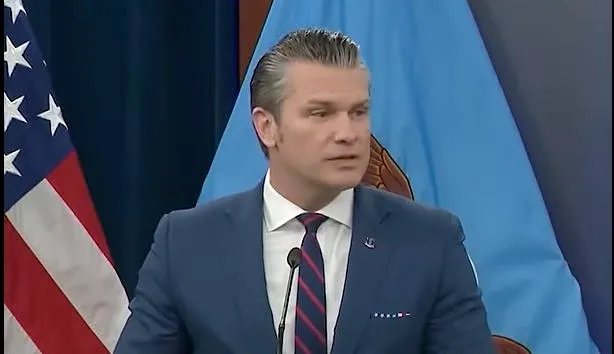
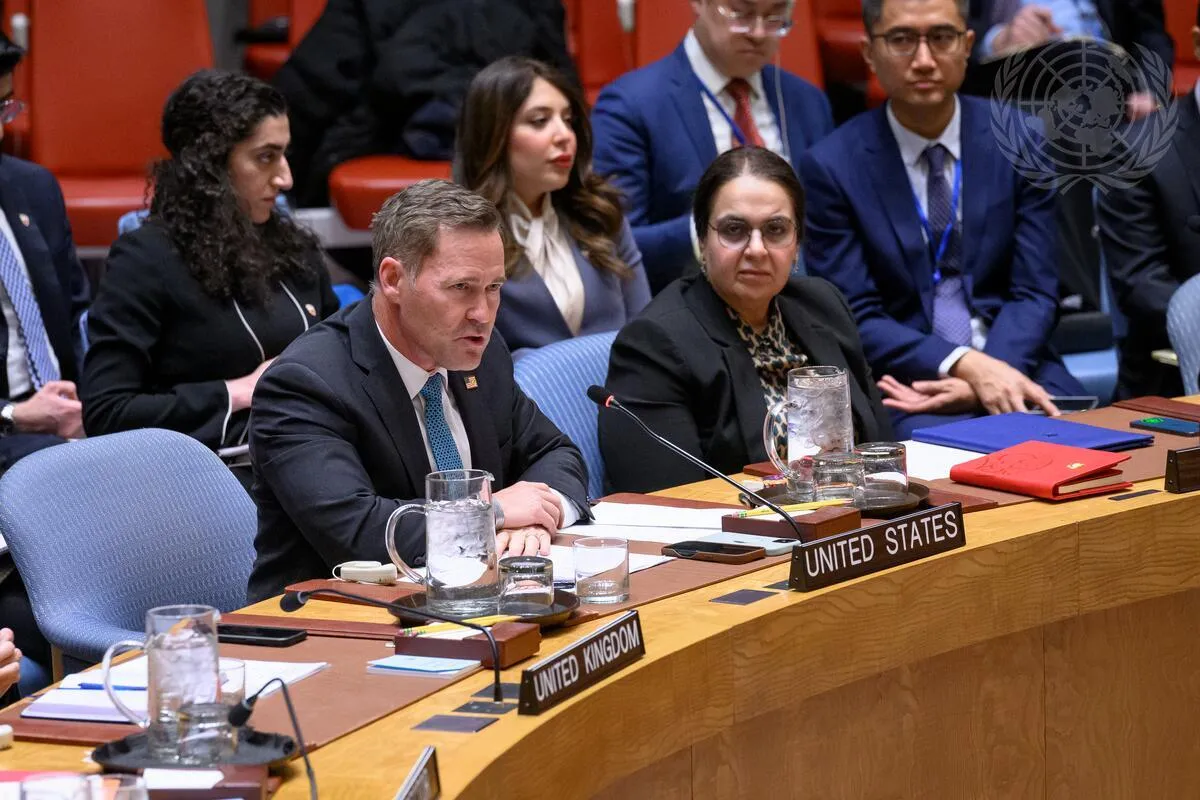
United States Ambassador to the United Nations Mike Waltz stood before the UN Security Council and described Iran’s retaliatory strikes as “unprovoked.” The United States and Israel have been bombing a sovereign nation for three consecutive days, killing its leader along with dozens of senior officials, and when that nation fires back, the word chosen is “unprovoked.” This is not spin. This is the erasure of reason, the vocabulary of a hegemon that believes its actions define the law, and which expects the rest of the world to go along.
Many governments are obliging. Britain has opened its bases while insisting it is not at war. Germany’s foreign minister dismisses the relevance of international law. France declared itself “satisfied” with the killing of Khamenei. The E3 condemned Iran’s retaliation without a word about the attack that provoked it. The European Commission president called for “regime change.” Brussels, pressed to say whether the strikes were legal, pivoted to Iran’s human rights record, as though one may bomb a country without UN authorization, so long as the country is disagreeable.
One European government said no: Spain barred U.S. forces from its bases, forcing tanker aircraft to depart Rota and Morón. “Spanish military bases will not be used for anything that falls outside the agreement with the United States and the United Nations Charter,” Foreign Minister José Manuel Albares said. Israel’s foreign minister accused Spain of “standing with all the tyrants of the world.” The insult tells you more about the mockers than the mocked. Madrid has endorsed international law—something that happens too rarely today.
The goal is not to install a new government in Tehran. It is to destroy Iran’s capacity to function as a sovereign state and to send a message to any nation aspiring to strategic independence. Strip away the rhetoric and what remains is a war to prevent the emergence of a multipolar world—waged by two nuclear-armed states against a country that does not possess nuclear weapons and that, the night before the bombing began, offered, through the Omani foreign minister on American television, to accept the core nuclear terms Washington claimed to be seeking—zero reprocessing, elimination of stockpiles—with long-range missiles and regional proxies on the table to follow. According to analyst John Helmer, the sticking point was Iran’s missile program, which Tehran regarded as essential to its survival. The response was not to negotiate further, but to begin bombing, even as the envoys were still at the negotiating table in Geneva.
The energy infrastructure of the Persian Gulf is under attack, European gas prices have spiked 50%, and the Strait of Hormuz is closed to navigation. Israel is bombing Lebanon again. Iran’s own foreign minister has acknowledged that military units are operating on pre-set instructions without centralized command. Retired U.S. Lt. Col. Daniel Davis, a four-time combat veteran, has warned that American interceptor stocks may last only two to three weeks, while Iran has spent decades stockpiling weapons underground and can reportedly still produce 100 missiles per month under sanctions. And the question that hangs over everything is whether Israel will resort to nuclear weapons if Iran’s missile forces survive—not a hypothetical, if Helga Zepp-LaRouche’s account is correct, that Netanyahu has already communicated to Trump that Israel regards Iranian missiles as existential and may act with or without American agreement.
Zepp-LaRouche called on citizens in every country to demand that their governments cease all military actions and return to diplomacy, invoking the Peace of Westphalia, the 1648 settlement that ended the Thirty Years’ War, because the warring parties recognized that the only path to peace included fostering the well-being of the other, and that if the fighting continued, there would be no one left to enjoy the victory.
In the age of thermonuclear weapons, that is no longer a metaphor. It is what happens next if this course is not reversed.
Contents
Strategic War Danger
- Former U.S. Ambassador to Saudi Arabia Chas Freeman: 'This Could Mark the End of the American Republic' (↓)
- 'A War You Can't Win': U.S. Combat Veteran Says Tehran Has Outmaneuvered Washington (↓)
- Iran Is Winning This War and Washington Knows It, Says Former British Diplomat (↓)
- Gulf Energy Infrastructure Under Fire: Gas Prices Spike 50%, Oil Heads Toward $100 (↓)
- France To Expand Its Nuclear Arsenal and Deploy Nuclear-Armed Aircraft to Allied Countries (↓)
- Friendly Fire Downs Three U.S. Jets Over Kuwait (↓)
- Iran's Security Chief: 'We Will Not Negotiate with the United States' (↓)
- Iranian Drone Strikes British Base on Cyprus (↓)
- The Israeli-American War Has Now Been Extended to Lebanon (↓)
- Iran's Foreign Minister Says Military Units Operating Outside of Central Control (↓)
- Pope Leo XIV Receives Cuba's Foreign Minister Rodríguez Parilla (↓)
- Madrid Says U.S. Cannot Use Its Bases in Spain for Iran Attacks (↓)
U.S. and Canada
- Jewish Newspaper Editorial Calls for Internment Camps for American Opponents of War with Iran (↓)
- Three Out of Four Americans Oppose U.S.-Israeli Strikes on Iran (↓)
Harley Schlanger Update
Watch The Daily Update with Harley Schlanger, a short video update available every weekday morning from The LaRouche Organization.