HARLEY SCHLANGER: Hello, and welcome to our weekly dialogue with Helga Zepp-LaRouche. She’s the founder of the Schiller Institute and the initiator of the weekly Zoom calls for the International Peace Coalition. Today is the 27th of May, 2026. I’m Harley Schlanger and I’ll be your host. You can send your questions and comments to Helga via email at questions@schillerinstitute.org.
Helga, it’s really good to have you with us today. As you heard from the Foreign Minister of China Wang Yi yesterday, speaking before a special session of the UN Security Council, he said we’ve seen the most complex crisis since World War II.
So who’s better to unravel the complexities than you, who has been taking the lead in building the momentum for a new strategic and development architecture? Your open letter to the members of the UN Security Council is being distributed to the delegates on the way in. So what can you tell us about the session yesterday? How did it go and is there some progress?
HELGA ZEPP-LAROUCHE: Well, I think it was extremely important that the topic of the international order and the United Nations Charter as the foundation of international law was put into focus. And I would say the seriousness of the situation where President Trump had declared at the beginning of the year that he does not need international law and the subsequent extraordinary developments, the kidnapping of President Maduro, the unprovoked attack on Iran, the danger of an escalation of the war in Ukraine, all of these things and many more, like the civil war in Sudan. And I can’t even start to enumerate all the dramatic developments of the situation. They do require that the adults in the room, so to speak, get together and uphold the idea of an international lawful, ordered society. So I think this was a very important first step. I think the meeting will be continued tomorrow.
And I think there’s also a meeting on the Global Governance Initiative by China. I don’t know if that’s the same one or if it’s a continuation of this format. But I think most speakers, I could not listen naturally to all, and I have not yet read all the summaries of all the speeches. But I think there was a clear division between those people who demanded the UN to be reformed very urgently, which I think is the idea of the Global Majority who feel that they are not represented. Africa, for example, does not even have a voice in the UN Security Council. And those on the other side who were of the opinion that the existing framework of the United Nations is sufficient, but that the problem is that the principles are not being upheld, and that all you need to do is uphold these principles and things would work.
Now, I think this is a very important discussion process, because it pertains to the question, is the human species capable of governing itself, or are we on the path of potential self-destruction; which is not an answered question yet. So, I think this intervention by China to put this on the agenda was actually extremely important. So, I don’t know the full result of it yet. I do not know also if the proposal which was made by former Prime Minister Davutoğlu from Turkiye and myself on what should be the perspective for settling the crisis in the Middle East has been raised, but I know that that proposal is being discussed widely. So, let’s see and redouble our efforts.
SCHLANGER: In spite of President Trump’s confidence that an agreement is near to end the war with Iran, especially the war that he and Bibi Netanyahu initiated, there were serious breaches of the ceasefire yesterday. Now, here’s a question from a journalist in Southwest Asia. He says, “There are many sound reasons to end the war, including the danger of escalation to a world war and the unfolding economic damage threatening to plunge the world into a global depression.” But he goes on to ask you, in particular, to answer, “Who wants to continue this war and why?”
ZEPP-LAROUCHE: Well, I think that at this point, it looks like President Trump really does want to end the war because it’s not such a pleasant outcome. I think he would like to move on and make the world forget that that war ever took place. Because as long as the Strait of Hormuz is blocked, the world economy is plunging further into a deep depression. It’s already having severe impacts in many countries, in energy prices, in fertilizer prices. The consequences will be devastating even if the war ends immediately.
But obviously, the midterm election is coming. The situation in the United States is very negative. The polls for Trump are terrible. So I think Trump is not the one who wants to prolong this war. But unfortunately it’s very clear that the Israeli government, and in particular Netanyahu, do not agree with the deal, which apparently is still being negotiated and according to Rubio, would still need a couple of days to be hammered out, as he put it. But I think Israel is not at all willing to agree to the Lebanon part of the agreement, namely that the war there should stop and that basically Israel would have to withdraw from southern Lebanon. And naturally, that is an important voice because that is directly linked or identical with important financial forces inside the United States, who in the past have been some of the main backers of President Trump. So it is very much undecided. And I think that it does require an intervention, I would say, by all the governments in the region who have an interest that there is a perspective of a future which can only be based on economic cooperation among all the countries in the Middle East for their mutual benefit.
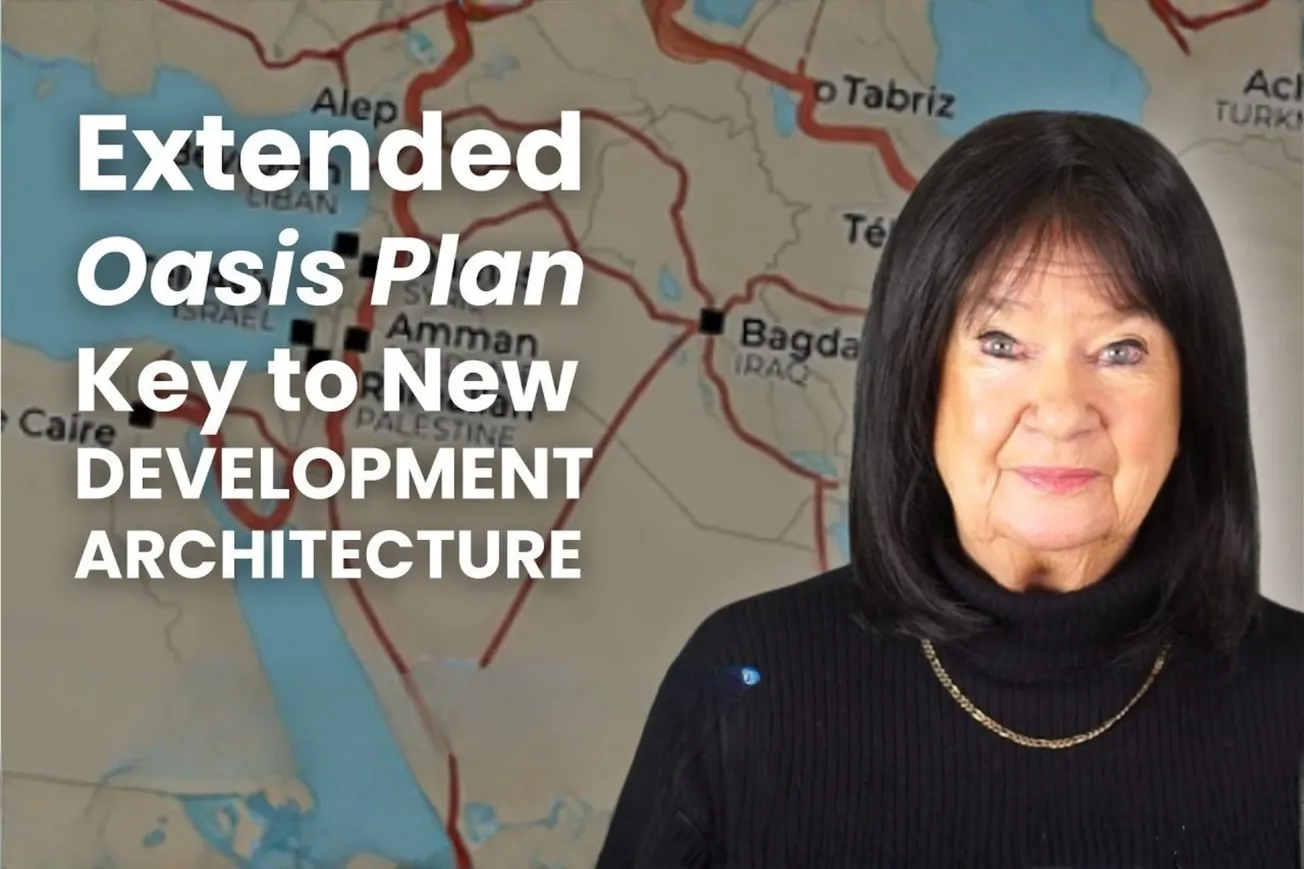
So I think short of such an intervention, where at least the majority of the countries of the Gulf and the Middle East in general would agree to go into the paradigm of joint development as we have been proposing it with the Extended Oasis Plan, I do not think that the balance can be shifted because too much is going on in backroom deals and all of this. And I think President Trump’s recent proposal that every Arab country should join the Abraham Accords is also not going to work because it would really ask too much, including Saudi Arabia insisting that they only will join it if Israel agrees to a Palestinian state.
So there are all these hurdles still there to be ironed out. But it has been my view for a long time that only if you catapult the whole discussion in a completely different domain, namely the New Paradigm of the Extended Oasis Plan, that you have any chance of resolving this terrible situation.
SCHLANGER: Now, we’re also seeing a heating up of NATO’s war against Russia. The Russians responded to what they call the terrorist attack on the dormitory in Starobelsk, which killed 21 young people. The Russians responded with an attack on military-industrial complexes in Kyiv. And they’re warning that diplomats in Kyiv should leave. They’ve also put out another warning saying that there are 12 locations in Europe where drones and other weapons are being constructed for Ukraine, and that these are legitimate targets for future strikes. Now, there’s been some discussion of this in the German media, including former advisor to Merkel, General Vad.
And a podcaster in Russia asked if you think these warnings are being taken seriously in the West.
ZEPP-LAROUCHE: Well, I think that there are many ordinary people who are really extremely alarmed about how far this crisis has evolved. Unfortunately, it seems that the European establishments, or at least as it goes for the German government, the EU, they seem to be completely deaf and insisting on continuing their course. I mean, this present development, you know, when there was this attack on this school in Lugansk, basically the reaction was the West … I watched TV on Sunday. This happened, I think, on Friday and then in the night to Sunday, there were these very heavy attacks by the Russian military on Kyiv and another city a little bit south, heavier than for a long time. And the media, the official TV, basically only reported about the Russian attacks, not even mentioning that this was a reaction to the attack on the school.
Now, the Russian government had immediately, I think on Saturday, invited 50 journalists from altogether 19 countries to come to this school to see with their own eyes that there were absolutely no military facilities anywhere close. In that way, it’s very clear since there were, I think, altogether four waves of drone attacks—clearly a violation of the Geneva Convention—and the foreign journalists all could investigate this themselves. Nevertheless, the German TV did not report that the Russian attack on Kyiv was a response to this attack on the school. You could see really very clearly how the population is being manipulated all the time.
And now you have a situation where the Russian Foreign Ministry again reiterated what you mentioned, that the foreign diplomats should leave Kyiv because there would be new attacks and they warned that Ukrainian citizens should not go close to military installations or command centers. What is the reaction of the EU? The EU representative to Ukraine, she basically said that we don’t listen to this, nobody will drive us away here, we are going to stay. I mean, you have the feeling that there is an absolute denial, and one starts to wonder more and more what really is behind all of this; because it is very clear that if this thing escalates, we could have war in Europe, on European soil. And I cannot see how neither NATO now, nor the German army, nor whatever future plans they have, how they want to be able to win a war against Russia.
First of all, Russia does not have an intention to occupy Europe. Russia will obviously react to these continuous provocations, but I think that there is something going on in the Western elites, which really needs to be looked at very, very closely, because it does not make sense. It is not according to common sense; the European behavior is just completely out of touch with reality. And I’m trying to really come to a conclusion of why this is. Have they all lost their marbles completely? They are risking the existence of Germany and the other European countries. It’s extremely alarming.
SCHLANGER: Well, on this, there’s been a discussion of a reduction of U.S. troops and U.S. military deployments to NATO that’s come out in the last couple of days. At the same time, there’s a discussion of moving more forces into the Baltic states. Do you think this is designed to provoke Russia?
ZEPP-LAROUCHE: Well, I think one comes to that conclusion. Altogether, I think they want to move up to 40 or 60 or even 80,000 troops into the Baltics. Now, I think that is definitely not a deterrence, but a provocation. And I think that the idea of the U.S. reducing their forces inside NATO is a good idea because the NATO forces are not there primarily for the protection of Europe, for sure not of Germany. I think, you know, they are there basically to keep the colonial status of the European countries. So, I think we need to completely change the paradigm and move to a new security architecture. You basically have to go back to when the whole direction went in the wrong way at the time of the German unification, when there was a chance to have a peace order. And everything which has happened since went in the wrong direction. And if you want to prevent a catastrophe, I think we have to go back and start from scratch and undo a lot of things which have happened in the last 30-plus years.
SCHLANGER: I have a question from a peace activist from the United Kingdom, who said there are reports that opposition to Putin is growing inside Russia, because he’s seen as weak for not responding more forcefully. And he asks, “Do you agree with these assessments about Putin, whether there’s pressure on him to escalate coming from hardliners like Karaganov, or if that’s just a media story that’s circulating for the sake of provocation?”
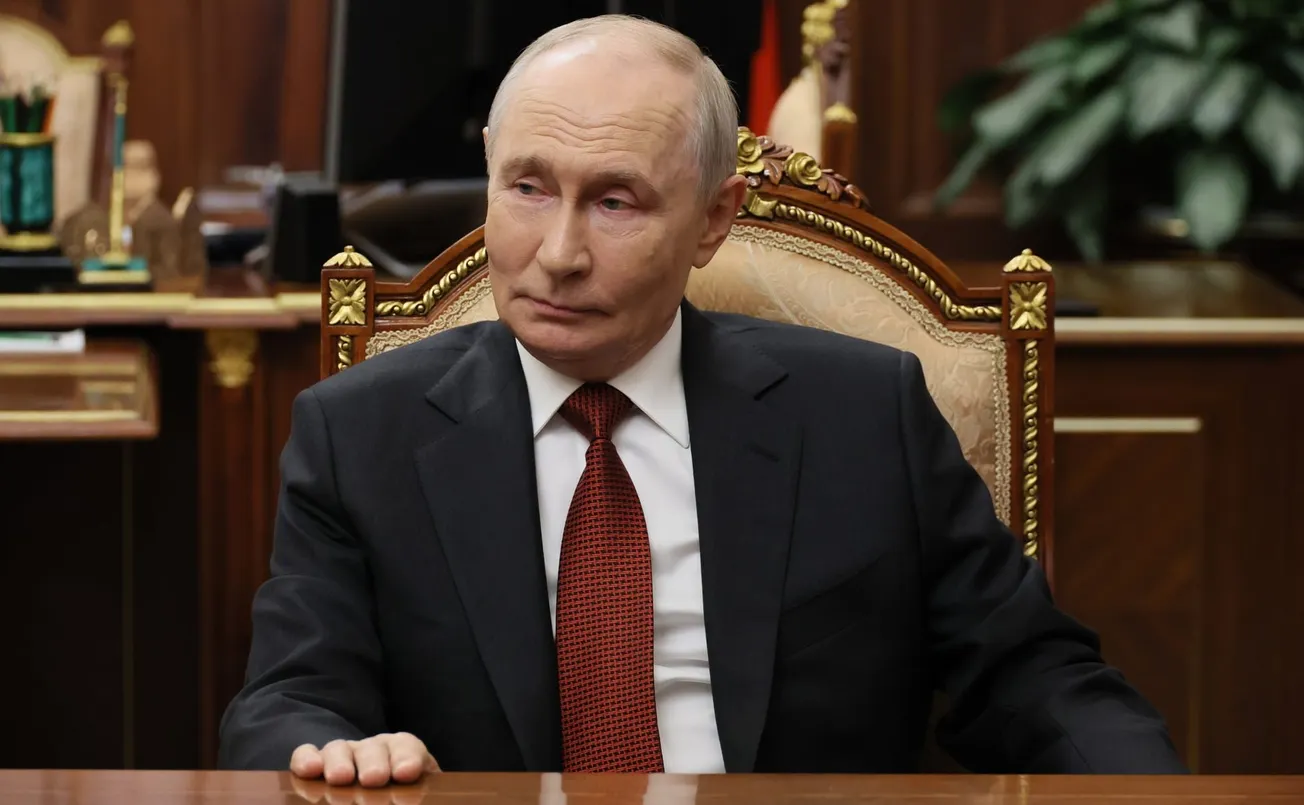
ZEPP-LAROUCHE: Well, I think we in the West could be very thankful that President Putin is President of Russia and not some other people, because Putin has proven to be an absolutely remarkable manifestation of patience. I think there is a shift in the Russian population. I think if there are especially such atrocities like the attack on the school, there are more and more segments in the Russian population who are saying that a more forceful answer should be given; that Putin should end this whole charade by deploying some of the more powerful weapons.
Previously, Sergei Karaganov had advertised the use of tactical nuclear weapons to be used in Europe to wake the Europeans up, because they are obviously sleepwalking into a new war, and they seem to be completely deaf against any warnings coming from Russia. When Russia says that they are crossing red lines, they say, “Oh, Russia didn’t respond to our crossing red lines so far, so there are no red lines,” and then adding one provocation after the other. And it seems that there is now, because of that, a growing part of the Russian population which is indeed shifting more to the views previously only held by Karaganov.
Even a very calm, mild-mannered diplomat like Dmitry Polyanskiy, who used to be the deputy Russian ambassador at the United Nations, who is now the permanent representative of Russia at the OSCE in Vienna, in a discussion with political scientist Glenn Diesen, said that there is right now a growing mood in this direction. He also said it may even be too late to prevent such an attack on Europe in response. Now, he is very mild-mannered, not like Karaganov, he is a diplomat, you know, and if he says something like that, it does reflect a growing sentiment in the Russian population. I can only say that we are very quickly reaching the point of no return, and we have to wake people up.
We should really understand that we cannot win a war against the strongest nuclear power on the planet. Russia just concluded maneuvers with Belarus, where they had, on the one side, transported nuclear weapons into Belarus, and in the maneuver, they tested the deployment of such nuclear weapons on the highest level of alert. Now, if that is not a warning sign … And naturally there were similar maneuvers by the NATO forces before at various points. So we are heading towards a disaster, and I can only say there is no alternative than to re-enter dialogue with Russia. In the time of thermonuclear weapons, the idea to even entertain that any conflict can be settled with war is insane. And I think we have to simply really get the population mobilized to back the idea that we should nominate somebody to enter the negotiations with Russia on a European level. The people were mentioned, you know, from Schröder to Merkel, Draghi, who could represent the EU in totality, or even Steinmeier was mentioned.
Now, I think, you know, given the severity and how advanced this crisis is, why not have Merkel and Schröder together have these negotiations? I think you can criticize Merkel for many things, but she still has some realism about Russia; and Schröder has some good standing with Putin. The two of them would make a good couple. Now, probably if you would ask both of them, they would both say, no, with that one I don’t go anywhere, because I don’t think they like each other much. But if you think that the existence of Germany is at stake, maybe these people can be caused to jump over their shadow, as we say in German—I think it’s an idiom which you cannot translate into English—but maybe we could ask them to do something extraordinary to save the country.
SCHLANGER: Well, speaking of extraordinary, there’s a question that came in from the U.K. about a Professor Richard Murphy of Sheffield University, who called on the U.K. government to get rid of the City of London and its medieval speculation with its offshore banks. And the question for you is, “Would this be helpful to establish a new Bretton Woods or toward securing a new development architecture?”
ZEPP-LAROUCHE: Well, I do not quite understand the question, because I don’t know how to get rid of the City of London. I mean, there were proposals in the book, but I don’t think they were so constructive. No, but more seriously, I think that the real dynamic of why we have the war, which is the bankruptcy of the liberal financial system, I think that there is desperation about where we have come to and that there seems to be no easy way out, I think that is the fuel behind the war.
So the idea to have a reform, to go back to a new Bretton Woods system whereby you would get rid of the overhang, extended debt of $2.5 quadrillion, that in one sense is the only thinkable way. You have to get rid of that bankruptcy which is fueling the war danger. But how that can be accomplished, I think that’s the big question, given the fact that we have in Europe right now a complete control of the mass media where, you know, neither the politicians nor the media are just not discussing options for how to get rid of this crisis.
So I think we need to have a creative intervention by people who really think that that is the solution. One place to do it is to come to our weekly International Peace Coalition meeting every Friday, because that in one sense could become the forum where such ideas are being discussed in a more fruitful way. So that would be my answer, because I cannot see any Parliament in Europe right now, nor in the Congress, which is completely rotten and under the control of the moneybags, where such a discussion could take place. So it does require some creative ironing out of how you would get there.
SCHLANGER: Now, as talking about the whole question of NATO has been more and more prominent recently, there are four EU members, France, Spain, Italy and the Netherlands, that are issuing basically a declaration of war against Germany because of its China policy; saying that the Germans are moving too close to China. There’s an economic delegation led by the industry minister who’s going to be going there for more talks. And the paper that was released said that the Chinese are engaged in unfair competition. This was reported in the Financial Times. It looks as though the EU as a whole is splitting. Is it possible that Germany is going to move in this direction and take some of Europe with it?
ZEPP-LAROUCHE: Well, I don’t think it’s much choice because the German economy is in an absolute free fall. Just today another report came out, I think by the so-called Five Wise People, basically saying that the German economy is in a chronic state of disarray and collapse. The growth figures, which are obviously not reflecting the real growth, nevertheless, it’s practically at zero. But if you look at it from the standpoint of the real economy, it’s much further into the red figures. The German social welfare state, as it developed in the post-war period, is being dismantled. Every single aspect of social expenditures is being slashed. No investment in any social aspects, not infrastructure, not education, not health. Everything is being cut below the point of breakeven. So, you know, Germany is just collapsing.
And therefore, trade and cooperation with China is the only way Germany can prevent being completely dismantled. Now, that was obviously the message which the 30 CEOs got across to Merz when he traveled to China with them earlier this year. And Katherina Reiche, the Economic Minister, now has 30 other CEOs and heads of Mittelstand industries with her in China. And I don’t have to be a little mouse in these discussions to know what the message of these industrialists is. They basically get across that this is a lifeline for Germany to have this kind of cooperation. Now, I think that if the German economy would make a clear stand, given their size, which still is the largest economy in Europe, it would have a very positive effect on the others. So I think it is the baby step in the right direction.
SCHLANGER: I have one question for you on the U.S. political situation. Someone wrote in and said, “In the last two weeks, we’ve seen two opponents of President Trump in the Republican Party beaten in primaries.” The first being Thomas Massie, with massive funding coming in from the Zionist lobby, and then just over the weekend, John Cornyn, the longtime Republican senator from Texas, lost to a candidate who was endorsed by Trump.
And the person wrote in and said, “Don’t American voters see what the rest of the world sees? That the present Trump policy is making a fool of the United States, leading to its isolation, and that the United States is a rogue nation. What will it take for Americans to get this picture?”
ZEPP-LAROUCHE: Well, I think that what is clear is that the U.S. is no longer a democracy, but has become a plutocracy. I think in the election campaign against Massie, his opponent spent $35 million for a Congressional seat. That is not the proverbial peanuts anymore, but this is really big time, Wall Street, Silicon Valley, who knows what moneybags were involved. I mean, that is a sad state of affairs. And I think the American population is probably going through a huge crisis.
And I think it’s still not too late. It’s the 250th anniversary of the American Revolution, although there has been an attempt to make that memory go away. I mean, this was the significance of the unbelievable speech of King Charles in front of the joint session of Congress, where he portrayed the American Revolution as being part of British history. Unbelievably, he tried to iron out even the memory that the American Revolution was against the British Empire; that the War of Independence was the first anti-colonial war in history. So I think it’s a challenge to the American people.
And I think the importance of independent candidates will rise, because it is becoming clear that there is no chance within the two-party system. I think that what Diane Sare, who is the Presidential independent LaRouche candidate, and other independent candidates who are right now working with her are doing will be a big hope. I know that many people are always saying independent candidates have no chance in the United States. But we are looking at the breakdown of the system. Chas Freeman had already said several months ago that he thinks the United States is in front of a civil war, and if things continue, we are going to have a civilizational collapse the dimensions of which people have no inkling yet.
If under these circumstances, the adults in the room can basically keep their heads above water and shape policies, is not yet decided. And I think it will depend to a very large extent on how many people take the fate of humanity in their heart and mind and act. We are proposing solutions. We have candidates who are representing these solutions. So join us.
SCHLANGER: Speaking of adults in the room, Helga, there’ll be another Zoom call of the International Peace Coalition this Friday at 11 a.m. Eastern Time. The IPC has become extremely important in triggering a real debate, and we need more and more people to join that. What is the plan for this Friday?
ZEPP-LAROUCHE: Well, I think that one big topic on the agenda will be an assessment of what this UN special meeting called by China has yielded, what guidelines were given, what the effect of it will be; and then we will obviously define what are the necessary next steps for the world population to mobilize around.
SCHLANGER: Well, that’s where people should be this Friday morning, joining you. Also, your open letter to the delegates of the United Nations is on the Schiller Institute website, and people can read that and circulate that.
So, Helga, thanks for joining us today, and we’ll see you again Friday morning.
ZEPP-LAROUCHE: Yes, until then; be good.