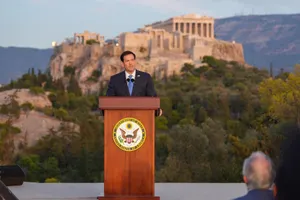
April 24—Responding to a tweet posted in early April by Pete Hegseth, the self-described “U.S. Secretary of War,” threatening to send Iran “back to the Stone Age,” the Iranian Embassy in South Africa replied with this short but firm comment, rich in potential diplomatic solutions:
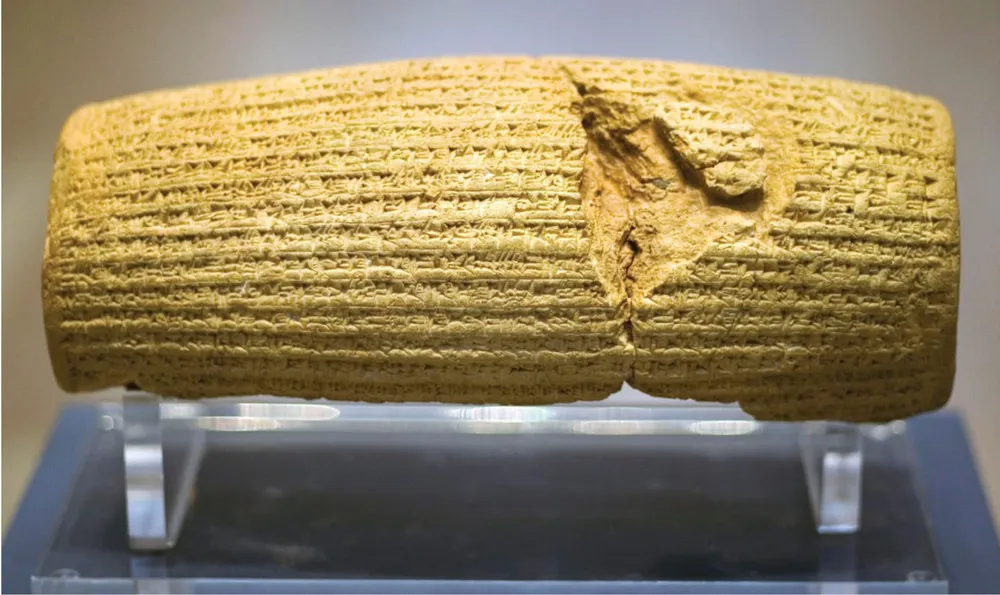
At a time when you were still in caves searching for fire, we were inscribing human rights on the Cyrus Cylinder. We endured the storm of Alexander the Great and the Mongol invasions and remained; because Iran is not just a country, it is a civilization.
History
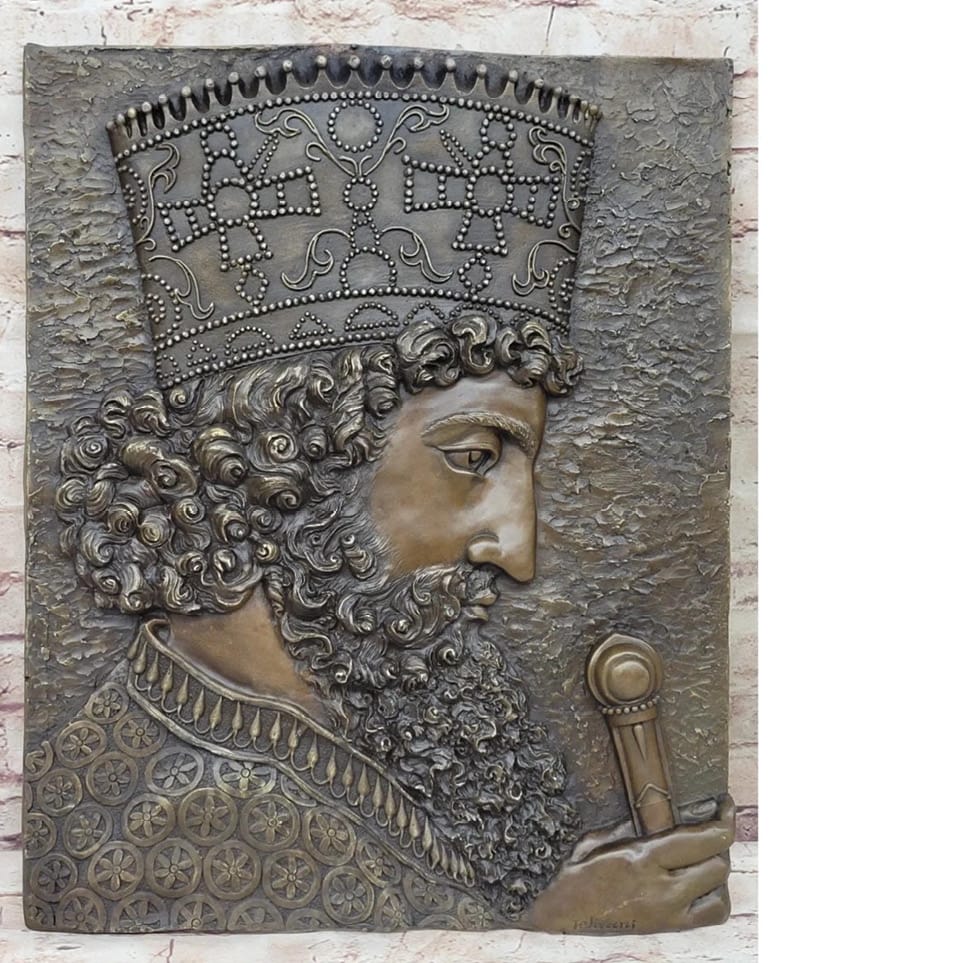
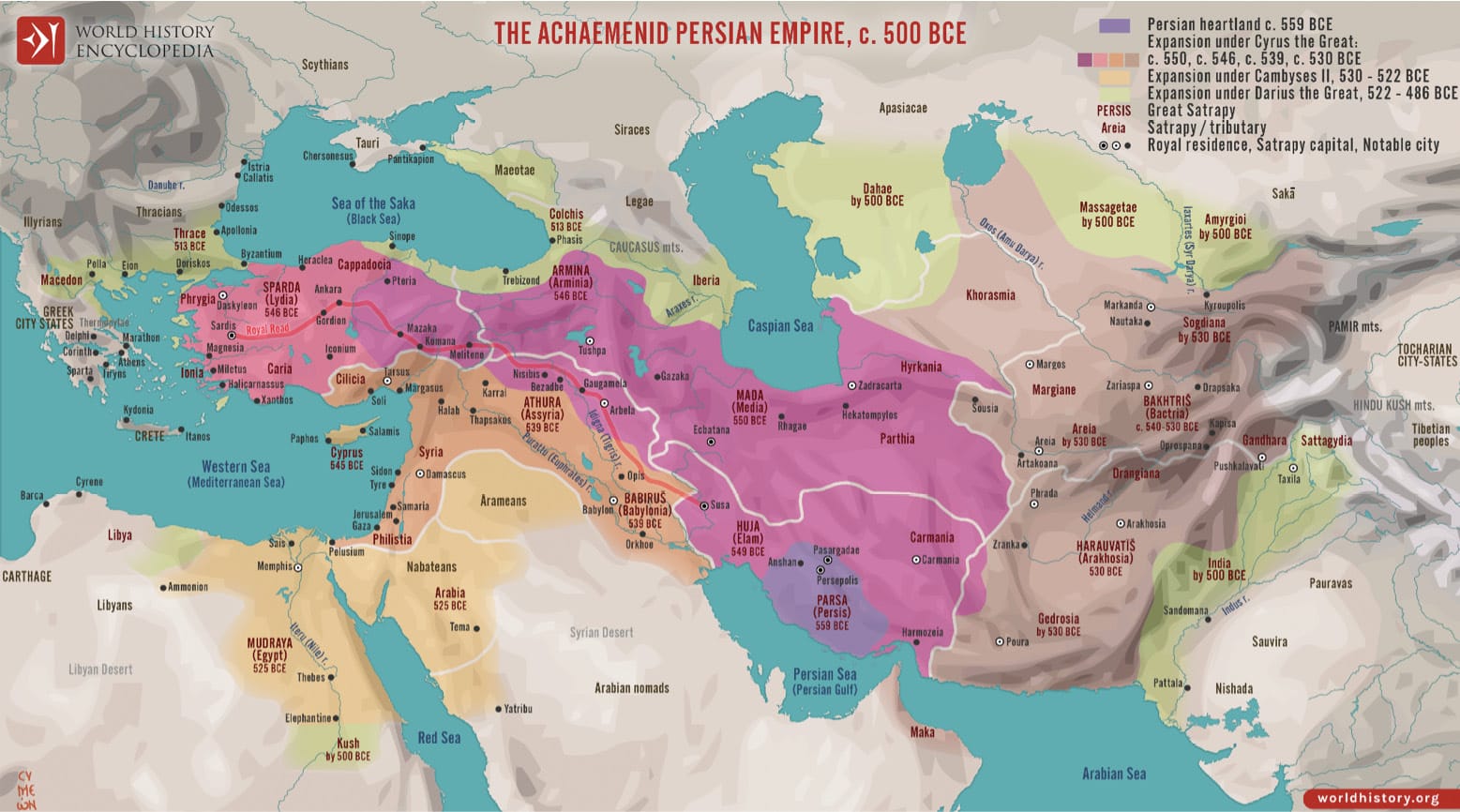
Cyrus was the founder of the Achaemenid Persian Empire in 552 B.C. It was his capture of Babylon in 539 B.C. that inaugurated the imperial era of Persia. By ending the Babylonian Empire, which until then had ruled Western Asia, Cyrus founded an empire stretching from India to Carthage, and from the Caucasus and the Danube to Ethiopia.
With 5.5 million square kilometers of territory, the Persian Empire had approximately 50 million inhabitants, representing 40% of the world’s population.
The Persian Empire is the earliest of the Indo-European empires. With its 20 provincial governors (satraps), its decentralized mode of organization sometimes served as a model for the Greek and Roman empires, and obviously for those of the Anglo-Saxons, the French, the Spanish, and others.
The founding act of the Persian Empire was the publication of the famous “edict” of King Cyrus, a copy of which, engraved in cuneiform characters on a terracotta cylinder, was discovered in the ruins of Babylon (modern-day Iraq) in 1879. It is kept in the British Museum in London.
This edict is of unparalleled value, as it constitutes the first declaration of human rights in history. Through this edict, Cyrus the Great abolished forced labor and solemnly proclaimed equal rights for all members of the empire, as well as freedom of worship and belief for all individuals.
That the Iranian embassy responded as it did is therefore very interesting. Of course, the honor of Iran’s great civilization scoffs at the U.S. President Donald Trump administration’s blatant ignorance. But at the same time, by invoking the Cyrus Cylinder, Iran, drawing on higher principles, extends an olive branch for a negotiated solution and, implicitly, for the possibility of a shared future once again.
Let’s see why.
- Although many archaeologists and historians specializing in the Near East generally take a more cynical view of Cyrus’ intentions, nonetheless the Cylinder was adopted as a symbol of that edict by Shah Mohammad Reza Pahlavi, who presented it as the “first charter of human rights,” and then exhibited it in Tehran in 1971 to celebrate the 2,500th anniversary of the Persian Empire.
- That same year, the UN translated the text into all its official languages and recognized it as a precursor to the Universal Declaration of Human Rights. Its temporary move from the British Museum to Iran for an exhibition in 2010 was commemorated as a major event, where then-President Mahmoud Ahmadinejad cited it as a source of inspiration guiding the struggle for the oppressed. Three years later, during an exhibition tour of the United States, the Cylinder was praised as a symbol of freedom. More recently, on November 6, 2025, the 43rd UNESCO General Conference unanimously recognized the Cyrus Cylinder as a global symbol of freedom, justice, and respect for cultural diversity. (Cyrus’s edict is still considered the world’s first declaration of human rights.)
- Relations between Iranians and Jews date back to antiquity. One of the episodes most celebrated in Iranian identity is the liberation of the Jews from Babylon by Cyrus the Great, an act recorded and engraved on the famous Cylinder seal, a testament to openness and tolerance. The Bible, moreover, offers a very favorable interpretation of Cyrus’s reign, which the Book of Ezra presents as enabling the Jewish people’s “return to Zion” after their captivity in Babylon.
The Jewish community in Iran is estimated today to number between 8,000 and 12,000 people, making it the largest in Southwest Asia after Israel, although its numbers have declined sharply since 1979 (around 100,000 before the Revolution). In early April, guided by AI without human verification, Israel bombed the Tehran synagogue. The Israeli army expressed its “regret” for the damage caused by this nighttime strike, which it claimed targeted a “senior Iranian military commander.”
Dialogue of Civilizations
To evoke the Cyrus Cylinder is therefore to extend an olive branch: the prospect of an intercultural, inter-religious and inter-civilizational dialogue, laying the foundation for a peaceful solution to many otherwise insoluble conflicts, both within the country (with the supporters of a return of the Pahlavi dynasty) and outside (with Israel, Christians, and the West in general).
For millennia, at the crossroads of the Silk Roads, Iranian civilization has not shown a DNA of terrorism and destabilization, but rather a fight for justice, respect and openness to others.
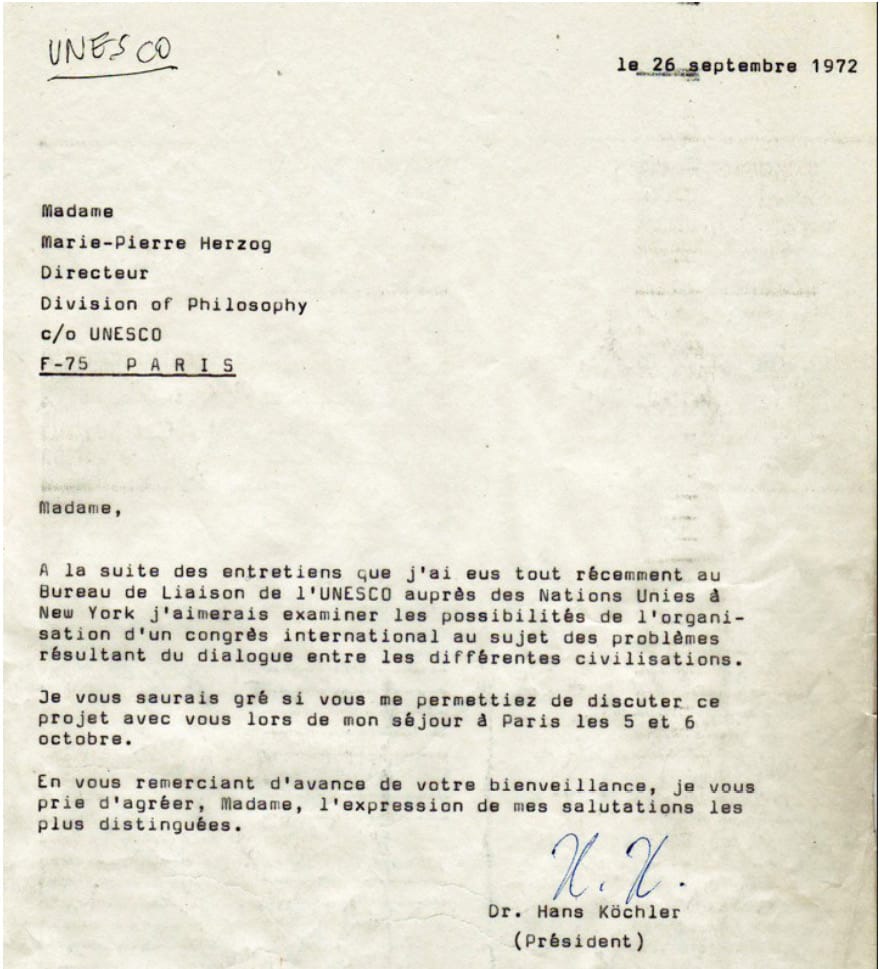
One year after the 1971 Iranian celebrations of the Cyrus Cylinder, Austrian professor Hans Köchler, president of the International Progress Organization (IPO), later a close friend and collaborator of the Schiller Institute and its founder, Helga Zepp-LaRouche, took up his pen to propose to UNESCO the organization of “an international congress on the subject of the problems arising from the dialogue between different civilizations.”
For years, Köchler, through countless presentations, lectures, and symposia worldwide, particularly in Iran, did exceptional work to popularize the concept, before it was taken up and supported by the Schiller Institute. Under the auspices of the Austrian and Senegalese Presidencies, a major symposium was held in 1974 in Innsbruck, Austria.
In 1997, in opposition to the “clash of civilizations” thesis of geopolitician Bernard Lewis, popularized by Samuel P. Huntington, Iranian President Mohammad Khatami placed dialogue between civilizations at the heart of his mandate. It was at his suggestion that the UN, in 1998, declared 2001 the “Year of Dialogue Among Civilizations.”
The concept is back on the table today. Will we be able to adapt to the Iranian DNA, or will we remain in the moral “Stone Age”?