
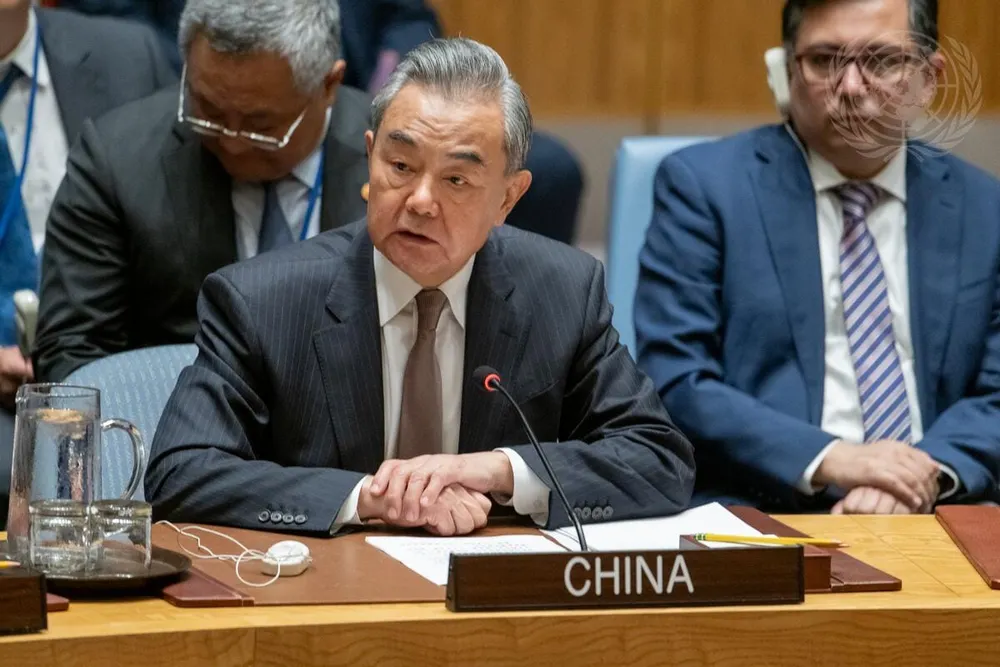
Less than week remains before the high-level open debate on “Upholding the Purposes and Principles of the UN Charter and Strengthening the United Nations-Centred International System,” to be convened by China at the UN Security Council on May 26 as the culminating event of Beijing’s May rotating presidency. Chinese Foreign Minister Wang Yi will chair; UN Secretary-General António Guterres will brief.
China’s framing of the debate is direct, identifying more than 60 armed conflicts active today, “trust lacking among major countries, raising risk of major miscalculation,” and the “rise of power politics” and “bully practices” as the principal threats to the rule of law in international affairs. The language echoes Iranian Foreign Minister Abbas Araghchi’s address to the BRICS Foreign Ministers Meeting in New Delhi on May 14, in which he attacked “American bullying” and “declining imperialist powers.”
The debate is the immediate venue that Schiller Institute founder Helga Zepp-LaRouche identified at the May 15 EIR Emergency Roundtable for advancing the combined framework proposed by former Turkish Prime Minister Ahmet Davutoğlu—a new security architecture for the Middle East grounded in the equal sovereignty of nations—and Lyndon LaRouche’s Oasis Plan for economic development in the region. Davutoğlu agreed in dialogue with Zepp-LaRouche to personally contact the mediator nations he had proposed: Türkiye, Pakistan, Malaysia, and Indonesia.


