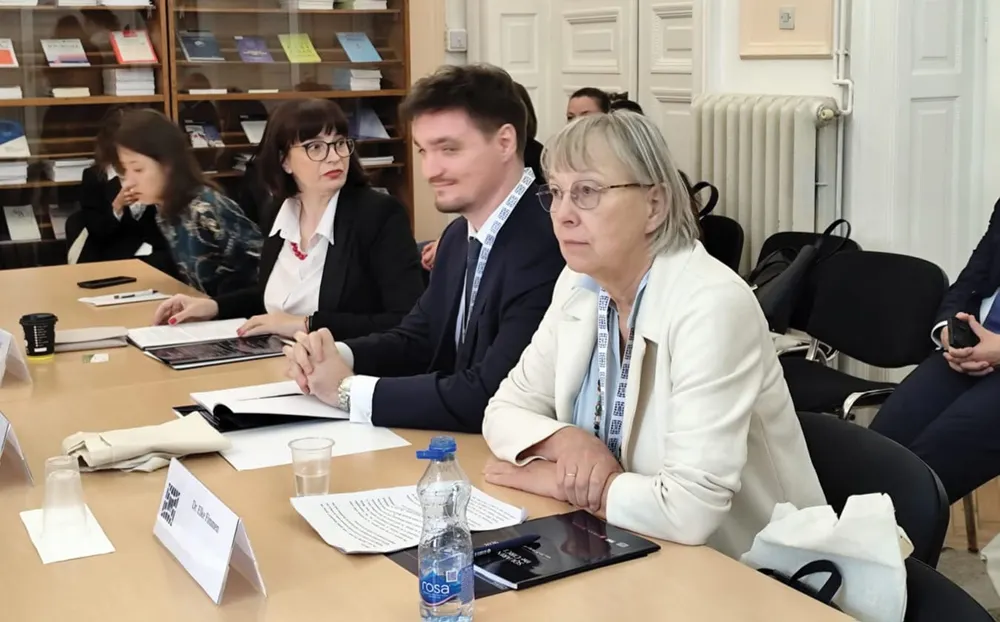
EIR · A LaRouche Publication LaRouche movement · Wednesday, May 27, 2026 'New Global Dynamics': Schiller Institute Participates in Belgrade International Conference By Elke Fimmen · 6 min read LaRouche movement Paid 'New Global Dynamics': Schiller Institute Participates in Belgrade International Conference By Elke Fimmen Published May 27, 2026 Updated Sep 15, 2026 · 6 min read Elke Fimmen of the Schiller Institute, right, participates in the IIPE conference in Belgrade, Serbia. Credit: EIRNS/Klaus Fimmen Save Tip jar Aa Share Share this article Post on X Share on LinkedIn Share on Bluesky Share on Facebook Share on WhatsApp Send by email Copy link More actions More actions Copy citation Report an issue Text Size Aa Small Aa Default Aa Large Appearance Light System Dark EIR 'New Global Dynamics': Schiller Institute Participates in Belgrade International Conference 6 min read Save Tip jar Aa Share Share this article Post on X Share on LinkedIn Share on Bluesky Share on Facebook Share on WhatsApp Send by email Copy link Text Size Aa Small Aa Default Aa Large Appearance Light System Dark View PDF Paid About the author Elke Fimmen More from Elke Fimmen → Latest articles Daily Alert: We're Facing Nuclear War, or a New Paradigm—Don't Sit on the Fence! Oct 22, 2026 We're Facing Nuclear War, or a New Paradigm—Don't Sit on the Fence! Oct 21, 2026 AIPAC Concedes It Has Been the Kiss of Death in 2026 Electoral Cycle Oct 21, 2026 Peskov: Russia, U.S. Must Address Nuclear Warheads and Strategic Stability Oct 21, 2026 View all articles Related coverage LaRouche movement ·Paid Editorial Statement from EIR: Bolsonaro's Economic Policy Team Linked to U.S. Nuclear Warmongers Daily Lead ‘To Hope, Is To Not Know’ Daily Lead A New Paradigm of International Relations, Or World War III Daily Lead Statecraft in the Complex Domain You may be interested in Collapsing Imperial System AIPAC Concedes It Has Been the Kiss of Death in 2026 Electoral Cycle Strategic War Danger Peskov: Russia, U.S. Must Address Nuclear Warheads and Strategic Stability U.S. and Canada ·Paid Putin Meets Witkoff for Talks on Ukraine, Economic Cooperation, Iran, and Summitry at the Upcoming APEC Meeting New World Paradigm ·Paid Russian Diesel Exports to the US Resume Collapsing Imperial System ·Paid Argentina’s Milei in Madrid To Interfere in Election Campaign Against Pedro Sánchez Africa ·Paid Africa CDC Calls for Meeting of Health Ministers To Confront Ebola Outbreak
U.S. and Canada ·Paid Putin Meets Witkoff for Talks on Ukraine, Economic Cooperation, Iran, and Summitry at the Upcoming APEC Meeting
Collapsing Imperial System ·Paid Argentina’s Milei in Madrid To Interfere in Election Campaign Against Pedro Sánchez