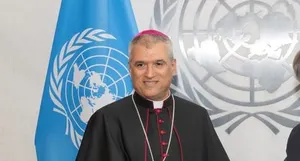
Eduardo Levy Yeyati, former chief economist at the Argentinian central bank and a full Professor of Economics and Public Policy at the School of Government, Universidad Torcuato Di Tella, and Regional Adviser at the Inter-American Development Bank, argued that stablecoins are a form of currency board money, and will fail—as the Argentinian currency board of the early 2000s failed—because of secondary money creation.
“Argentina’s central bank maintained a strict 1:1 backing of base money with U.S. dollar reserves—a perfect currency board. Banks and depositors trusted the peso because they believed it was ‘as good as dollars,’” Levy wrote in the International Banker.
“While the central bank limited narrow money (M1) to its reserves, commercial banks created dollar-denominated broad money far exceeding those reserves through fractional-reserve lending. When capital flight began in 2001, the reserves backing base money proved insufficient to meet the total dollar-denominated claims in the system. The currency board collapsed not because the central bank violated the 1:1 rule, but because secondary-money creation broke the credibility of the peg.”