
Ukraine’s drone campaign against the fuel lifelines of Crimea escalated sharply over the weekend. In a separate development, a strike on the city of Voronezh, deep in Russia's interior, appears to have involved Western-supplied air-launched cruise missiles against a major military-industrial plant.
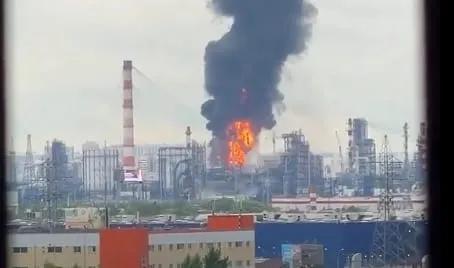
Overnight June 20-21, Ukrainian drones struck the ferry crossing and oil terminals on both sides of the Kerch Strait, one of the routes Russia has used to fuel Crimea since the Crimean Bridge was closed to hazardous cargo. The TES-Terminal-1 oil depot in Kerch, less than a kilometer from the bridge, and the tank farm at Port Kavkaz on the eastern side were set ablaze; the Maritime Executive reported five of seven tanks burning at the Kerch terminal. A Rosmorport rail-ferry, the Elena II, was hit, taking ferry service out of commission. The Institute for the Study of War, citing geolocated footage, claimed at least three ferries set ablaze and air defenses guarding the bridge disabled—claims not independently confirmed. Officials in Russia's Krasnodar Territory, which faces Crimea across the Kerch Strait, said one person was killed on a ferry.
The effect was immediate. A day later, on June 21, Sergey Aksyonov, the head of Crimea, suspended all retail fuel sales: “Fuel will be sold only to government agencies that ensure the functioning and security of the Republic of Crimea,” he wrote, urging residents to “remain calm and to only trust official sources.” The ban on civilian purchases came after weeks of worsening shortage. Since late May, the AP reported, sales had been rationed to 20 liters per vehicle per week via prepaid coupons, with hours-long lines and speculators reselling at double price. It is the worst energy crisis in Crimea since it became part of Russia in 2014.
The Voronezh strike was a different kind of escalation. Overnight June 21-22, Ukraine struck the city of Voronezh with air-launched cruise missiles, hitting the Voronezh Semiconductor Devices Plant, which Ukraine’s General Staff called a “critical component” of Russian defense production. What is notable is not the distance—Ukraine has struck far deeper with its own ground-launched FP-5, hitting the Votkinsk missile plant some 1,400 km inside Russia in February—but rather the probable use of British- or American-made cruise missiles, the Storm Shadow or the ERAM, either of which would, at least until now, have required U.S. permission to fire so deep into Russia. The General Staff reported "high-precision air-launched cruise missiles," which would rule out the ground-launched FP-5. Governor Alexander Gusev confirmed a plant was damaged; Russian authorities later said at least five people were killed and some 10 apartment buildings damaged. (Russian Telegram channels attributed the strike to UK Storm Shadow missiles, though neither Kiev nor Russian officials specified the type.)
In a separate, mass drone barrage the same night, Ukraine also struck the Dubna satellite-communications center near Moscow—some 670 km from Voronezh; Russia said it downed 301 drones, 84 of them headed for the capital.
These escalations follow Ukrainian President Zelensky’s European tour: his June 7 meeting in London, his presence at the G7 summit in Evian, and then in Brussels at the NATO defense ministers’ meeting and the Ukraine Defense Contract Group.


