Today foreign ministers representing 690 million people, in the 11 members of the Association of Southeast Asian Nations (ASEAN) issued a joint statement calling for an end to the warfare in Southwest Asia. In the opening hours of their three-day meeting in Manila, they met in private, then immediately released their eight-point statement, “On the Evolving Situation in the Middle East.” They reported on the destructive impact of the warfare, and stated: “We further affirmed the obligations of all States to resolve their differences through peaceful means, and to respect the sovereignty and territorial integrity of all nations…in accordance with international law, including international humanitarian law, the UN Charter, and relevant UNSC resolutions.”
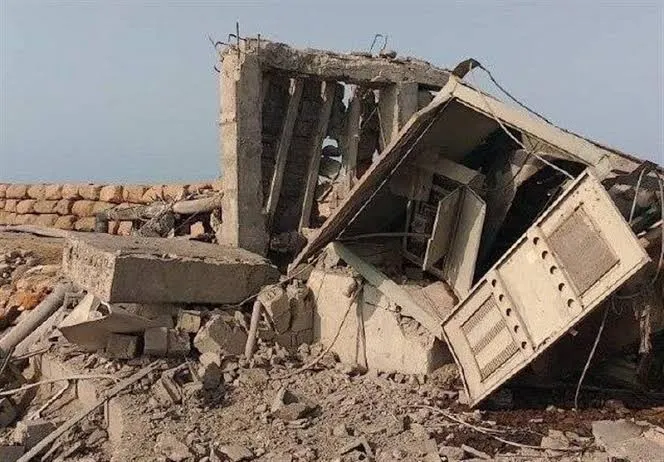
Southeast Asia, in March, was the first and hardest hit—along with locations in Africa—by the economic shocks from the shutdown of shipping through the Strait of Hormuz, resulting from the U.S./Israeli-initiated attacks on Iran Feb. 28, which followed their combined attack a year ago June. The potential impact now is deeper and more extensive, given not only the resumed blockage of the Strait of Hormuz, but the pending blockage of the Strait of Bab El Mandeb, the effective closure of Black Sea shipping routes, the turmoil in the Baltic Sea route for Russian exports of oil and grain, and the on-land destruction of Eurasian energy and transport infrastructure.
However, beyond the ASEAN ministers’ valid points on economic harm, and on death and devastation in the Southwest Asia region, is the reality that continuation of warfare, with the 10th round of U.S.-initiated attacks on Iran on Tuesday, escalates the danger of world war, and the threat of nuclear exchange and obliteration of civilization. Yet President Trump declared today at the White House, where he met with Lebanese President Joseph Aoun, “We’re not finished at all” in bombing Iran.
The nuclear war danger is pointed up by a recent geopolitical article from London—the legacy center of empire. Published July 10 by the Royal United Services Institute (RUSI), the British monarchy’s own defense thinktank, the piece, headlined, “The Next Global Shock Could Be Infinitely Worse,” cavalierly discusses the scenario that someone from the ranks of “less responsible world leaders” is likely to resort to use of nuclear weapons, and we had better summon up the “imagination” to expect it. Author Tim Willasey-Wilsey, a RUSI Senior Associate Fellow, is not writing to head-off such a cataclysmic prospect; he is publicizing it as a live contingency, an inevitability, which will be, he says, the “next global shock to rival Pearl Harbor and 9/11.”
This perspective may seem extreme, but it is representative of the nature of the war faction in the Collective West, however fractured it may be, which, also to be noted, is as incompetent as it is immoral.
Take the frantic activity of President Donald Trump at present, on the U.S. economy.
Besides giving orders, as Commander-in-Chief, to continue to attack Iran, Trump is issuing wild, King Canute-style directives on tariffs, on stopping inflation in U.S. grocery stores, and other topics du jour. On July 20, he declared this week to be “Made in America” week, and immediately decreed a 50% tariff rate on goods from Canada (to go into effect in 30 days). On July 15, he decreed a 25% rate on most goods from Brazil. The Brazilian government called the unjustified, unilateral decision “a lamentable milestone” in the history of Brazilian-U.S. relations. Today, Canadian Prime Minister Mark Carney called Trump, starting a wheeling-and-dealing process in response.
Meantime, so much in the U.S. economy continues to be not “Made in America,” that, for example, not even the daily food supply in the United States is produced at home. The United States is a net food importer, in money terms and also in absolute volume terms, for many basic foods. Independent family farms are being driven out of operation by the very military-agro-industrial-financial complex that is enforcing the wars.
It is emblematic that today in the Senate, both Trump’s military henchman Pete Hegseth, and agriculture flunkey Brooke Rollins, were witnesses at a four-hour committee hearing, asking for passage of Trump’s requested $87 billion so-called supplemental budget request. They defended the necessity for the funds to cover the cost of the Iran war ($37.4 billion by September) and of a build up of the military, and for $10 billion to aid farmers facing ruin. U.S. farmers will have a $43 billion income loss this year, it is projected.
Meantime, the full U.S. military budget bill—the FY2027 NDAA (National Defense Authorization Act)—for $1.5 trillion, though stalled, may be brought up for a decisive vote any day now in each chamber, without a separate debate and vote on its included section mandating the integration of the U.S. and Israeli military and intelligence operations—a 100-percent unprecedented, and 100-percent treasonous action.
It is essential to speak out, demonstrate, and activate in all ways possible against this immediate threat—it is the special responsibility of Americans to do so—and for everyone, anywhere, to act to stop the Western war faction, and move the world toward a new architecture for development, security, and peace.
Given the war escalation, economic breakdown, and nuclear threat, the stakes are existence itself. This perspective will be discussed in all respects July 31 at the Emergency Roundtable co-sponsored by this news service, EIR.news, and the International Peace Coalition: “Solve the Immigration Crisis with Development; What You Need to Know About the Strategic Significance of Pope Leo’s Encyclical.”