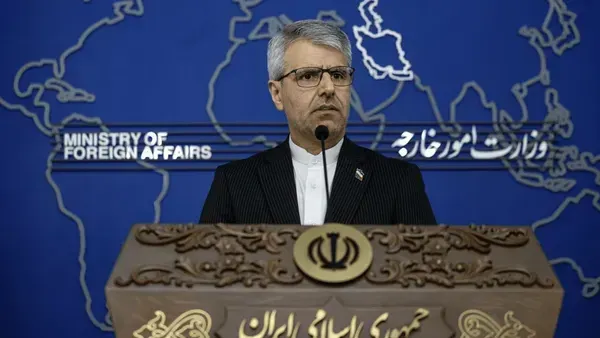
Events of the past 48 hours have shown that the Trump administration is reaching a breaking point. President Trump on Aug. 1 called off what he had claimed would be a massive strike on Iran, saying that Iran was now ready to talk and that negotiations would ensue on Monday. The only problem is that Iran didn’t seem to have gotten the memo, nor would they have a good reason to trust Trump’s intentions even if they did. Iran’s Foreign Ministry spokesman Esmail Baghaei said Monday that Iran is not negotiating with the U.S. but with Oman, and further that any agreement reached with the latter is unlikely to lead to the reopening of the strait until the U.S. ends its aggressive actions and naval blockade against Iran. Apparently upset by this news, Trump flew into a temper tantrum later on Monday, posting on social media that the “Iranian leadership is incredibly duplicitous!”
Meanwhile, diplomatic activity throughout the region and beyond has been non-stop over the recent days, in an attempt to stave off a further escalation, and to create a peaceful resolution. Notably, the United States has been left entirely outside of these processes, obviously viewed more as representing a problem to be managed than a partner.
Further indicating this situation, CNN reported that a senior intelligence official in CENTCOM has been soliciting “new creative and unconventional ways to pressure and punish Iran.” Another official confirmed this, admitting that the administration is “running out of conventional options” as Trump’s Iran war turns into a debacle.
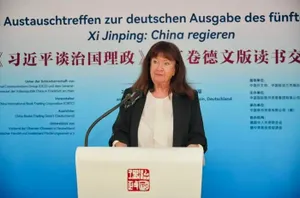
It is clear that this situation is reaching a point of exhaustion, Helga Zepp-LaRouche told associates in a discussion on Monday, but this is also why the world is in a state of heightened tension. “A phase change has to occur one way or another, because the existing trajectory is coming to an end,” she noted—either Trump will pack up and leave the region, as many experts have advised him to do, or he will launch a new phase of escalation. This dynamic of desperation is actually the main factor behind the threat of a new world war, and must be taken extremely seriously.
A similar situation exists with regard to Ukraine, where NATO-enabled strikes into Russia have been causing more damage—including damage to civilian infrastructure and commercial enterprises—bringing this situation to a new and more dangerous phase.
Zepp-LaRouche emphasized the importance of EIR’s July 31 Roundtable, “Solve the Immigration Crisis With Development,” in pointing the way out of the current global crisis. Aside from a sudden burst of reason and diplomacy—which is not very likely, Zepp-LaRouche noted—the only other approach is that defined in last week’s EIR Roundtable meeting, namely “to immediately start to address the refugee crisis in a human way, which would mean economic development, joining hands among the Western nations and the BRICS, to jointly say we will develop Africa, the Middle East, the rest of Asia—which needs it—and Latin America. And also the poor areas of Europe and the United States, because there are areas which are bordering on Third World conditions.
“So we must stop this whole armament insanity, which is a complete destruction of wealth and economic assets, and go for joint development. Now, that does require a lot more pushing, but it’s not impossible given the fact that that does represent the interests of the Global Majority.”