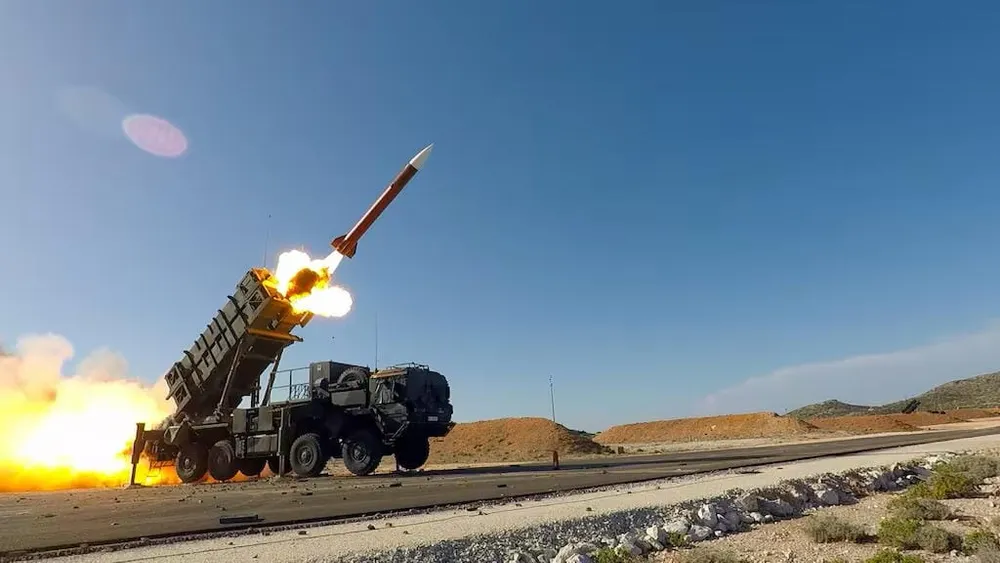
Volodymyr Zelensky has demanded 300 Patriot interceptors from Ukraine’s Western backers, complaining that they should be defending Ukraine rather than “sitting in warehouses.” The demand points to a physical reality that no amount of political theater can change.
Over the decade from FY2015 to FY2024, the U.S. Department of Defense procured an average of just under 270 PAC-3 Missile Segment Enhancement interceptors per year, according to the Center for Strategic and International Studies. Zelensky is therefore asking for somewhat more than a full year of American procurement, delivered at once, from stocks that two simultaneous wars have already drawn down.
Why he is asking is not in dispute. In the Russian strike on Kyiv on Aug. 1, Ukrainian air defenses intercepted only one of 27 incoming ballistic missiles, according to figures reported by the Associated Press. Patriot is the only system in Ukraine’s inventory that can engage Russia’s Iskander-M, and Ukraine has effectively run out.
This is not the only missile in short supply. CSIS reported in December that no new THAAD interceptor had been delivered to U.S. inventory since July 2023—production having shifted to foreign orders, including 360 interceptors for a single Saudi contract—while the June 2025 twelve-day war between Israel and Iran consumed more than 150 THAAD and roughly 80 SM-3 interceptors in twelve days.
The most telling number is an administrative one. The U.S. Army has raised its stated requirement for PAC-3 MSE interceptors from 3,376 to 13,773 missiles—a fourfold increase in what the service says it needs.
Interceptors are built on a small number of assembly lines by a workforce that takes years to train, from supply chains of small firms that cannot expand on the strength of supplemental appropriations. The war is consuming them faster than the industrial base can make them, and the same shortage is why the American commander in Europe reported this week that he must choose between defending the U.S. homeland and defending Israel.
This is a physical-economic constraint, not a political one.