The Lead
Trump Asked Xi for Three-Way Arms Talks; on Tuesday the World Meets On Nuclear Abolition
by Jason Ross (EIRNS) — Sep. 26, 2026
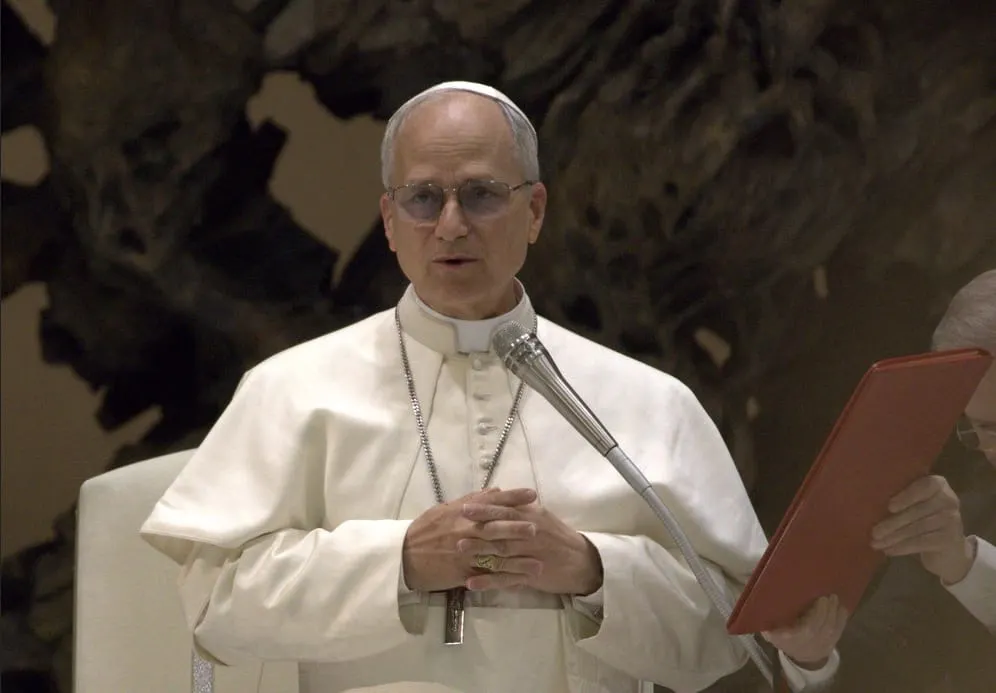
There were three major statements about nuclear weapons on Friday, Sept. 25. In Washington, near the bottom of the White House fact sheet on the Xi visit, is a sentence that got less media attention than the pandas going to the Atlanta Zoo: “The President advocated for trilateral arms control negotiations between the United States, Russia, and China.” Trump has asked for this before, and Beijing has always answered that the two powers holding roughly nine-tenths of the world’s warheads should reduce first. The fact sheet does not say Xi agreed; it says the two countries “agreed to build a constructive relationship of strategic stability.” In Paris, Pope Leo XIV told the French government, quoting John XXIII’s Pacem in Terris: “Nuclear weapons must be banned. A general agreement must be reached on a suitable disarmament program, with an effective system of mutual control.” In New York, Kazakhstan’s foreign minister told the General Assembly that New START has expired, the NPT Review Conference has failed “for the third consecutive cycle,” and his country “is ready to host one of their next meetings” of the nuclear powers. On Tuesday, Sept. 29, the same Assembly holds its annual high-level meeting on the elimination of nuclear weapons.
Pursuing that relationship with China is one side of Trump. The other was on display the same week: on Saturday he rejected Iran’s seven-day plan to reopen the Strait of Hormuz, and The Wall Street Journal reports, from unnamed officials, that he has told his staff renewed bombing is likely after the midterms. Tucker Carlson told NPR that when he warned Trump in the Oval Office, days before Feb. 28, what the war would cost, the answer was, “in the end, we all die anyway.” Which version of Trump governs is not purely a matter of Trump himself. It is a function of who is in the room, and the people who want the room to themselves have spent the week saying so. Nicholas Burns, ambassador to Beijing under Biden, objected to “the over-the-top flattery by President Trump of President Xi,” because Xi’s “government’s aim is to overtake us in power.” Samm Sacks of New America said Beijing sees Trump “as being pro-China, more so than anyone around him in his Cabinet and anyone in Congress,” and knows “there are China hardliners who want decoupling waiting in the wings.” Peter Thiel said the Pope was acting as “a useful idiot for the CCP” with his calls to exercise greater caution with respect to artificial intelligence. The outlook is: any restraint on the United States serves China, so there must be none. Helga Zepp-LaRouche said the same thing from the other side on Friday: Rubio and Hegseth “are probably not very happy with what he is doing with Xi Jinping.” There are few people on this planet Trump respects. Xi is one of them, and Xi told him to his face that the Thucydides trap “can be overcome.”
The premise the opposition shares, from Burns to Thiel, is that the United States is in a contest for dominance and that dominance is worth a war. The Pope put forward a different perspective in Paris: “Peace is not a balance of power; rather, it is built day by day through dialogue and justice.” John XXIII wrote Pacem in Terris in April 1963, six months after he had helped Kennedy and Khrushchev step back from the missiles in Cuba, and two months before his own death. He was dying when he wrote it. He did not conclude that it therefore did not matter. That is the difference between a human being and the creature who says “we all die anyway”: the human being acts for people who will live after him or her, and measures a nation’s greatness by what it builds for the future, not by whom it outranks.
Lyndon LaRouche, in the March 1983 televised address in which he proposed that the two superpowers make the missile obsolete and “then proceed on the basis of that agreement to a program of eliminating thermonuclear weapons,” said what such an agreement is for:
But let us hope that by avoiding and averting the immediate danger of nuclear war before us, in that process we might grow up a little bit, and then, having grown up a little bit, we might by then find ourselves acting like mature people to take actions to remove the causes of war rather than simply trying to stop the weapons… and we use this [beam-weapon] technology to assist the development of developing countries, to increase the general welfare of mankind on this planet, to make ourselves more rational, more scientific, more inclined to think rationally about the connection between policies and practices and the results of those policies and practices down the road, that if we commit ourselves to those things which are properly the common aims of mankind, perhaps in that great effort we can find a solution.
Whether the United States “will go for war over keeping their dominance or not,” Zepp-LaRouche told the International Peace Coalition on Friday, “is the question which will decide if mankind exists or not.” She recalled the testimony of Steve Starr and Theodore Postol to the IPC: once one nuclear weapon is used, all of them are likely to be used within days.
The Assembly meets Tuesday on abolition. Kazakhstan has offered a venue, the Pope has given an outline, and the U.S. President has himself proposed trilateral talks. The people who prefer dominance to peace are in the room with him every day. What other voices will be heard?
Contents
New World Paradigm
- The White House Fact Sheet on The Xi Visit: Arms Talks, 'Super Intelligence,' and Two More Meetings This Year (↓)
- China at the UN: 'The World Wants Peace Not War' (↓)
- China Marks Five Years of the Global Development Initiative at The UN; Pledges 10,000 Engineers (↓)
- Jaishankar at UN: Global South Faces a 'Four-F Crisis' of Food, Fuel, Fertilizer and Finance (↓)
Strategic War Danger
- Kazakhstan Calls for Nuclear Powers To Resume Dialogue, Offers To Host Meeting (↓)
- Trump Rejects Iran Ceasefire Proposal (↓)
- NYT Corroborates Emirati Warning to Netanyahu Before Oct. 7; Minutes Show He Told Security Chiefs To Keep Gaza Calm (↓)
- Lavrov at the UN: Establish Indivisible Security, Reject the EU Virus of Racial Superiority (↓)
Support our work 🙏
Support our work directly with a tip or donation — as a reader-supported publication, we rely on readers like you to keep this work going!