The following is Part 3 of a feature on American history first published in EIR on February 9, 1996. Part 1 is available here, Part 2 here.

The year 2026 marks the 250th anniversary of the Declaration of Independence by what would soon become the United States of America. That instrumental document laid down the principles of an anti-oligarchic republican form of government, and would go on to be the inspiration for countless other peoples around the world, forever changing the shape of history. Today, this history is either misunderstood or intentionally misconstrued, and the U.S. has nearly abandoned the outlook of its Founding Fathers. Over the course of this year, EIR will be publishing key articles on the true anti-oligarchic history of the United States in the hopes of contributing to the widest possible discussion of these principles, the rediscovery of which has enormous implications for whether the world can get out of its current state of turmoil today.
7. The ‘Philadelphia Interests’: The World after Lincoln
Following the American Civil War, U.S. statesmen, industry builders, military officers, scientists, and inventors in the nationalist faction fought against terrible odds to advance global technology and civilization. Assassins struck down their President in 1865, another President in 1881, and another in 1901. The nationalists were bankrupted in 1873, and U.S. government finances came under foreign control; piratical foreign representatives seized the great industries. By 1902, adherents of British policy governed the United States top-down and blocked any further revolutionary technological advance.
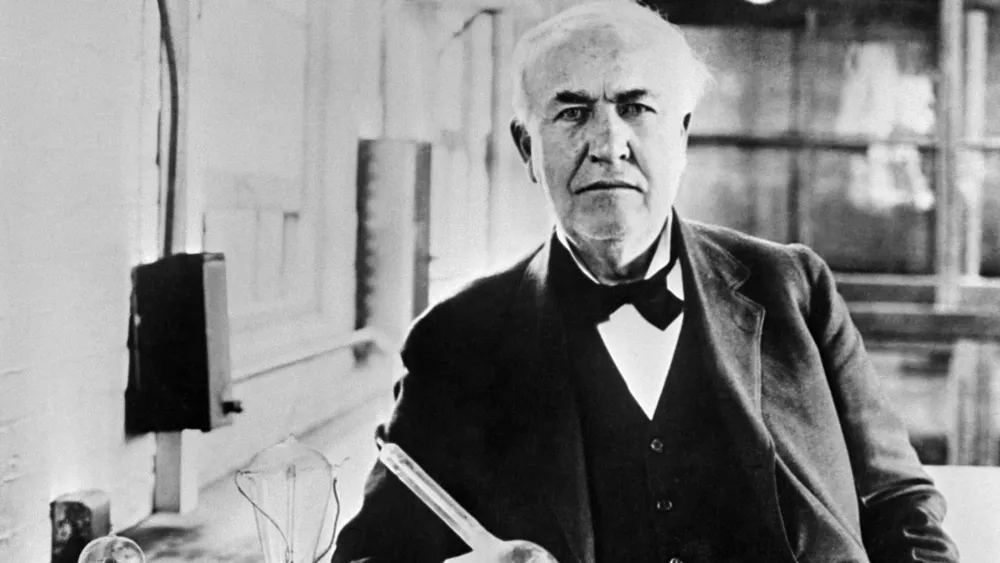
Despite these obstacles, in the post–Civil War period the tightly knit nationalist faction created new infrastructure and industries which vastly expanded the power of man over nature in the United States and abroad. Their crowning victory was the electrification of the United States and other nations by their protégé and fellow fighter, the inventor Thomas A. Edison.
“But wait!” the reader may be thinking. “Your history may suit a communist country, but not the United States. In capitalist countries, no one planned new technology. Sure, some inventors might have been idealistic at times; but money and the market drive our economy!” The idea that forethought and strategic purpose have guided man’s progress is perhaps even more unsettling to some people than the thought that evil men conspire against that progress. This may be because, in 1996, such real progress is unthinkable, is banned by “budget cuts” and “ecology.”
Yet, in 1870, there still existed a powerful American alternative to Wall Street, to British ideology. There was a general expectation of dramatic material progress; there were men and institutions determined to bring it about, and they had allies abroad. We report here on how some of the main industries were built with their new technologies. In order to unmistakably identify the strategists behind these enterprises we will review some of their other objectives, political and military, and explain how the nationalists were ultimately brought down.
At the heart of America’s post–Civil War development were the political and intellectual associates of Henry C. Carey and Alexander Dallas Bache, and the complex of government and private institutions they and their predecessors had built since Benjamin Franklin.
The nationalists’ power revolved around the Pennsylvania Railroad (PRR) and the banking house of Jay Cooke. The PRR had been built in the late 1840s; the city of Philadelphia bought a quarter of the corporate stock to subsidize construction. In 1857, PRR President J. Edgar Thomson hired the young engineer William J. Palmer—to become the sponsor of Thomas Edison—as his personal secretary; Palmer converted the railroad from wood- to coal-burning locomotives. The Pennsylvania Railroad grew to become the largest American corporation, with 6,000 miles of lines.
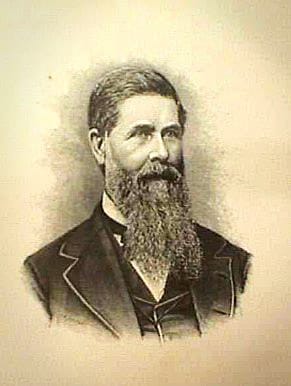
During the Civil War, PRR executives Thomas Scott and Andrew Carnegie organized the U.S. military telegraph office. William J. Palmer became a cavalry general and was awarded the Congressional Medal of Honor. Philadelphia nationalist Jay Cooke raised $1 billion for the war effort: He sold U.S. bonds to ordinary citizens, and beat Wall Street’s attempt to blackmail the President by denying credit to the government. Cooke continued marketing most of the federal government’s bond sales after the war.
Thus a combination arose, involving banking, government, and Bache’s naval and military connections, with immense potential power for technological transformation. At the center was economist Henry C. Carey, the grand old man of nationalist strategy. His books and articles defined the purposes of the nationalists’ efforts. Carey’s ideas informed the federal policy that protected the mills and kept federal finances out of the hands of the London-Wall Street banking axis. And Carey’s behind-the-scenes relationships with the military, the scientists, and the pro-modern parties in each foreign country, were the web which held everything together.
By 1871-72, a unified set of large industrial companies was owned by a partnership, known informally as the “Philadelphia Interests,” including J. Edgar Thomson, Thomas A. Scott, Andrew Carnegie, William J. Palmer, Matthew Baird, Samuel Felton, and others. They ran the Pennsylvania Railroad, the Baldwin Locomotive Works, the Denver & Rio Grande Railroad, the Pennsylvania Steel Company, the Kansas Pacific Railway, the Mexican National Railways, the Automatic Telegraph Company, and numerous other railroads, iron forges, machine builders, and coal mines.
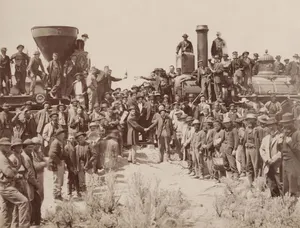
Partner Andrew Carnegie was building the J. Edgar Thomson Steel Works in Pittsburgh, the world’s largest and first truly modern steel mill. The Philadelphia Interests had just taken control of the Union Pacific Railroad, and had started George Westinghouse’s career by installing his air brake on PRR trains.
Meanwhile the group’s banker, Jay Cooke, with huge government land grants under Lincoln’s law, began construction of the 2,000-mile Northern Pacific Railway.
The management of these enterprises overlapped with the Franklin Institute, the University of Pennsylvania, and the American Philosophical Society. The cadres developed under Alexander D. Bache’s leadership, and otherwise nested within this extended Philadelphia research/industrial complex, supplied the genius and drive for the most important U.S. engineering and scientific endeavors. For example: Samuel Felton, president of several of the partners’ railroads and steel companies, was the brother of Bache-Lazzaronian Cornelius C. Felton, who presided over vital scientific capabilities as president of Harvard College. Another example: Bacheite Benjamin Silliman, Jr. had published in 1855 a “Report on the Oil Rock, or Petroleum, from Venango County, Pennsylvania,” on the chemical composition of underground oil and how to refine it; this was the beginning of America’s oil industry, which was first promoted by the Philadelphia Interests.
Henry Carey’s disciple Joseph Wharton, founder of the Bethlehem Steel Company, led the Washington, D.C. lobbying on behalf of Carey and the PRR group. They secured protective tariffs so high as to block any British interference with U.S. development. Joseph Wharton founded the Wharton School of Business (later a school for swindlers and parasites) as a Careyite nationalist center.
British Financiers Open Fire
In 1871, at the height of the nationalists’ power, the British forged a new Philadelphia–New York–London axis that would be used to break the entire American political leadership. London banker Junius S. Morgan merged his New York son, J.P. Morgan, into the Austrian-origin Drexel banking house of Philadelphia. The new firm was Drexel, Morgan & Co.—later, J.P. Morgan & Co.
Anthony Drexel owned the Philadelphia Ledger, which had a joint editorial operation with the London Times. The Ledger began relentlessly slandering Jay Cooke, the main banker for the U.S. government and the Philadelphia Interests; they said Cooke was going bankrupt, that his depositors and lenders would lose everything. These articles were circulated throughout the world while Drexel, Morgan & Co. coordinated an all-out war against Cooke’s credit standing within the financial community. Furious “anti-corruption” propaganda by the Anglophiles against all railroad building had already caused the Congress to shrink from further support for Cooke and his colleagues, and Cooke was weakened. Drexel’s campaign struck its target with explosive effect.
Jay Cooke & Co. folded and closed its doors on Sept. 18, 1873. Within two days the Northern Pacific and most other American railroad construction halted. The new steel mills shut down, banks collapsed, stocks crashed. In this Panic of 1873, the Philadelphia industrialists were totally removed from the transcontinental railroad business. The overall pace of development in the American economy was never again to be recaptured. The goal of densely settling populations along the western routes of transcontinental railroads was abandoned by the men who took over the lines.
In 1879, the year that Henry Carey died, the Specie Resumption Act was officially implemented, ceding sovereignty over U.S. monetary policy to the international holders of gold.
Britain’s Newcomen Society gloated over the change: “Drexel, Morgan & Co. achieved a major position in the distribution of U.S. Government bonds, a field that previously had practically been dominated by the Philadelphia banking firm of Jay Cooke…. After Cooke was forced into bankruptcy by the Panic of 1873, the Drexel-Morgan firm held an unrivaled position in this field of finance…. To the United States Treasury, [Morgan] could now offer distribution facilities … [involving] Drexel-Morgan … J.S. Morgan & Co. in London … [and] international distribution through Levi Morton and the Rothschild firm.” In fact, those very British firms constituted a syndicate which had gained iron control over U.S. government finances.
But in the darkening 1870s, Henry Carey and his associates did not submit. We will here offer thumbnail sketches of four “projects”—three foreign nations, and one famous man’s career—projects which were carried out under conditions akin to enemy military occupation, and which the nationalists would continue for a few crucial years after Carey’s death.
Japan Gets on the Track
The U.S. nationalists had opened up Japan in the 1850s, when Commodore Matthew Perry brought a fleet loaded with a railroad train and a telegraph system; with U.S. backing, Japan went on to create a new pro-modernization government. In 1872, Japanese Prince Iwakura and much of his regime came to visit, staying in the home of Jay Cooke. His delegation was preparing a trade treaty and a loan of $15 million for Japanese development, and Cooke was negotiating for Asian connections with the Northern Pacific system. The allied nationalists envisioned a global belt of railways, canals, and shipping operations to vastly increase the effectiveness of their economies.
At that time, Henry Carey’s associates, led by geologist/industrial planner Benjamin Smith Lyman and economist E. Peshine Smith, were in Japan coordinating the American-allied government’s identification of mineral resources, planning railroads, and outlining tariff strategies. This was the birth of Japan’s industrial might.
The fiercely anti-British John Bingham became ambassador to Japan in 1873. Bingham hung on to his post through several U.S. administrations until 1885, battling British diplomat Harry Parkes for influence over Japan’s destiny: Should it be a powerful technological republic or a British-model chauvinist empire, a plaything of British geopolitics?
The eventual collapse of America’s nationalist faction was a tragedy for Japan as well as for the United States. The Japanese entered modern times on an American train, but the British sidetracked it.
Russia’s Western Start
As America’s most influential newspaper writer, Henry Carey had swung public opinion behind Russia in its 1854-56 Crimean War with Britain. Carey himself went to Russia in 1859, apparently to secure a U.S.-Russian alliance in the deepening U.S. sectional crisis. During the Civil War, Czar Alexander II did send his fleet to New York and San Francisco to prevent British direct intervention on behalf of the Confederacy, and the United States began supplying ironclad warships to Russia.
Former Pennsylvania Gov. Andrew Curtin went to Russia as U.S. ambassador in 1869. Henry Carey hosted a send-off dinner for Curtin, where a U.S. general proposed that the czar should build a trans-Siberian railway to link up with the United States and to break British hegemony.
Carey’s Philadelphia friend, George H. Boker, was ambassador to Russia from 1875 to 1878, and a new venture was undertaken.
The Russians appointed the publisher of Carey’s polemical anti-British magazine articles, banker Wharton Barker, as Russia’s American financial agent. In 1878 Barker built four battle cruisers for the Russian Navy in Philadelphia. Wharton Barker went to Russia to plan iron and coal mines, forges and factories, for the transformation of southern Russia. He formally proposed that the two nations prepare as allies for a war against Great Britain, aiming at “the accomplishment of the common work of Russia and America, namely the dismemberment of the British Empire.”
Wharton Barker and his closest associates brought about the nomination of their candidate, James A. Garfield, who was elected U.S. President in November 1880. The czar signed the industrial development contracts with the Philadelphia organization on March 10, 1881; on March 13, Czar Alexander II was assassinated. One week later, Garfield was inaugurated; President Garfield was shot in July, and died in September. The new czar, Alexander III, continued some of the proposed southern Russian development, but now without participation by the clearly dangerous Philadelphians.
Count Sergei Witte, an advocate of Friedrich List’s nationalism, would build Russia’s Lincoln-style trans-Siberian railway and begin the country’s industrial modernization in the 1890s. But the Russian Revolution overthrew Witte and cut the American tie.
Ireland and the Carey Submarine
One hundred years after Mathew Carey had become an Irish revolutionary, his son, Henry Carey, plunged in and took responsibility for reviving the Irish struggle for independence from Britain. Carey’s disciple, Philadelphia Irish immigrant physician William Carroll, was designated head of the Irish revolutionary underground—the Fenians, or Clan na Gael—in 1875. Dr. Carroll was chairman of the Clan na Gael executive committee from 1875 to 1880; he was backed in the movement’s leadership by other Carey allies, notably Knights of Labor chief Terence V. Powderly and University of Pennsylvania economics Prof. Robert Ellis Thompson.
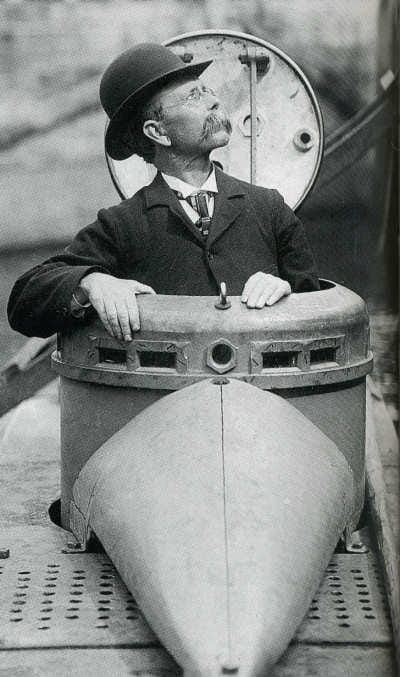
Carroll and his colleagues sent cash and guns to Ireland, and in 1878 Carroll toured the British Isles, reuniting the bickering Irish underground into a cohesive force of 20,000 members. (Twenty years later this Careyite initiative would result in the formation of the Sinn Féin, which went on to free most of Ireland from British rule.) Dr. Carroll’s main partner in this work was Irish revolutionary John Devoy, who had become foreign editor for James Gordon Bennett, Jr.’s New York Herald. Several others of the Carey-allied Irish nationalist movement joined Devoy in guiding the Herald—a newspaper that would be useful to Thomas Edison.
Perhaps Dr. Carroll’s most spectacular enterprise was the invention of the submarine. The Clan na Gael “skirmishing fund” paid Irish immigrant John Holland approximately $60,000 to build prototype underwater warships; Carroll justified the expenditure by reference to Robert Fulton’s similar craft in the 1790s. The three-man submarine, Fenian Ram, was tested in New York harbor in May 1881; the British embassy protested, but Garfield refused to interfere with the Irish operation. (Garfield died soon afterwards.) The U.S. Navy in the 1890s decided to revive the Clan na Gael’s project, and paid John Holland to build the Navy’s first battle submarines.
8. The Real Thomas Edison
Thomas Edison was called by admirers “the Franklin of the Nineteenth Century,” and it is not surprising that he should be slandered by his detractors precisely as was Franklin: “a mere tinkerer,” “uneducated,” “unscientific,” “an empiricist.” The Dec. 31, 1995, Washington Post labeled Edison “a grease monkey. A putterer. A mechanic.” As the lie was put about that Franklin was a “British agent,” so had Edison been called a Wall Street stooge. It is said that J.P. Morgan sponsored Edison’s work, or that speculator Jay Gould gave Edison his start.
These and other calumnies constitute an outpouring of Anglo-establishment rage which is puzzling until one knows who Edison really was.
At the height of their power, the Philadelphia industrial-scientific-political grouping (see previous sections) discovered Thomas Edison as a young, clever inventor of telegraphic devices. They set him up as an independent full-time inventor. They encouraged him into astonishing inventions. When they were grievously weakened, financially and politically, they schemed to make Edison famous. Recognizing the force of his genius, they asked him to invent the electric light and tutored him in the history of the field. They protected Edison as far as possible from the brutal sabotage of J.P. Morgan, their enemy, and they stayed with Edison, through to the victorious electrification of the world.
The following report is, as far as is known, the first published attempt to systematically account for Edison in his real relations to the “principalities and powers,” and to see Edison’s own thinking in the context of America’s technological optimism—something considered quite “incorrect” today.
It was William Jackson Palmer who directed the initial rescue of Edison out of Wall Street’s employ. By the end of the Civil War, Palmer had become a full partner in the Philadelphia Interests. He had converted the Pennsylvania Railroad to coal. As a Union officer, his cavalry had routed and captured an entire Rebel regiment in Alabama. The partners in 1866 sent Palmer and his assistant, telegraph expert Edward H. Johnson, out west to build the Kansas Pacific Railroad.
Backed by their industrial power, and the land grants and greenback-issuance policies put in place by President Lincoln, Palmer and Johnson surveyed the Kansas Pacific route through untracked wilderness in New Mexico and Arizona to the West Coast, and built the line from Kansas City, Missouri, to Denver, Colorado. Johnson served as telegraphic constructor, surveyor, and Palmer’s secretary. With Johnson’s assistance, Palmer began building a line from Denver to Mexico City, with plans to develop modern manufacturing in both of the United States’ North American sister republics.
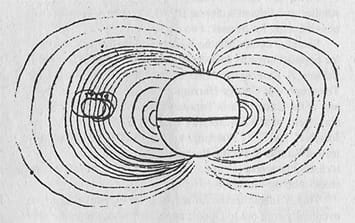
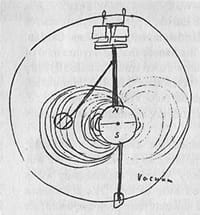
Entries in Edison’s notebooks, 1886. Edison hypothesized on the force geometries shaping the solar system, and theorized that overlapping force lines from the Sun and the Earth produced the Earth’s rotation. Left, an “apparatus to prove the theory.” Like Franklin, Edison had no use for Isaac Newton’s dead, purposeless universe.
But Wall Street was pressing everywhere to take over and milk or destroy productive enterprises. Jay Gould would get into the Kansas Pacific; the Boston Brahmins would move to shoot down Palmer’s operations.
Backed by the Philadelphians
In 1870, Palmer, one of his Kansas Pacific executives named Josiah Reiff, and Philadelphian George Harrington, formerly Lincoln’s Assistant Secretary of the Treasury, set up the Automatic Telegraph Company in New York City. The firm was supposed to compete with the Western Union Company, which only bought inventions in order to silence a potential challenge to its communications monopoly, and would suppress or make use of them as necessary.
Palmer sent Johnson back East to supervise Automatic’s work, and Johnson hired the 24-year-old Edison to invent their technology. Edison had made a name for himself as an employee or contractor developing telegraphic devices, but Wall Street had hemmed him in. The Automatic Telegraph Company now gave Edison $40,000 to set up a new shop; Reiff later arranged that Edison would be on salary while doing his telegraphic inventing. Edison accepted on condition that Johnson be assigned as his chief assistant. Johnson became Edison’s closest friend, and was Edison’s business manager for the next two decades.
Socialist author Matthew Josephson helped lay the basis for populist error by misidentifying Edison’s backers, in his Edison: A Biography:
One of the directors of Automatic Telegraph was George Harrington, formerly assistant secretary of the United States Treasury, but reputed to be the financial agent of the sinister Jay Gould. Another director was Josiah C. Reiff … Washington lobbyist for the Gould-controlled Kansas & Pacific Railroad. These people were all for technical progress … but … they were in hopes [of] a good stock-jobbing venture.
This is anachronistic fallacy of composition. Harrington eventually sold out to Gould; and Gould was contending for and eventually took over the Kansas Pacific. But Reiff and Automatic’s international representative, Colonel Gouraud, were both agents of the anti-Wall Street Gen. William J. Palmer. Gouraud would become Edison’s personal representative in England, dealing with British invention-stealers. On Jan. 17, 1870, Palmer wrote to his fiancée that he daydreamed of an “ideal railroad” under his own total control, staffed by only his closest and most trusted comrades: “Mr. Reiff [should be] general agent, Colonel Gouraud New York representative … and a host of good fellows from my regiment should occupy … various positions.”
Edison himself explained the speculator’s thinking:
Gould took no pride in building up an enterprise. He was after money, and money only. Whether the company was a success or failure mattered little to him. His conscience seemed to be atrophied, but that may have been due to the fact that he was contending with men [of Western Union] who never had any to be atrophied.
To understand Edison’s mental map, it helps to consider the background of his Canadian immigrant father, Samuel Edison, who assisted Thomas in his Automatic Telegraph work and would help construct his famous Menlo Park, New Jersey, laboratory. Like Henry Carey’s father, Mathew Carey, Thomas Edison’s father was indicted for treason against the British Crown. Samuel Edison organized his townsmen against British rule, and, in 1837, he was forced to flee through the woods from British troops pursuing him. He escaped across the river-border from Ontario to Michigan, and later moved to Ohio, where Thomas was born in 1847.
Attacking a Problem
Johnson described Edison’s probe of everything ever done before on the telegraph problem under study—how to send several messages simultaneously on the same wire, at high speed:
There were numerous theoretical solutions in French books, but none of them enabled him to exceed the rate of 200 words a minute…. I came in one night and there sat Edison with a pile of chemical books that were five feet high when laid one upon another. He had ordered them from New York, London and Paris. He studied them day and night. He ate at his desk and slept in a chair. In six weeks he had gone through the books, written a volume of abstracts, made 2,000 experiments … and produced a solution, the only one that could do the thing he wanted.”
Edison wrote:
I would construct a theory and work on its lines until I found it untenable, then it would be discarded and another theory evolved. This was the only possible way for me to work out the problem.
In 1876, Edison moved into the new Menlo Park laboratory, the “invention factory,” with the Philadelphians’ Johnson as his chief executive assistant. Alexander Graham Bell had recently developed a toy-like telephone device, somewhat better than two cans on a string, which could be used with difficulty over a short distance. Edison and his staff went to work to perfect the telephone; by 1877, he had invented the carbon transmitter and microphone, making the telephone practical.
Bell was backed on Wall Street by Boston’s John Murray Forbes, a Baring Bank ally and head of the Boston-to-China opium syndicate; Forbes’s son Hathaway would be Bell Telephone’s first president. Edison, Johnson, and Colonel Gouraud created a rival telephone company and fought it out for preeminence in England itself against the Bell forces; the rival British companies eventually merged.
A few years earlier, Edison had met George F. Barker, a professor of physics at the University of Pennsylvania. Barker (no known relation to Wharton Barker) was chief scientist at the Franklin Institute, resuming Alexander D. Bache’s role. Professor Barker became Edison’s scientific “angel” and dear friend.
Inventing the Phonograph
The Bell-Edison telephone was going to market, and Edison asked: What if you call someone, and he is not in? The voice must be somehow preserved. Professor Barker encouraged Edison to take up the solution to the question—the invention of the phonograph. Edison had been partially deaf since childhood, but had trained his concentration so he could hear the entire musical overtone series. He loved Beethoven and hated Wagner; he worried that his new instrument could not reproduce a truly beautiful sound, and warned against its use for bad popular musical entertainment.
Once the phonograph was tested successfully, the embattled Philadelphia nationalists set out to make Edison famous.
Professor Barker arranged for Edison to be invited to the April 18, 1878, Washington, D.C., meeting of the National Academy of Sciences, an institution founded by Bache for loyal scientists during the Civil War. Barker and his friends made sure that the hall was packed with a warmed-up audience. The first words of the device to the public were, “The Speaking Phonograph has the honor of presenting itself to the Academy of Sciences.”
That night, a demonstration was held for the press in the Washington bureau of the Philadelphia Inquirer. The next day, with the cooperation of nationalist political leader James Blaine (soon to be President Garfield’s Secretary of State), the phonograph was demonstrated for congressmen in the home of Blaine’s niece.
This publicity, organized by the Philadelphians and their political allies, made Edison world-famous.
To see a little bit of the connection between Edison and his political backers, we advert to a message from Professor Barker to Edison on March 22, 1878. Barker telegraphed that he wanted to hook up a direct telephone line from Menlo Park into the University of Pennsylvania for his forthcoming lecture. Barker then asked Edison, “Would it be too much of a favor to ask that you allow someone at your shop to give me occasionally a little time for experiment? For example I am to have at the University on Wednesday next, some of our most prominent men, Mr. Henry C. Carey, [Careyite journalist] Mr. Morton McMichael, Mr. Geo. H. Boker [former ambassador to Russia] etc. to see the telephone (the Bell [and two other devices]) and I should be very glad to use that opportunity to show them the greatest of the telephones, Mr. Edison’s. Could you let someone do some talking [i.e., on the telephone from Menlo Park to the lecture-demonstration for Henry Carey et al.] about 4 p.m. on that day?” A few days earlier, General Palmer had written congratulations to Johnson: “Edison’s last developments beat Aladdin completely.”
The Fight for Light
In July 1878, Professor Barker invited Edison to travel with him by the new railroad to Wyoming, to view a solar eclipse, and on to the West Coast. On this trip of two months, Barker reviewed with Edison the development of electrical science, and the recent attempts to create light from electricity. Barker proposed that Edison take this up as his own great project. On Sept. 8, Barker next took Edison to Connecticut, to view an arc light (a bow of flame between two adjacent electrodes, unsuitable for indoor use) and a water-powered generator. Seeing a problem posed, and that no one was on the track to a solution, Edison excitedly took up the challenge.
Edison’s object was to electrically heat, and cause to glow, some material (“filament”) contained inside a glass, without consuming it; to “divide the light,” by having an unlimited number of such devices running on the same power source; and to create a steam-driven generator that would convert fuel burned into electricity with such efficiency that the new light would be at least as cheap as the gas lights then in use.
Early the next month, October 1878, Edison boldly announced to the newspapers that he had invented the electric light, that he would produce light and electric power universally for the cities, thus moving civilization to a new stage.
Edison was confident he could do what he claimed. But the Philadelphians were staggering financially; Edison and his friends would have to get cash to move the work to completion. And those who controlled the main sources of available funding, Britain’s U.S.-based financial agents, viewed Edison with alarm.
J.P. Morgan, his partner Anthony Drexel, and Rothschild representative August Belmont all came to Menlo Park in early December to negotiate for rights to Edison’s yet-to-be-created electric light. Morgan immediately incorporated his Edison Electric Lighting Company (EELC).
Knowing that the London–New York financial axis wanted control so that they could suppress his work, and faced with Morgan’s lawyer Grosvenor Lowrey’s demands for secrecy, Edison used publicity to educate a broad range of supporters and potential financial backers.
The New York Herald, with its Irish underground editors, was Edison’s special champion. A particularly influential article in the Dec. 21, 1879, Herald precisely and scientifically detailed the history of Edison’s work on light and power up to that point, describing the result as “a bright, beautiful light, like the mellow sunset of an Italian autumn”; the author had accompanied Edison and Professor Barker on their trip out west.
The British scientific establishment and their American hangers-on churned out incessant, scornful anti-Edison propaganda. A special committee of Parliament heard experts testify that the electric light was impossible, and electric power would be dangerous in the general public’s use. Sir William Preece told the Royal United Service Institution on Feb. 15, 1879:
It is .. easily shown (and that is by the application of perfectly definite and well-known scientific laws) that in a circuit [with constant] electro-motive force … additional lamps [inserted] …in series [will cause a sharp diminution of the light in relation to] the number inserted. Hence a sub-division of the electric light is an absolute ignis fatuus.
Among the attacks against Edison in the New York Times was an interview with a prestigious scientist, Henry Morton, pronouncing the whole electric light idea a failure, and repeating the British line that “no sub-division of the light is possible.”
The nationalists’ New York Herald replied, referring to the British heart of the problem:
Mr. Morton … will not have [the electric light] on any terms, and when a man of his eminence … refuses to consent to the electric light it is but little short of impertinence for Mr. Edison to invent it…. As Lord Russell [former British Prime Minister] was willing to consent that the progress of the British people might be admitted to go so far as he approved, but held that the point so gained must be a finality, so this professor will not admit that there may be any movement in the progress of invention beyond his finality; which is gas.
At length, Edison made his impossible light, his unlawful dynamo, and the hundreds of other inventions necessary for a working power system. Morgan blocked the manufacture of light bulbs, preferring to simply hold the patents. So Edison sold stock in the EELC and he and Johnson set up the Edison Lamp Company to make the bulbs.
A single power station was established at Pearl Street, New York. The Morgan-controlled EELC bluntly refused to allow any more generators to be built. But the overwhelming public faith in Edison’s competence made it likely that other money sources could somehow be found, and a brawl on the EELC board loosened Morgan’s stranglehold for a time. Edison now proceeded with the spread of electricity the way the nationalists had built railroads before the Civil War—municipalities issued their own bonds to pay for the building of power stations. Production of dynamos and their installation grew rapidly. Large city central power stations rose to 12 in 1884, and to 58 in 1886. By 1888, Edison had installed 200 central lighting stations and 1,500 isolated plants (and he held about $4 million in municipal bonds).
Edison’s power stations brought electricity to South America and Japan. Johnson and Professor Barker spread Edison’s systems to Europe. German industrialist Emil Rathenau became Edison’s partner in Germany. Rathenau was the opponent of the British-controlled Siemens company, whose 40% efficient dynamo had been bested by Edison’s 90% rating. So it was Rathenau’s Edison company, later called Allgemeine Elektricitäts-Gesellschaft (AEG), which turned on the lights in Berlin and electrified German industry.
‘He Couldn’t Solve a Simple Equation’
Who, then, really, was this man who brought light and power to the world?
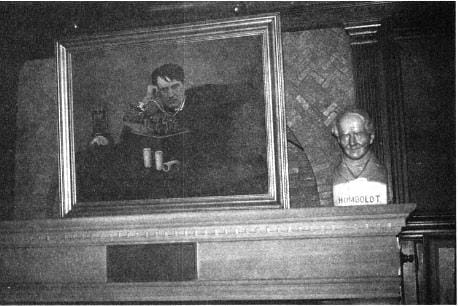
With a mind that demanded problems to solve, that fought for solutions, Edison received direct support from America’s best scientific thinkers, who had been trained in the milieu of Gauss and Humboldt. Edison’s bust of Alexander von Humboldt sits in the Edison laboratory historic site in West Orange, New Jersey.
Edison’s notebooks contain countless thousands of experiments and free explorations of much of the domain of science. His working hypotheses on the nature of gravity as electromagnetism, including his picturing of the origin of the earth’s rotation in terms of the overlapping lines of force of the Sun and the Earth, are in the tradition of Johannes Kepler’s work—and a challenge to the Newtonian dogma that separates gravity from electromagnetism.
At one point, J.P. Morgan’s men brought in the young Francis Upton, trained by the prestigious Newtonian Hermann Helmholtz, to serve as “expert mathematician” to the presumably crude Edison. But, after a time, Upton confessed himself Edison’s scientific inferior. Yet the man who brought Upton in, Francis Jehl, later bitterly complained to Upton that Edison had “such real little knowledge, a man that cannot solve a simple equation.”
Edison attracted to himself fanatically dedicated young researchers, in the post–Civil War era of hope and determination to remake the world. Edison’s laboratories were the first modern R&D facilities, in line with Leibniz’s “Academy” proposal for “institutions of research and development with their own manufacturing and commercial houses directly attached … [to] offer a just, low price for merchandise…. The trading monopolies will be eliminated.”
Edison’s economic ideas were terrifying to the rentier financiers. As he put it:
The company with the best and cheapest machinery will do the business…. Fact is … all electric machinery is entirely too high now. These high prices hurt the business. With the leaden collar of the Edison Electric Light Co. all around me, I have never been able to show what can be done. The ground of cheapening has scarcely been scratched. Let us break the leaden collar and you will see a brainy competition that will show them what real competition is…. [Prices] must go down 50 to 75% lower than now … and we will make a great profit.
Among the assistants trained personally by Edison were Henry Ford, who created the automobile industry, and Frank J. Sprague. Sprague worked with Edison on electric trains, then formed a new company led by the Philadelphian Edward Johnson; they developed the electric subways, the elevators, and many basic electric industrial tools.
The Edison companies, like all the great American industries, were usurped by Morgan and related British-approved financiers. No significant new technology is attributable to those financiers, to Wall Street, or to the “magic of the marketplace.”
End of Part 3.
Bibliography and Acknowledgments
The author gratefully acknowledges the research and counsel of the following persons in preparation of this article: Richard Black, Elliott Greenspan, Laurence Hecht, Denise M. Henderson, Carol Hugunin, Robert Hux, Michael Leppig, Alan Levinson, H. Graham Lowry, Arthur Murphy, Richard Sanders, the late Richard Sober, Charles B. Stevens, and Philip Valenti.
Many of the facts presented in this study are quite widely known, but they are not thought to be especially significant. Perhaps this may be attributed to the brain-death typical of academia, as much as to historians’ Anglophilia or other prejudice.
Thomas Edison is a good case in point. Virtually every standard Edison biography mentions that a certain Prof. George F. Barker was Edison’s science advisor and that he asked Edison to invent the electric light. And most biographies note that a certain Edward H. Johnson was Edison’s best friend and business manager. But no biography really inquires into who these people were, where they came from, or what was on their minds.
A large volume of correspondence involving Edison and these two men, a vast array of Edison’s notebooks and other treasures, are in the Thomas A. Edison papers, which are now available on microfilm at major libraries.
Some of the research for this article was done using papers from the Duke of Bridgewater Archive at Salford University, Salford, England; Matthew Boulton papers, Birmingham City Archives, Birmingham, England; Henry C. Carey papers, Pennsylvania Historical Society, Philadelphia; William J. Palmer papers, Pennsylvania State Library, Harrisburg; Wharton Barker papers, Library of Congress, Washington; records of the 1837 rebellion (for Edison’s father), National Library, Ottawa, Canada; and the George F. Barker papers, University of Pennsylvania Archives, Philadelphia.
Some sources readers may find particularly useful:
Ellis L. Armstrong, ed., History of Public Works in the United States, 1776-1976 (Chicago: American Public Works Association, 1976). Many interesting facts are presented, but it is lacking the necessary history of public policy.
Robert V. Bruce, The Launching of Modern American Science, 1846-1876 (New York: Alfred A. Knopf, 1987). This contains useful facts about Alexander D. Bache’s “Lazzaroni” grouping, but Bruce doesn’t have a clue about the philosophy, politics, or scientific method of his characters.
Henry C. Carey, Principles of Social Science, 1858, reprint (New York: Augustus M. Kelley, 1963). Lincoln would certainly have read this three-volume work, widely circulated just prior to the Civil War.
Anton Chaitkin, Treason in America, from Aaron Burr to Averell Harriman (New York: Campaigner Publications, Inc., 1985).
G. Waldo Dunnington, Carl Friedrich Gauss: Titan of Science (New York: Exposition Press, 1955).
Joseph Henry, “Eulogy on Prof. Alexander Dallas Bache,” in Annual Report of the Smithsonian Institution (Washington D.C.: Government Printing Office, 1870).
H. Graham Lowry, How the Nation Was Won: America’s Untold Story 1630-1754 (Washington, D.C.: Executive Intelligence Review, 1988).
Merle M. Odgers, Alexander Dallas Bache (Philadelphia: University of Pennsylvania Press, 1947).
Allen Salisbury, The Civil War and the American System: America’s Battle with Britain, 1860-1876, 1978, reprint (Washington, D.C.: Executive Intelligence Review, 1995). Henry Carey’s work is excerpted and placed excellently in context.
Nancy Spannaus and Christopher White, The Political Economy of the American Revolution (New York: Campaigner Publications, Inc., 1977); to be reprinted in 1996 by Executive Intelligence Review. Many extracts from America’s founding nationalists.
Since such historical figures as Franklin, Hamilton, and Lincoln acted on philosophical grounds which are today considered incorrect or dangerous, their own writings should be read in preference to most secondary works about them, which often range from pointless to deceitful.