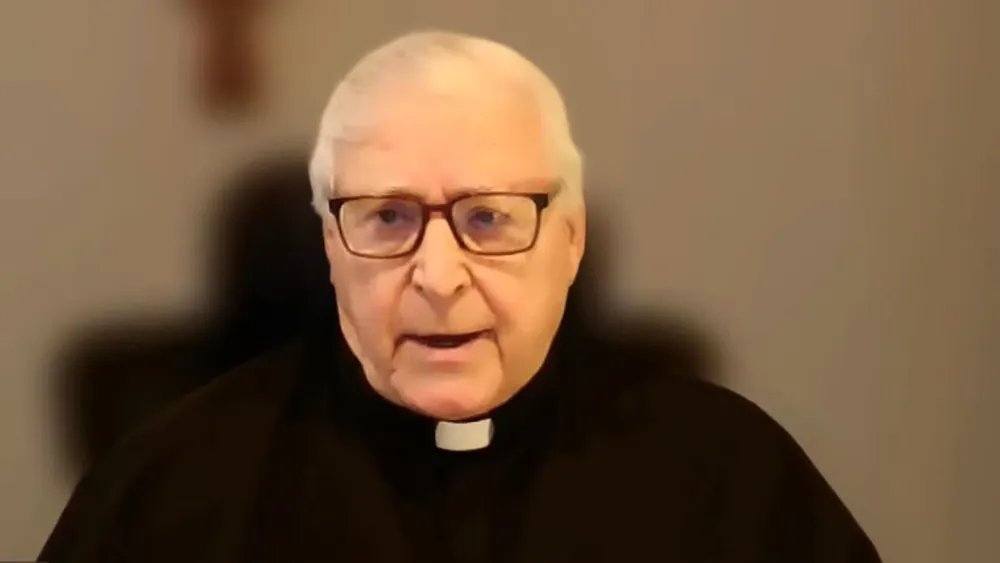
The following is an edited transcript of remarks delivered Oct. 2, 2026, by Father John Heagle to the 174th meeting of the International Peace Coalition (IPC). Fr. Heagle is the director of Priests Against Genocide (U.S.A.) and a member of the Association of U.S. Catholic Priests. Subtitles have been added. The video is available here.
Thank you for the invitation to be part of this important conversation. I would like to address the paradigm shift that Helga Zepp-LaRouche is so creatively articulating here. The paradigm shift from confrontation to collaboration is the way I would put it, or from being rivals to being partners, as the Schiller Institute often puts it.
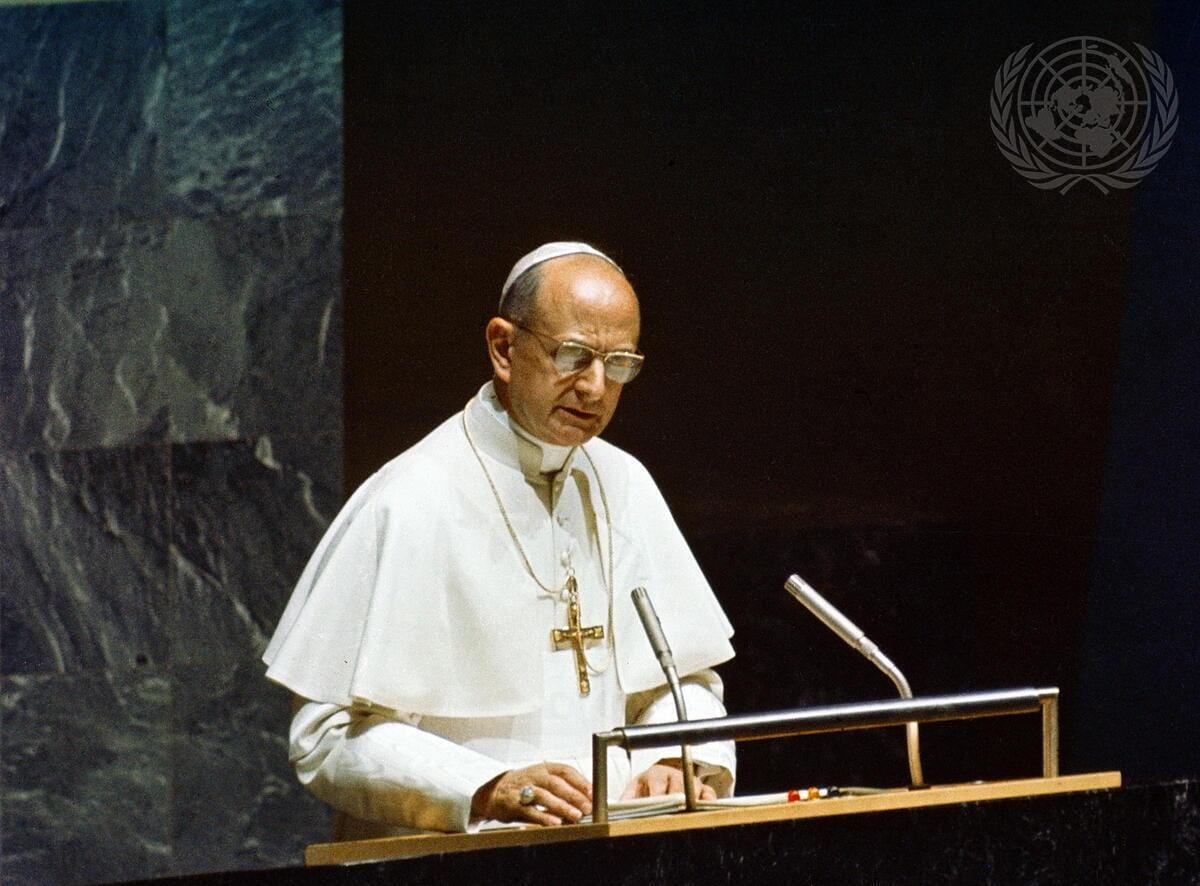
[Previous speaker] Mike Callicrate quoted from Paul VI, “If you want peace, work for justice.” And I’d like to start there, because there was a Pax Romana back in the Roman military times that said, “If you want peace, prepare for war,” and that has been the fundamental stance of—if I can call it that—the Pax Romana/the Pax Americana, which is to prepare for war, prepare for more empire and imperial occupation rather than cooperation.
So, I’d like to look at the way in which the Catholic Church has also experienced a paradigm shift and how it is in the process of being part of the significant tectonic or seismic shift that is going on in the world today that you are spearheading.
Let me begin by just sharing with you that, on my desk, I have a quote from dear Pope Francis, which says that “the Church is not a fortress of truth, but it is a field hospital for the wounded.” I think that is an immense image or metaphor for what the paradigm shift is really all about; that the Church is not someplace where you go to argue about who’s in and who’s out, who’s right and who’s wrong, but it ought to be a field hospital that asks just who’s bleeding, who’s being oppressed, whose dignity is being taken away, and how can we stand with them in solidarity and in support?
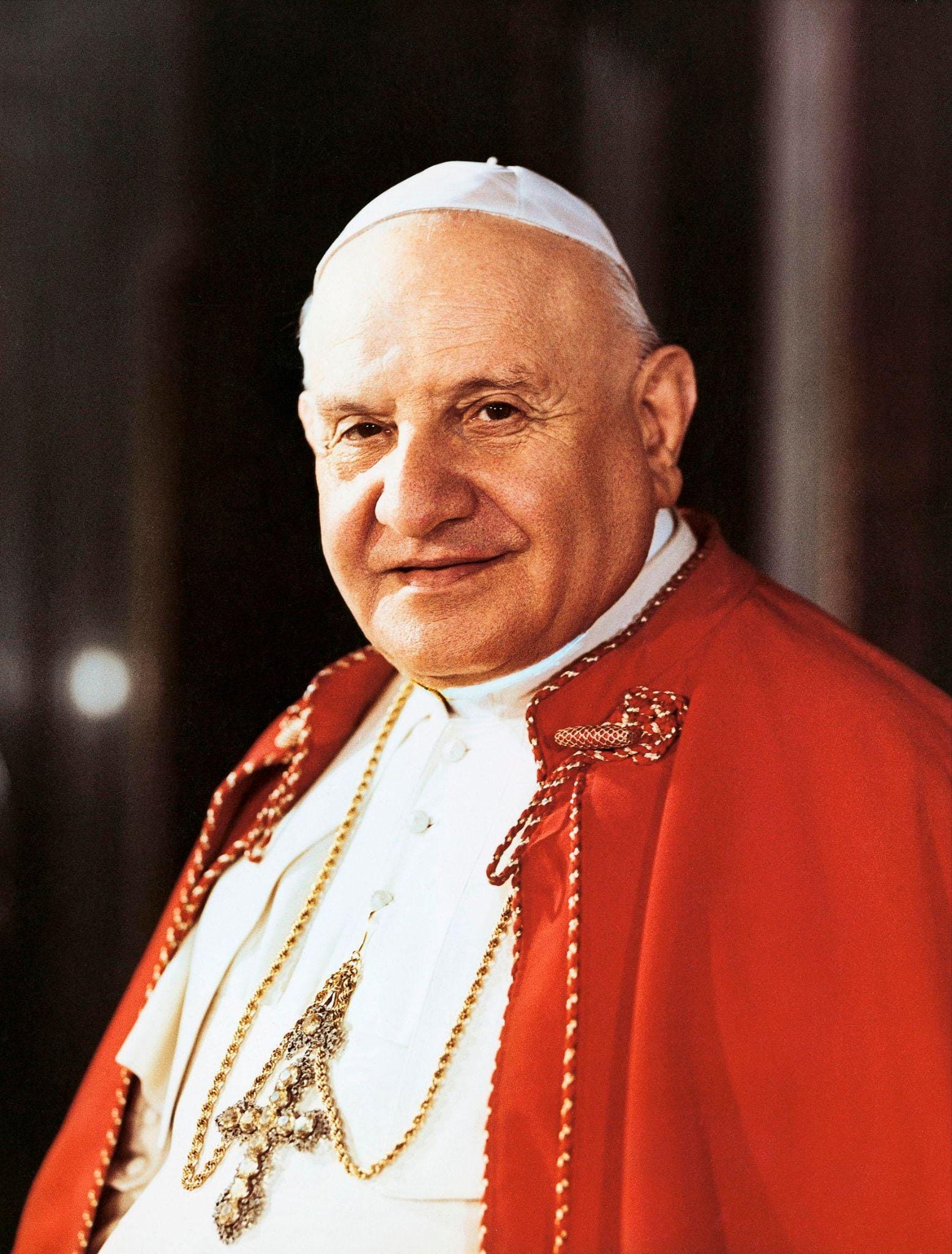
John XXIII began that shift toward the world, toward being present in the midst of it, in the 1960’s, 1958 to be precise. He spoke about how the Church should open up its windows. That’s not just a perfect kind of little decorative understanding that he’s talking about; that’s a metaphor for being open to the pain of the world, and it finds its expression in the opening words of the [Pastoral] Constitution on the role of the Church in the modern world that I also have on my desk, and it says these significant words:
The joys and hopes, the griefs and anxieties of people today, especially the poor and the afflicted, are the joys and hopes, the griefs and anxieties of the followers of Christ.
That’s where the windows are to be open for, to let in the world, to let in the grief, the pain, the division, and the terrible experience of division that is there everywhere in the world. To back that up, Cardinal Suenens, in 1962, at the end of the first session of the Second Vatican Council, raised the question—because the bishops had been discussing, what are the internal workings of the Church, and why do they matter? And Cardinal Suenens stood up and said, “Hey, wait a minute, guys.” (He didn’t use those words exactly.) He said, “We’ve been talking about the interior, internal life of the Church, but what about the world?”
What about the world? He raised the same question as John XXIII, the same question that Francis has on my desk, and he gathered that together in his own parting encyclical, Pacem in Terris, Peace in the Earth, on all the Earth. And the distinctive change in John XXIII’s encyclical was that it addressed all people of good will, not just Catholics.
The Church Needs To Be Among the Oppressed
The Church wants to be part of the human experience of reaching out for healing. The Church doesn’t just want to talk to the people of God, doesn’t just want to speak or teach or mandate. It first of all needs to listen. It needs to be present to the pain. It needs to be there where the pain is really most severe among the oppressed people. It is from that that liberation theology rose in Latin American and South America and Central America.
In Populorum Progressio, Pope Paul VI used the phrase that you often echo here, and that is that “development is the new name for peace.” And he made that step forward in which then the liberation movement from South America could find a voice to speak for and listen to and bring the truth from the ground up; from the people who were being oppressed; from the peasants; from the people who were most being oppressed—they needed to be listened to. Unfortunately, there was a certain amount of, I suppose we could say, naïveté, in what Paul VI was saying—because he assumed that nations would take up this cause, that they would voluntarily begin to tear apart the structures of violence, the institutional violent structures that create injustice. And they didn’t do that. They have not done it.
We’re 60 years after Populorum Progressio, and if anything, as has been pointed out, the divisions between the just and unjust are even greater. I grew up on a dairy farm in Wisconsin, the heart of the Midwest, the heart of the United States. And I am a priest from the United States. And I recognize what I would call the total failure of our democracy today. I want to be part of this paradigm shift itself. And that’s why I’m in the work that I’m involved in. Because there are limitations to what is possible if we just assume that nations will change. We’ve got to bring some kind of real pressure to bear, that has to come from the people themselves.
In 1967, at Riverside Church in New York, Martin Luther King, Jr. named three of the evils that prevent the paradigm shift, that are obstacles for us making this leap to another way of looking at the world and at the human family. And he named them. They are racism, materialism, and militarism. So the ethnic cleansing, if you will, the continued hatred of “the other,” materialism, the greed of the West and the North compared to the Global South and its needs, and the constant military buildup where it’s bringing us exactly to that moment of complete anxiety that we are experiencing today, of being right at an existential moment when there could be a nuclear holocaust.
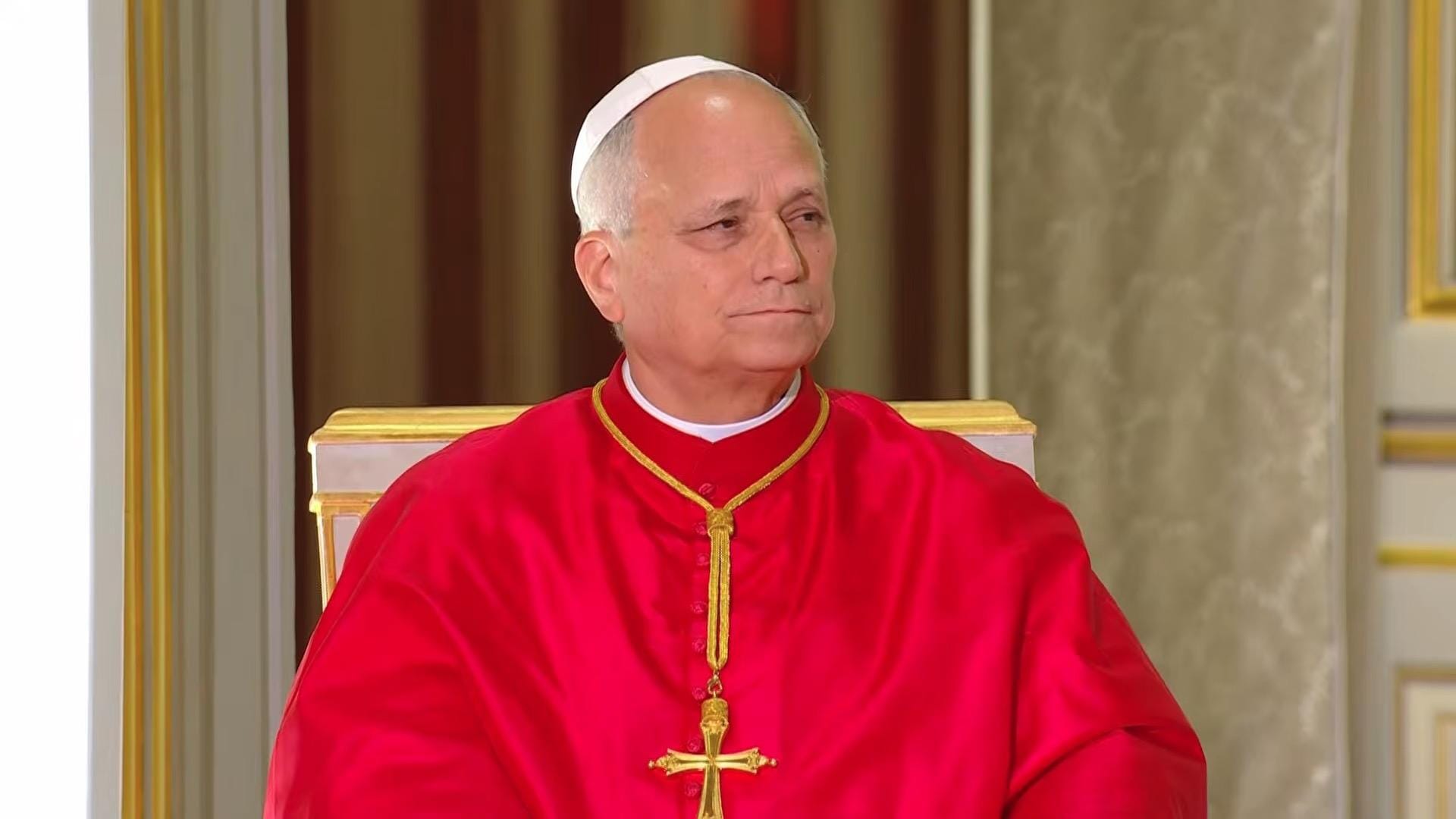
So, this brings us, then, to Pope Leo. Why did this Robert Prevost get elected? I think there are reasons that everyone was surprised that an American—I should say, not an American, [but] someone from the United States, because America is two continents—someone from the United States was elected Pope. And I’m convinced that it wasn’t because he was American, obviously, not because he was from the United States. It was because he was a global citizen, because he was already a citizen of Peru. He belonged there. He worked there for decades. He was committed to the developing countries, to the countries that are most oppressed. And I think, when it came to the Conclave, that the other bishops looked at that and said, here’s our man. Here’s the one we need. And I think it was the Latin American bishops, the bishops from South America and Latin America who probably said, let’s do this. And the bishops from South Asia and other parts of Asia also saw him as the promise.
Synergy for the Common Good
So just the other day, Pope Leo used the phrase, “synergy for the common good.” It kind of sounds like a complicated word. But synergy for the common good is another term for a paradigm shift. Not just selfish energy for my imperial needs, but synergy, shared energy, collaborative energy that will be for the common good of all the human community.
Pope Leo Challenges the ‘Just War’ Doctrine
For centuries, the “just war” theory, whose lineage dates back to St. Augustine, has been the Church’s framework for judging when war is deemed permissible. Pope Leo XIV, himself a member of the Augustinian order, has now called that framework into question.
In his encyclical, Magnifica Humanitas, Pope Leo wrote that “humanity is slipping into a violent culture of power, where peace no longer appears as a responsibility to be taken on, but as a fragile interval between conflicts.” He goes on: “it is important to reaffirm that the ‘just war’ theory, which has all too often been used to justify any kind of war, is now outdated. Humanity possesses far more effective and capable tools for promoting human life and resolving conflicts, such as dialogue, diplomacy and forgiveness. The use of force, violence and weapons reflects a relational poverty that always has disastrous consequences for civilian populations.”
In an article published simultaneously in Osservatore Romano and in Vatican News Tuesday, Oct. 6, Milan Catholic University professor Luigi Franco Pizzolato quoted from Augustine’s Letters: “It is more glorious to kill war with words than men with the sword, and to acquire and obtain peace through peace, not through war.” Augustine is also quoted as saying that the state “will never be able to exercise lasting dominion over those whom it has succeeded in subjugating through military victories.”
If Leo’s view takes hold, it would be a profound change for the Church, with political consequences far beyond it.
And I think that’s what appealed to people when Pope Leo went to Spain, when he went to all these places he’s been so far, and most recently to France. Less than 50% of the people in France are designated anymore as Catholics. It’s a secular country, and that’s not a bad thing. I think that they are rebelling against the Church that was too focused on the next world, on getting us to heaven, rather than “may Your will be done on Earth, as it is in Heaven.” The focus is, what are we going to do for the human community now?
And that finally brings me to the work that I’m doing with Priests Against Genocide. My work here is to recognize that we cannot talk about this conceptually or even overly optimistically. People are bleeding. There is genocide all over the world, not just in Gaza and East Jerusalem and the West Bank and South Beirut, but also in South Sudan, in Congo, in other places throughout the world.
There are people being slaughtered because of who they are. They are understood as “the other,” and that they are dispensable in some way. And my work is particularly focused on the genocide that is unfolding in Gaza and for the Palestinian people. And I just want to share an event that happened to me. I was being interviewed by a radio station out of Berkeley, California, where Democracy Now was born; Pacifica Radio, it’s called. And at the end of it was a half-hour interview during rush hour. And so at the end of the interview, I had just hung up, when immediately I received an email from a woman who coordinates for Doctors Against Genocide. She said, “Wow! We have to work together!”
And that is synergy for the common good, if I may point it out. Just our cooperation and collaboration has given a whole new energy to working to bring an end to the war, to the war on— It’s not just a war going on in Gaza; it’s a war on the people by this right-wing Israeli government. And I want to end with a poem.
This is more of a tragic ending, but it’s an invitation for us to recognize that the bleeding is where, if you will, the field hospital has to be present immediately—where the bleeding is. This is a poem written from the perspective of a young child from Palestine, from Gaza. There was a tradition during the bombing: The parents would write the names of their children on the children’s legs, because they would be lost under the rubble or simply almost vaporized by the bombs. And so this is a poem by the Palestinian-American activist Zeina Azzam; and it’s called “Write My Name.”
Write my name on my leg, Mama
and please write your name
and Baba’s name on your legs, too
so we will be remembered
as a family….
Write my name on my leg, Mama
When the bomb hits our house,
When the walls crush our skulls and bones
our legs will tell the story, how
there was nowhere for us to run….
I want to join all of you in seeking, in the words of Pope Leo, “a disarmed and a disarming peace.” And I know and I recognize that I need to begin with my own life. I need to recognize how I need to be disarmed. And only if I am disarmed with my angers, my resentments, my fears, only if I am disarmed, can I become a disarming presence.
Thank you very much.
Concluding Remarks
I am humbled by listening to the experts, particularly in the area of food. Food has such a profound impact in terms of its interrelationship with everything else in terms of the issue of justice. And I guess the last thing I’d like to say is that in the Catholic Church there is a profound shift going on from the just war theory to “just peace.”
Pope Leo has said that the understanding, or most of all, the way that the practice of just war [has been used] is over. It’s no longer adequate, no longer effective. You have to move toward a new understanding of just peace rather than just “how do we get ready for war?” And that is not to say that there may not be times when a country which is threatened by an adversary for their very life, that they don’t have a right to defend themselves. But often the just war theory was simply used as an excuse to go to war.
And so I’d like to understand and also hold up what the IPC is offering: the wonderful letter of the Appeal to Pope Leo to create a summit. I want to once again emphasize and underline how important that is, and to invite anyone and all of you to be sure to sign on to that letter. And I thank you for the gift of being here.
Thank you.