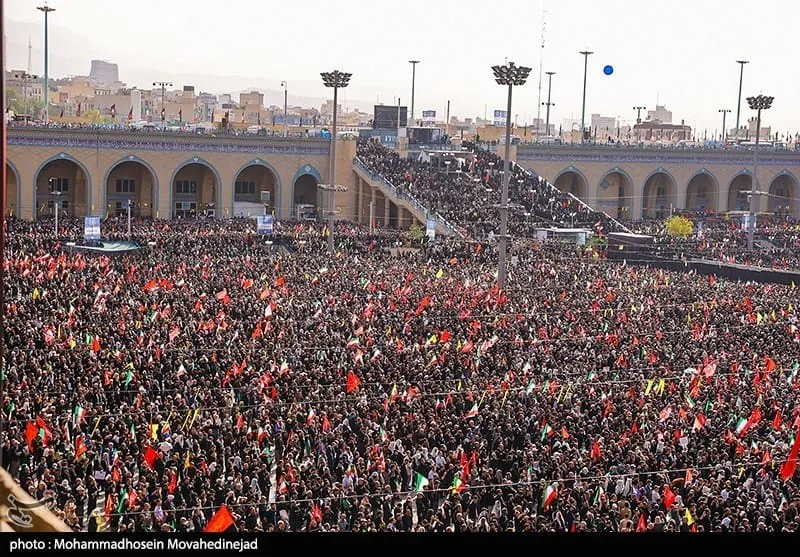

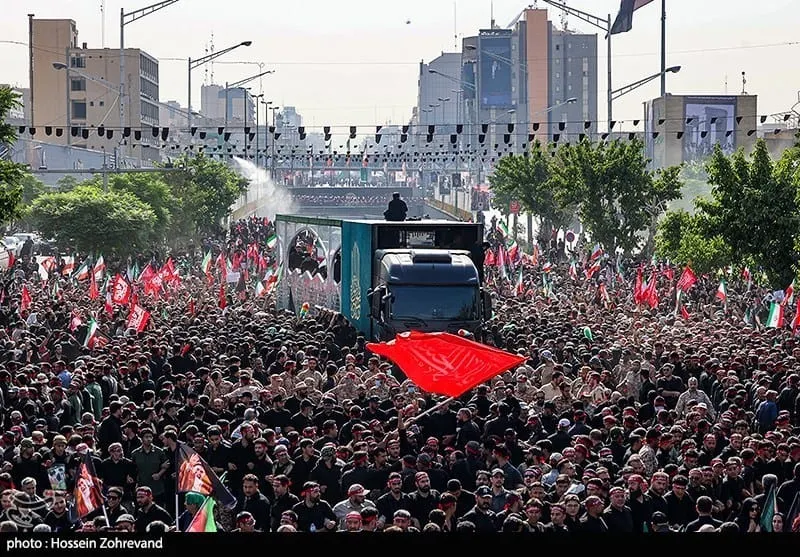
The funeral procession for Iran’s Supreme Leader, Ayatollah Ali Khamenei, concluded in Tehran after 12 hours. Khamenei was killed on Feb. 28 at the outset of the U.S.-Israeli war of aggression along with several members of his family. Tasnim reported that the vehicle carrying the coffins came to a halt at Tehran’s Azadi Square on Monday after massive crowds of mourners surrounded the funeral cortege, prompting organizers to call on people to join the procession through the designated routes. In a post on social media, Iman Attarzadeh, the spokesperson for the headquarters organizing the funeral ceremonies, said the vehicle had been halted due to the “widespread expressions of love and devotion by the faithful and admirers” of the martyred Imam. He called on mourners to reach the late Leader’s funeral convoy at Azadi Square through the routes that had already been announced by the organizers.
The imagery posted on Iranian social media showing the streets and the Tehran metro packed with people bears this out. The Middle East Spectator cites Al Jazeera and Tasnim reporting that this funeral is now the largest in recorded history and that estimates for the size of the crowd run as high as 14 million people. A sampling of imagery shot from the air can be seen here.
Iranian authorities have issued harsh warnings that no one should dare create security problems, but the massive turnout is becoming such a strategic political statement, such a show of force, that a U.S. or, more likely, Israeli “breakaway ally” incident should not be ruled out.
As of now, Khamenei’s son and successor Mojtaba has yet to appear in public (he’s been totally out of sight since the attack which killed his father), although three of his brothers and many top political leaders were present. For example, a nervous [Financial Times reported](https://www.ft.com/content/a3dedf8e-f0fa-4646-a18e-5842c7359e3c ) the presence of “Islamic Revolutionary Guard Corps commander Major General Ahmad Vahidi, who returned to public view on Thursday after an absence of about four months.”