Feb. 6—On Jan. 3, 2026, the United States launched military strikes on Venezuela and captured President Nicolás Maduro and his wife, Cilia Flores, who were flown to New York City by U.S. forces to face charges of narcotics trafficking and narcoterrorism.
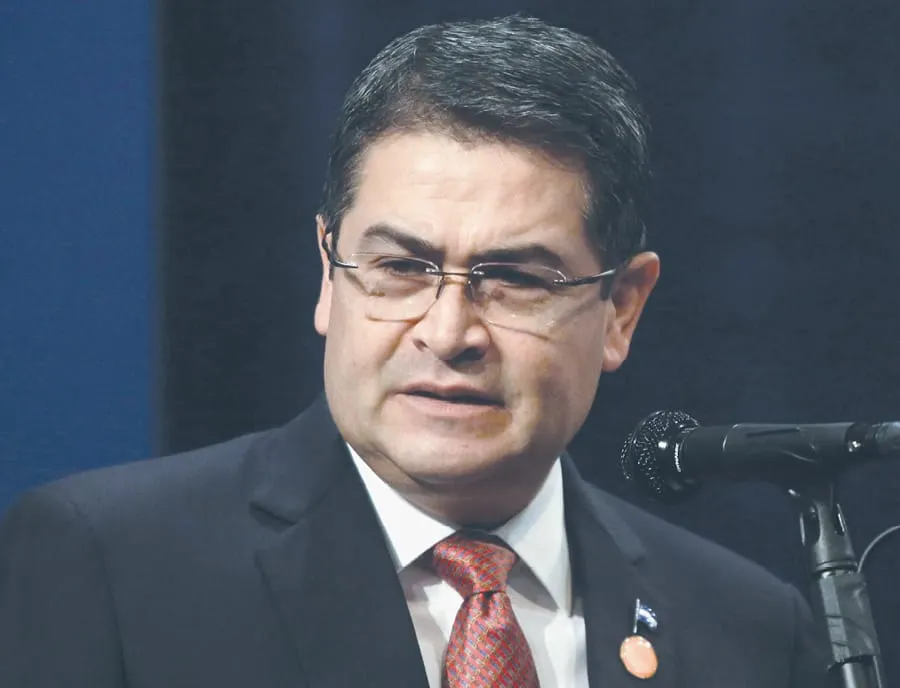
One month earlier, U.S. President Donald Trump had pardoned Juan Orlando Hernández, the former President of Honduras and a convicted drug trafficker. According to a statement released by the U.S. Department of Justice on June 26, 2024, Hernández helped to facilitate “the importation of an almost unfathomable 400 tons of cocaine” to the U.S.A. “Billions of individual doses sent to the United States” and “now, after years of destructive narco-trafficking of the highest imaginable magnitude, Hernández will spend 45 years where he belongs: in federal prison,” declared prosecuting U.S. Attorney Damian Williams of the Southern District of New York at the time.
Of course, while Maduro, the “bad narcoterrorist,” sits on the world’s largest oil reserves the United States doesn’t want China, the world’s rising economic giant, to use, Hernández, the “good narcoterrorist,” is the right-wing politician who championed Honduras’s Zones for Employment and Economic Development (ZEDEs) and allowed Silicon Valley moguls to experiment with the creation of the libertarian dystopia called “Próspera” on the Honduran island of Roatán.
Charter Cities and Network States
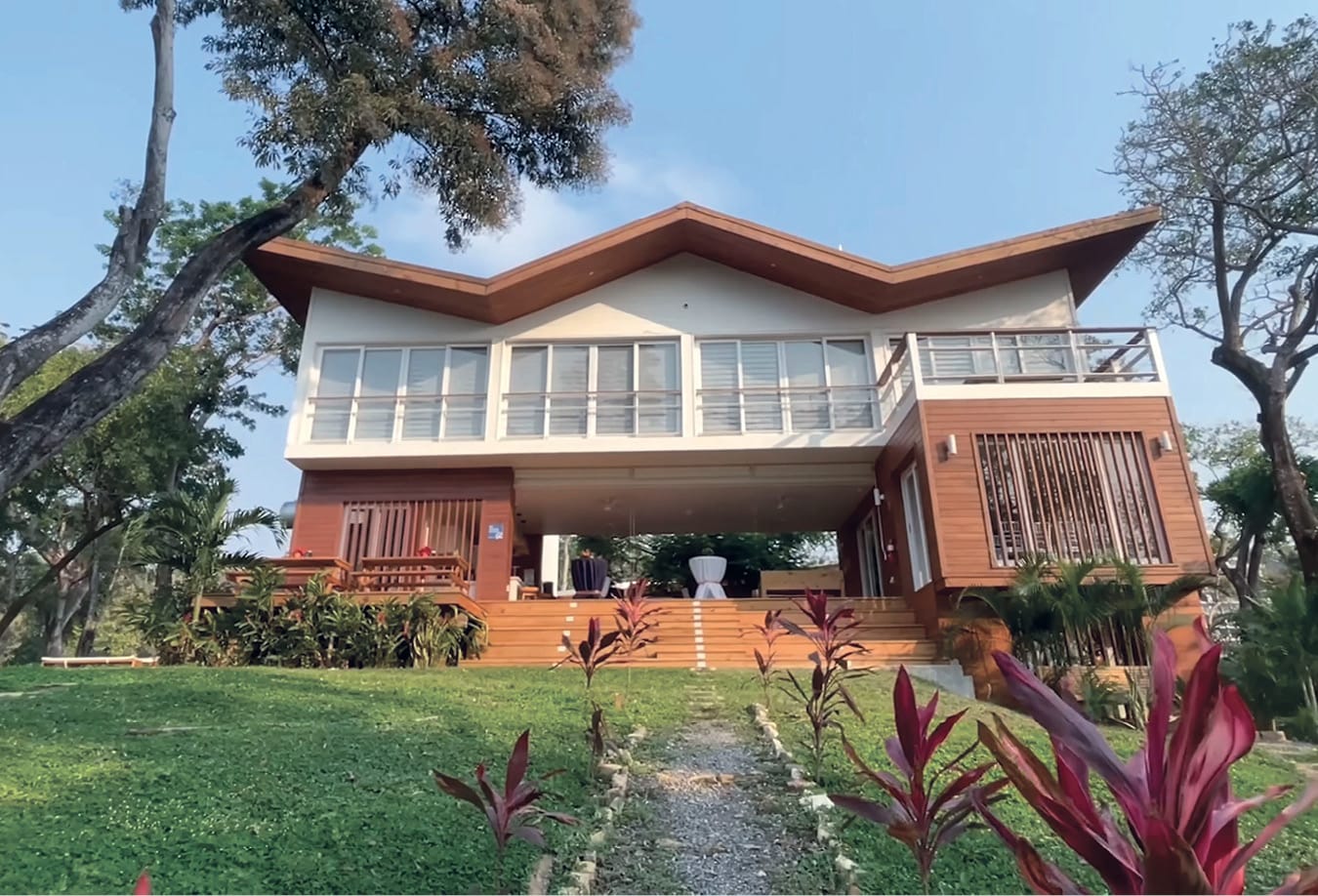
Próspera fits Peter Thiel’s and Curtis Yarvin’s libertarian fantasy of “charter cities” (see article in EIR).
Honduras’s first private city was conceived after the 2009 coup that brought the Hernández National Party to power. Special Development Regions (REDs) were created at the time, based on the model of the charter cities of American Paul Romer, the 2018 Nobel Prize in Economics laureate and former World Bank chief economist, who became an advisor to the elected government after the coup. Romer was influenced by the Charter Cities Institute (CCI), a Washington, D.C.–based organization that promotes the development of such special jurisdictions worldwide. The concept was promoted by the German economist Titus Gebel, an investor in Honduras Próspera, Inc., in a 2023 white paper, “Free Private Cities—A New Operating System For Living Together.”
ZEDEs “reserve the right not to accept major criminals, Communists and Islamists,” explained Gebel in 2019. “For a fixed [yearly] fee, the operator offers citizens of the free private city protection of life, liberty and property,” the terms of John Locke which the U.S. Founding Fathers rejected and replaced with “life, liberty and the pursuit of happiness.”
Wisely used by China to kick-start its development, Thiel’s version of ZEDEs have been touted as “prosperity zones,” where the law can be tailored to attract capital, and where the private city does not adhere to governmental powers like taxation or policing. ZEDEs have been tried in the United States but met with push-back, which is why promoters went abroad.
The Honduran Próspera project gained steam in 2013, when it was approved by Honduras’s Supreme Court. To make it a reality, its founders formally applied for a charter city in Honduras in 2017, using companies with names like Brimont Holding and North Shore Development Company to purchase land on the island where Próspera sits.
While on the surface one might believe this to be a Honduran project, Honduras Próspera, Inc. was and remains an offshoot of NeWay Capital LLC, a Washington, D.C.–based asset management firm directed by Erick Brimen, a Venezuelan who calls himself a “finance professional,” and Gabriel Delgado Ayau, the grandson of the founder of Guatemala’s Francisco Marroquín University, the nerve center of the Latin American far-right libertarian movement, and the former president of the ultra-neoliberal Mont Pelerin Society.
Unsurprisingly, Honduras Próspera, Inc. is registered in the U.S. State of Delaware, a tax haven. Who are Próspera’s investors? Like the accounts of Honduras Próspera, Inc., this information is registered and held by Trident Trust Company LTD, based in the Cayman Islands, yet another notorious, opaque tax haven used by criminal drug lords and their bankers.
To sell his project, Brimen pretended in 2024 that he conceived of the city as a “poverty relief initiative” for Honduras. Since construction began in 2021, so the narrative goes, the city has helped launch more than 200 businesses and raised over $100 million in investments. “What is now Próspera started as an idea that emanated from being from Venezuela,” Brimen said to Insider News. “In my country of birth, there was a tremendous amount of poverty, very concentrated wealth, and a huge separation between the two. I wanted to find ways to get rid of poverty.”
‘Tech Zionism’
In reality, Brimen is merely applying the concept of colonial “Tech Zionism” laid out by Balaji Srinivasan, former CTO of Coinbase and author of the “network state” concept:
1) Use tech money and influence to capture governments through elections;
2) Circumvent the authority of nation-states by purchasing land with the intent of setting up “special zones outside of legal control.” (A similar model was followed by the Rothschilds in pre-Israel Palestine).
Próspera’s low-taxation model, which includes a 1% business income tax, 5% personal income tax, and a 1% land value tax, makes Próspera an attractive hub for businesses and residents. Furthermore, the territory has embraced , with all transactions—including tax returns—being processed, unsurprisingly, in Bitcoin. Residents only need to scan their wallet QR code to complete payments within seconds.
Illegal Medical Experiments
Still worse, several network states have already become platforms for unregulated (illegal) medical experimentation. Regulations, be they Federal Drug Administration procedures, AI safety terms, and other functions and processes that can constrain venture capitalists’ encroachments on national sovereignty—up to and including democracy—are to be removed.
Network state ideologues believe in abolishing medical regulations and implementing “consent only” testing, accomplished by setting up their own colonies, where they are able to do unregulated medical experiments. With the thousands of biotech startups they want to accelerate, this is a primary driver of the network state.
Unregulated medical experiments and gene therapies are being conducted in Próspera. They were also considered in Montenegro for Zuzalu, a “floating city” focused on biomedical experimentation. In Próspera, a welcome billboard reveals clearly this transhumanist agenda: “Welcome to Vitalia, the city where death is optional.”
An article published by Le Monde notes that “in the basement of a laboratory, people can have magnets implanted in their fingertips or get injected with follistatin to take part in a longevity gene therapy trial. This medical trial may not have been approved by health authorities in any country, but that doesn’t matter.”
PayPal Mafia
Trump donors and advisors Peter Thiel of Palantir, and Marc Andreessen, reportedly backers of venture-capital fund Pronomos Capital, are spearheading, with millions of dollars, a global drive to finance charter cities around the planet.
Thiel’s Pronomos portfolio includes investment in people, organizations, and firms building their “own” digital nations. This already includes charter cities such as Próspera in Honduras, Yung Drun City in Bhutan, and Metropolis, a charter city inside the small nation of Pallau, a Micronesian archipelago halfway between Guam and the Philippines.
“Metropolis Global” was proud to announcehaving received investments from Pronomos:
“We are excited to announce that Metropolis Global has received seed-round investment from Pronomos Capital and Patri Friedman. This round of investment supports our mission to provide global citizens with universal access to Digital Nations—countries existing in the digital space with physical sovereignties as anchors. Digital Nation participants will soon be able to enjoy trusted government products and services from across the world, regardless of their home jurisdiction.
“Pronomos Capital is led by Patri Friedman. Patri is the Founder and Chairman of Seasteading Institute, a non-profit that explores the creation of sovereign ocean communities. He also founded Ephemerisle, a self-organizing festival that is entirely on water. He also co-founded the Future Cities Development Corporation, a project to establish a self-governing charter city within the borders of Honduras. He is a libertarian, neoreactionary, anarcho-capitalist, and theorist of political economy. In short, he is a leader in this field.”
Metropolis Global doesn’t say that Patri Friedman is a former Google employee and the grandson of ultra-neoliberal economist Milton Friedman, one of the founders of the Chicago School and the inspiration behind the Chilean and Argentinean dictatorships of the 1970s.
Take-Down of African Nation-States
Also part of Pronomos’s portfolio are Alpha City, a firm promoting “privately managed and operated cities” in Africa, and Afropolitan, whose manifesto claims, “The nation-state experiment has failed for Black people worldwide. It has yielded nothing but poverty, genocide, police brutality, ethnic strife, inflation, weak government, and the failure of our ecosystems.”
How do you build a digital nation? Afropolitan further recommends:
“Crypto-philosopher Balaji Srinivasan highlighted this as the most viable strategy to build such a country—which he calls a Network State—in the 21st Century. The Network State is a digital nation launched first as an online community before materializing physically on land after reaching critical mass.”
From his site, Senegalese entrepreneur Magatte Wade announced last year a partnership with NeWay Capital to create “Próspera Africa.”
Cryptos on the Rise
The power of crypto is on the rise. In 2013, Brian Armstrong and Fred Ehsram, operating out of San Francisco and Silicon Valley, founded Coinbase Global, Inc, an American cryptocurrency exchange. Today, Coinbase has more than 100 million users and is the world’s biggest Bitcoin custodian, as of 2024. The company operates in more than 100 countries and holds nearly US$516 billion in assets, including nearly 12% of all Bitcoin in existence and 11% of all Ether, another popular cryptocurrency. As of 2025, the company operates as a remote-first company with no physical headquarters.
In January 2025, Coinbase CEO Brian Armstrong said that his company’s venture capital division would be an additional investor in Próspera to “grow financial inclusion and innovation.”
Próspera’s governance model sets it apart, offering a semi-autonomous structure that allows it to operate largely independently from the Honduran government. The city is managed by an anonymous council and overseen by an arbitration court composed of former U.S. judges, who handle disputes. Private security firms enforce the city’s rules, further emphasizing its distinct governance approach.
Any company setting up in Próspera can choose the regulatory framework that suits it from a list of 37 countries or common law—based on case law rather than written statutes. “If you think Singapore has the best legal framework, you can set up shop in Próspera and work in accordance with Singaporean standards,” explained an official.
Próspera and similar charter cities are promoted by the U.S.-financed Tony Blair Institute as a model for Gaza’s reconstruction and Trump’s Gaza “Peace Plan.” Gaza is only one case of a long list of charter cities in the wings, as one can find on the website ns.com.
Opposition
After Hernández’s arrest and extradition to the United States in 2022 for narcoterrorism, Xiomara Castro became President. She vowed during her campaign to eliminate ZEDEs, stating at the UN General Assembly, “Never again will we carry the stereotype of the banana republic.” In 2022, the Honduran Congress voted unanimously to repeal ZEDEs, though international treaties protect Próspera for at least 50 years, preventing its immediate dissolution.
In response to the government’s actions, Honduras Próspera, Inc. filed a nearly $10.8 billion lawsuit against the Honduran government at the International Centre for Settlement of Investment Disputes (ICSID). This amount equates to nearly two-thirds of the country’s 2022 budget.
Today, Trump advisor Roger Stone, desperate to save his patron, backed the sequestration of Maduro and argued that pardoning Hernández could “crush socialism and save a freedom city in Honduras,” calling Próspera a project with “major implications for U.S. policy and the future of freedom throughout the world.”
We could suggest that Donald Trump invade the Cayman Islands, a tax haven where billions of dollars from international drug cartels are laundered by banks such as HSBC, the British opium bank considered too big to jail because it’s too big to fail.