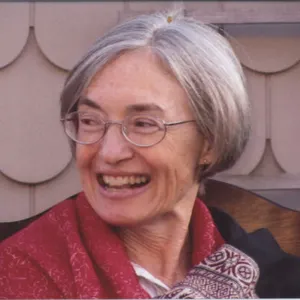
The New Eastern Outlook (NEO), one of the scholarly journals of the Russian Academy of Sciences’ Institute of Oriental Studies (IOS), published an extensive interview on March 24 with Schiller Institute founder Helga Zepp-LaRouche. Headlined “Helga Zepp-LaRouche: ‘The Idea of a European Security Order Which Excludes Russia Is Not Viable,’” the interview covers substantive discussions of everything from the Malthusian intent behind Henry Kissinger’s NSSM-200 and today’s war on Iran, to the measures required to protect nations from the imminent collapse of the $2.4 quadrillion derivatives bubble, and the importance of Nicholas of Cusa’s Coincidence of Opposites method of thinking for today.
The interview was conducted in writing, by independent Egyptian writer Tamer Mansour, who in 2025 had published a three-part series in the same publication about Lyndon LaRouche’s work. The views of the authors do not necessarily coincide with the opinion of the editorial board, the NEO reports.
Question: Why is this the most dangerous period in history? Zepp-LaRouche replied: “The Global South is in the process of creating a new world economic system, which allows them to overcome 500 years of colonialism. Since these countries represent 85% of humanity and thus are clearly the Global Majority, the idea to suppress their development is clearly a delusion. The greatest danger comes from another delusion cherished by some circles in the U.S. and Great Britain, that it would be possible to fight and win a tactical nuclear war....”
What do you consider “indispensable” for moving the world into the new global security and development architecture that you call for? Zepp-LaRouche: “This is no longer an optional proposition, but a life and death necessity for humanity…. It is existential for the existence of mankind that we overcome geopolitics, which led to two world wars in the 20th century. … The key is the idea that ‘development is the new name for peace,’ that security is only possible if it is combined with the development of all potentials of each nation.”
To Mansour’s final question—how do you define a multipolar configuration that is not merely a reversion to competitive blocs, but can become “a platform for shared development rather than a prelude to systemic fragmentation?"—Zepp-LaRouche gave a soaring vision of the future 100 years from now, “if we learn to think of the one mankind, who has a common interest and a common future.” Then “the present cause for all the misery in the world, the lust for power and wealth of the few, will be replaced by the joyful collaboration of society for the common good of all. Oligarchism will be left behind as a childhood disease of mankind, and we will learn to relate to each other with love and respect for the creativity of other human beings. The reason why this is not only possible but realistic is because we are human; we are the only creative species, at least known in the universe so far.”