Feb. 27—Dr. Amuah, born in Ghana, is an academic and writer on security matters, and a techno-entrepreneur. He was formerly a Senior Advisor on Nuclear Affairs for the South African government and is a former regional chair of the Nuclear Disarmament Forum.
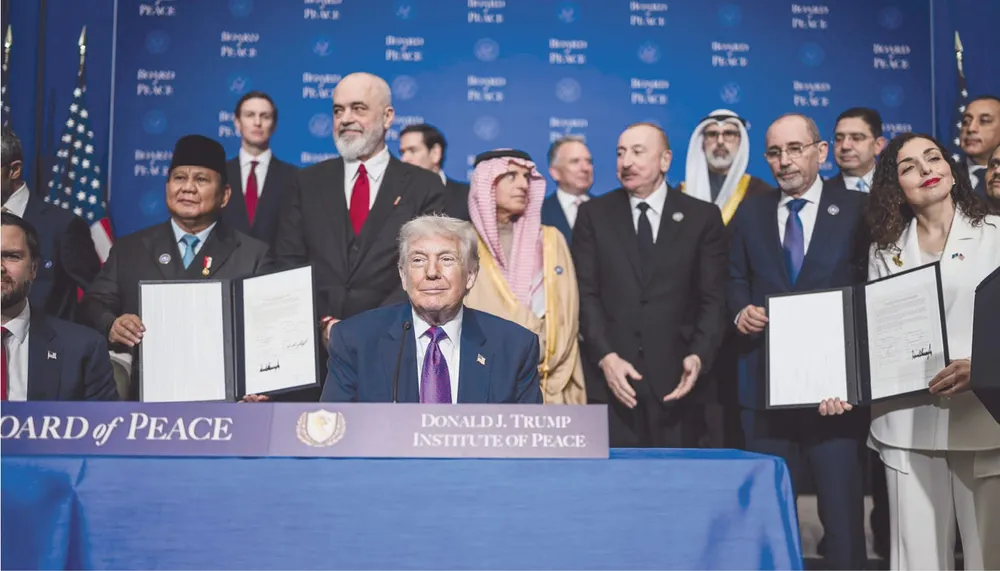
When U.S. President Donald Trump stood before the World Economic Forum in Davos in January 2026 to unveil his “Board of Peace,” the invitation list told a story far more revealing than any press release could convey. Of the approximately 50 countries asked to join as founding members, not a single sub-Saharan African nation was included. The message was unmistakable: in Trump’s vision for global peace and security, Africa’s 49 countries south of the Sahara simply do not matter.
This exclusion, in my view, is not an oversight. It is the logical culmination of a worldview articulated nearly eight years earlier, in January 2018, when Trump reportedly asked lawmakers in the Oval Office why the United States should accept immigrants from “shithole countries” in Africa and Haiti. For years, Trump denied using the phrase. But in December 2025, at a rally in Pennsylvania, he finally admitted it, bragging that he had asked why America couldn’t have more immigrants from Norway instead of “filthy, dirty, disgusting” places like Somalia. The Board of Peace is not a departure from that worldview; it is its institutional expression.
The Board of Peace began as an initiative to oversee Gaza’s reconstruction—a role endorsed by UN Security Council Resolution 2803 in November 2025. But its charter has since expanded to encompass conflict resolution worldwide, with Trump holding sole executive veto power independent of his Presidency. Member states serve three-year terms, though a permanent seat can be purchased with a $1 billion payment to a peace-building fund.
Of the roughly 26 countries that accepted invitations, the geographic skew is striking. The Middle East is well represented: Saudi Arabia, UAE, Türkiye, Egypt, Jordan, Kuwait, Bahrain, Qatar, and Israel all have seats. Morocco, a participant in Trump’s Abraham Accords, also joined. From Asia came Indonesia, Pakistan, Vietnam, and Cambodia. Europe contributed Hungary, Albania, Armenia, and Belarus. The Americas sent Argentina, El Salvador, and Paraguay.
Notably absent are major European powers—such as France, Germany, and the UK declined or were not invited amid sharp disagreements with Trump over tariffs and Greenland. But the omission that speaks loudest is sub-Saharan Africa’s. As Priyal Singh, senior researcher at the Institute for Security Studies (ISS), observed: “I think sub-Saharan Africa is completely marginalized. I don’t think there’s been any invitation extended to any country in that region.”
The exclusion reflects multiple intersecting factors, none of which offer comfort to those hoping for a more inclusive U.S. foreign policy.
First, the Board’s Gaza origins. Because the initiative began as a mechanism for Middle East peace, the initial invitation list naturally skewed toward countries with direct stakes in that region. North African states like Egypt and Morocco fit this framework; sub-Saharan nations do not.
Second, Trump’s transactional philosophy. Jakkie Cilliers, chairperson of the ISS Board of Trustees, explains: “Trump thinks peace agreements are like selling a building. You sign an agreement and everybody sticks to it. So, you sign an agreement between the DRC [Democratic Republic of the Congo] and Rwanda, but it means nothing because there’s no commitment, no enforcement, no accountability.” This approach has no room for the complex, entrenched conflicts that plague sub-Saharan Africa where conflicts require sustained multilateral engagement, not quick bargains.
Third, deteriorating bilateral relations. South Africa, the continent’s most industrialized nation, was “clearly not invited,” due to its adversarial stance toward U.S. policies. Pretoria has held military exercises with Russia, China, and Iran; brought a genocide case against Israel at the International Court of Justice; and championed “global South” agendas that challenge U.S. hegemony. Zane Dangor, South Africa’s Director-General of International Relations, posted on X that the Board represents an agenda “to replace and destroy the UN with a colonial style mandate system.” Such rhetoric does not win invitations and friends, it must be said.
Meanwhile, the Trump administration has signalled further punitive measures. South Africa’s preferential trade access under the African Growth and Opportunity Act (AGOA) is “precarious” and could be revoked. And the administration has moved to block $555 million in funding for the African Development Fund, the African Development Bank’s soft-loan affiliate, stating it was “not currently aligned to administration priorities.”
The “shithole countries” admission of December 2025 confirms what many suspected: Trump’s disparaging 2018 comments were not a lapse but a reflection of genuine belief. For nearly eight years, Senator Dick Durbin of Illinois lived “with the shadow of people saying that I misled the American people as to what the President said,” he stated on the Senate floor. “Yesterday, he admitted what he said.”
That worldview now has institutional form. The Board of Peace treats Africa as irrelevant to global peace architecture. When the UN Security Council remains paralyzed, Trump’s solution is not to reform the system but to build a parallel structure, one where Africa has no seat at the table.
Yet the picture is not entirely monochrome. The administration recently extended AGOA for one year, restoring duty-free access for 32 sub-Saharan countries. It has deepened military cooperation with Nigeria, deploying special operations forces to provide intelligence and training against ISIS-affiliated groups. By the way, who is funding these groups? Ironically, the United States is preparing a Sudan peace plan to present to the Board of Peace, indicating willingness to engage with African crises but through its own, unilateral framework.
These contradictions suggest not strategic coherence but rather an administration that engages selectively: where U.S. interests are directly threatened (Nigeria’s oil, Sudan’s potential alignment), engagement continues; where countries assert independence (South Africa), punishment follows.
For sub-Saharan Africa, the exclusion from Trump’s Board carries profound implications that demand strategic response.
First, deepened marginalization in global governance. The Board of Peace creates a U.S.-centric parallel structure that competes with the UN and African Union. Singh warns it could “have a net hollowing-out effect on the broader global conflict response system,” drawing resources and diplomatic energy away from established multilateral institutions. If the U.S. channels its influence through the Board, the UN and AU could be starved of the support they need to function.
Second, the rise of “transactional peacemaking.” Trump’s approach, quick bargains without institutional follow-through, is ill-suited for Africa’s complex conflicts. As Cilliers notes, signing an agreement “means nothing” without commitment, enforcement, and accountability. This model could produce fragile deals that quickly reignite violence, as occurred with several wars Trump previously claimed to have ended.
Third, the shift from multilateralism to bilateral co-opting. The Board’s model incentivizes wealthy nations to contract out security services, as seen with France paying (via the EU) for Rwanda’s intervention in Mozambique and the U.S. funding Kenya’s mission in Haiti. This approach bypasses collective, consensus-based action and risks exacerbating regional rivalries.
Given these realities, sub-Saharan Africa must reconsider its strategic attachments, including its faith in the United Nations.
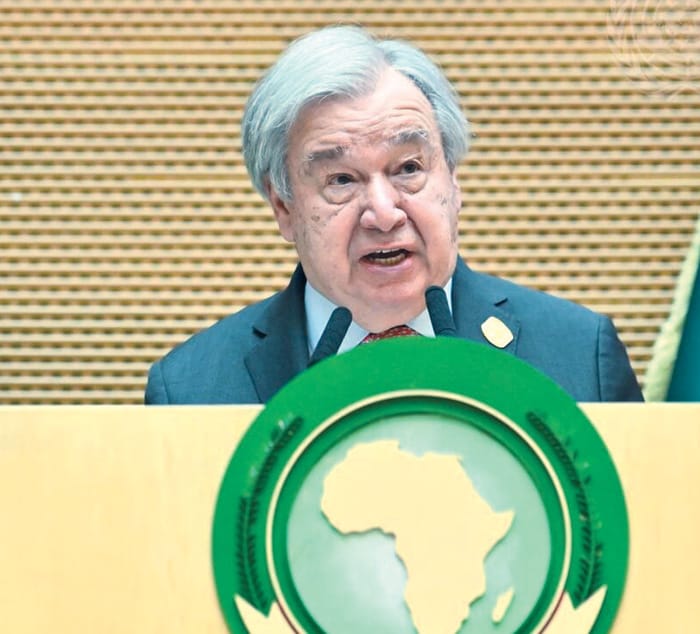
The UN Security Council’s structure remains indefensible. As UN Secretary-General António Guterres told the African Union Summit in February 2026: “This is 2026—not 1946. Whenever decisions about Africa and the world are on the table, Africa must be at the table.” Yet Africa has no permanent seat, no veto power, and no realistic prospect of reform despite decades of advocacy under the 2005 Ezulwini Consensus, which calls for two veto-wielding permanent seats for the continent.
South African Minister Ronald Lamola has urged African unity on UN reform, warning: “Let us not allow this issue to divide colleagues.” But progress remains elusive. The window of opportunity Guterres identifies may be opening, but Africa cannot wait indefinitely.
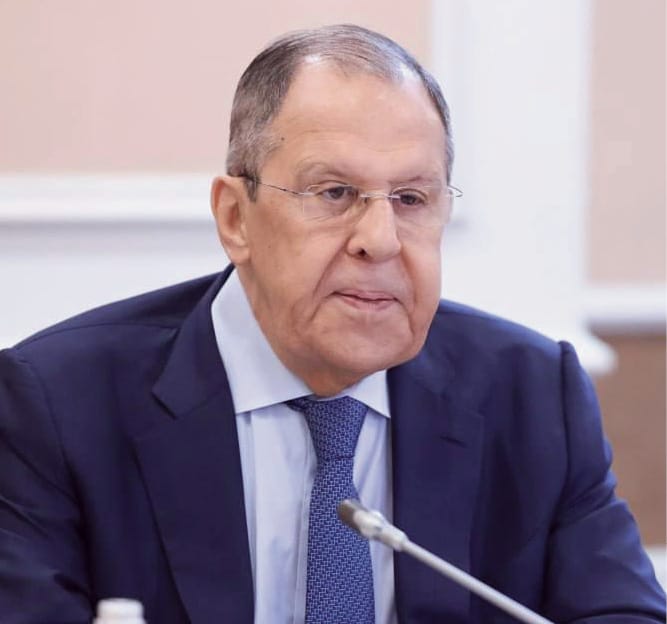
This is why sub-Saharan Africa should consider mass accession to BRICS. The grouping now including Egypt and Ethiopia alongside South Africa offers an alternative platform that increasingly challenges Western-dominated institutions. Russian Foreign Minister Sergey Lavrov recently described BRICS as “becoming a global umbrella for Eurasia, Africa, Latin America,” with combined GDP (PPP) already surpassing the G7.
The benefits are tangible. The New Development Bank has financed over $32 billion across 96 projects since 2016, with 30% in local currencies, reducing dollar dependency. Twenty-three nations have applied for membership, including Nigeria and Angola, which are under consideration for the next expansion round. As global trade reorganizes amid geopolitical fragmentation, “non-aligned countries appear to be relatively isolated from any potential negative fallout,” and BRICS+ nations could see 3% growth through South-South trade.
For sub-Saharan Africa, the calculus is clear: a UN that excludes Africa from permanent Security Council membership cannot be the sole guarantor of continental security. An American peace board that excludes Africa entirely cannot be trusted to mediate African conflicts. BRICS offers not salvation, it has its own internal divisions, with China and Russia pushing rapid expansion while Brazil and India urge caution, but it offers an alternative. In a multipolar world, Africa needs multiple poles of engagement.
The exclusion of sub-Saharan Africa from Trump’s Board of Peace is not an accident. It is the institutional embodiment of a worldview that regards African nations as “shithole countries” unworthy of serious engagement. That worldview now has concrete form: a parallel global governance structure where Africa has no seat, no voice, and no veto.
For Africa, the implications demand strategic clarity. The UN Security Council remains unreformed, with Africa permanently excluded from its highest councils. The American peace board actively marginalizes the continent. In this context, mass accession to BRICS represents not ideological alignment but pragmatic diversification—a recognition that in a fragmented world, Africa cannot afford to put all its diplomatic eggs in any single basket.
As Guterres declared in Addis Ababa: “No more exploitation. No more plundering. The people of Africa must benefit from the resources of Africa.” The same principle applies to diplomacy: Africa must benefit from its own strategic choices, made in its own interests, through its own alliances. The Board of Peace has made those choices considerably easier by demonstrating, unmistakably, where Africa stands in the American imagination. The response should be equally unmistakable: a turn toward those platforms—BRICS, the African Union, and South-South cooperation—that recognize Africa not as an afterthought but as an essential partner. And this will require Africa to be united in its global outreach.