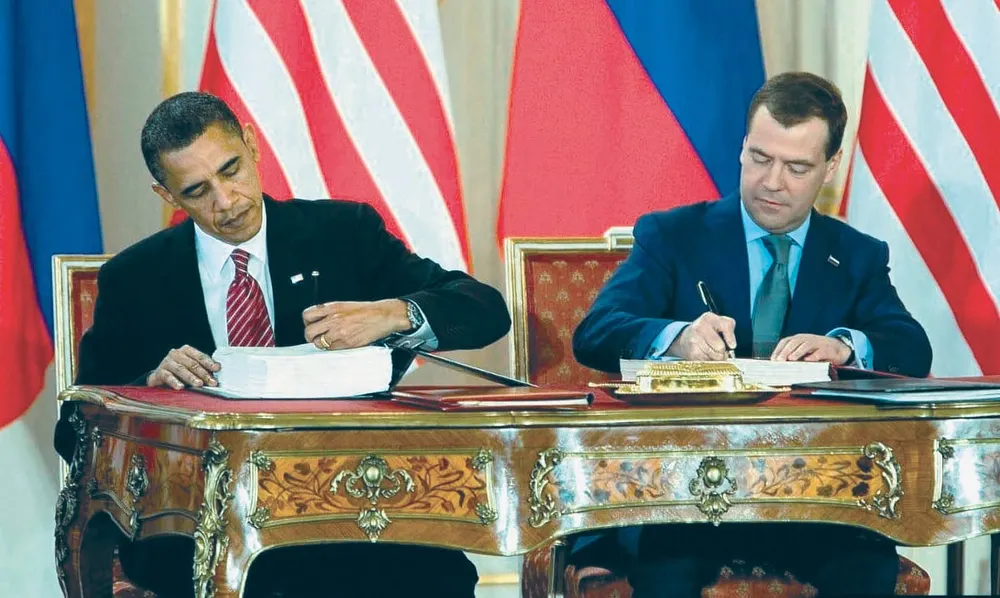
March 6—The U.S. President Donald Trump administration is demonstrating that it is applying the same logic to the now expired Treaty on Measures for the Further Reduction and Limitation of Strategic Offensive Arms, popularly known as New START, as it applied when it withdrew from the INF Treaty in 2019: accuse the other side of violating the treaty, and argue that staying in the treaty doesn’t serve American interests, thus setting the stage for developing and deploying the weapons that were previously prohibited. Given that New START’s expiration leaves the world without any form of nuclear weapons regulation for the first time in 50 years, this move has pushed the relations among the three largest nuclear powers into an unprecedented era of strategic instability.
It deserves to be asked what the true intention of the Trump administration is in letting the treaty expire, and whether it signals the desire to establish a new global order of American domination.
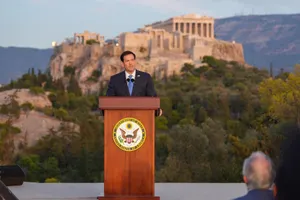
Robert Kadlec, nominated for the position of Assistant Secretary of Defense for Nuclear Deterrence Policy and Chemical and Biological Defense Programs, admitted as much when he described the benefits of the United States returning to full nuclear testing during his confirmation hearing before the Senate Armed Services Committee last Nov. 4.
“There seems to be three reasons why you would want to test,” Kadlec explained in response to questions from Sen. Mark Kelly (D-Ariz.) about nuclear testing. Trump had just announced a few days earlier that he had instructed the Department of Defense—he calls it the Department of War—to begin testing U.S. nuclear weapons. “One is technical uncertainties about the weapon, and clearly, I think in the context of what has happened recently with the President receiving the report that certifies our stockpile is both safe, secure, effective, and reliable. That doesn’t seem to be the issue. The second one seems to be broadly whether or not there is an issue around the qualifications or capabilities of the nuclear enterprise, in terms of how that would be affected by resuming testing. And clearly, we’re making huge investments to recapitalize and modernize our enterprise, both human capital as well as the physical capital. So that doesn’t seem to be the issue. The third one seems to be, whether there’s geopolitical context or reasons to do that.”
“As before, there is no technical need to conduct such tests,” Sergey Lavrov, the Russian Foreign Minister said several days later in response to Kadlec’s remarks. “That’s a strong statement. I’m not sure whether the speaker himself realizes the gravity of what he said, but we are compelled to interpret this as confirmation of what we have been saying all along, which is that there is no technical necessity for such tests. He went on to say that the goal was geopolitical and thus drove the point home for us.”
“What may the geopolitical goal of the United States look like?” Lavrov continued. “Domination, right? The use-of-nuclear-weapons argument in this setting is alarming and represents a significant departure from the concept once agreed upon by Ronald Reagan and Mikhail Gorbachev, where a nuclear war cannot be won and therefore must never be fought.”
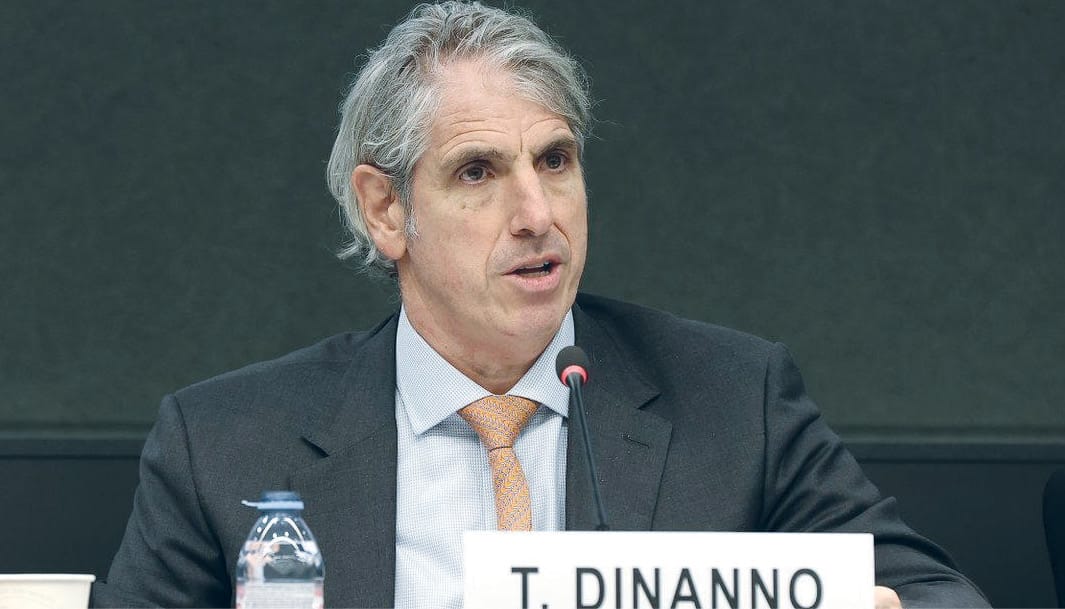
The Trump administration’s intentions were further clarified by Thomas G. DiNanno, U.S. Undersecretary of State for Arms Control and International Security, during a Feb. 6 plenary session of the Conference on Disarmament (CD). The session was held the day after the expiration of New START. President Donald Trump, a few weeks after taking office in 2025, initially expressed interest in extending the treaty but ultimately let it expire without action, claiming that he could negotiate a better deal that would also include China. “I am here to tell you that President Trump wants to find a better agreement,” DiNanno said at the outset, referring to New START. “Even if we could have legally extended the treaty, it would not have been beneficial for the United States—or the world—to do so,” DiNanno said. He later noted that while “some of its elements were useful,” “New START placed unilateral constraints on the United States that were unacceptable.”
“When New START was signed in 2010, the Russian Federation and the United States maintained the largest nuclear weapons stockpiles in the world,” DiNanno explained. “We still do—despite China undergoing a massive and deliberate buildup, as it pursues a nuclear arsenal close to that of the United States and Russia. This buildup is opaque and unconstrained by any arms control limitations. This is the crux of the problem and is emblematic of the change in the global strategic environment over the last 15 years. Today, the United States faces threats from multiple nuclear powers. In short, a bilateral treaty with only one nuclear power is simply inappropriate in 2026 and going forward.”
DiNanno then hinted at U.S. intentions following the end of New START. “No longer constrained by the political-military circumstances of 2010 and the treaty they yielded, and in response to the destabilizing behavior of these other countries, the United States can now finally take steps, consistent with our National Security Strategy and National Defense Strategy, to strengthen deterrence on behalf of the American people and our allies. Militarily, the expiration of New START enables the United States to take parallel steps. We will complete our ongoing nuclear modernization programs that were initiated while New START entered into force. The United States also retains non-deployed nuclear capacity that can be used to address the emerging security environment, if directed by the President. Such actions include expanding current forces, diversifying our capabilities, developing and fielding new theater-range nuclear forces, and adapting our extended deterrence posture as necessary.”
China and Russia Respond
Not surprisingly, both China and Russia rejected the claims and accusations made by DiNanno in their remarks at the Conference on Disarmament.
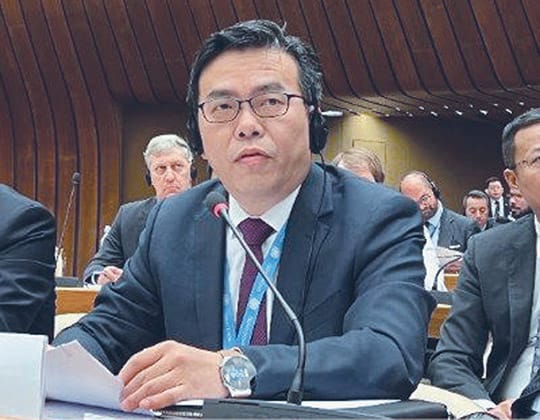
“China has noted that the U.S. side continues to distort and smear China’s national defense force in its speech,” said Shen Jian, Ambassador of China for Disarmament Affairs. “China has always taken an extremely cautious and responsible approach to nuclear weapons,” he said. “China has always adhered to the nuclear strategy of self-defense, adhered to the policy of ‘no first use of nuclear weapons,’ and unconditionally pledged not to use or threaten to use nuclear weapons against non-nuclear-weapon states or nuclear-weapon-free zones. China has always maintained its nuclear forces at the minimum level required for national security and has no intention of engaging in an arms race with any country.”
In direct response to DiNanno, Shen pointed to the elephant in the room: “The United States seeks absolute strategic advantages and spheres of influence, violates the principles of the purposes of the Charter of the United Nations, arbitrarily launches military strikes against sovereign countries, provokes camp confrontation, and becomes the initiator of the international and regional arms race.” It is the actions of the U.S., he charged, that “are the biggest source of risk for international security.” “Instead of using China’s nuclear policy and nuclear forces to make articles about China’s nuclear policy and nuclear forces and rendering the so-called ‘China nuclear threat theory,’ the United States should introspect and effectively respond to the international community’s concerns about the negative trend of the United States in the nuclear field,” Shen said.
The Russian address to the Conference on Disarmament was delivered by the Permanent Representative of the Russian Federation to the United Nations in Geneva, Ambassador Gennady Gatilov. The main part of Gatilov’s speech was a reiteration of previous official statements, including the Russian Foreign Ministry statement of Feb. 4. Gatilov explained, among other things, how it was that U.S. actions precipitated Russia’s suspension of the New START treaty in 2023.
The emergence of Russia’s “novel” weapons systems “must be viewed through the prism of the relationship between strategic offensive weapons and strategic defensive weapons, enshrined in the New START Treaty, which was deliberately ignored by the American side throughout the entire life cycle of the Treaty,” Gatilov said. DiNanno had earlier accused Russia of violating the treaty by developing new weapons systems not covered by its terms. “As it is well known, Washington’s efforts to build a global and deeply destabilizing U.S. missile defense system continued throughout the entire term of the New START Treaty, and they currently are part of the ‘Golden Dome’ project, which poses an even more obvious threat to strategic stability.
“In these circumstances it is clear that the emergence of new Russian weapons systems outside the scope of the New START Treaty was a compensatory measure aimed at neutralizing the U.S.’s actions in the field of missile defense that were contrary to the Treaty and, accordingly, at maintaining strategic balance,” Gatilov said.
Mealy-Mouthed Trump
Trump had initially expressed interest in extending New START. “That’s not an agreement you want expiring. We’re starting to work on that,” he said on July 25, 2025, in response to a TASS reporter. “It’s a problem for the world,” he added, referring to the then-upcoming expiration of the treaty. “When you take off nuclear restrictions, that’s a big problem.”
But a few days later, Kremlin spokesman Dmitry Peskov said that there had been no talks between Moscow and Washington on the New START treaty. “First, there is no communication on the issue. In fact, what hinders it is the current situation in bilateral relations, which was created under the Biden administration,” he said.
Then, Russian President Vladimir Putin made an offer. The treaty’s then-looming expiration signals “the imminent end of the last international accord directly limiting nuclear missile capabilities,” he said at a meeting of the Russian Security Council on Sept. 22, 2025. “A complete renunciation of this treaty’s legacy would, from many points, be a grave and short-sighted mistake. It would also have adverse implications for the objectives of the Treaty on the Non-Proliferation of Nuclear Weapons,” Putin said.
Therefore, he continued, “In order to prevent the emergence of a new strategic arms race and to preserve an acceptable degree of predictability and restraint, we consider it reasonable to maintain at this turbulent time the status quo established under New START. Accordingly, Russia is prepared to continue observing the treaty’s central quantitative restrictions for one year after February 5, 2026.”
The response from Trump was silence.
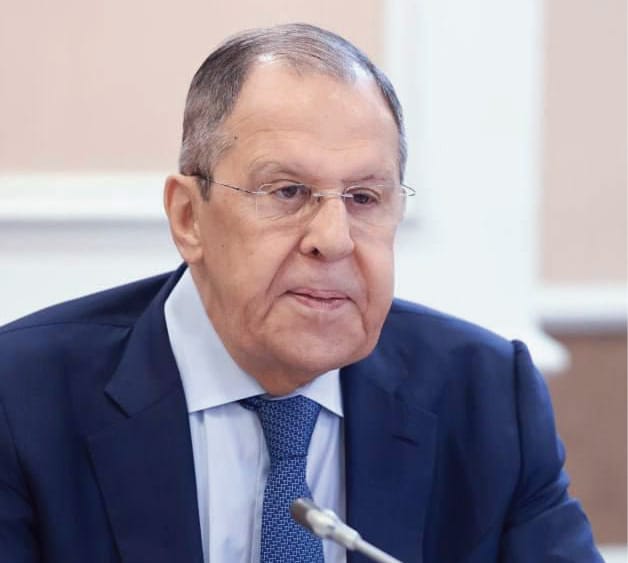
At his Nov. 11 press conference, Russian Foreign Minister Sergey Lavrov again confirmed that the Trump administration still had not responded to Putin’s offer. “We have made it clear many times that this proposal is a unilateral gesture of goodwill on our behalf,” he said. “No talks or consultations are needed for the United States to support our approach. All the United States needs to do is state that it will not raise the quantitative limits under the Strategic Arms Reduction Treaty for one year, that is, at least for as long as Russia adheres to its own unilateral commitment. That’s all there is to it. No further steps are required.”
“As for whether any talks are underway to renew the treaty, no, there are no talks,” he went on. “Once again, the situation is completely transparent. The quantitative levels are well known. We know what the Americans have, and the Americans know what we have. Let’s take a year to, so to speak, cool down, analyze the situation, stop measuring everything by the Ukraine yardstick, and focus on the great powers’ responsibility to maintain global security and stability, above all, in terms of avoiding nuclear war. We are ready for that.”
After three more months of silence from the United States, on Feb. 3, Sergei Ryabkov said Russia would not initiate any démarches to the U.S. ahead of the expiration of New START, which was at that point just two days away: “We completed everything necessary in a timely manner, and they had ample time to consider it. The lack of a response is also a response,” Ryabkov stated.
Later the same day, Trump finally responded. He “will decide the path forward on nuclear arms control, which he will clarify on his own timeline,” a White House statement said. “If it expires, it expires,” Trump said in a January interview with the New York Times. “We’ll just do a better agreement.”
Danger of a New Arms Race
With the treaty expired, Russia apparently intends to maintain a moratorium on increasing strategic nuclear force levels as long as the United States doesn’t act to break those levels. “We will very carefully observe how the American side acts now, after the formal absence of any limiting mechanisms. At the same time, we will treat this situation with full responsibility and do not intend to be the first to take steps toward escalation,” Lavrov said. Then on Feb. 11, Lavrov told the State Duma that the moratorium concerning the limits set out in New START “remains in effect, but only as long as the U.S. does not exceed these limits.” Russia “has reasons to believe” that the United States is in no rush to depart from the New START limitations, he claimed. However, not everyone is so measured. A spokesperson of the U.S. Air Force Global Strike Command (AFGSC) told The War Zone that they are prepared to upload additional warheads to Minuteman ICBMs and renuclearize B-52 bombers that were denuclearized to comply with New START. “The conclusion of New START allows us to streamline our focus and dedicate more resources to our core mission: ensuring a safe, secure, and effective nuclear deterrent. This managed transition enhances our operational readiness and our ability to respond to the nation’s call,” the spokesperson said.
Even more stark was the proposal by Robert Peters, the Heritage Foundation’s Research Fellow for Strategic Deterrence, published in an Oct. 3, 2025 special report, “The U.S. Nuclear Arsenal of 2050: A Proposal for American Survival.” It argues for the United States to triple its deployable nuclear weapons arsenal for attacks principally against China and Russia, to a new total of 4,625 operationally deployed nuclear weapons.
“The United States maintains a strategic deterrent that is insufficient for the current degrading security environment, much less an unknown and potentially far worse security environment of the coming half-century. For this reason, the United States should increase its strategic arsenal significantly, while also rebuilding its largely ossified non-strategic nuclear arsenal,” Peters writes.
With the recent moves by the United States to kidnap the President of Venezuela Nicolás Maduro, defund the United Nations, and now launch a full-blown regime-change war against Iran, the question of whether humanity is capable of preventing its own annihilation is more serious than ever. The Trump administration’s decision to let New START expire is even more dangerous in this context, and requires urgent action to restore some level of regulatory framework between the world’s two largest nuclear powers. However, as Helga Zepp-LaRouche has stressed, the breakdown in the international order requires more than simply returning to a previous era of less instability. Only with the creation of a new security and development architecture, which abandons the notion of geopolitical domination between rivals, will the danger of nuclear annihilation truly be taken off the table.