
U.S. President Donald Trump and First Lady Melania met Britain’s King Charles III and Queen Camila on April 27 upon their arrival in the U.S., beginning an unprecedented and extravagant visit by a British monarch. They began with a tea session, then went for a tour of the newly unveiled and expanded White House Beehive. Then on Tuesday morning, April 28, Trump and Melania hosted a State Arrival Ceremony on the South Lawn of the White House, with a traditional military arrival ceremony which included the United States Army Herald Trumpets. The national anthems of both countries were played, with the Presidential Salute Battery rendering a 21-gun cannon salute. They then presided over a Pass in Review of 300 United States Service Members with nearly 500 members of the U.S. Armed Forces from all six military branches present at the ceremony—an historic first for State Visits.
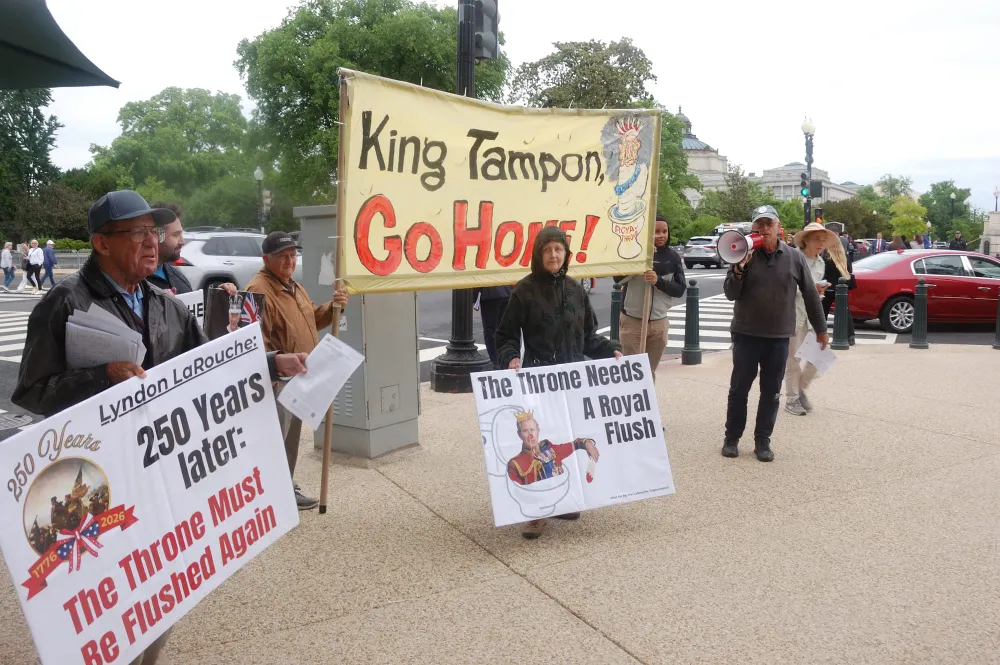
There are other ceremonies, speeches, and banquets, illustrating how the visit is a sickening show of servitude on the United States’ 250th anniversary of independence from the British Empire. Media reports have been playing up the current tensions between the U.S. and U.K. governments, particularly after Prime Minister Starmer refused to join Trump’s war against Iran, and insist that Charles’s main goal is to “Mend some fences and make Trump smile.” One senior British official told Politico that Charles’s visit will aim to “rise above politics, and remind everyone that this relationship is far bigger than just the immediate relationship between any president and prime minister.”
In his address to a joint session of Congress, Charles traced the U.S.-U.K. relationship back over four centuries, not merely 250 years, claiming that “our destinies as nations have been interlinked.” He drew heavily on the false notion that the U.S.’ institutions and founding documents were influenced, “often verbatim,” from British tradition. When the colonists established the United States, Charles said, “They carried with them and carried forward the great inheritance of the British Enlightenment, as well as the ideals which had an even deeper history in English common law and Magna Carta. These roots run deep, and they are still vital.”
He also invoked Henry Kissinger’s vision of an “Atlantic partnership based on twin pillars, Europe and America,” arguing this partnership is “more important today than it has ever been.”