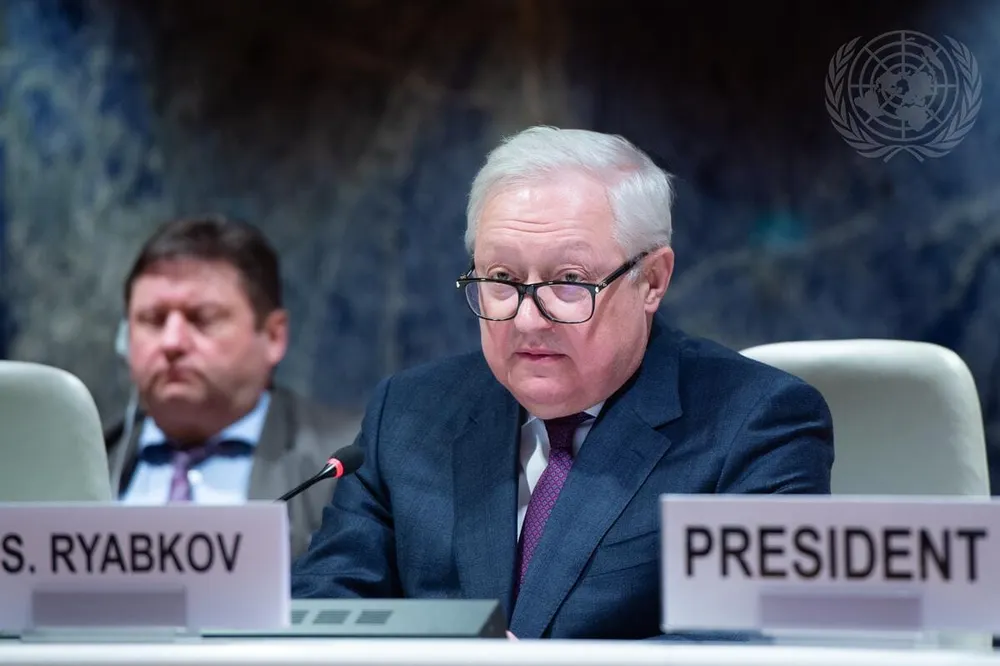
Russian Deputy Foreign Minister Sergei Ryabkov delivered remarks to a meeting of the Trialogue International Club on April 20, in which he reported on strategic security between the U.S. and Russia. As reported by TASS, Ryabkov’s comments included the following elements:
• “Russia, for its part, maintains a strict commitment to the national moratorium on nuclear testing, declared back in 1990. However, Russia will offer a proper and proportionate response should the United States and other countries conduct such tests,” he said.
“As for Washington’s statements about a potential resumption of full-scale nuclear testing, which could have a devastating impact on the Comprehensive Nuclear-Test-Ban Treaty, we are confident that such a step would trigger a kind of self-sustaining chain reaction in this field, pushing a number of countries that possess nuclear weapons—including those that are not party to the Non-Proliferation Treaty—to conduct full-scale explosive nuclear weapons tests,” Ryabkov added.
• An increasing number of U.S. allies in Europe are considering developing their own nuclear capabilities, a trend that is both provocative and damaging to the non-proliferation regime. “This is extremely provocative and destructive to the nuclear non-proliferation regime, especially given that it is happening without any visible objections from Washington or the European capitals of nuclear-armed countries,” he said. “This is noteworthy, given that for years we have heard assurances that agreements on ‘joint nuclear use’ and ‘extended nuclear deterrence’ are supposedly effective tools used by the collective West to address nuclear non-proliferation challenges.”
“This assertion is, in my view, highly questionable and does not resonate with the overwhelming majority of countries that are parties to the Treaty on the Non-Proliferation of Nuclear Weapons. Indeed, it is becoming increasingly clear that the more actively these arrangements are promoted by Western nuclear powers, the more they encourage their non-nuclear allies to become more ambitious and active in seeking broader access to nuclear weapons,” Ryabkov concluded.
• Russia notes statements by the American side to immediately build up its nuclear arsenal above the limits of the New Strategic Arms Reduction Treaty (New START) and resume nuclear testing: “We note the absence of any signs of Washington’s readiness to take comprehensive efforts to reduce the conflict potential considering all the factors influencing strategic stability. At the same time, we have taken note of Washington’s stated readiness immediately to start building up its nuclear arsenal above the limitations of the New START Treaty and resume nuclear tests contrary to the provisions of the CTBT [Comprehensive Nuclear-Test-Ban Treaty] ‘at the first order’ of the U.S. president.”