

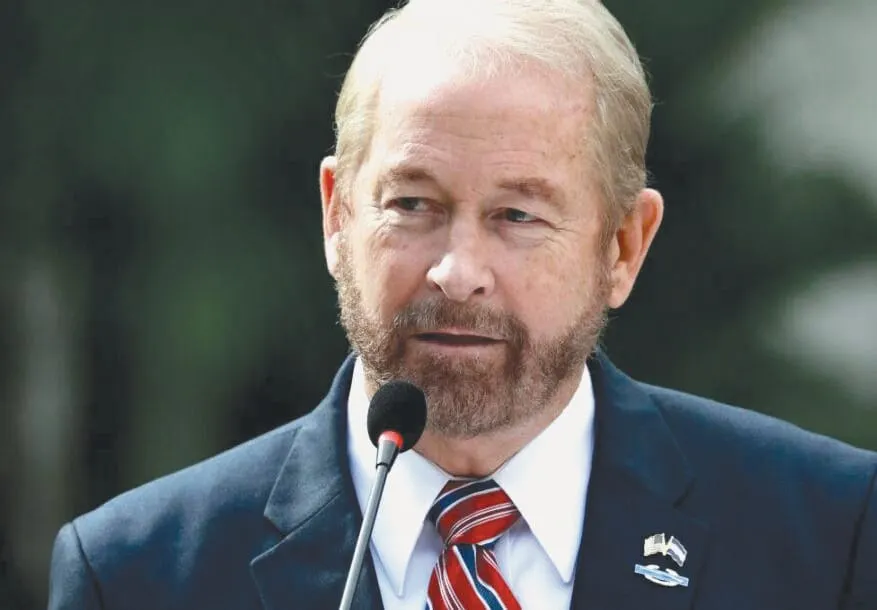
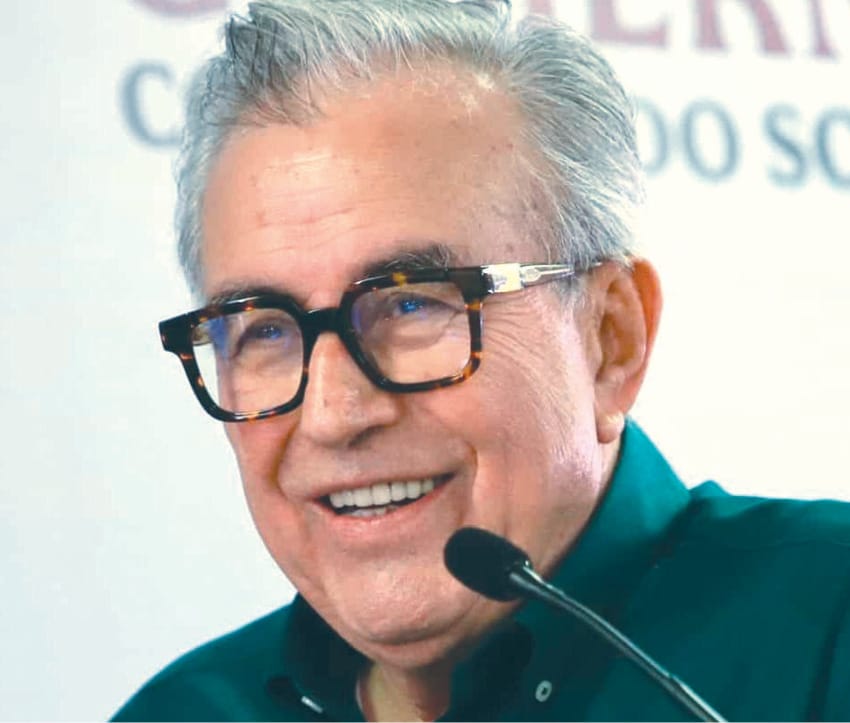
May 7—On April 29, U.S. Attorney for the Southern District of New York Jay Clayton and Administrator of the U.S. Drug Enforcement Administration Terrance C. Cole unsealed bombshell charges of drug trafficking against the sitting governor of Mexico’s state of Sinaloa, Rubén Rocha Moya, along with nine other significant Mexican political figures and officials. Along with the indictment, the United States requested that those indicted—including Governor Rocha—be arrested for the purpose of extradition to the U.S. to face charges, and the “word” is out that more indictments of state governors are in the works.
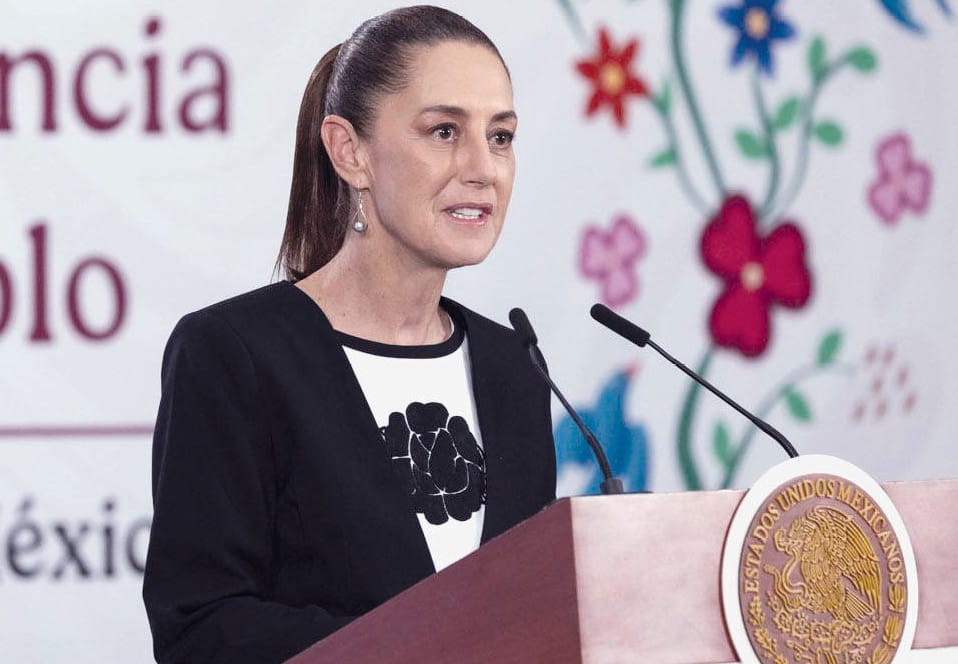
Ten days earlier, a scandal broke out in Mexico when two CIA agents died in a car accident in the northern state of Chihuahua while returning with Mexican officials from a raid on clandestine methamphetamine labs. Mexican President Claudia Sheinbaum has emphatically rejected U.S. President Donald Trump’s repeated overtures pressing that U.S. military and police forces be given permission to operate in Mexico, purportedly to fight drugs. Sheinbaum has asserted the long-standing Mexican policy affirming Mexico’s sovereignty and ability to combat drugs nationally. It was quickly revealed that the governor of Chihuahua, María Eugenia “Maru” Campos Galván, from the rightwing opposition PAN party, had secretly allowed the CIA to operate in that state, in direct violation of Mexico’s well-known strict laws against foreign citizens participating in law enforcement, public security, or military activities within Mexico.
These are opening salvos in what is shaping up as an orchestrated destabilization of Mexico designed to end the way the invasion of Venezuela did: with the loss of its sovereign right to self-government and thereby all control over its natural resources. President Sheinbaum is being told she faces only two outcomes: either she is brought totally to heel, or her government will be toppled. If she refuses to extradite Rocha and continues to deny Americans permission to operate freely inside the country, she will be denounced by Washington and its allies inside Mexico for being allied to drug interests, and U.S. military action will follow; if she folds and grants everything Trump is demanding, Mexico’s sovereignty is gone—along with control of its significant oil industry and other valuable raw materials.
Setting up for Bloodshed
Key to the operation is President Trump’s ambassador to Mexico, retired U.S. Army Col. Ronald D. Johnson, a political hitman rather than a “diplomat.” The first two decades of Johnson’s career were spent in the U.S. Special Forces, counting among his notable missions serving as one of the 55 U.S. military “advisors” to the Salvadoran military in its bloody civil war, and commanding a detachment in President George H.W. Bush’s 1989 overthrow of Panama’s Manuel Noriega. When he retired from the Green Berets in 1998, Johnson moved into the Central Intelligence Agency for the next two decades-plus of his life, including working closely with the U.S. Southern Command. Officially, he “left” the CIA in 2019, to serve as Trump’s ambassador to El Salvador from 2019-2021, his next “diplomatic” post being his assignment to Mexico in April 2025.
When the news of the CIA agents’ involvement in the Chihuahua mission broke, Johnson made no apology for the violation of Mexican laws, but instead promised “to continue their mission.”
Trigger-happy Trump has now upped the ante, reiterating for the umpteenth time that he is itching to unleash the U.S. military against Mexico (and Colombia), in the name of “fighting drugs.” He heeds not that any such move would be the single greatest boost possible to the power of the drug cartels, which would wrap themselves in the Mexican flag and “recruit” willing and unwilling Mexican citizens alike to fight “the yanquis.”
“Would I launch strikes into Mexico to stop drugs? OK with me,” Trump told reporters on May 4. “Whatever we have to do to stop drugs.” Would he ask for the Mexican government’s permission to launch strikes? Trump refused to answer that question, saying only that he has been “speaking” with Mexico City. “They know how I stand…. So let me just put it this way. I’m not happy with Mexico.”
President Sheinbaum responded the next day in her speech at the official commemoration of the 1862 Battle of Puebla, where Mexican forces defeated the invading French army. “To our neighbors, to the United States, we say … we are clear and resolute. History tells us that the people of Mexico are not mistaken when it comes to defending national sovereignty…. No foreign power is going to tell Mexicans how to govern ourselves,” Sheinbaum stated.
Let us be clear: the destabilization of the Mexican government has no more to do with “fighting drugs” than did George H.W. Bush’s invasion of Panama, which installed a government run by the Cali cocaine cartel in the country, all in the name of “fighting drugs.”
The Mexican independent farmers association known as the National Front to Save the Mexican Countryside has named the game that is now underway by issuing an Open Letter to President Sheinbaum: It is the financier interests of Wall Street and the City of London which run the drug trade as their private army, the document charges, and then use the devastation they themselves have created as the pretext to take over the country.
Notable in the farmers’ statement, is their identification of the 1994 North American Free Trade Agreement (NAFTA) as the key turning point for the expansion of the drug trade in Mexico, and their assertion that the key to Mexico being able to defeat the drug cartels’ grip today is to replace the NAFTA free trade policies which opened the floodgates for the drug trade.
They are right. Long before NAFTA took effect in 1994, EIR had fought against its imposition tooth-and-nail, precisely because it was designed “of, by and for” Dope, Inc.’s bankers. EIR’s 1991 Special Report, “NAFTA: Auschwitz below the Border,” stated bluntly:
NAFTA’s banking takeover will open up the banking system of the Americas to all sorts of speculative hot money flows—including those of the drug trade. Such activity does not aid production; it destroys it…. NAFTA will also reorganize the entire Ibero-American banking structure, and thereby create the conditions under which the vast financial flows originating in the Ibero-American drug trade can be more readily laundered into the cash-strapped Anglo-American banking system.
Some smart Mexican farmers understand it is those same powerful banking interests which still control the drug trade today: the Wall Street banking interests which the blustering “Mr. Tough Guy” Trump refuses to touch.