The following is the introduction to the second edition of the Schiller Institute’s report, “Extending the New Silk Road to West Asia and Africa: A Vision of an Economic Renaissance.” It was released on April 21, 2026, updating the first edition published in 2017. The full report is available in English in paperback and Kindle formats, and also in paperback in Chinese.
December, 2025—Since the publishing of the first edition of this report in November 2017, the world has witnessed “changes not seen in a hundred years,” to quote Chinese President Xi Jinping. A new paradigm of multilateralism in international relations and world history, as envisioned by Schiller Institute founder Helga Zepp-LaRouche[1] and forecast by the late American thinker and economist Lyndon LaRouche,[2] has gradually taken shape. The key elements of this new paradigm are characterized by, first, the consolidation of the BRICS (Brazil, Russia, India, China, and South Africa) as a potent economic force with clearly defined development goals and mechanisms of credit generation, and its expansion in 2024 into BRICS Plus with the inclusion of Egypt, Ethiopia, Iran, the UAE, and Indonesia. The first four of these nations are included in the geographic scope of this report. The other element in this new multilateral world order is the success of the Belt and Road Initiative (BRI) in defining a new model of bilateral and multilateral cooperation to achieve the common goals of development of nations, especially in the Global South, or Global Majority nations.
Despite intensive media, political, and even security attacks on the BRI, as in the case of the attacks on Chinese engineers building the China-Pakistan Economic Corridor (CPEC), the number of nations joining it kept growing, reaching 152 nations by the beginning of 2025. Even though much of the BRI reflects the peaceful rise of China as the world’s leading industrial, technological, and scientific power, and although launched by China, it belongs now to the whole world. It is characterized by the three principles of “planning together, building together, and benefitting together.”[3] The notions of win-win cooperation and harmonization of interests are foundational concepts in this new paradigm. However, as discussed in the first edition, these are not only Asian notions but exist in Western civilization too, though neglected as a result of adopting imperialism and colonialism as policy. They are also enshrined in monotheistic religions such as Judaism, Christianity, and Islam. This gives hope of building a true dialog of civilizations for the benefit of all nations and building a “community with a shared future for mankind.”
Simultaneously, new dangers have emerged threatening the security and the very survival of humanity itself because of the tectonic shifts in the recent decades. The decline of the previously dominant Western powers financially, economically, and even culturally, represents one tectonic plate. The other plate is represented by the rise of China, Asia and the Global South in general. Unfortunately, this type of tectonic shift is usually accompanied by major economic, geopolitical and social earthquakes. As we have witnessed in the region of West Asia and North Africa in recent years, the old, unipolar world order is clinging desperately to its past hegemonic dominance, which is withering. The lack of understanding of the process of change the world has been going through with the shift of the economic center of gravity from the West to the East, is the source of much of the turmoil we are witnessing.
The transatlantic financial and banking system has been on life support, through quantitative easing, ever since the global financial crisis of 2008.[4] The physical-economic factors of production in the United States and Western Europe have been in decline for decades. Under-investment in hard infrastructure such as transport, water, and power, as well as soft infrastructure like education and healthcare, has undermined the productivity and prosperity of societies in the West. In the meantime, more resources are poured into the bankrupt financial and banking system and on endless wars and armament.
However, and all the while, politicians in the West tend to blame the damage caused by their own policies on foreign powers or immigration. The truth of the matter of the increased number of immigrants flowing from West Asia and Africa to the EU is two-fold: the “regime change” wars launched since 2001 by the U.S., Britain, and their allies on the one hand, and the indifference to the aspirations of real economic development of the peoples in these two regions. The post-colonial exploitative relationship of dependency of these nations on expensive Western technology in one direction and the flow of cheap raw materials in the other direction has made the imbalance unsustainable.
It was due to these facts, and considering the existential threat to humankind posed by the potential clash between the world’s two largest nuclear-armed powers, the U.S. and Russia, over the conflict in Ukraine, that the Schiller Institute called for a new global security and economic architecture.[5] The new architecture requires a new security thinking that takes into consideration the security needs of all nations, not only a few powerful ones. It also calls for complementing the security aspect with an economic development perspective that deals with the root causes of the many crises humanity faces today. Finally, a dialogue of civilizations and cross-cultural understanding among nations that respect and take into consideration the different historical, cultural, religious, and social dimensions of each nation is an absolute necessity. Societies are diverse in culture but can live in harmony without imposition of one set of values by one or a group of nations on other nations. The common goals of mutual prosperity and peaceful co-existence must be the supreme criteria of global governance, and every other detail of difference must be subject to cultural exchange, dialogue, and diplomacy.
One of the Schiller Institute’s main methods in bridging the gap between East and West, and North and South, is through tri-partite cooperation. For example, as proposed in the first edition of our report and reiterated here, instead of competing against each other, or even undermining each other’s relations to third parties, the U.S. and the EU should cooperate with China and Russia on projects in third countries and regions, such as in West Asia and Africa to alleviate poverty, bring technology for development and prosperity for these two underdeveloped but potentially immensely wealthy regions. This means working together to finance and build infrastructure first and foremost. Through the BRI, China has proven that there is an established and healthy method of doing this. Issuing long-term credit for infrastructure development, industrialization and modernization are no longer hypothetical but a reality in many parts of West Asia and Africa. The method is not the failed “aid” policy but that of “enabling” and “empowering” nations to stand on their feet in accordance with their own goals, aspirations, and potential. Turning potential into action is possible, as we will see in this new edition.
Vision and Method
It is important to note that this edition of the report, like the previous one, is not a catalogue of projects that have been built or planned, although we report on many of them here. Our intention behind this report, as the title suggests, is to provide a vision and method. The fact that the successful method used by China and its partners through the BRI matches the method we suggested in the first edition proves the points made in our report. However, the vision is nowhere close to being realized soon: While the achievements are impressive, the needs of nations in the Global South far surpass what has been accomplished so far. For example, the Asian Development Bank (ADB) estimated in 2018 that its 45 developing member countries would need to invest $26 trillion between 2016 and 2030—about $1.7 trillion annually—to bridge Asia’s infrastructure financing gap.[6] The African Development Bank (AfDB) estimates that Africa needs $130 billion to $170 billion annually for infrastructure financing, a conservative figure that still amounts to $1.5 trillion in the next decade.[7] This must be compared with the $1.5 trillion that China invested in the BRI in the first ten years.
The process through which this healthy method was launched through the BRI must be both accelerated and expanded. The question of financing infrastructure has become a major issue for many nations, not only in the developing sector but also in the formerly industrialized nations. Through the Washington Consensus of the 1980s, neoliberalism became hegemonic in the West and, consequently, in the institutions it dominated, such as the International Monetary Fund (IMF) and the World Bank. Governments were successively encouraged and often coerced into abandoning their responsibilities for the public goods of society, especially infrastructure in both its hard and soft aspects. A new myth of “private sector–financed” infrastructure was invented. As we discuss in Chapter 4, infrastructure is a public good whose value is to be found in its social and physical-economic benefits to the economy, not in monetary returns as a direct generator of financial profit. Therefore, the private market does not support long-term, low-yield enterprises. Later the public-private partnership (PPP) was floated to lure governments into providing massive incentives and profit-making opportunities through basically taxing the population via infrastructure fees.
This is one reason why we believe that the U.S. and EU proposals to counter the BRI, such as Build Back Better World (B3W)[8] or Global Gateway, are not serious undertakings, since they argue that the “private market” should be the source of financing for infrastructure projects.[9]
Through aggressively pushing the “China debt trap” narrative, which we have thoroughly debunked, as we report in Chapter 4, Western institutions have been coercing developing nations in Africa and Asia to abandon projects financed through Chinese loans. But even that effort did not last very long. As nations facing dire financial situations due to the global financial crises, wars, and food and commodity price hikes, they had to choose between poverty or resorting to state-backed credit policy, both through their own resources and in cooperation with China.
The method of cooperation was clearly outlined in detail by President Xi in the September 2024 Summit of the Forum on China-Africa Cooperation (FOCAC) held in Beijing, as a process of “modernization and industrialization.” In the next years, China will implement 10 partnership action plans with Africa to advance modernization. One of the partnerships is “the partnership initiative for industrial chain cooperation” through which China supports Africa “in developing local value chains, manufacturing and deep processing of critical minerals, build growth circles for China-Africa industrial cooperation in five regions, undertake 10 supporting projects of industrial parks for African countries, and hold 100 training sessions on industrialization.” A China-Africa digital technology cooperation center will be jointly built, to facilitate Chinese businesses in undertaking 20 digital infrastructure projects and digital transformation. The “partnership initiative for connectivity” implies that China supports African integration by implementing 30 new infrastructure projects to support the African Union (AU) and the African Continental Free Trade Area (AfCFTA). Furthermore, China will support interconnected development between transport infrastructure and industrial parks built and operated by Chinese companies in Africa, and build a multimodal sea-rail transport network that connects China’s central and western regions to African nations. Another aspect is the enhancement of financial market connectivity, where China will deepen cooperation with Africa in local currency settlement and financial technology. The AfCFTA was established in 2018, with 43 African nations participating. However, free trade without infrastructure connecting the trade partners does not mean so much. As we explain in Chapter 7, African nations remained connected more with the outside world than among themselves, a legacy of the colonial era.
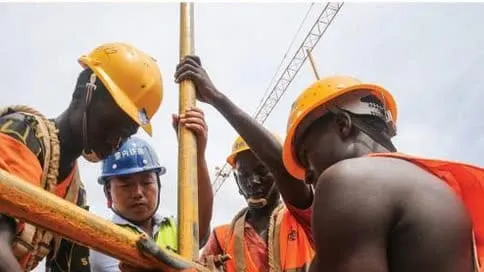
The Chinese model of cooperation within the FOCAC mechanism is based not on “helping” Africa but “enabling” it to utilize its natural and human resources for development. In 2015 at the FOCAC Summit in Johannesburg, South Africa, President Xi said that, to achieve industrialization and modernization, Africa needs to overcome three bottlenecks of development—the lack of infrastructure, skilled workers, and capital. China has since then focused on these three aspects. As transport, power, and skilled labor have started to increase, the industrialization of the continent has started to pick up pace. Through Chinese investments, industries are relocating to Africa, and industrial parks are emerging in many countries in West Asia and Africa. The Jizan Special Economic Zone in Saudi Arabia, TEDA Industrial Park in Egypt’s Suez Canal Special Economic Zone, Ethiopia’s many industrial parks, Tanzania’s Kwala Industrial Park, the China-Morocco Science and Technology City in Tangier, and many others, including those in remote and landlocked areas like the Sino-Uganda Mbale Industrial Park in Uganda, to name a few, represent an unprecedented development. African nations do not want to continue to be exporters of cheap raw materials and importers of expensive finished goods. They demand to become part of the global value chains. A growing portion of the goods consumed in Africa are now made in Africa.
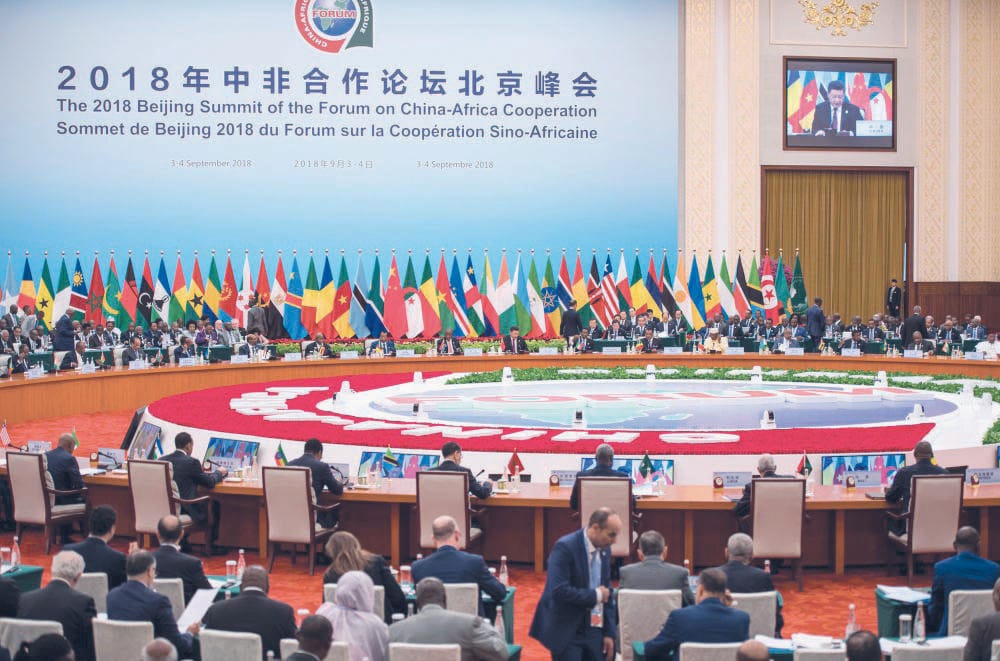
The “Hunan model” of cooperation between China and Africa, which takes its name from the province in China where the FOCAC Ministerial meetings are held to follow up on decisions of the summits, is focused on the three main areas at which the province has excelled. These are modern agriculture and machinery, poverty alleviation, and vocational training. By sharing modern agricultural technology with African nations, two major dilemmas can be resolved. First, many African nations lack food security due to low agricultural productivity. Utilizing modern techniques, these nations can increase their basic staple food production and reduce or eliminate their food insecurity. Many pilot agricultural research centers and farms have been established by China and African countries to serve this purpose. Second, other African nations, which have much greater agricultural potential, lack the infrastructure for packaging, refrigerating, and transporting the produce to markets. By providing the infrastructure, China is enabling these nations to solve this dilemma. In 2020, Ethiopia, whose name was earlier associated with recurring famines, exported the first cargo of fresh avocadoes to Europe, using refrigerated containers on the China-built railway from Addis Ababa to the port of Djibouti on the Red Sea. Ethiopia uses the same railway for importing fertilizers and machinery for its growing agricultural sector.
As for vocational training, there will be an acceleration in implementing the “Future of Africa” China-Africa Vocational Education Cooperation Plan that aims to build schools of engineering technology and 10 Luban Workshops, an international program named after an ancient Chinese master craftsman that provides vocational skills training for youth. In total, these initiatives will provide 60,000 training opportunities for African youth. It is noteworthy that in 2017, China surpassed both the U.S. and the United Kingdom in the number of African students enlisted in its universities. Many of the vocational and educational programs are focused on agriculture, engineering, and science and technology.
The Demographic Divide
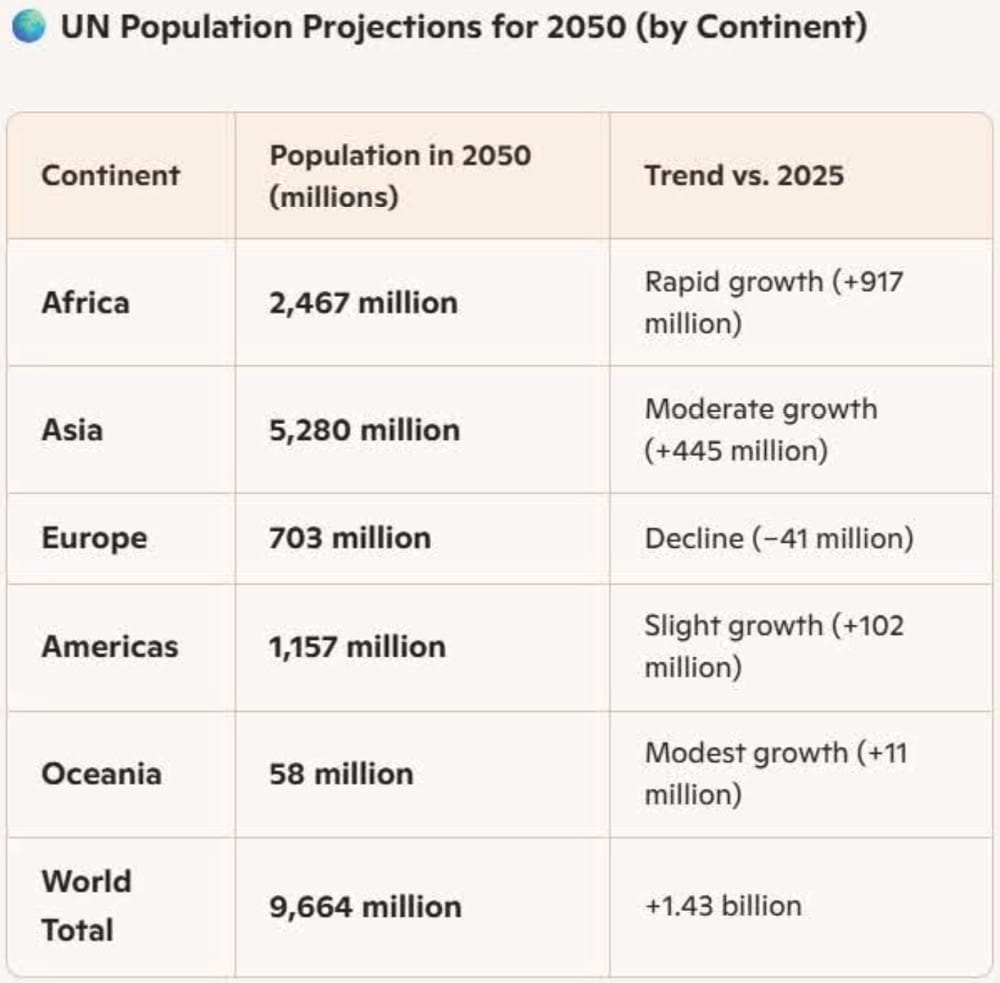
By 2050, the United Nations projects the world population to reach about 9.7 billion,[10] with Africa experiencing the fastest growth, while Europe will decline (see chart). By 2100, it is projected that world population will stabilize at around 10.2 billion, with Africa accounting for nearly 40% of humanity. Africa dominates the population growth, rising from 1.55 billion in 2025 to 3.81 billion in 2100. This means that Africa will become the demographic center of the world.
That’s not all. A significant aging process across most continents will take place, with Africa remaining the youngest and Europe the oldest. Africa’s median age will remain under 30, shaping, based on which direction the policy will take, global labor markets and migration flows.
East Asia will face severe aging, with median ages exceeding 45 in Japan and South Korea, while South Asia remains younger (~33-35). Europe’s demographic challenge is the most critical, with a projected median age of 47. Europe will struggle with shrinking workforces and rising dependency ratios.
The implications of this shift are enormous. Economically, Africa’s youthful population could become a major driver of global growth and will represent both the factory and farm of the world and a source of emerging scientific and technological progress. This if a sound policy is adopted in Africa and by the major economic and political powers of the world. Otherwise, this might become the nightmare for all humanity, as young people in Africa and West Asia will seek, as they already do, a better life in Europe, where the economic and social reality is already under a process of collapse, in terms of the infrastructure, education, healthcare, and pension systems.
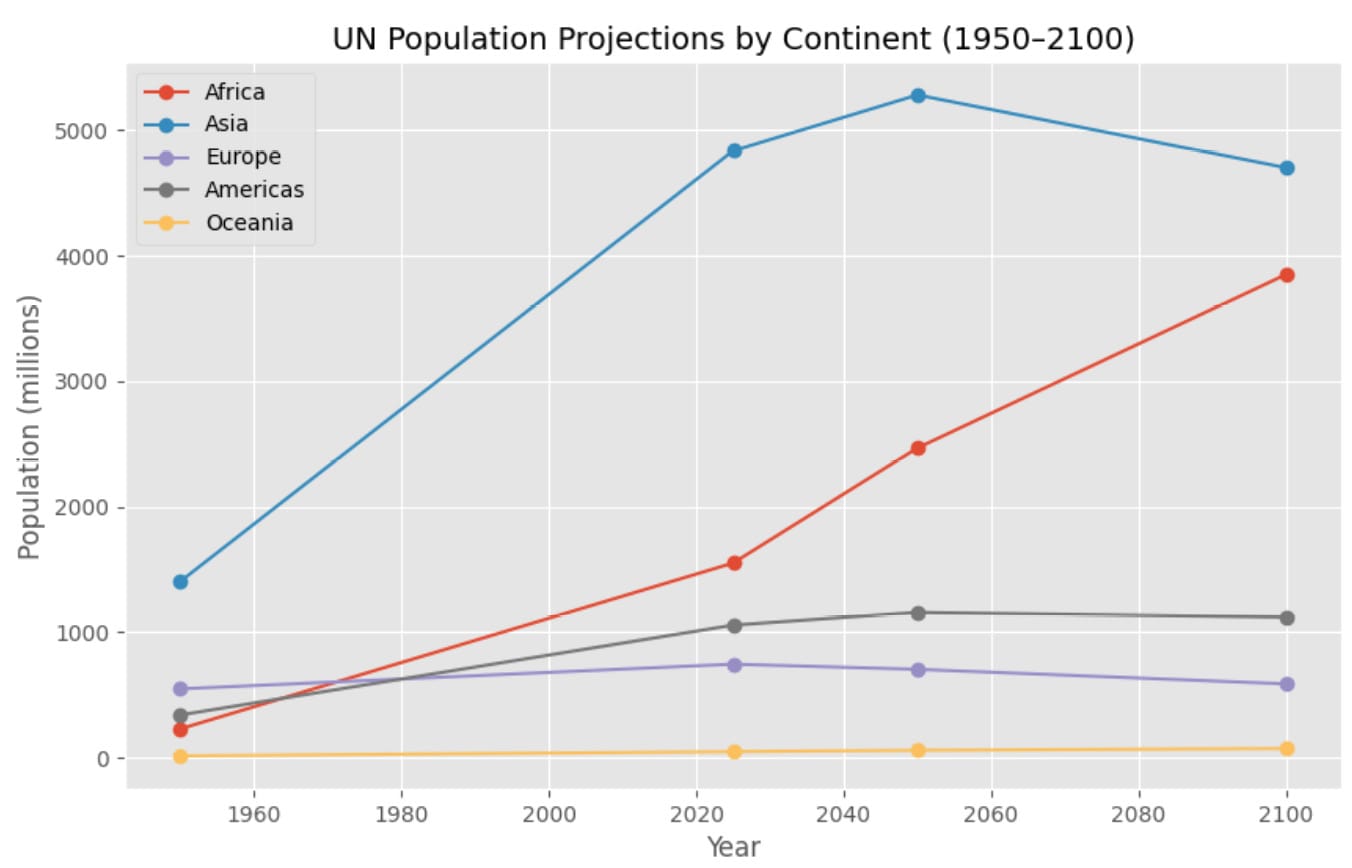
This population growth will become either a blessing or a curse for Africa and the world. The sound policy followed by China and its partners in West Asia and Africa in resolving the three bottlenecks of development—lack of infrastructure, capital, and skilled labour—poses the question of how Europe and the United States will act in the region. Africa is already more populous than China, and more than twice as large in terms of both population and land than Europe and North America. China alone cannot resolve the issues of development in Africa, but it has set into motion a clear and functioning mode of practice that should be joined by Europe and the United States. Japan, South Korea, India and the ASEAN countries are also called upon to tap into this potential source of common prosperity.
The Myth of ‘Small and Beautiful’
In the run-up to the October 2023 celebration of the 10th anniversary of the BRI in 2023, opponents of the initiative spread the myth that China has stopped lending and investing in infrastructure projects in Africa and Asia and that China should only focus on “small and beautiful” projects. While the Covid-19 pandemic and its enormous economic and financial impact on developing nations and on China are totally ignored by those “analysts,” the reality is that China had no intention of stopping its previously successful method of cooperation. It is true that President Xi, in his keynote speech at that celebration, announced that China would build 1,000 “small yet beautiful” projects in BRI countries that directly affect peoples’ lives. However, this was just one out of ten plans he presented. An example of such small projects was the launching in 2025 of an integrated rural project, funded by moderate loans from the Export-Import Bank of China, that includes digging 85 wells, constructing 89 water towers, laying 1,450 km of water pipes, and building 300 water supply stations to serve 18,200 rural families in northern Senegal, according to Professor Chen Xiangming, who studies urban development. Other projects include the funding of electric buses for urban areas in Uzbekistan, local hospitals and medical centers. But such projects have been carried out by China since the 1960s.
The idea of “small and beautiful” development was a top-down policy imposed by the U.S. and British governments through Henry Kissinger to prevent the industrialization of the so-called Third World, through advocating what was cynically termed “appropriate” technology policy to impoverished countries, i.e., no modern technology.[11] This stands in sharp contrast to the Chinese policy. The godfather of this anti-growth method of thinking, which attracted many naïve environmentalists and leftists in the West too, was British economist E. F. Schumacher, who published the book Small Is Beautiful in 1973. Schumacher’s basic thesis is that, given the limited resources in the world, the modern economy is not sustainable. He advocated de-industrialization and called for only “environmentally” sustainable development in the Third World. This is of course a fallacy, since “resources” exist relative to the level of technological and scientific advancement of a society, rather than simply the extent of known mineral deposits. The human mind is what transforms the mineral deposit studied by the geologist into the ore gathered by the miner. For example, there are more energy resources than fossil fuels: Fission and fusion nuclear power are almost limitless.
This strategy came parallel with the policies adopted by the U.S. and consequently many other Western countries to regard population growth in the Global South as a threat to the national security of the U.S. and its allies. This was codified in a national security study memorandum commissioned by Henry Kissinger in his position as National Security Advisor in 1974 and titled “Implications of Worldwide Population Growth for U.S. Security and Overseas Interests.”[12] The basic premise of this study is that population growth in developing nations will lead the governments of those nations to invest in modern technologies to increase productivity and sustain the growth of their population to avoid political instability. This would consequently lead to those nations utilizing their natural resources for their own development rather than exporting them at low prices to the U.S. and its allies in the industrialized world who need these raw materials for their own growth. Thus, the population growth was said to raise “national security problems.” The study proposed measures of strict population control in “third world” countries and identified fifteen countries to be targets of specific actions. The projections of the study were all wrong: population growth continued and economic growth in those nations rose. However, it took many years to achieve this progress, since the U.S. coerced many nations to control population and limited technological and industrial growth by promoting “appropriate” technology rather than the latest modern technology. The damage caused by this policy persisted for more than 40 years.
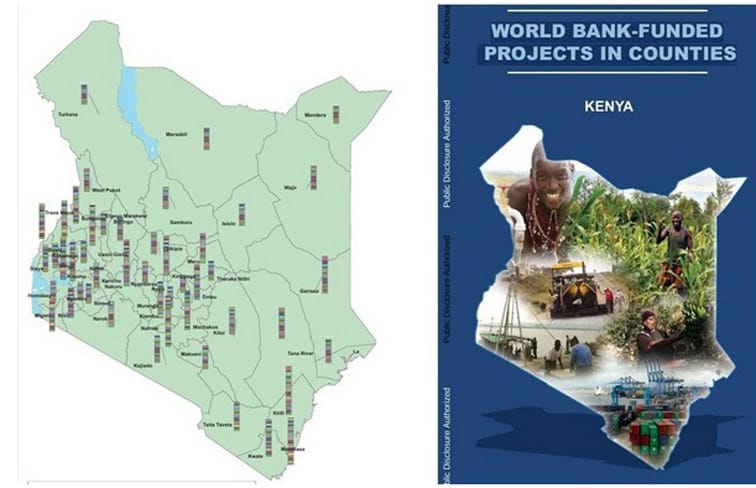
“Small and beautiful” became the model for aid projects of the World Bank, the U.S., and the European Union. Hundreds of billions of dollars were spent on micro projects all over Africa without dealing with the core causes of poverty and lack of development. Without large-scale electric power generation, national and continental transport networks, irrigation systems, and modern healthcare and education systems, Western aid programs vanished without real impact, like pouring water into sand—they only perpetuated poverty and backwardness.
The Chinese model, which is completely different and reflects its own development method, combines megaprojects with smaller urban and rural socially and economically beneficial projects. The whole is an integrated long-term and evolutionary development process; not piecemeal spontaneous interventions scattered over a large area in response to momentary needs. It is impossible to have a modern hospital or school without electricity, roads, clean water, housing, suitable nutrition, and many other elements. During the Covid-19 pandemic, the Schiller Institute published a study on rebuilding the global healthcare system to defeat the pandemic and other potential biological threats.[13] The study explained the physical requirements—power and water—for building a modern healthcare system. It took one well-documented example: The U.S. Energy Information Administration (EIA) issued a report in 2007 outlining the physical requirements of maintaining the 3,040 largest hospitals in the U.S. These hospitals, with approximately 915,000 beds at the time of the study, used about 458 trillion BTUs of energy per year: 194 trillion BTUs in the form of electricity (57 billion kWh) and the remainder in the form of natural gas, district heating, and fuel oil. Water consumption for all purposes was 133 billion gallons (ca. 500 million cubic meters) per year.
To bring Africa to this same standard of public healthcare, it can be estimated that the continent would need at least 15,000 new modern hospitals to be built, including 4 million new hospital beds. This would require approximately 28,000-32,000 megawatts of new power generation capacity and 2.2-2.5 billion cubic meters of clean water. Africa will also need to build an industrial capacity to produce medical equipment and pharmaceutical products domestically. In addition, increasing the food production capacity would be another major contribution to better health for the population. This would require massive investment in transportation infrastructure, machinery, and energy supply.
It is this level of vision and ambition that should become the norm when discussing economic and social developments in the Global South.
In contrast to the small-minded Western view of Africa’s development, President Xi declared, at the September 2024 FOCAC Summit, that China would carry out 30 infrastructure connectivity projects and pledged 360 billion yuan ($50 billion) of financial support over three years. Two-thirds would be in the form of loans, and one-third as assistance and investment in Africa by Chinese companies. These include large-scale projects in transport, hydropower, and water-management systems. For example, the second largest hydroelectric dam in Africa (after the 6,000-MW Grand Ethiopian Renaissance Dam (GERD)), will be the Mambilla hydropower plant in Nigeria. It is funded through a $5.8 billion loan secured from the Exim Bank of China. Upon its completion (expected in 2029), Mambilla will have an installed electrical generating capacity of 3,050 megawatts. The contract, which includes the construction of a new high-voltage transmission system of over 700 kilometers, was awarded to a consortium of Chinese companies: Gezhouba Group, SinoHydro, and CGCOC Group. China is also funding the construction of the largest hydroelectric dam in Angola, the 2,172-megawatt Caculo Cabaça, which will be the third largest dam in Africa. China funded the project through a loan of U.S. $4.5 billion from the Industrial and Commercial Bank of China (ICBC). It is expected to be commissioned in 2026.
Further proving that the BRI has not abandoned megaprojects, China continued to offer loans for infrastructure projects in Asia in 2024 and 2025. After the successful launching of the Laos-China High-Speed Railway project and the Indonesian Jakarta-Bandung highspeed railway, China, in partnership with other neighbors and BRI partners, is financing several mega railway and connectivity projects. The 600-kilometer China-Kyrgyzstan-Uzbekistan standard gauge railway was launched in 2025 with Chinese banks and companies funding 75% of the project’s total cost of U.S. $4 billion. China has also agreed to provide 65% of the financing for the planned and approved China-Vietnam railway, whose estimated cost is around $8 billion. In January 2025, the government of Thailand approved the building of a 375-kilometer-long high-speed railway to connect to China through Laos. The total cost of the railway is estimated to be $10 billion and will involve Chinese companies.
It is obvious that the age of megaprojects is not over, since the needs and aspirations of development, modernization, and industrialization of the nations of the Global South and the BRI partners are so great that only such a level of investment can lift these nations to a higher economic platform.
African Leaders Rebel Against the Status Quo
African leaders are becoming acutely aware of the significance of megaprojects to resolve issues on the continent. The question of the construction of the Grand Inga hydropower project, which we highlighted in the first edition and continue here in Chapter 13, has become a battle cry for African nations. It is only the mindset of the Western elites, and those who think like them, that stands in the way of such achievements.
At the closing session of the June 2023 Summit for a New Global Financing Pact in Paris, South African President Cyril Ramaphosa told French President Emmanuel Macron and the assembled top Western dignitaries and BRICS leaders that many promises have been made to Africa, but they have not been kept. He argued that the global financial architecture and its institutions need to be reformed and that Africa “needs capital of scale.” He also stressed that Africans are “not beggars and must be treated as equals” by the West. He put the Western leaders on the spot by proposing a practical solution to dealing with the 600 million Africans who lack electricity. He challenged the leaders to “put money on the table to build this megaproject on the mighty Congo River which will generate electricity for up to 12-15 African countries.” President Ramaphosa estimated the potential of the Congo River hydropower generation to be 70,000 megawatts. Unfortunately, the response he received from the European and other Western leaders was indifference, supporting his contention that coming to such summits was a waste of time. However, this statement and the continued cooperation between African nations and the BRICS members, and with China along the BRI, proves that African nations have rebelled against the former unilateral system of continued neocolonialism and are entering the age of multilateralism.
The lecturing of African nations about “political reform” as a first step to economic development is no longer accepted. Several nations in the Sahel have literally rebelled against the system by taking power from governments subservient to the former colonial powers and the U.S. In Mali, Niger, and Burkina Faso, military leaders took power and ejected foreign military forces and shut down military bases of Western powers. Although this has created an unstable situation, it is a sign of rejection of the status quo and an eagerness to achieve economic and political sovereignty.
Breakthroughs on the Continent
Since the first edition of this report was published in 2017, several African nations have witnessed a leap in their economic and social development. Two of the countries mentioned in the first edition, Egypt and Ethiopia, made remarkable progress on the way of fulfilling their goals. Their populations have surpassed 100 million, they became members of the BRICS, and they have built a strong basis for their economic development despite massive security challenges.
Ethiopia has achieved double-digit GDP growth for several years, making it the fastest-growing economy in Africa. Its investments in the infrastructure projects outlined in the first edition have continued. Several of the industrial parks that were planned or under construction in 2017 are now fully operational, thanks mostly to Chinese companies. More importantly, through the reform of the agricultural sector and the introduction of modern technologies, machinery, and infrastructure, Ethiopia has escaped from the clutches of recurring food shortages and even famines. It has also put the country on track to resolve the electricity shortage through large-scale hydropower projects, like the 6,000-megawatt GERD, inaugurated in September of 2025. Ethiopia not only managed the construction itself, in cooperation with foreign companies from Italy, France, and China, but also resolved the challenge of financing it domestically when Western institutions and powers boycotted the project. As we explain in Chapter 8, the dispute between Ethiopia and Egypt over the water rights—a conflict that is often exaggerated in media reporting—can be addressed through the creation of a new, comprehensive water-management system for the whole Nile Basin.
Egypt has similarly embarked on an economic rejuvenation process despite a dire financial situation and security challenges. A national highway system of more than 5,000 km is nearing completion. The modernization of the railway system and the addition of a new high-speed railway from Ain Sokhna by the Red Sea to Alexandria and Al-Alamain by the Mediterranean, passing by the New Administrative Capital, is under construction, in cooperation with Siemens of Germany. The New Administrative Capital, which is nearing completion, is one of the most ambitious urbanization projects in the world, large enough to house 7 million people. It was built from the ground up in an empty desert 45 kilometers east of Cairo by mainly Egyptian construction companies, except for the core of the city and its Central Business District, where office towers were built by the China State Construction Engineering Corporation (CSCEC). The Suez Canal Special Economic Zone (SCSEZ) and industrial parks are growing at a good pace, although not as planned. Chinese companies are the largest investors in these parks, as mentioned below. And Japanese companies have invested up to U.S. $3 billion in the SCSEZ.
However, the most promising aspect of Egypt’s development is the freedom from the geographical confinement along the Nile River and Delta where 90% of its hundred million people live on less than 10% of its land. The New Nile Valley, as we outlined in the first edition (see Chapter 5) on reclaiming the desert for agricultural and mining activities, has moved from the drawing boards into realization. Egypt’s financial woes have been augmented historically by the lack of sufficient locally produced staple foods and reliance on imports to an extent that the country has had to borrow to cover the cost of these imports. In a world that has been hit frequently by geopolitical crises like the Ukraine war, which led to a dramatic increase in food and fertilizer prices, the financial burden on Egypt doubled and quadrupled. By expanding into the desert and reclaiming its soil, Egypt will add 4 million new acres of cultivated land to its existing 6 million acres. In terms of energy security, Egypt and Russia have embarked on the construction of the first large-scale commercial nuclear power plant in Africa in over 40 years, in the western Mediterranean city of Al-Dabaa. The power plant, which contains four 1,200-MW reactors, is financed through a long-term $28 billion loan from Russia. The construction of the first two units started in 2022 and the third and fourth in 2023 and 2024, respectively. Besides the reactor, the Egyptian government built a nuclear technology technical school in the same city to graduate hundreds of nuclear technicians who will be participating in the construction and maintaining the plant when it is completed. The main workforce of specialized engineers has been trained in Russia by Rosatom.
One of the most remarkable breakthroughs in Africa in recent years, is the task achieved by Egyptian and Tanzanian companies in building a major infrastructure project relying on their domestic capabilities. The Julius Nyerere Hydropower Project (JNHPP) on the Rufiji River in Tanzania was built by the Egyptian government-owned civil engineering company Arab Contractors and the privately owned Egyptian multinational Elsewedy Electric. This achievement was made despite strong opposition and boycott from Western companies and governments on unfounded environmental pretexts, as explained in a detailed article by our colleague Dean Andromidas.[14] Since Africa does not yet produce power-generating turbines, the nine turbines operating in the JNHPP were supplied by the Chinese Dongfang Electric Corporation. The hydropower plant became fully operational in March 2025, more than doubling Tanzania’s electricity production capacity, from 1.6 to more than 3.7 gigawatts. In addition, the 34-billion-cubic-meter reservoir created by the dam will be of great importance for the agricultural sector of the country. The dam will also reduce the destructive flooding that occurred regularly.
This project is a true victory for Africa and a sign of the great changes towards achieving Africa’s potential that are now underway. Egypt’s role extends beyond the hydropower project itself, to supplying the equipment necessary for expanding Tanzania’s electricity grid nationwide.
As noted earlier, this report is not about listing all the built, under-construction, or planned projects in Africa or West Asia. We list a few as examples of the fact that a new paradigm is taking shape in the Global South. African nations are recalibrating their economic plans to match this new paradigm in which they utilize their own resources as much as possible. And thanks to the possibilities offered by China and the Belt and Road and cooperation with other BRICS nations, turning Africa’s potential into reality looks much closer. However, as we indicate in the chapters of the first edition which we reprint here, challenges of such a colossal magnitude must be tackled with an equally large effort. This will require increasing the level of investment by at least an order of magnitude beyond what has been achieved so far. Many of the goals identified in the first edition of this report are still waiting to be fulfilled. Their realization requires the participation of more nations from the industrialized world. The Schiller Institute has emphasized through dozens of conferences, hundreds of seminars, and published reports and petitions that the U.S. and the EU must participate in this new paradigm and contribute with their full technological, financial, and human resources to this process. This would be a key factor in saving their own economies as well as lifting the developing nations to a higher economic platform. As we discuss in the next section, the challenge is to change the mindset and philosophical outlook of the leaders in the West to a more harmonic and peace-oriented outlook.
West Asia on Two Different Trajectories
As this edition of the report was being composed, the region of West Asia (so-called Middle East) was brought to a critical boiling point with Israel’s June 13, 2025 massive bombardment attack on Iran, which targeted civilian as well as military leaders, scientists involved in the Iranian nuclear program and their families, and critical infrastructure. Iran retaliated by launching unprecedented daily barrages of hypersonic missiles and drones on Israeli targets. The war lasted for 12 days and culminated in a U.S. attack on Iranian nuclear facilities, after which a ceasefire was declared. But no solution has been reached between the U.S. and Iran on a negotiated resolution of Iran’s nuclear program or restoring the Joint Comprehensive Plan of Action (JCPOA) reached in 2015 but cancelled by President Donald Trump in 2018. Therefore, everything remains hanging in the balance.
The backdrop to this war is the ongoing Israeli military attack on the Palestinian people in Gaza, which has been described as genocide by many international experts. Eighty percent of Gaza has been destroyed so far, and more than a hundred thousand people killed, mostly women and children. As of the date of the writing of this text (August 26, 2025), the population was starved through a total blockade that ended international aid reaching the two million people living in Gaza. The trigger of this attack was a surprise armed operation launched by the Islamic movement of Hamas on Israeli targets adjacent to the Gaza Strip on October 7, 2023. While the world watches this horrendous tragedy, it cannot intervene since the U.S. Administration has vetoed all meaningful U.N. Security Council resolutions to stop the killing and continues to protect the Israeli government.
The larger context of this situation is the historical interventions by colonial and imperialist powers to sow division and dominate this strategically important region. The British Empire’s Sykes-Picot secret deal with the French Empire in 1916 to divide the territories of this region which were under the Ottoman Empire between themselves and the subsequent creation of what became the State of Israel through the British Balfour Declaration in 1917, set the stage for a perpetual cycle of wars and forced emigration. The right of the Palestinian people to have an independent state, although recognized by the United Nations, is still denied by Israel with the backing of the U.S.
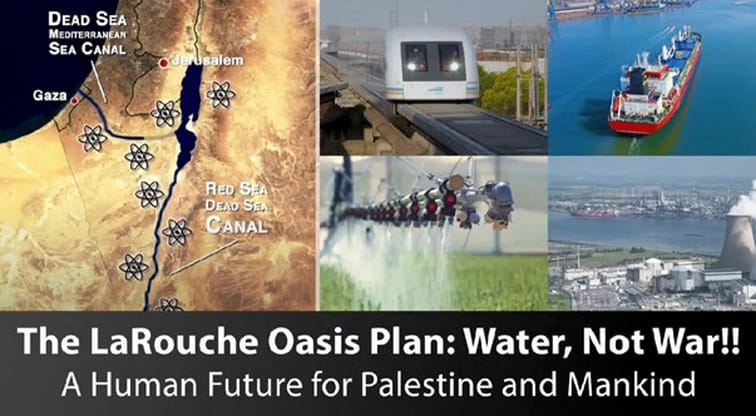
The Schiller Institute recognized from early on, that the economic and strategic interests of the different parties involved hold the key to resolving this unstable situation. It was in this context that the Schiller Institute relaunched the Oasis Plan (see Appendix 2, Chapter 6), which was proposed already in 1975 by Lyndon LaRouche as a “peace through economic development” plan.
Divide and Conquer, or Unite and Prosper?
The philosophical outlook of peace and cooperation advocated by the Schiller Institute was clearly defined in the introduction to the first edition of this report (reprinted below). This outlook represents the true European and American humanist and revolutionary ideas that made the Golden European Renaissance and the American Revolution and establishment of the republic of the United States of America possible. However, it has been undermined by an opposite tradition, Hobbesian[15] and bestial in nature, and which permeated the acts of the European colonial powers over the past five centuries, especially the British Empire. It corrupted the U.S. through the “special relationship” with Britain that has shaped much of the U.S. foreign policies since the assassination of President John F. Kennedy.
It is important to review a few developments that preceded this catastrophic situation in Palestine and West Asia to show the contrast between “divide and conquer” and the win-win philosophy to “unite and prosper.”[16]
Besides Israel, all the nations of this region joined the Belt and Road Initiative when it was launched in 2013. The pace of cooperation between China and the nations of West Asia and North Africa has accelerated in a non-linear fashion and in proportion to and in opposite direction to the geopolitical failures and disasters of the Anglo-American alliance. China has become the number-one trade partner of all the Arab countries plus Iran, and trade between China and these countries has increased by 900% between 2004 and 2024, when it reached a new high of U.S. $407 billion. China is involved in a large number of infrastructure projects in Arab countries, such as ports, railways, roads, and energy. However, in recent years the focus has shifted to include industrialization and technology transfer.
A breakthrough took place with the December 2022 summit between President Xi and the leaders of the Arab world in Riyadh, Saudi Arabia. In his speech on December 10, 2022, President Xi outlined the concrete economic and financial measures on which China was offering to collaborate with the Gulf Cooperation Council (GCC) immediately. The “five points”[17] Xi presented should be of interest to study for any serious analyst. They include long-term trade in oil and gas in local currencies, infrastructure projects extending to nuclear power, space exploration and space technology, telecommunications and AI, industrial projects, and transport infrastructure projects. One day before the China-GCC Summit, President Xi and Saudi King Salman bin Abdulaziz reached a Comprehensive Strategic Partnership Agreement. Saudi leaders say this partnership is symbiotic with Saudi Vision 2030. Thirty memoranda of understanding were signed between Chinese and Saudi entities. These were concretized as contracts worth $30 billion during the China-Arab Business Forum in Saudi Arabia in June 2023. The deals included projects for electric vehicle production, renewable energy, cloud computing, information technology, petrochemical industries and infrastructure development in Saudi Arabia.
The Saudi Public Investment Fund (PIF), the country’s largest sovereign wealth fund, has been backing several important initiatives. In 2023, the Saudi Ministry of Investment signed a $5.6 billion deal with Chinese electric car maker Human Horizons to manufacture and sell vehicles in the Kingdom. Additionally, earlier this year, Chinese computer maker Lenovo and Saudi Alat Electronics signed a U.S. $2 billion agreement to build a manufacturing plant in Saudi Arabia. Construction began in the Riyadh Special Integrated Logistics Zone, with plans to produce millions of “Saudi Made” laptops, desktops, and servers in the facility, as stated in a press release by Lenovo. This joint venture was financed by the PIF through dedicated bonds issued by Lenovo.
Saudi Arabia’s Vision 2030 aims to diversify the Kingdom’s economy, reducing its reliance on oil exports as the sole source of income. The economy was severely impacted during the past decade when oil prices plummeted to $30 per barrel in 2014, 2016, and again in 2021. By partnering with China and other nations, Saudi Arabia seeks to avoid similar shocks by becoming an industrial power and logistics hub under the BRI, connecting Asia, Africa, and Europe.
Egypt is another country in the region intensifying its cooperation with China under the BRI to industrialize and modernize its economy. Since the completion of the New Suez Canal and the Suez Canal Economic Zone in 2015, Chinese companies have been at the forefront of creating new investment opportunities in this strategically positioned country along the Maritime Silk Road. The China-Egypt TEDA Suez Economic and Trade Cooperation Zone (TEDA) is a prime example of how the BRI connects markets and supply chains across three continents. Located on the shores of the Red Sea, TEDA was carved out of the desert and has attracted over 160 companies, producing a wide range of consumer and manufactured goods while providing more than 70,000 jobs to the local workforce. As Ain Sokhna, the main city within the TEDA, grew in size and importance, a new port has come under construction in collaboration with Chinese companies, along with a new high-speed railway connecting it to the rest of the country.
The localization of Chinese technology and supply chains in Egypt through the BRI is exemplified by Haier, a leading Chinese home appliance manufacturer. Last year, Haier boosted its investment in Egypt to $168 million. This expansion will yield an initial annual production capacity of about one million home appliances, primarily air conditioners. Approximately 70% of the output will cater to the local market, while 30% is slated for export, according to Haier’s Egyptian general manager. Highlighting the importance of leveraging local resources, Haier aimed to source 70% of the content for its products locally by 2025 and 80% by 2026.
During the China-Arab Summit in December 2022, President Xi said that China supports closer cooperation between financial institutions from the two sides, welcomes Arab states to issue Panda bonds in China, and welcomes Arab banks to join the Cross-Border Interbank Payment System (CIPS), which supports cross-border renminbi transactions. Egypt was the first Arab country to raise funds in China by issuing Panda bonds worth 3.5 billion yuan (U.S. $478.7 million) in 2023. The UAE has already established bilateral trade arrangements in local digital currencies.
In February 2023, Iran (not an Arab country) finalized a 25-year comprehensive strategic cooperation agreement with China, during the state visit by President Ibrahim Raisi to Beijing. Interestingly, one month later, in March 2023, China brokered the restoration of diplomatic relations between Iran and Saudi Arabia, which had been broken off in 2016. By the end of the year 2023, Iran, Saudi Arabia, the United Arab Emirates, Egypt, and Ethiopia were all invited to join the BRICS, creating the BRICS Plus. Saudi Arabia has not formally joined yet. These nations are also either full members or observers in the Shanghai Cooperation Organization (SCO), which is increasingly moving from being a mere security cooperation framework into an economic cooperation mechanism.
China’s energy security in the coming decades will depend on making sure, through cooperation and diplomacy, that this whole region is secure, stable, and prosperous. Central Asia and the Persian Gulf countries are the main suppliers of China’s oil and gas needs. Russia has also emerged as the complementary major energy exporter to China. China’s economic stability depends largely on the safe and continuous flow of oil and gas from these regions to its ports. Geopolitical tension can make strategic chokepoints like the Hormuz Strait and the Malacca Strait a major source of insecurity for China and its partners.
The Destructive Trajectory
In contrast, when U.S. President Joe Biden visited Saudi Arabia in July 2022, he said that, to him, the “bottom line” was that this trip was about once again positioning America in this region for the future. “We are not going to leave a vacuum in the Middle East for Russia or China to fill,” he emphasized.[18] It seems that the complete opposite happened a few months later with President Xi’s visit to the region. Not only was China filling a huge vacuum left by U.S. lack of interest in building stronger economic partnerships, but the Gulf countries and OPEC continued coordinating oil export policies with Russia within the framework of OPEC Plus. The vacuum seems to come not from actions of Russia or China, but instead from the fact that the U.S. is solely focused on security and military matters in the region with no interest in trade and economic development.
An ominous development came with the speech given by Israeli Prime Minister Benjamin Netanyahu in the UN General Assembly on September 22, 2023, in which he presented a map of the “Middle East” with only Israel in the historical land of Palestine, and with no Palestinian territory. Additionally, he divided the nations of the region between those willing to normalize relations with Israel and those who were not. The latter included Lebanon, Syria, Iraq, Yemen, and Iran, all of which were subject to Israeli and U.S.-British attacks and destabilizations. Netanyahu was emboldened by the announcement a week earlier of the U.S.-backed India–Middle East–Europe Corridor (IMEC) during the G-20 Summit in India. At the time, we analyzed this “initiative” and found that it had no economic substance but instead represented a major destabilizing geopolitical move.[19] The main purpose of the IMEC was to undermine the BRI and build a wall in the middle of this vital region for the world economy. What China did to unite and prosper the nations of the region was targeted by an operation to divide and conquer its nations and disrupt global economic cooperation and peaceful co-existence.
Less than a month after Netanyahu’s speech at the UNGA, Hamas launched its devastating attack on Israel on October 7, 2023, ushering in a new stage of horrific crimes against humanity that we still witness today in Gaza.
A year later, again at the UNGA, Netanyahu presented an updated version of his 2023 map. He inserted an arrow representing the IMEC and outlined it as “The Blessing,” while the nations of Lebanon, Syria, Iraq, Yemen, and Iran were described as “The Curse.” This is not the first time these nations were targeted.
There is a long history of regime change wars, economic sanctions, and intelligence operations by the U.S., Britain, Israel, and some of their allies, that has enmired this region in bloodshed and destruction. Some of these operations were directly targeting the BRI and China-Arab cooperation.
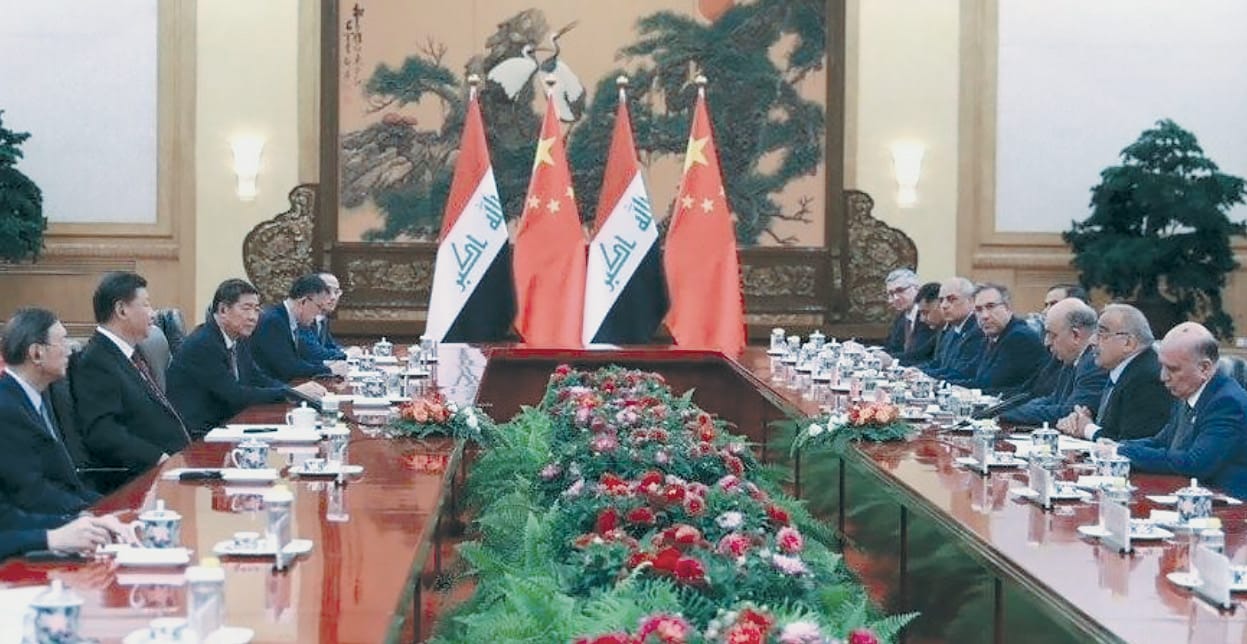
In September 2019, Iraqi Prime Minister Adel Abdul-Mahdi headed the largest delegation of ministers ever to visit Beijing. A number of agreements were signed, the most important of which was a 20-year “oil for reconstruction” credit agreement, according to which Iraq would allocate the revenues of 100,000 barrels of oil daily—a portion of its 700,000–800,000 barrels per day exported to China—in a special fund to which Chinese banks would add six times the accumulated amount, in loans guaranteed by China Export and Credit Insurance Corporation (Sinosure). The fund was to be dedicated to building direly needed infrastructure of all types in Iraq. Iraq’s infrastructure was destroyed several times by wars launched by the U.S. and Britain and their allies since 1991 and never rebuilt after the Anglo-American invasion in 2003. The agreement was to last for the duration of 20 years. This approach is one of the most practical ways of financing long-term development in nations endowed with abundant natural resources.
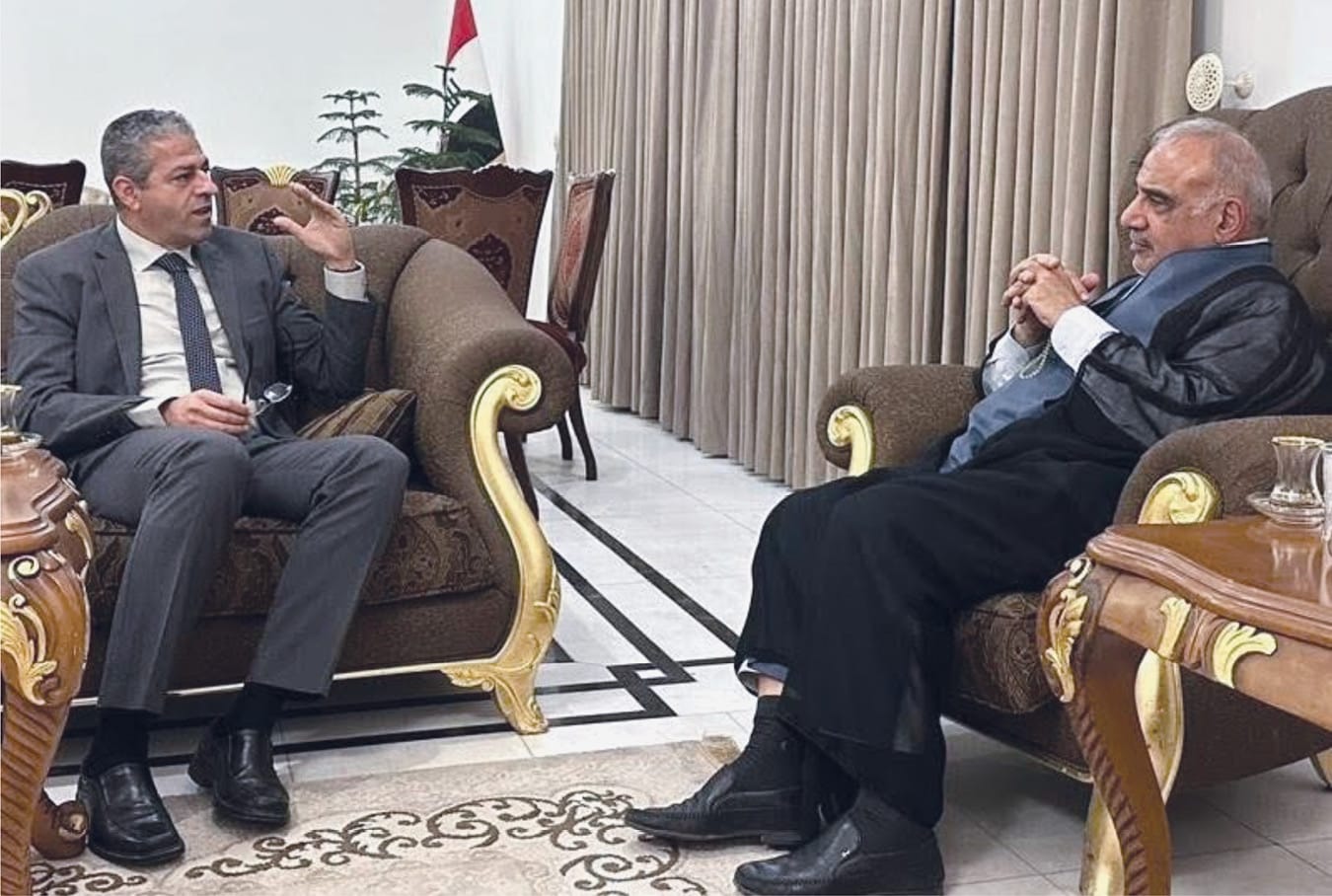
However, as soon as Prime Minister Abdul-Mahdi returned to Baghdad, a massive wave of protests broke out in Iraq, allegedly in objection to the corruption in the country and the lack of services and jobs. The protesters were manipulated by domestic and foreign forces that demanded regime change. No public discussion was conducted about the fact that the agreements with China were meant to address these very issues. Mysteriously, the protests turned violent when an unidentified “third force” was roaming the streets of different cities to assassinate protesters and policemen as well. This chaotic situation was made more dangerous with the assassination of Iranian Maj. General Qassem Soleimani and Iraqi commander of the Popular Mobilization Forces Abu Mahdi Al-Muhandis through a drone strike ordered by President Donald Trump as the two were driving near the Baghdad Airport on January 3, 2020. Prime Minister Abdul-Mahdi was eventually forced to resign in May, and the Iraq-China agreements were reduced to very small projects.[20] The real reason behind the protests, i.e., removing the government, became obvious because they completely ceased after the resignation of the government and the installation of a much weaker government which did not provide any services and became known for its corrupt practices. No new protests were waged.
Another case where the U.S. intervened to sabotage China-Arab cooperation was Lebanon. In the Spring and Summer of 2020, the Lebanese government under Prime Minister Hassan Diab was conducting intensive talks with Chinese counterparts to outline a strategy of reconstruction that included financing and constructing railways, roads, power plants, water management systems and new port facilities. The Trump Administration was already engaged in creating tensions in the nation by demanding that the Lebanese government disarm and force out Hezbollah’s members of parliament, although they had been duly elected. When Hezbollah leader Hassan Nasrallah declared publicly his support for the Lebanese government “going east,” the U.S. State Department’s disruptive activities went into high gear. In early June 2020, U.S. Ambassador to Lebanon Dorothy Shea stated on Lebanese opposition television that Lebanon should beware of cooperating with China, citing unfounded examples of such cooperation with other nations as being harmful. This prompted the Chinese embassy in Lebanon to issue a statement protesting against Shea’s allegations. A diplomatic brawl ensued, leading to Shea being summoned to the Lebanese Foreign Ministry to receive a protest for meddling in the internal affairs of the country. In late June, the Trump Administration dispatched David Schenker, U.S. Assistant Secretary of State for Near Eastern Affairs, to the region to increase the heat on Lebanon. Schenker said in an interview with a Lebanese opposition newspaper that Nasrallah’s calls for Lebanon to “look east”—toward China to mend the country’s ailing economy—were “shocking” and that Lebanon needed to resist falling into such a “trap.” Schenker stated: “We all see how China seeks to acquire any country that fails to pay its debt dues.” He pointed to the much-trumpeted two examples of Djibouti and Sri Lanka, where in the latter case Sri Lanka granted China a 99-year lease of its Hambantota port after failing to pay its debts.
The Schiller Institute was engaged in this situation through social media and publishing reports explaining the fallacies of the U.S. officials’ claims and also urging the Lebanese people and their government to be aware that these warnings by U.S. officials were veiled threats to destabilize the country.[21] One week after the Schiller Institute issued this warning in public, the Port of Beirut was completely destroyed by a massive explosion of ammonium nitrate storage inside the port. The explosion, which was one of the largest non-nuclear explosions in history, destroyed the port almost completely as well as adjacent residences and caused 218 deaths and 7,000 casualties. The country, already suffering from the impact of the Covid-19 pandemic, entered an emergency status. Prime Minister Diab was forced to resign and the talks with China were stopped. Until now, the causes of the explosion have not been clarified.
Geopolitics Is Becoming Obsolete
Despite all these destabilization efforts, China-Arab cooperation through the BRI persisted. Its resilience is derived from the fact that it offers the nations and people of the region real solutions to meet their needs and fulfil their aspirations. The only thing these nations have been offered through geopolitics is death and destruction. Geopolitics is an obsolete and sterile way of thinking. It is based on a zero-sum game. It thrives through conflicts that, though destructive, are short-lived. Its followers must find new conflicts and sources of divisiveness to survive.
The new paradigm in international relations is overturning this fruitless way of conducting global governance. The cases of Afghanistan and Yemen are good examples of the impotence of overwhelming military power that is devoid of any constructive elements that respect the dignity and humanity of others.
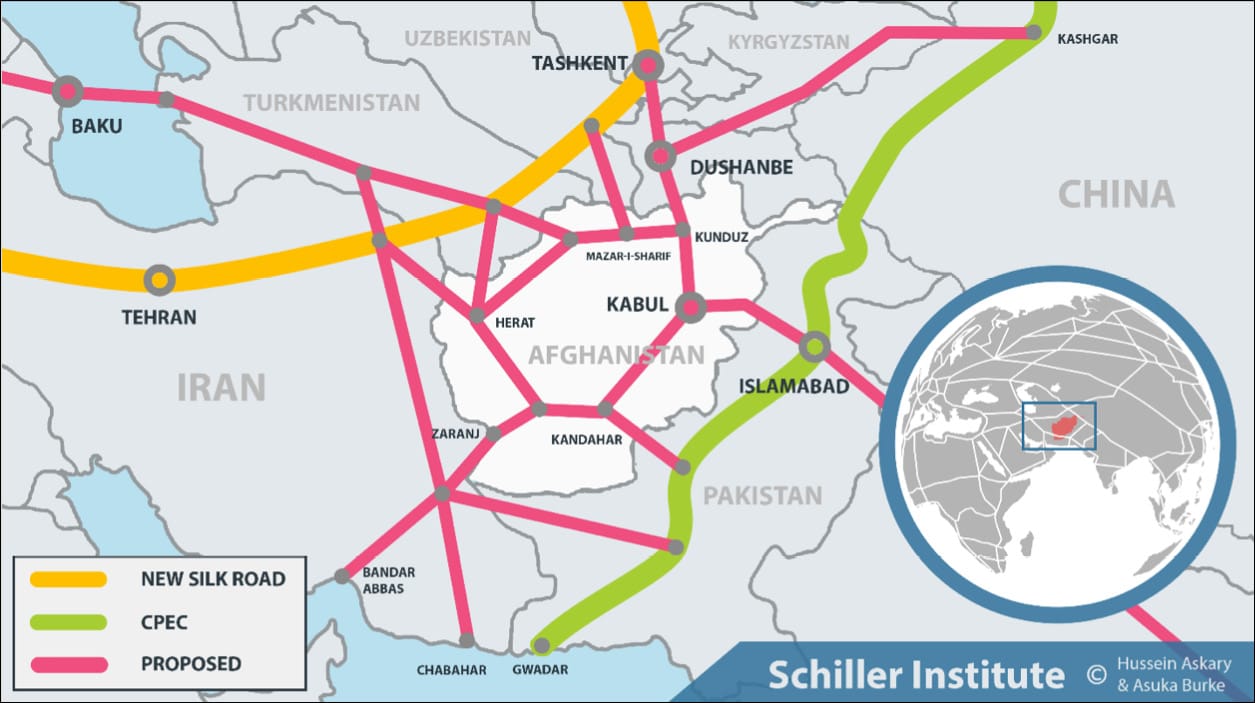
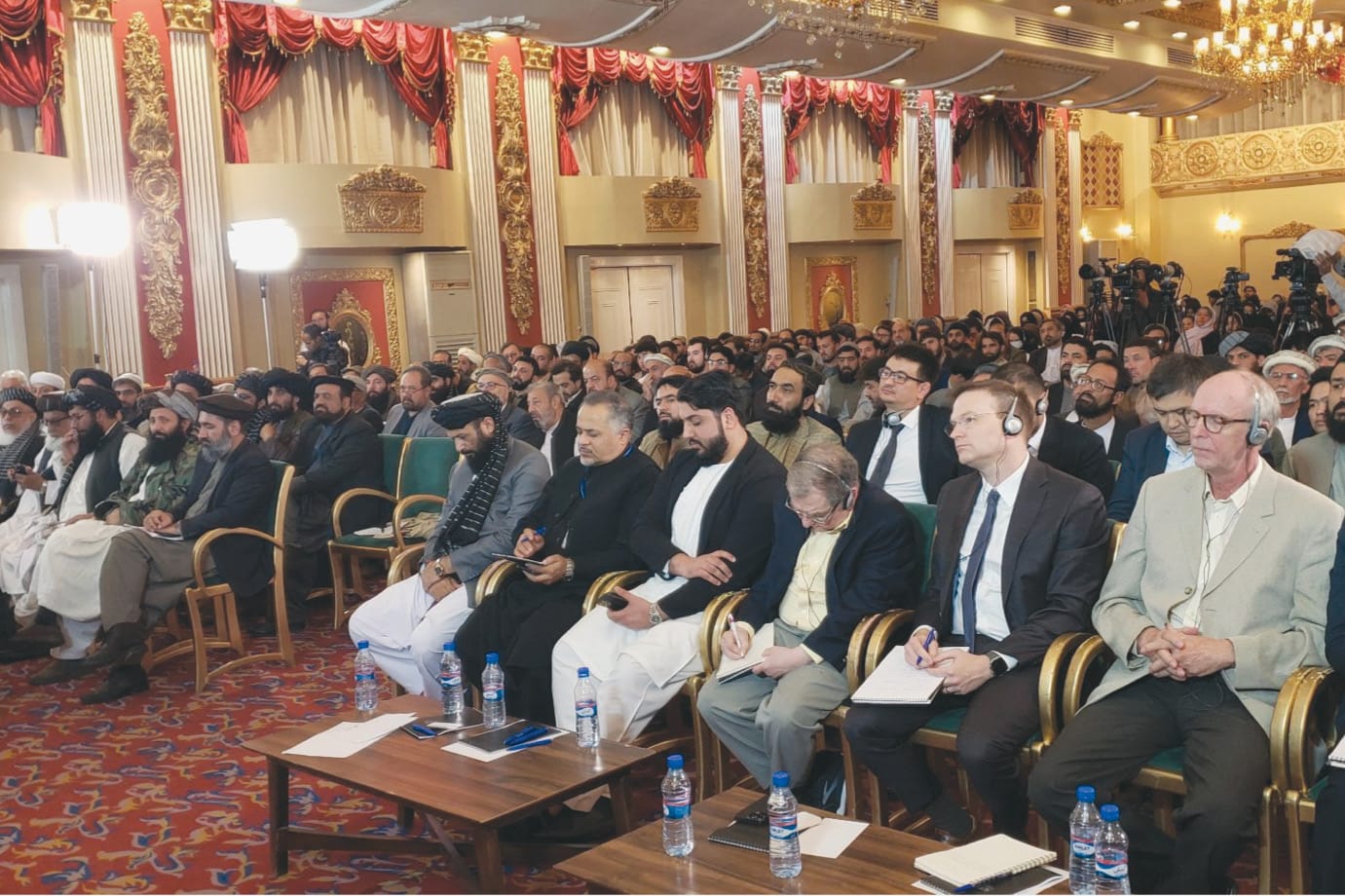
The hasty withdrawal of U.S., British, and other North Atlantic Treaty Organization (NATO) members’ troops from Afghanistan in August 2021, after 20 years of a failed “war on terrorism,” can potentially become an inflection point in the history of Central Asia. Afghanistan had been trapped in the geopolitics of the British Empire’s Great Game for more than two centuries. Wisdom through physical economics and the reconstruction of Afghanistan through integration into the BRI holds the key to showing the superiority of economics over geopolitics. Immediately after the withdrawal of U.S. troops, the Schiller Institute and Helga Zepp-LaRouche issued an international call to launch “Operation Ibn Sina” for the reconstruction of Afghanistan.[22] In the following months, through dialogue and workshops with Afghan engineers, civil society organizations, and experts, the Schiller Institute outlined a comprehensive strategy for the uplifting of the Afghan economy and its people. In November 2023, the Schiller Institute team responsible for the development of Operation Ibn Sina visited Kabul to participate in a major conference on the economic development of the country.[23]
In the meantime, China wasted no time to engage with the new government in Kabul and recognized the Taliban diplomatic representative to Beijing. China also appointed a special envoy for Afghanistan affairs and relaunched a series of agreements on infrastructure and mining. The Afghan government itself launched a series of projects focused on increasing agricultural output and eliminating the cultivation of opium which had thrived under the U.S.-British occupation. The countries of Central Asia have also recognized—de facto, if not de jure—the government in Kabul, with which they have signed new agreements on connectivity and trade. Through Chinese diplomatic efforts, the tense relationship between the Taliban and the Pakistani government was gradually normalized, but certain disagreements resulting from the effects of the previous war on terrorism era persist.
One of the poorest countries of the region, Yemen, survived eight years of war waged by a coalition led by Saudi Arabia and the United Arab Emirates to implement UN Security Council Resolution 2216 to restore the Yemeni government overthrown by the Ansarullah (Houthi) forces in April 2015. However, the military operation failed in its objectives and instead created a massive humanitarian crisis in the country. Here, too, the Schiller Institute intervened to address the humanitarian crisis and composed, just before a ceasefire was reached, a study on the reconstruction of Yemen in cooperation with Yemeni experts and the Yemeni Investment Authority. The study, published in Arabic (see English short version in Appendix 2, Chapter 6), was titled “Operation Felix: The Miracle of Yemen’s Reconstruction and Connection to the New Silk Road.” The report was released in the Yemeni capital, Sanaa, on June 16, 2018, at the headquarters of the Yemeni Investment Authority. The Schiller Institute advised the Sanaa government and the relevant United Nations organs to include Operation Felix in any future settlement and national reconciliation, because without economic and social development of the whole nation, peace and security cannot be sustained.
Conclusion
The Schiller Institute has continued to stress the importance of the U.S. and the EU joining the new paradigm rather than attempting to undermine it. The rise of China and the Global South is unstoppable, and attempting to disrupt it will only lead to a new world war that will most definitely be fought with thermonuclear weapons that could lead to the end of human civilization entirely. By reaching a modus vivendi of humanist characteristics to build a new security architecture and peaceful co-existence, the Western powers will be able to survive the financial, economic, and cultural downward spiral of the past 50 years. The first step after reforming the financial and banking system is the retooling of the American “military-industrial complex” into a tool for peace and prosperity, as proposed by the Schiller Institute.[24]
We consider this new edition of our report in this form, including all the chapters of the first edition, as a crucial conceptual contribution to the new paradigm of development in the world. The ideas presented in these chapters are timeless, in a sense, and they also reflect the fact that despite much positive effort, not nearly enough has been done to achieve the goals identified therein. It is important to give praise where praise is due, to the efforts made by the nations of West Asia and Africa in collaboration with China and other BRICS nations. It is our hope that through this work and other activities of the Schiller Institute, we can instill both clear-sightedness and optimism about the path to take in the minds of leaders and the population in Western countries first and foremost. African, West Asian and Chinese leaders and peoples seem to have a clearer view of the path to be taken.
Notes
- Helga Zepp-LaRouche keynote speech at the Schiller Institute Conference, January 2013, “A New Paradigm To Save Mankind.”
- Lyndon LaRouche died in February 2019 at the age of 96. His life’s work was focused on establishing a new just world economic order. His forecast and vision for a new world order were detailed in his 2005 book Earth’s Next Fifty Years.
- Keynote speech by President Xi Jinping in the celebration of the tenth anniversary of the launching of the BRI, at the Third Belt and Road Forum for International Cooperation, held in Beijing, October 18, 2023.
- Paul Gallagher, “Why the New President and Congress Must Nationalize the Federal Reserve,” Executive Intelligence Review, January 10, 2025.
- Helga Zepp-LaRouche, “Ten Principles of a New International Security and Development Architecture,” 2022.
- The Asian Development Bank, “Closing the Financing Gap in Asian Infrastructure,” June 2018.
- Africa Policy Research Institute, “Trade infrastructure financing in Africa: an exploration of geopolitical funds for private sector participation,” November 6, 2024.
- B3W was later rebranded as “Partnership for Global Infrastructure and Investment” (PGII), after the embarrassing defeat of President Joe Biden’s domestic Build Back Better plan in the U.S. Congress.
- “G-7 Alternative to The Belt and Road: All That Glitters Is Not Gold!” Hussein Askary, Belt and Road Institute in Sweden, June 21, 2021.
- “World Population Prospects 2024.”
- Special report “Henry Kissinger’s ‘Appropriate Technology’: ‘Appropriate’ to World Depression and Third World Genocide,” Executive Intelligence Review, October 10, 1978.
- National Security Study Memorandum 200: “Implications of Worldwide Population Growth for U.S. Security and Overseas Interests,” December 10, 1974.
- “LaRouche’s ‘Apollo Mission’ to Defeat the Global Pandemic: Build a World Health System Now!” Schiller Institute, April 11, 2022.
- “Another Victory in Africa’s Fight for Development: Nyerere Hydroelectric Power Project Ready to Go Live,” Dean Andromidas, Executive Intelligence Review, March 1, 2024.
- Thomas Hobbes (1588-1679), was an English philosopher whose most well-known work Leviathan advocated the idea of man being part of “the state of nature,” a jungle, where there is no place for morality, and society is locked in a “war of all against all,” where only power and fear of punishment can restrain individuals and societies.
- This expression was used by Professor Zhang Weiwei, director of the China Institute, Fudan University, during a speech he delivered at a Schiller Institute conference organized in Berlin on July 12, 2025.
- Xi Jinping’s keynote speech in China-GCC Summit, Riyadh, December 10, 2022.
- Remarks by President Biden on His Meetings in Saudi Arabia, July 15, 2022.
- “The India-Middle East Corridor is a Fraud,” Hussein Askary, Executive Intelligence Review, September 29, 2023.
- “Iran, Iraq and the World in This Moment of Crisis,” Hussein Askary, Executive Intelligence Review, January 10, 2022.
- “Lebanon Should Join the New Paradigm of the Belt and Road: But Watch Out for the War Party!” Hussein Askary, Executive Intelligence Review, July 24, 2020.
- “Project Ibn Sina: Restore Afghanistan’s Ancient Greatness,” Schiller Institute, November 21, 2021.
- “Schiller Institute Participates in Conference on Afghanistan’s Economic Development,” Schiller Institute, November 7, 2023. A summary report on key aspects of Operation Ibn Sina, by Marcia Merry Baker and Karel Vereyken, was published in Executive Intelligence Review on August 30, 2024.
- “The Military-Financial Complex Is Bloated on Blood Money from Wars,” Executive Intelligence Review, December 22, 2023.