

May 27—Farmers led by the National Front to Save the Mexican Countryside (FNRCM) came to Mexico City from around the country May 20, for a show of force behind two key demands. Number one: the government must pull Mexico’s staple grains (including corn, wheat, rice, sorghum, beans) out of the USMCA free trade treaty, in order to defend Mexico’s independent farmers and food supply from destruction at the hands of the international cartels and financiers which the treaty serves.
Second: Mexico’s Secretary of Economy Marcelo Ebrard must be impeached, because he is selling out the national economy, agriculture included, in the U.S.-Mexican-Canadian negotiations underway on whether to extend, revise, or end the USMCA. All three countries are now in an official review period, for a decision to be made this year.
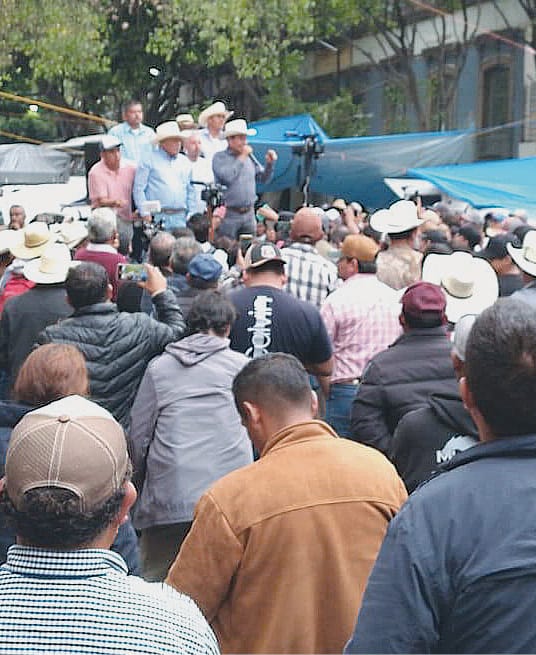
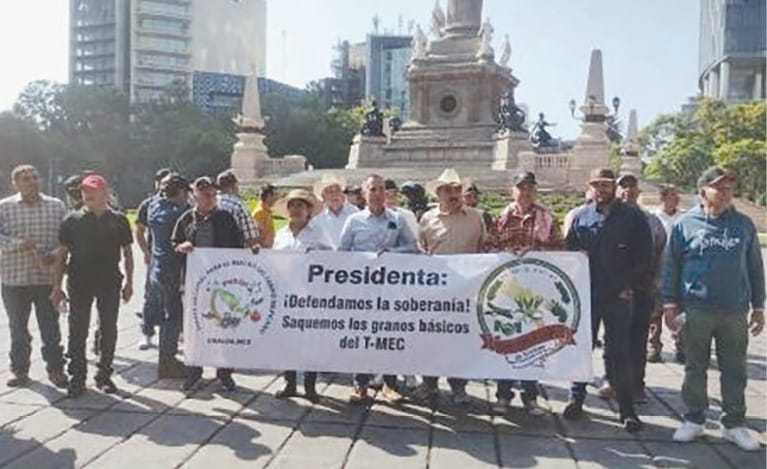
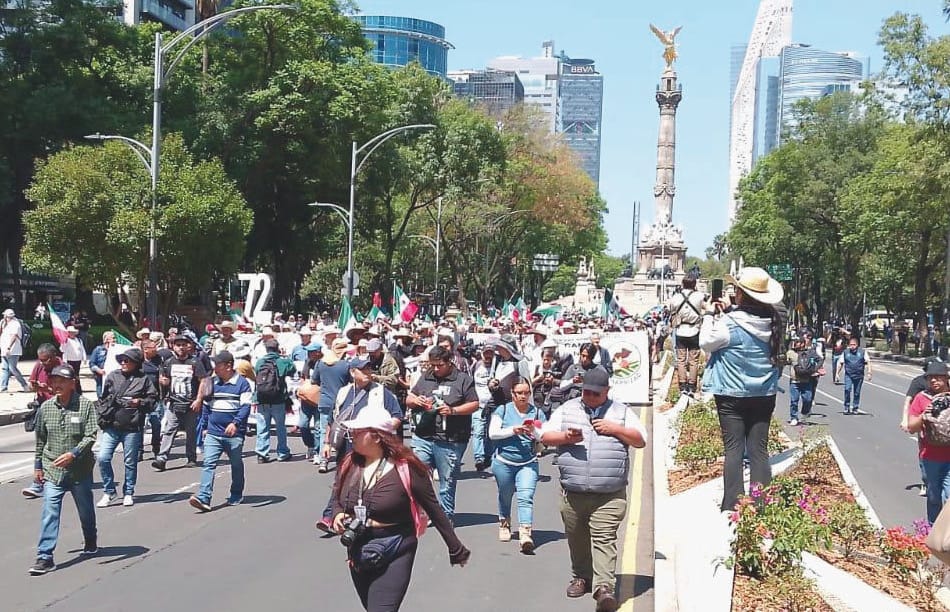
FNRCM organizers expected that some 2,000 farmers would participate in their march; when May 20 came around, as many as 3,500 farmers were there, according to many media accounts. Nineteen of Mexico’s 34 states were represented. Truckers from around the nation also participated.
The impressive procession streamed along the Paseo de la Reforma, marching from the Angel of Independence to the Senate. There were banners, tractors, and sometimes music, at stops along the way. For example, outside the Government Ministry, the “Hymn of Tlaxcala” was sung, the anthem of the central Mexican state of Tlaxcala.
Meeting with the Agriculture Secretary
Their protest was not ignored. The next day, Mexico’s new Secretary of Agriculture, Columba López Gutiérrez, met with around 25 leaders of the FNRCM. López Gutierrez, herself an agronomist by training, had just been named Secretary on May 1. López posted photos from the meeting afterwards on her X and Facebook pages, reporting on the “working meeting” which she and her team had held “with farmers from 19 states across the country, who are members of the National Front to Save the Mexican Countryside, to hear their views on staple grains, and to move forward with a joint plan to strengthen the Mexican countryside.”
Secretary López reported that setting “reference prices” for produce tied to the costs of production in each region was discussed, along with the challenges of marketing, financing, and storage infrastructure. Another meeting was set for May 28 “to continue making progress on agreements and actions for the sector.”
FNRCM leader Eraclio “Yako” Rodríguez Gómez, based in Chihuahua, told Imagen Agropecuario that the farmers were also happy with the meeting. His report was that ways to set “parity prices for all products and all producers” were discussed, as part of “building a new national agricultural structure.” This is why pulling the grains out of the USMCA is so crucial, he emphasized. “[W]e should not depend on the Chicago Board of Trade; we need national mechanisms that we control … for setting the prices of all products.”
A short statement from Sonora, along the same lines, was issued a week before the national protest by FNRCM activist Alberto Vizcarra Ozuna in Ciudad Obregón, and received attention, including posting on the Voces del Campo Facebook page. (See box.)
Another key topic, Rodriguez told Imagen Agropecuario, was how to provide short-term financing to help farmers deal with their unpayable debts, “while a bank system is built.” He is referring to the FNRCM proposal for the national agricultural bank to be re-established to issue long-term credits.
Statement from Sonora, May 13
We Advocate for National Agriculture, Not ‘A Business Run by a Select Few’
by Alberto Vizcarra Ozuna
This statement was issued May 13, 2026, from the Yaqui Valley, Ciudad Obregón, Sonora, by Alberto Vizcarra Ozuna, member of the National Front to Save the Countryside, and longtime advocate for water infrastructure for Mexico and all North America.
The real goal is not to rescue “a business run by a select few,” although, unfortunately, this is often the inaccurate image that producers themselves still project.
We must revive the concept of National Agriculture, which we [in Mexico] upheld from 1934 to 1982, when pricing, credit, and trade policies were guided by the goal of food self-sufficiency; a goal that was achieved, as throughout this period the agricultural sector-maintained growth rates of over 6 percent annually, achieving 85 percent self-sufficiency in staple grains.
Achieving the goal of food self-sufficiency is the only thing that justifies the subsidy, as the aim is not to bail out a group that “has ceased to be profitable,” but to strengthen the national economy and protect it from the instability of international markets.
This is what has been neglected since the signing of NAFTA (in the mid-1990s), since even with the compensatory schemes—designed to ensure profitability for producers—it was not possible to increase production or reduce food dependency, because that was not, and has not been, the purpose of the NAFTA-USMCA treaties.
If Mexico continues to subject its national agriculture to such a trade framework, domestic producers will indeed be displaced, and what remains of the sector will be outsourced or taken over by agro-financial corporations.
This will lead to a situation of greater social crisis and decay. For any process of corporatization is inherently exclusionary and destructive to the social and productive life of nations.
Serve the Nation, Not the ‘Markets’
These farm leaders are not only thinking about how to save their farms and the national food supply, but about how to revive national industry, as well. Rodriguez, a former federal congressman, told Imagen Agropecuario that “over the last 20 years, they have dismantled the entire productive and industrial infrastructure in Mexico, and so we have to revive it, because we cannot continue depending on whether the U.S. President wakes up in a good mood or a bad one.”
The FNRCM, since its founding in 2024, has been demonstrating, and also engaging in dialogue on policies to restore Mexico’s economy. For example, on Sept. 25 last year, a forum was held at the National University of Mexico, on “Restoring National Agriculture,” with FNRCM, economics faculty, and other experts, from which a statement was issued to Mexican President Claudia Scheinbaum, the Agriculture Committee of the Federal Senate, and to the Ministers of Agriculture and Economics. The ministries at that time were unresponsive, but now, with the new Minister of Agriculture and the May 20 show-of-force rally in Mexico City, there is a dialogue underway.
The hold-out is Secretary of Economics Ebrard. The farmers’ demonstration in Mexico City had a fighting focus against what Ebrard has been doing in league with U.S. Trade Secretary Jamieson Greer and Deputy Trade Representative Jeffrey Goettman to continue destructive industrial and agricultural practices in both countries, in the name of satisfying “the markets,” which is just another name for perpetuating the domination by the supranational globalist companies.
The situation, in brief, is that Mexico has been forced to be reliant for half of its corn consumption on imports from the United States, and a similarly significant share of other staples, while in turn, Mexico supplies the United States with 30 to 85% of many fruits and vegetables (fresh and frozen), to the detriment of the farm sectors in both countries. This same pattern obtains in other agricultural and industrial sectors, from beef to automobiles.
Ebrard has been acting on the side of Wall Street, the Chicago Board of Trade, and the mega cartels to perpetuate these trade patterns. This week, the first of three negotiating rounds kicked off between Mexico and the United States between Ebrard and U.S. authorities, toward the USMCA review in July.
The farm demonstrators in Mexico City stopped at relevant government offices all along the route of their march, delivering their statement calling for the impeachment of Secretary Marcel Ebrard for his committing “treason” by his policies against the Republic.
U.S. Farm Leaders Also Denounce Cartels
Last year, many U.S. farm leaders sent a letter of support to the FNRCM for its standing up for farmers and ranchers in Mexico, acknowledging that the two countries have a “common enemy” in the cartels. Now the situation in both countries, and internationally, is worsening rapidly because of the economic shocks from the U.S.-Israeli war on Iran.
Three of the U.S. farm-leader signers of the 2025 support letter to their counterparts in Mexico gave reports this month to the International Peace Coalition on the situation in the United States. The gist of all their remarks is that, without intervention to stop it, the monopolies and financial syndicates are increasing their domination during the present crisis. What remains of independent, U.S. family farming is going down.
Angela Huffman, located in Ohio and president of Farm Action nationally, spoke about this on May 8. (See accompanying transcript.) Jesus Holguin, president of the Kansas Cattlemen’s Association, reported May 22 in some detail how a lot of the “agriculture land is now being consolidated by big capital investors, into big corporate farms.” (See below.)
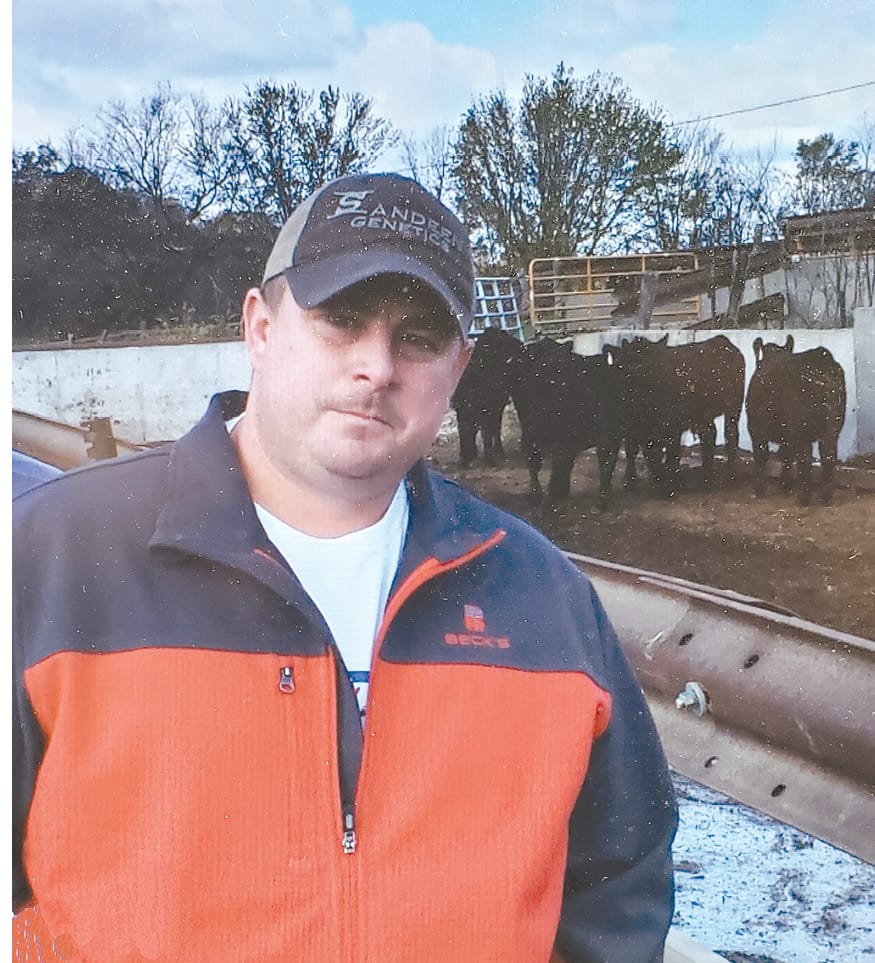
Jon Baker, Iowa cattleman, vice president of the Iowa Stockgrowers Association, summed it up May 22, saying that the crisis of the war impact on diesel prices, fertilizer and so on, is “driving consolidation of production. That to me is not a way to really have security in our food production. It will drive production into fewer and fewer hands, the more independent producers are forced out because of this.”
Baker described the underlying vulnerability of farmers and ranchers. Speaking from the U.S. leading corn, soybean, and pork state, he explained the situation of farmers: “We are at or below breakeven right now in the row crop sector…. The hog industry is not at a profitable standpoint, marketwise.” He said, “Go back to these corporate entities that control our costs. We have to do something to minimize this. Take the Board of Trade today. In the last two days, just in my little operation, the markets have shifted to where it’s $80,000 lower in value on what I have in this operation. Just in the last two days. And that’s just a market shift for no certain reason.”